Matsuokayama Kofun: A Keyhole-Shaped Burial Mound in Japan
Site at a Glance
- Rating
- 4
- Popularity
- Very Low
- Country
- Japan
- Primary era
- Classical
- External website
- Open
- Eras represented
- Classical
- Civilizations
- Yamato
- Site type
- Burial
- Remains
- Burial Mound
On this page15 sections
History
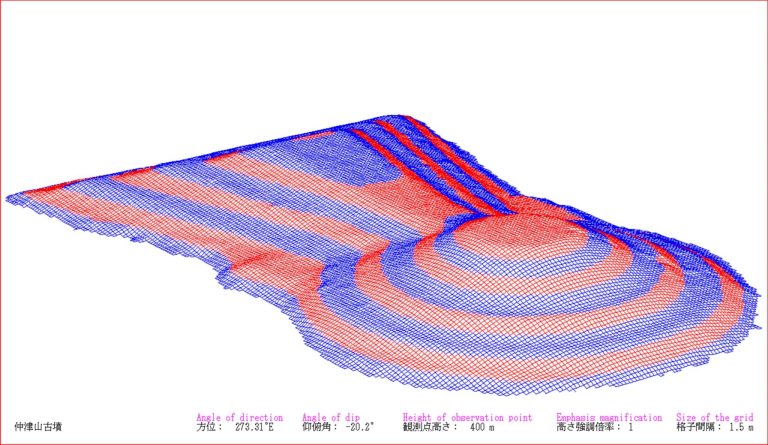
Matsuokayama Kofun is a large early Kofun-period burial mound in Kashiwara, Osaka, Japan, built around the late fourth century. The Kofun period, generally dated from the third to the sixth centuries, was an era when large burial mounds were constructed across Japan. Matsuokayama is a keyhole-shaped mound, combining a rectangular front section with a circular rear section, and is the largest burial mound in the Matsuokayama Kofun Cluster. It is also the cluster’s only mound of this form.
Early Kofun-period development
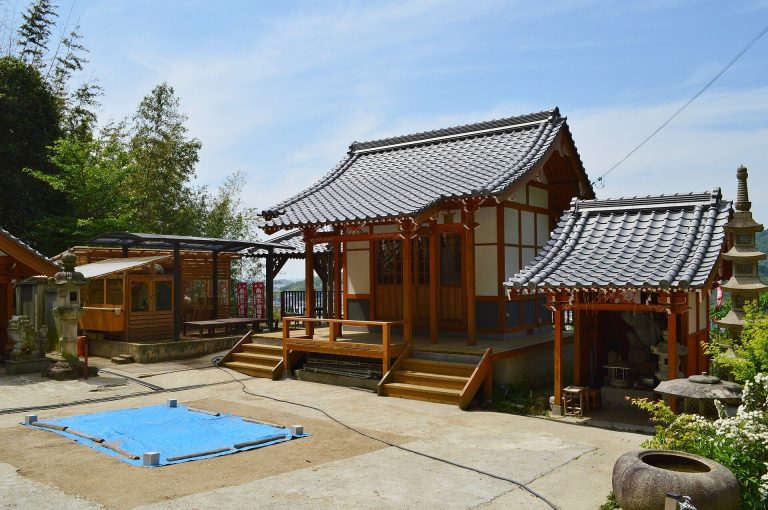
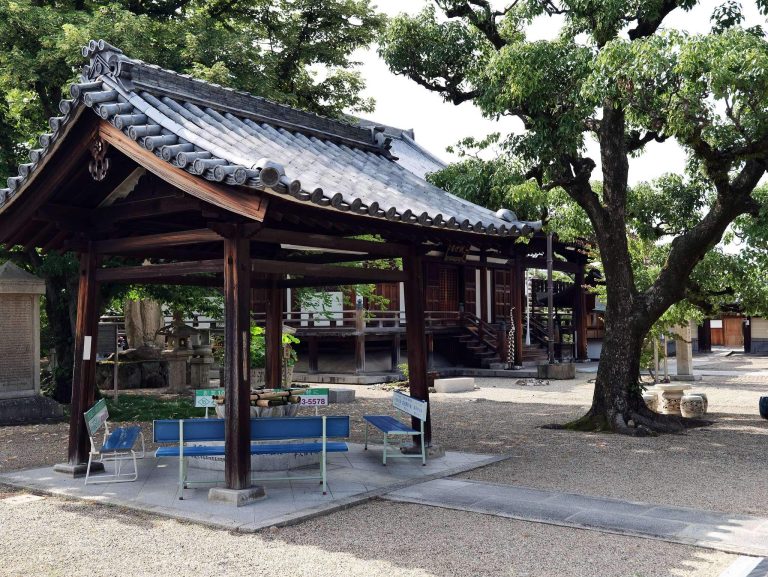
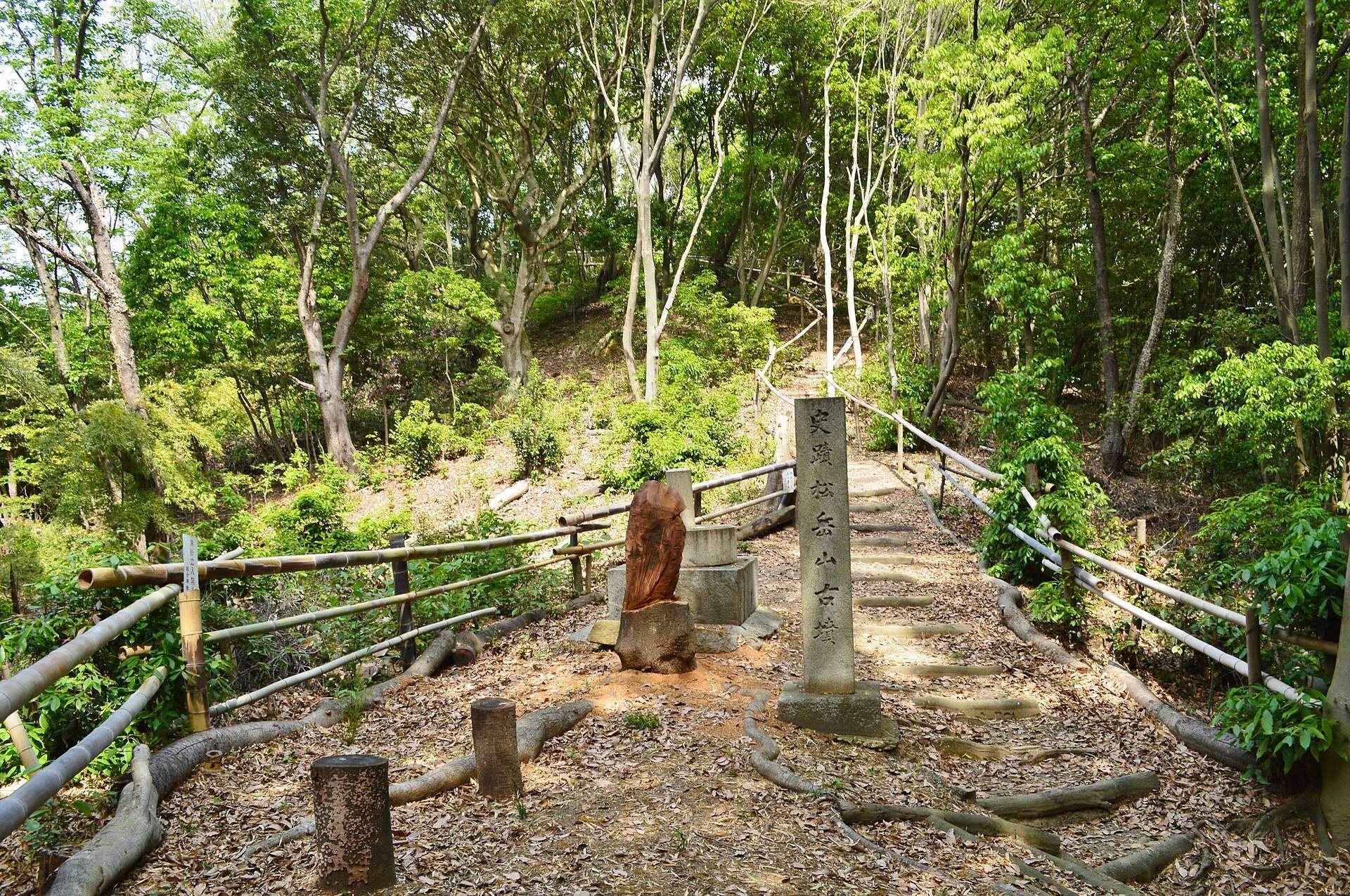
The mound stands on the summit of the Matsuokayama hills, within the grounds of Kokubu Jinja, a Shinto shrine, on the south bank of the Yamato River. Its position and unusual construction have shaped interpretations of the person buried there. The surrounding area offered little cultivated land to support the mound’s construction, leading to the possibility that the deceased was connected with an occupational group involved in transporting goods along the Yamato River and managing stone.
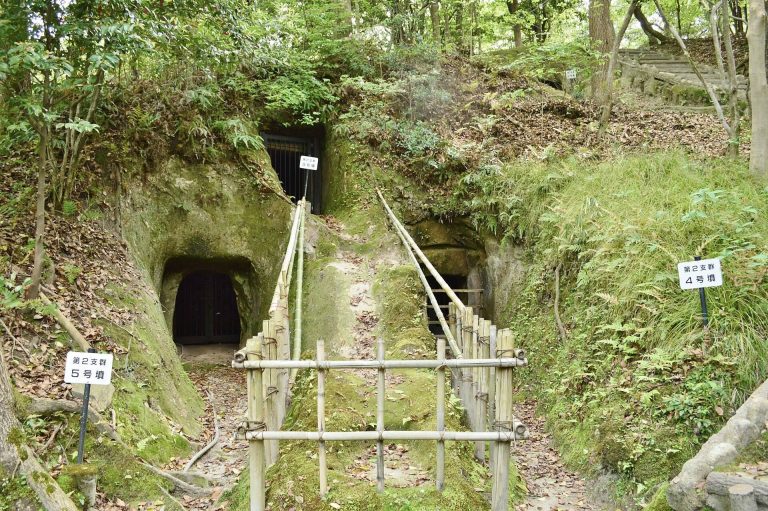
Matsuokayama Kofun is considered alongside Tamateyama Kofun No. 7, a broadly contemporary mound approximately 1.6 kilometers to the southwest. The two mounds have markedly different characteristics. Together, they help illuminate the Kawachi region before the construction of the great royal tombs of the Middle Kofun period in the Furuichi Kofun Cluster.
Names and changing interpretation
The hill was formerly known as Matsuoka Hill. The present name, Matsuokayama, became established in connection with a once-proposed identification of the site as the findspot of a burial epitaph associated with the Fun clan, an ancient Japanese kin group. That identification is now rejected because the mounds at Matsuokayama date to the early Kofun period, while the epitaph belongs to a later period.
Excavation and protection
An excavation attributed to Atsushi Saisho in 1877 was said to have produced bronze mirrors and beads. Their present whereabouts are unknown. In 1915, Seijiro Takino collected a pestle-shaped stone artifact, which is also no longer located.
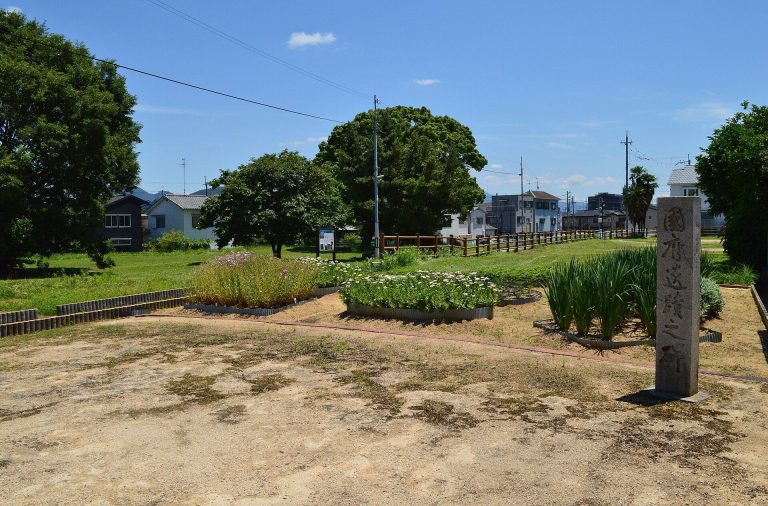
Investigations of the burial facility were conducted in 1955 by the Osaka Prefectural Board of Education and researchers including Yukio Kobayashi of Kyoto University. Kashiwara’s Board of Education surveyed the site in 1984, confirmed the front part of the mound during an excavation of Chausuzuka Kofun in 1985, and carried out further excavation in 1986. The rear circular portion received National Historic Site designation on March 8, 1922. In 2008, three elliptical cylindrical haniwa and two pot-shaped vessels from the mound became Tangible Cultural Properties of Kashiwara.
Remains
Matsuokayama Kofun consists of a circular rear mound and a rectangular front section oriented toward the west. The mound is approximately 130 meters long, although some reconstructions estimate about 150 meters. Including the surrounding stonework, its full length extends to approximately 155 meters. Thin stone slabs were stacked to form the mound, while its surface carried stone revetment and rows of cylindrical haniwa, clay objects placed on or around burial mounds.
Mound and perimeter construction
Keyhole-shaped mound
The rear circular section measures approximately 72 meters across and rises 16 meters high. It was built in three or four tiers. The front section is approximately 32 meters wide and 6 meters high, with two tiers. In the first and second tiers, vertically arranged basalt slabs were covered by rounded stones laid diagonally. Along the southern side, slabs were stacked at an angle, appearing to thrust into the mound.
Stone perimeter and haniwa terrace
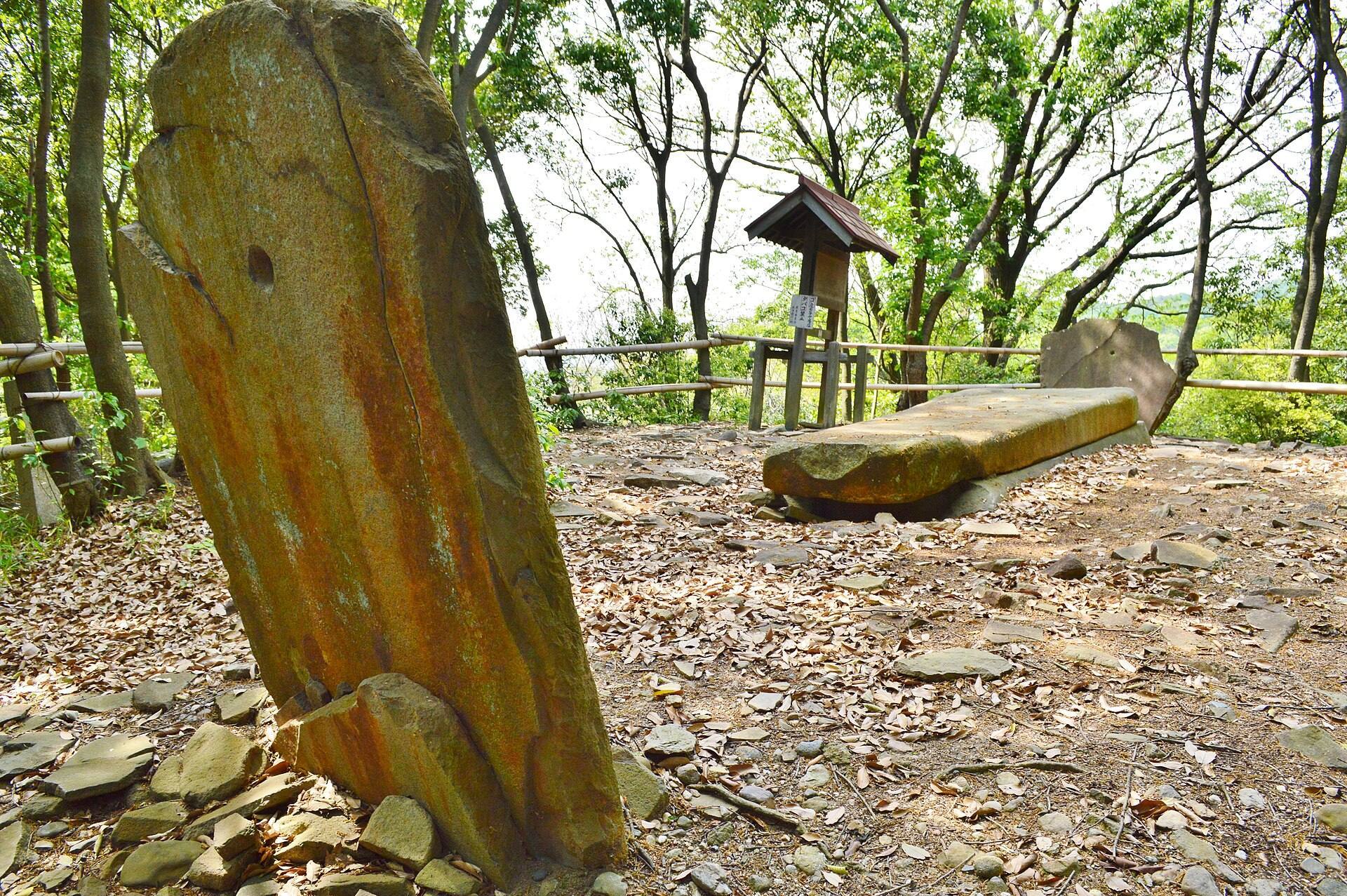
Stonework formed an outer perimeter zone around the foot of the mound. At the front edge, a terrace made from stone slabs supported rows of oval cylindrical haniwa with lateral fins. The northern side borders a cliff, so the perimeter stonework is thought to have been built only along the southern side. Erosion of the covering earth has exposed the stone coffin and scattered slabs connected with the burial facility.
Burial facilities
Main stone coffin
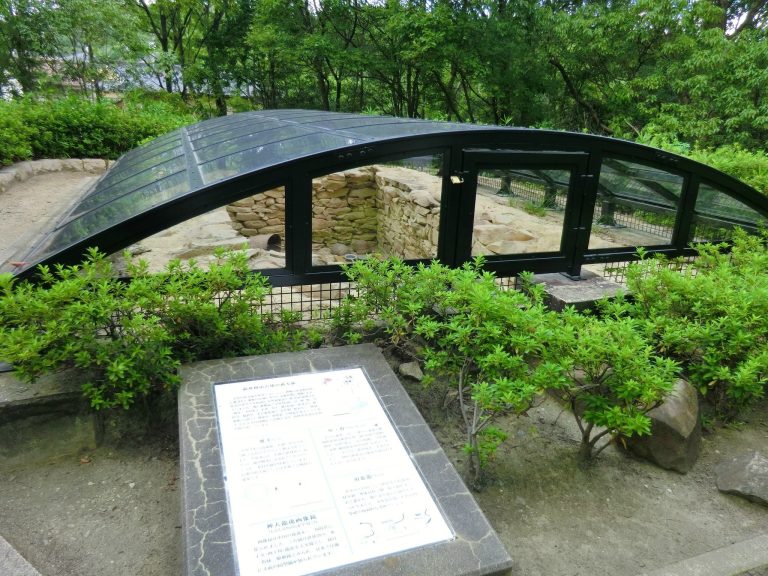
The central burial facility lies within the rear mound. It has been interpreted either as a pit-style stone chamber, meaning a burial chamber set in a shaft cut into the mound, or more cautiously as a stone-built burial installation rather than a conventional chamber. Basalt slabs are scattered around the exposed coffin.
The coffin runs from north to south and is made from six stones: one lid, one base, and four sides. The lid and base are biotite granite, while the side stones are garnet-hornblende andesite or tuff, probably brought from Kagawa Prefecture. Two side stones have projections used for attaching ropes. The base stone has been carved to fit the body of the deceased.
The coffin is regarded as an early form of the long-chest-shaped stone coffins later commonly associated with royal tombs. Its unusual design includes end stones set inward to create a small chamber-like space and a flat lid without rope-hanging projections. A standing stone remains at each end. The southern stone is approximately 2.3 meters high and 1.4 meters wide, while the northern stone is approximately 1.8 meters high and 1.4 meters wide.
Both standing stones have holes near their tops. The southern stone has one hole; the northern stone has two holes and two shallow depressions that do not pass through the stone. They appear to have been installed when the mound was built, but their purpose remains unknown. Comparable standing stones are known at Saki-Misasagi Kofun, although those at Matsuokayama are generally not regarded as surviving chamber stones.
Additional burial installations
A small pit-style stone chamber without artifacts was identified at the constricted section of the mound’s foot. A box-shaped stone coffin was found on the terrace of the first tier, and additional small burial facilities are considered possible.
Grave goods and earthenware
Burial goods
Numerous grave goods were found inside and outside the main stone coffin. They included jadeite magatama beads, other jadeite, jasper and glass beads, copper and iron swords, spears, axes, and additional objects. Most of the excavated artifacts are kept at Kyoto University.
Elliptical cylindrical haniwa
Three elliptical cylindrical haniwa were recovered from the foot of the front section during the 1985 investigation. Two are complete. One measures 158 centimeters high, with a long diameter of 64 centimeters and a short diameter of 42 centimeters. The other is 143 centimeters high, with a long diameter of 70 centimeters and a short diameter of 40 centimeters. The third survives through its upper two tiers and is 76 centimeters high.
These haniwa have red pigment on the side facing the mound. Their surfaces include triangular, inverted-triangular, horizontally elongated rectangular, and comma-shaped perforations, as well as encircling bands and fins on both sides. They are among the largest known elliptical cylindrical haniwa. Fin-bearing examples are otherwise known only from finds at Shikinzan Kofun in Ibaraki.
Pottery vessels
Two earthenware vessels were recovered during the 1985 and 1986 investigations. One came from the front foot of the mound. It is a short-necked, round-bottomed Haji ware jar with a spherical body, measuring 9.5 centimeters high. The other was found at the foot of the constricted section and is a small jar with two rims, measuring 13 centimeters high.
The three elliptical cylindrical haniwa and the two jars designated as Kashiwara cultural properties are kept at the Kashiwara City Historical Museum. Together with the exposed coffin, standing stones, tiered mound, and perimeter construction, these remains give Matsuokayama Kofun its distinctive physical character within the Matsuokayama cluster.