Nanakoshiyama Kofun: A Sixth-Century Burial Mound in Japan
Site at a Glance
- Rating
- 4.1
- Popularity
- Low
- Country
- Japan
- Primary era
- Medieval
- External website
- Open
- Eras represented
- Medieval
- Civilizations
- Yamato
- Site type
- Burial
- Remains
- Burial Mound
On this page9 sections
History
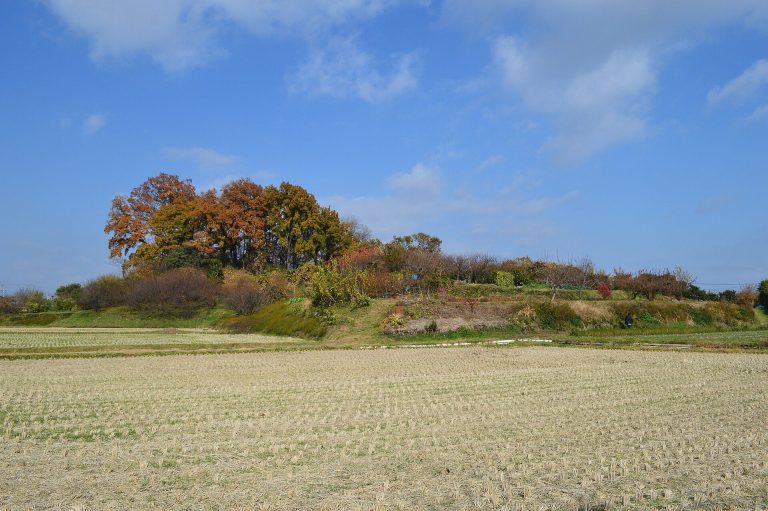
Nanakoshiyama Kofun is a sixth-century burial mound in Fujioka, Japan, built during the Kofun period, the era from roughly the third to the seventh century when monumental Japanese tombs were constructed. It forms part of the Shiroishi Kofun Group and is the largest kofun in Gunma Prefecture.
Construction and regional authority
The mound’s date is supported by the style of its haniwa, clay objects placed on or around burial mounds. One interpretation identifies the buried person as a member of the Owari clan, an ancient kin group associated with Owari, who was sent by the Yamato royal authority to administer the Midorino regional estate. The Yamato authority was the central polity that developed in the Kinai region during the Kofun period. This interpretation rests partly on the mound’s resemblance to Haji Nisanzai Kofun, built in the late fifth century, and on its matching dimensions with Danpuzan Kofun in Atsuta Ward, Nagoya.
The origin of the name
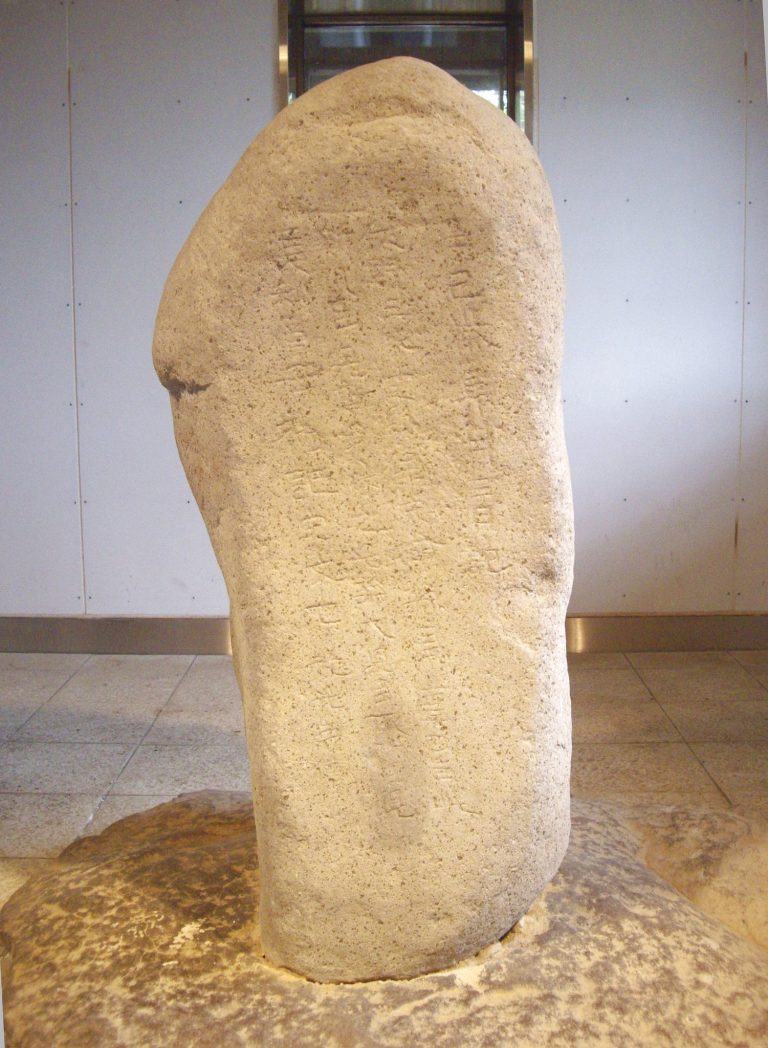
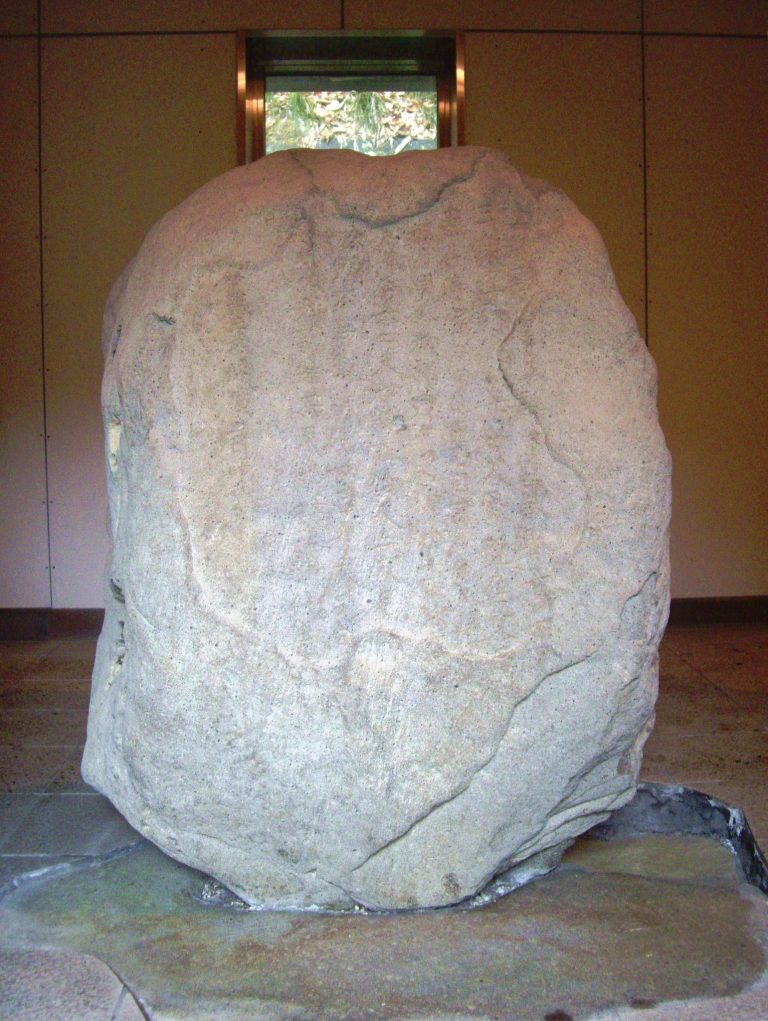
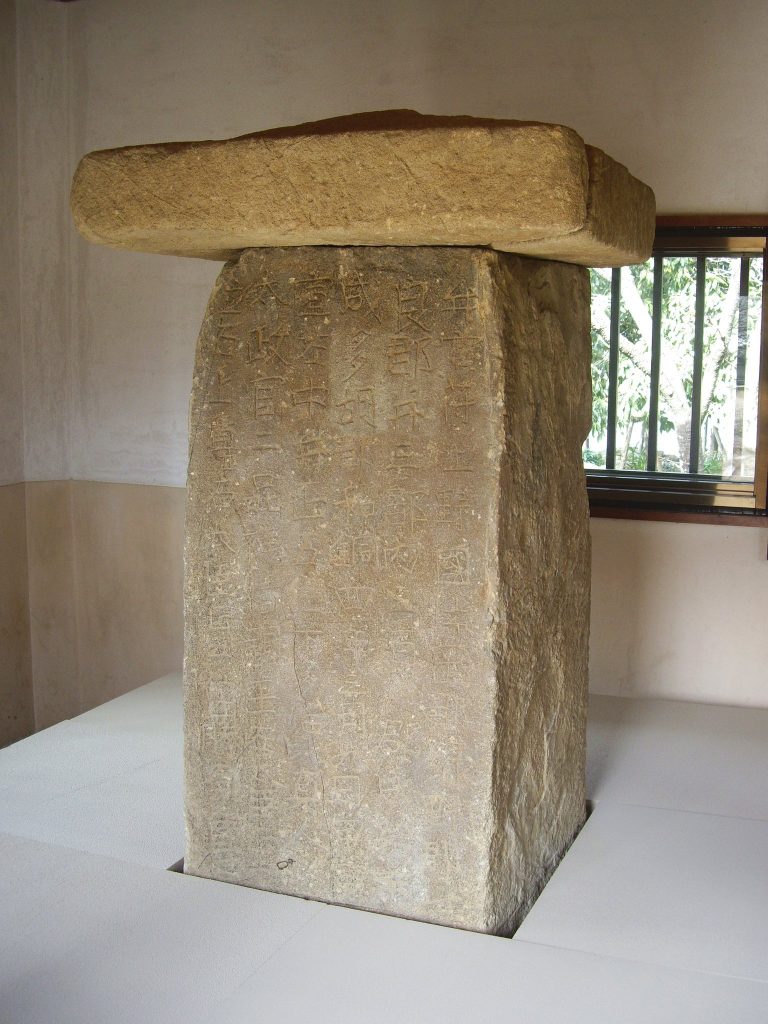
The name Nanakoshiyama comes from a later legend linked to a person associated with the Tago Monument, one of Japan’s three major ancient stone monuments. In the story, this person became an official of Tago District in the early eighth century and later faced a punitive court expedition after plotting rebellion. When the official fled from Yatsuka Castle, seven women associated with him died by suicide at a place called Ochiai. The legend says that each woman was buried in a palanquin, giving the mound its name. The story does not match the mound’s chronology, because the official’s appointment belongs to the early eighth century, while Nanakoshiyama Kofun was built in the sixth century.
Protection and investigation
Nanakoshiyama Kofun became a National Historic Site in 1927, and the protected area was enlarged in 1996. The burial facility has not been excavated. A ground-penetrating-radar investigation in 2017 indicated that a large stone-lined burial chamber lies within the mound.
Remains
Mound and terraces
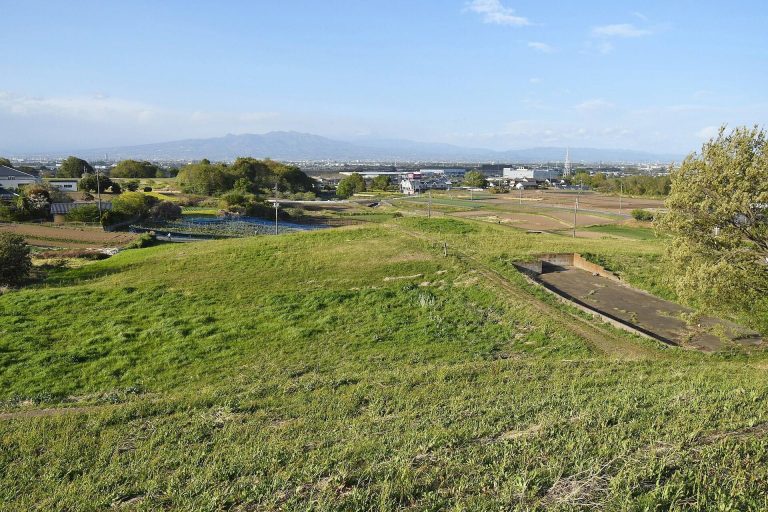
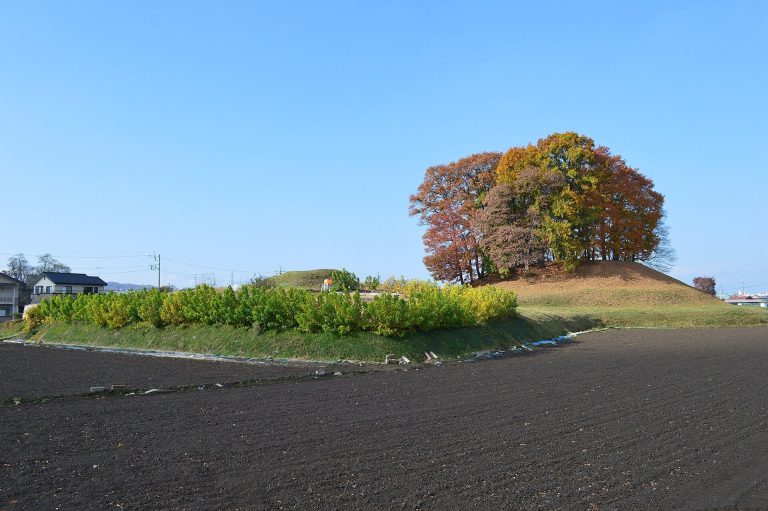
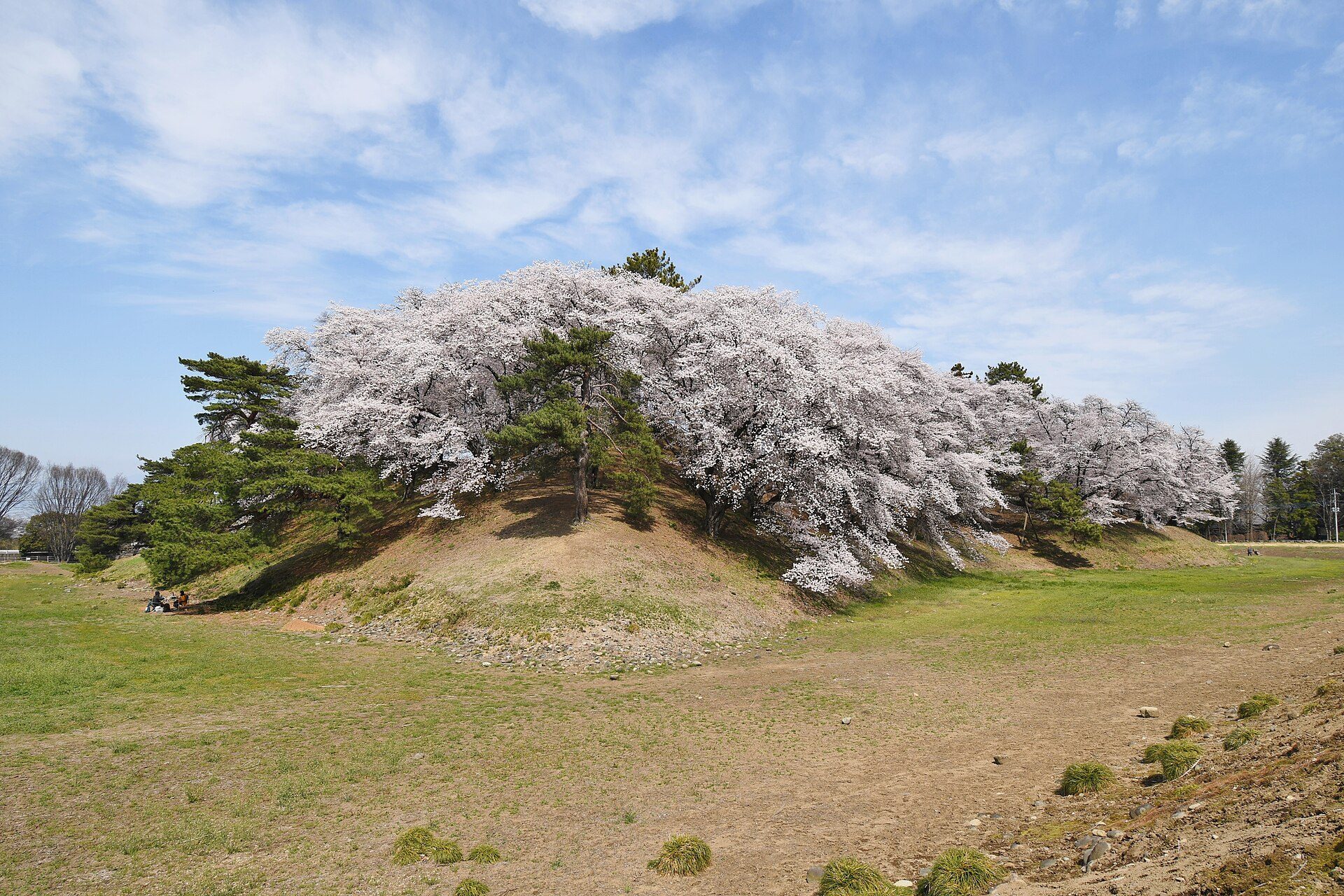
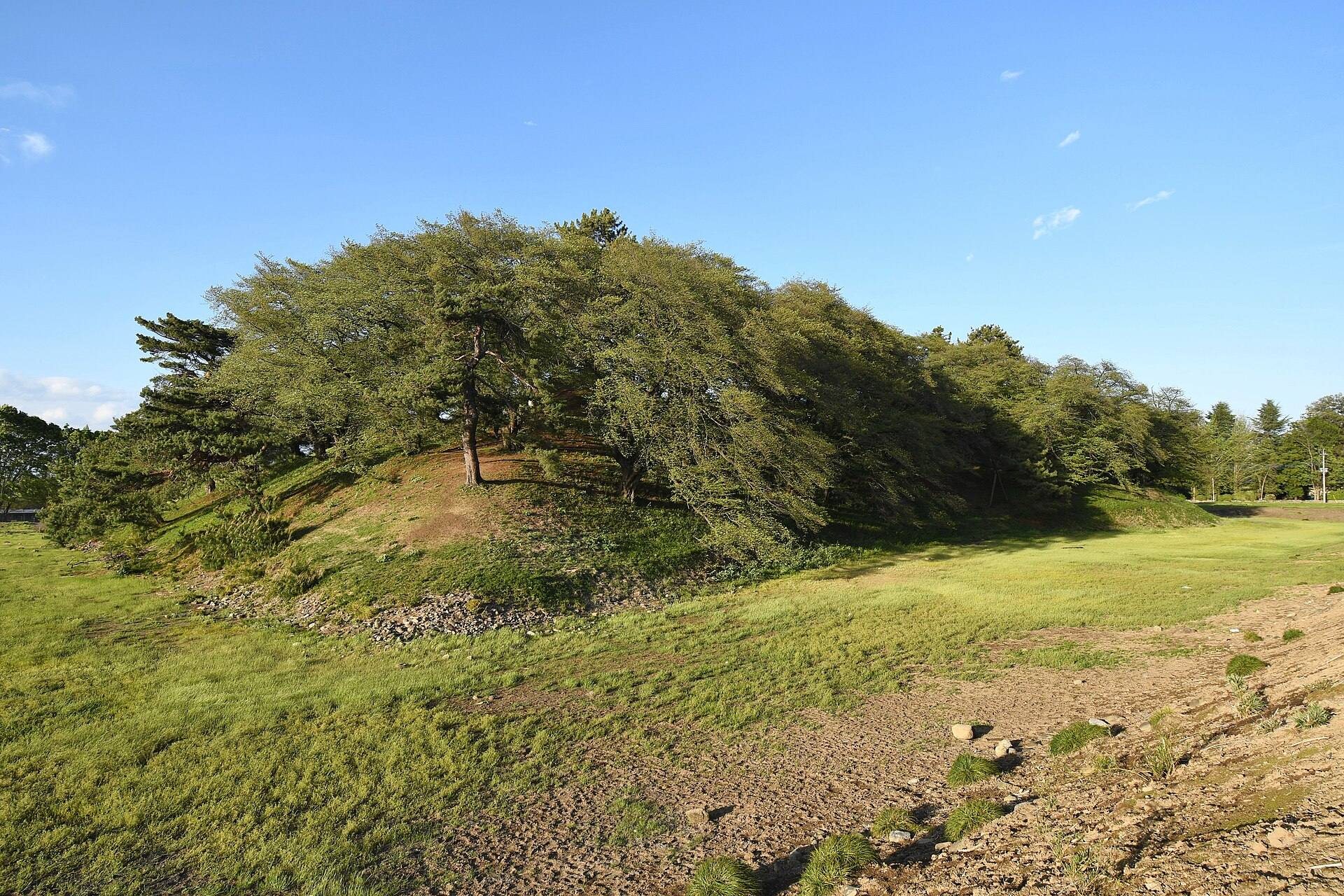
Nanakoshiyama Kofun is a keyhole-shaped mound, combining a circular rear section with a projecting front section. Its total length is 145 metres, although a length exceeding 150 metres has also been proposed. The rear circular section measures 87 metres across and rises 16 metres, while the front section is 106 metres wide and also 16 metres high. The mound was built in three tiers on a tongue-shaped river terrace formed by the Kabura and Ayu rivers southwest of their confluence.
Moats and surface construction
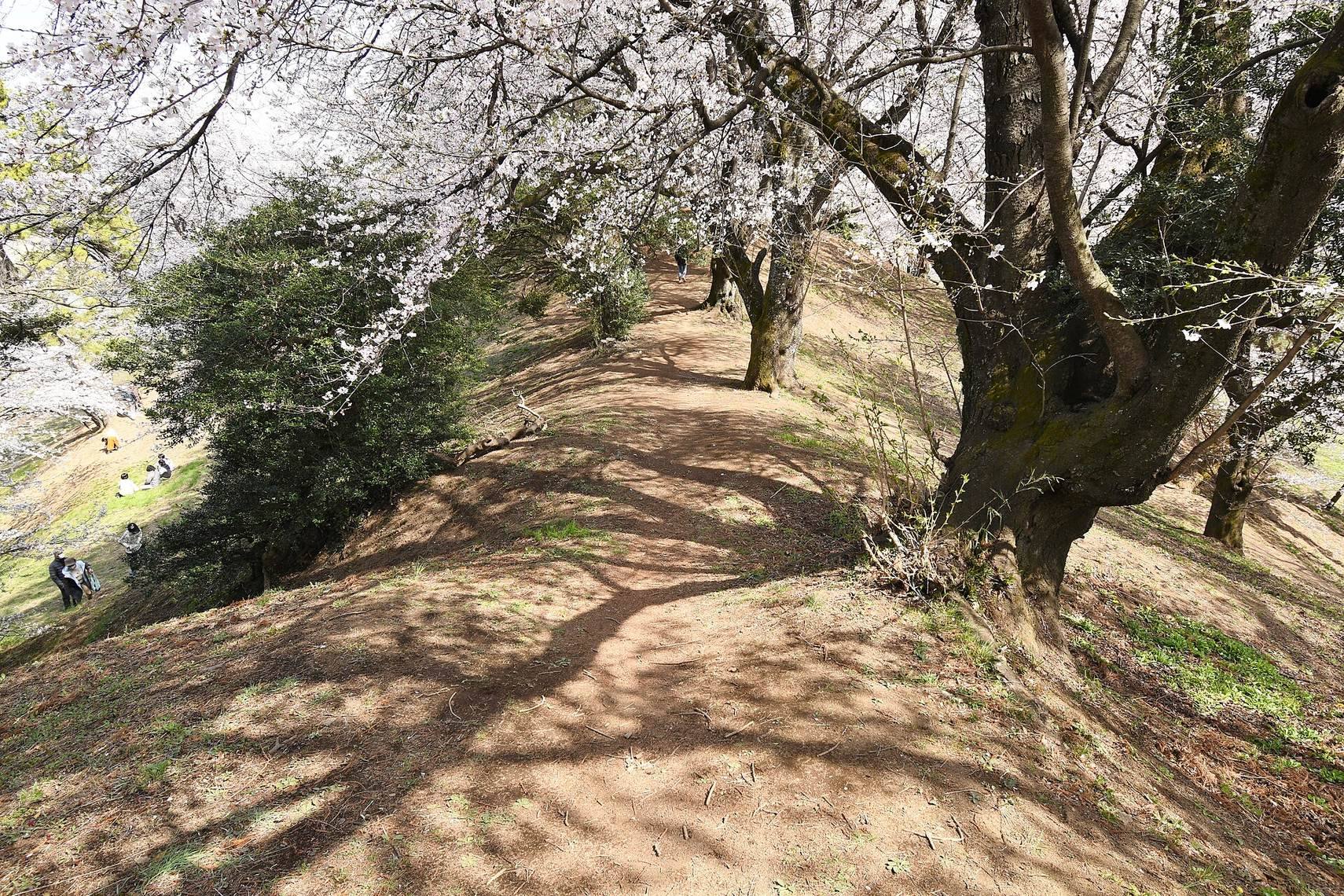
Two embanked concentric moats surround the mound. A third moat was identified on the western side in front of the projecting section, where it follows an approximately C-shaped course. Together, these features form a three-moat system. The embankments had stone facings and rows of haniwa. Stones known as fukiishi, which protected the slopes and finished the mound’s surface, formerly covered the mound. Sakura trees were planted there later.
Haniwa and pottery
The recovered objects include cylindrical haniwa, morning-glory-shaped cylindrical examples, and figures representing people, horses, houses, and shields. The largest cylindrical haniwa exceed one metre in height, with a reported diameter of 50 centimetres and a height of approximately 1.1 metres. Some bear seven projecting bands, attached rims, and bands placed low on the body. Sue ware, a high-fired pottery often made with kiln technology, and Haji ware, generally lower-fired pottery of the Kofun and succeeding periods, have also been found. No burial goods have been recovered.
Burial chamber
The burial facility is presumed to be a horizontal stone chamber, meaning a chamber entered from the side through a passage rather than covered from above during burial. Its exact form and condition remain unconfirmed because the mound has not been excavated. Ground-penetrating radar has nevertheless indicated a large stone-lined chamber within the mound.