Shiroishi Inariyama Kofun: A Kofun-Period Burial Mound in Japan
Site at a Glance
- Rating
- 4.2
- Popularity
- Very Low
- Country
- Japan
- Primary era
- Classical
- Eras represented
- Classical
- Civilizations
- Yamato
- Site type
- Burial
- Remains
- Burial Mound
On this page9 sections
History
Shiroishi Inariyama Kofun is a Kofun-period burial mound in Fujioka, Japan, built by the ancient Japanese society that constructed large elite tombs during the period from approximately the third to the sixth centuries. Its construction was once placed in the first half of the fifth century, but ground-penetrating-radar research carried out from April 2018 to May 2019 showed that the mound dates back at least to the beginning of the fifth century.
Burial Facilities and Archaeological Investigation
An investigation in 1933 identified two burial facilities in the mound’s rear circular section. The Fujioka City Board of Education then surveyed the mound in 1985 and 1986 to establish its extent. Later radar research detected a third burial facility in the front rectangular section and revised the estimated overall length from 140 meters to 155 meters. Because this facility has not been excavated, its internal structure remains unknown.
Heritage Protection and Later Damage
Shiroishi Inariyama Kofun became a National Historic Site in 1993. In 2009, the protected area was enlarged to include Junitenzuka Kofun and Junitenkitazuka Kofun, two nearby burial mounds immediately to the north. Heavy rain brought by Typhoon No. 19 caused an approximately 5-by-8-meter collapse on the northeastern side of Junitenkitazuka Kofun in October 2019.
Remains
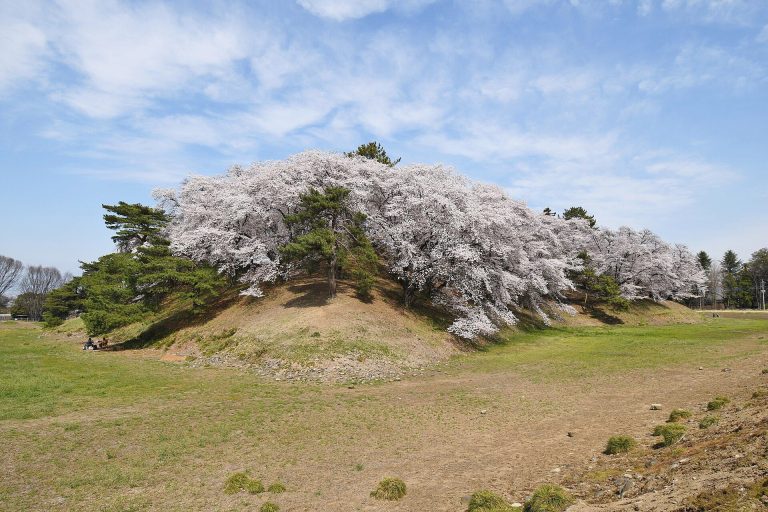
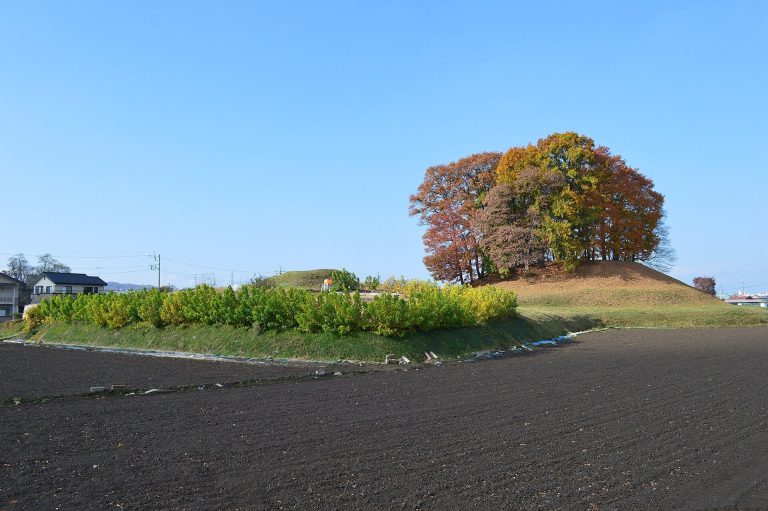
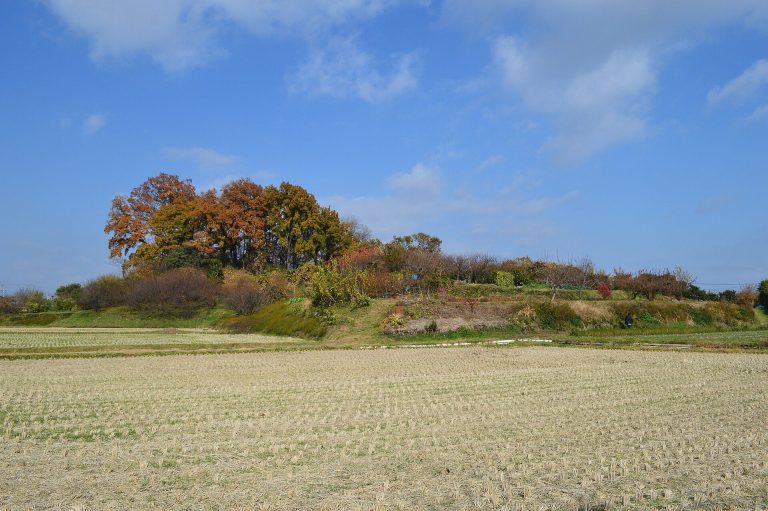
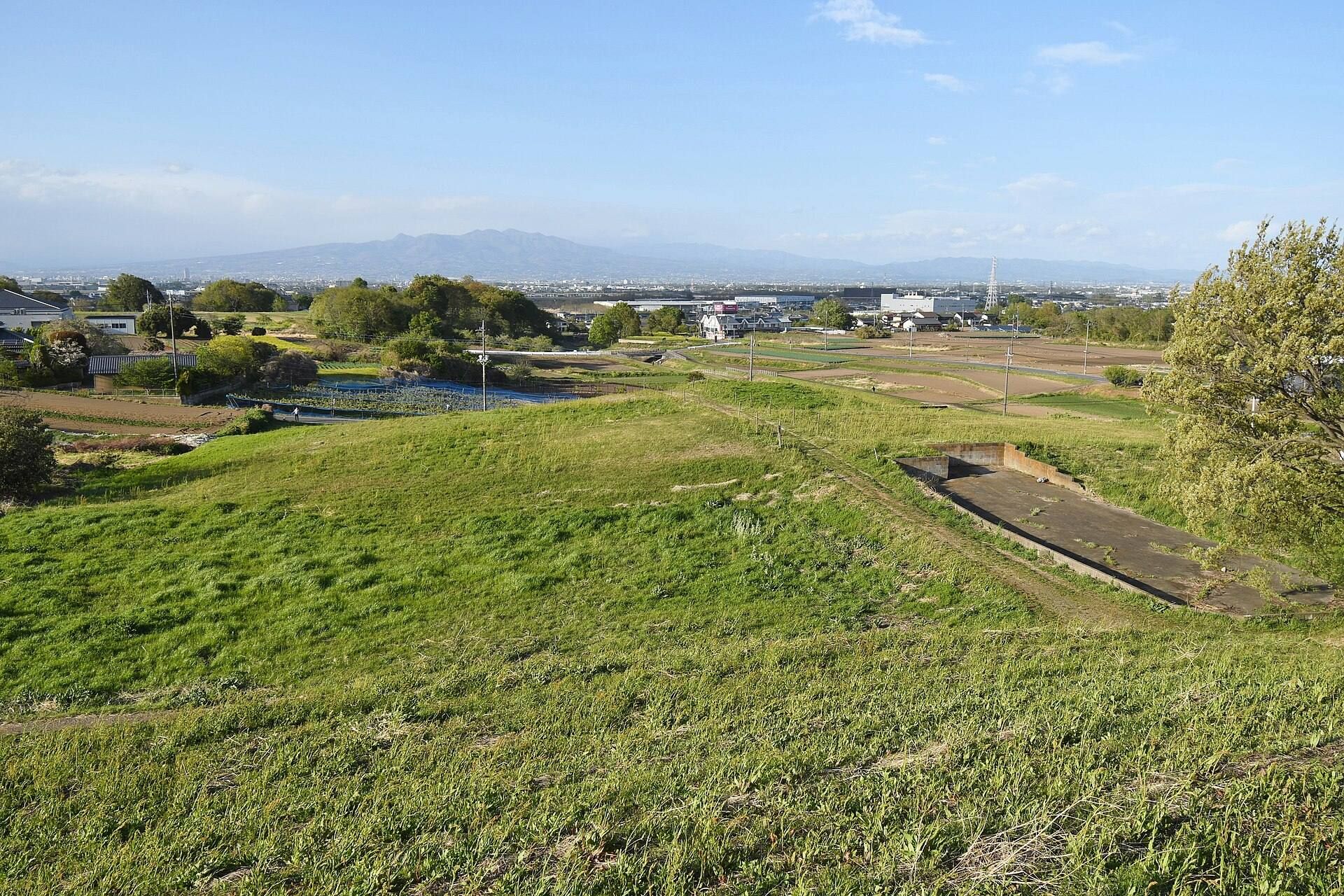
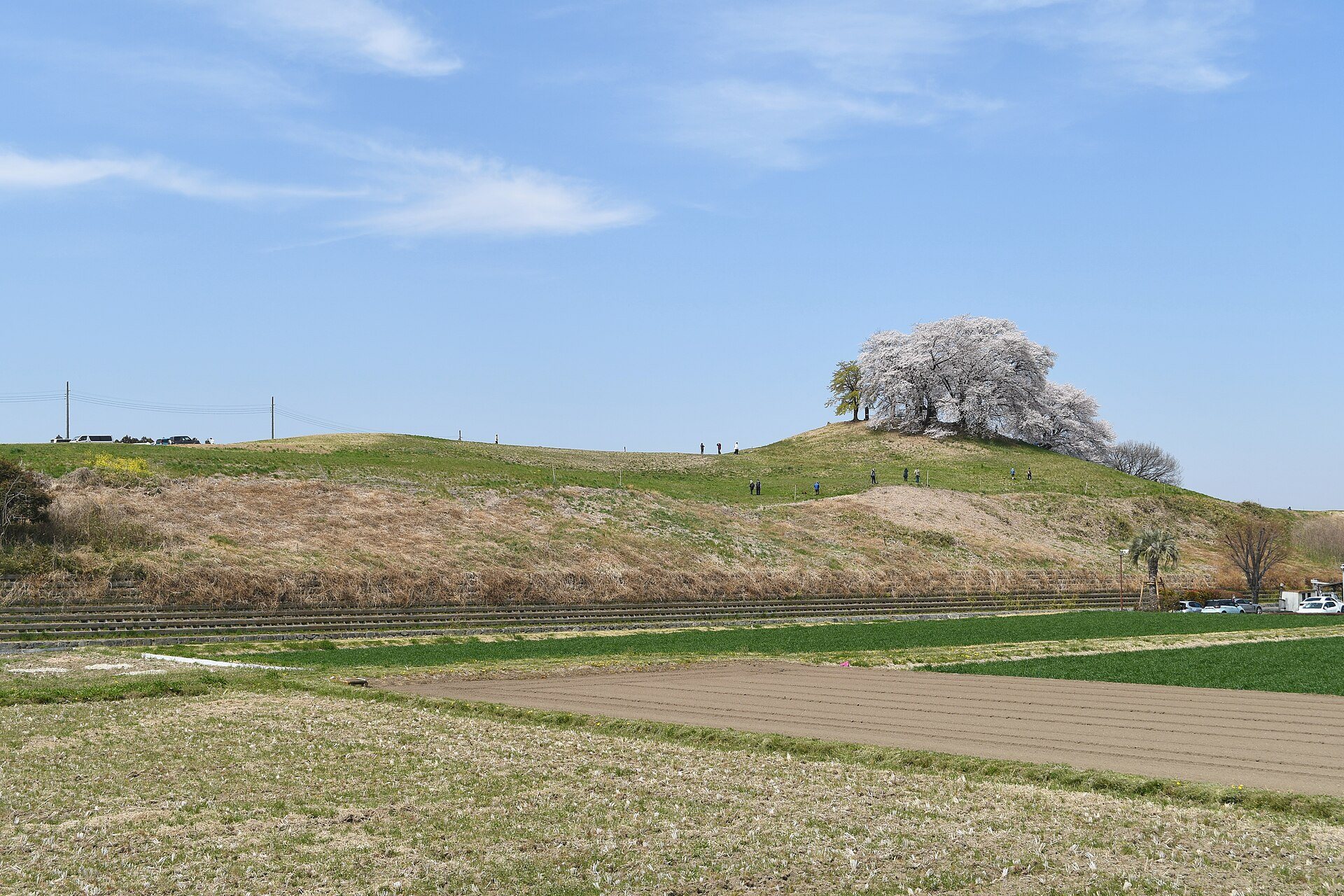
The mound is a keyhole-shaped burial mound, a form that combines a circular rear section with a rectangular front section when viewed from above. It stands on hilly ground at an elevation of about 120 meters, approximately 1.5 kilometers south of the confluence of the Aburagawa and Ayugawa rivers. The mound is 155 meters long. Its rear circular section measures about 92 meters across and rises 13.5 meters, while the front section is approximately 81 meters wide and 8.5 meters high.
Mound Layout and Surface Construction
Shiroishi Inariyama Kofun was built in three tiers. Its narrow connecting section broadens partway along the mound into a plectrum shape, resembling a pick. A surrounding ditch crossed the natural plateau on the north and south sides. On the west, the mound used a natural valley, while a cliff formed its eastern boundary.
Fukiishi, revetment stones laid over a mound to protect and strengthen its slopes, covered the second and third tiers of the rear section. The stones appear to have surrounded the third tier of the front section as well. Haniwa, clay funerary objects placed around or on burial mounds, stood in rows across the surface. Three rows encircled the rear section, while partial rows were identified at the base and on the third tier of the front section. The examples included cylindrical and morning-glory-shaped forms.
Burial Facilities and Associated Objects
Rear Burial Chambers
Two burial facilities occupied the eastern and western ends of the summit of the rear circular section. Each was a pit-style stone burial chamber with a gravel floor, walls made from river stones, and a covering of clay.
Front Burial Facility
Ground-penetrating radar detected another burial facility in the front rectangular section. This non-invasive survey method identifies buried structures and changes in the ground through radar signals. The facility has not been excavated, so its form and construction are not known.
Haniwa and Grave Goods
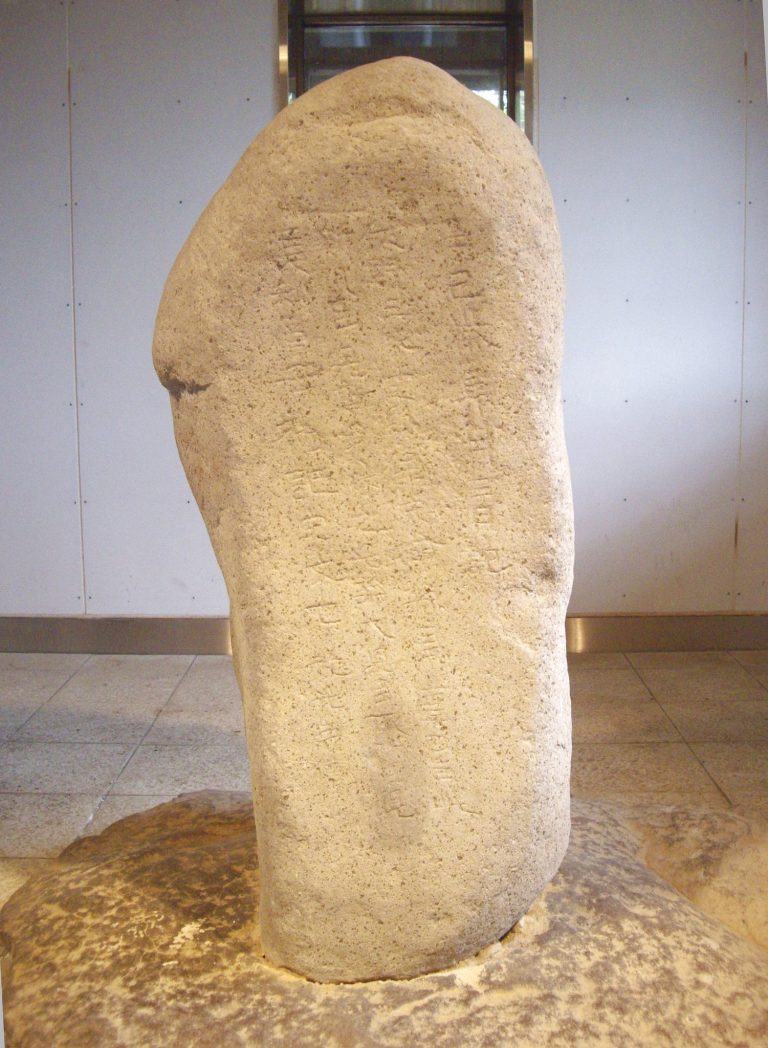
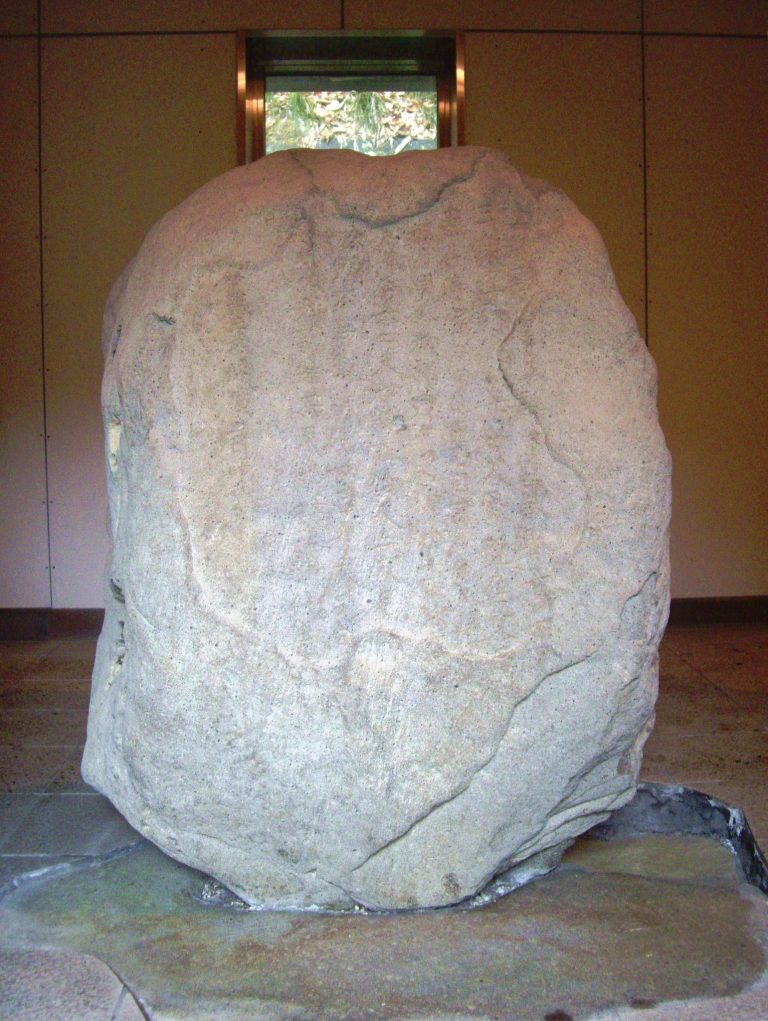
Excavated objects include bronze mirrors, iron weapons, magatama and round beads, numerous stone imitations of everyday objects, and two distinctive stone pillows. The haniwa collection includes cylindrical and morning-glory-shaped examples, houses, a raised warehouse with a hip roof, gabled houses, and a warrior wearing short armor. These haniwa and other grave goods are held by the Tokyo National Museum.