Honji Senju-ji Temple: Original Head Temple of the Takada Branch
Site at a Glance
- Rating
- 4.3
- Popularity
- Low
- Country
- Japan
- Primary era
- Early Modern
- External website
- Open
- Eras represented
- Early Modern
- Civilizations
- Tokugawa
- Site type
- Religious
On this page14 sections
History
Honji Senju-ji is a Japanese Buddhist temple in Moka, Tochigi Prefecture, Japan, founded by Shinran in 1225 as an early center of Jodo Shinshu activity in eastern Japan. It is traditionally regarded within the Takada branch as the only temple established by Shinran himself. The later head temple, Honzan Senju-ji, stands in Mie Prefecture, while Honji Senju-ji remains the original head temple of the branch.
Foundation under Shinran
The temple was founded after Shinran had spent more than ten years teaching in eastern Japan. Ouchi Kuniyuki, the lord of Moka Castle, requested its establishment. Its principal object of worship was a Zenkoji-style image of Amida Buddha accompanied by two attendants, brought from Zenkoji in Shinano Province.
A traditional foundation story says that Shinran slept outdoors on the Banju Stone. During the night, a celestial being appearing as a child instructed him to establish a temple at that place. Shinbutsu, one of Shinran’s leading disciples and traditionally ranked second among his Twenty-Four Disciples, is thought to have administered the new institution.
In 1226, Emperor Go-Horikawa issued a decree naming the temple Senju Amida-dera and recognizing it as an imperial prayer temple, a Buddhist institution appointed to conduct prayers for the court. Shinran then made the temple the center of his activities and is said to have lived and preached there for about seven years before returning to Kyoto. The community that gathered around the temple became the basis of the Takada branch, while Shinran continued to send teaching letters and handwritten books from Kyoto.
Revival and fifteenth-century expansion
After Shinran’s death, the temple declined. It was revived around the middle of the fifteenth century as the teachings of Rennyo, the eighth head of Honganji, helped Jodo Shinshu communities expand. Shin’ne, the tenth abbot, strengthened the revival by spreading the teaching through the Tokai and Hokuriku regions.
Shin’ne received the protection of Utsunomiya Masatsuna, a powerful landholder in Shimotsuke Province. Masatsuna’s sons, Utsunomiya Naritsuna and Shioya Takatsuna, also protected the temple during periods when it had no resident abbot. Around this time, Senju-ji became a subordinate temple of Enryaku-ji’s Eastern Pagoda. Enryaku-ji was the major headquarters of the Tendai Buddhist school on Mount Hiei near Kyoto.
Leadership conflict and the shift to Ise
After Shin’ne died in 1512, a succession dispute divided the community. One faction supported Oshin, Shin’ne’s stepchild and the son of Togashi Masachika. The opposing faction supported Shinchi, an adopted son from the Tokiwa-i-no-miya family who was also an adopted child of Emperor Go-Kashiwabara.
Warfare burned Honji Senju-ji in 1526, and the temple subsequently declined. The conflict and destruction shifted the Takada branch’s center to Muryōju-in in Ise, a temple founded by Shin’ne. That institution became known as Honzan Senju-ji, and leadership of the branch moved from Honji Senju-ji to the temple in Mie.
Edo-period rebuilding and preservation
Honji Senju-ji was rebuilt during the Edo period, with its Zenkoji-style Amida triad continuing as the principal object of worship. In 1638, a wooden portrait of Shinran known as the “life-size portrait” was transferred there from Honzan Senju-ji in Ise. The precincts were designated a National Historic Site in 1967, and several of the temple buildings are National Important Cultural Properties.
Remains
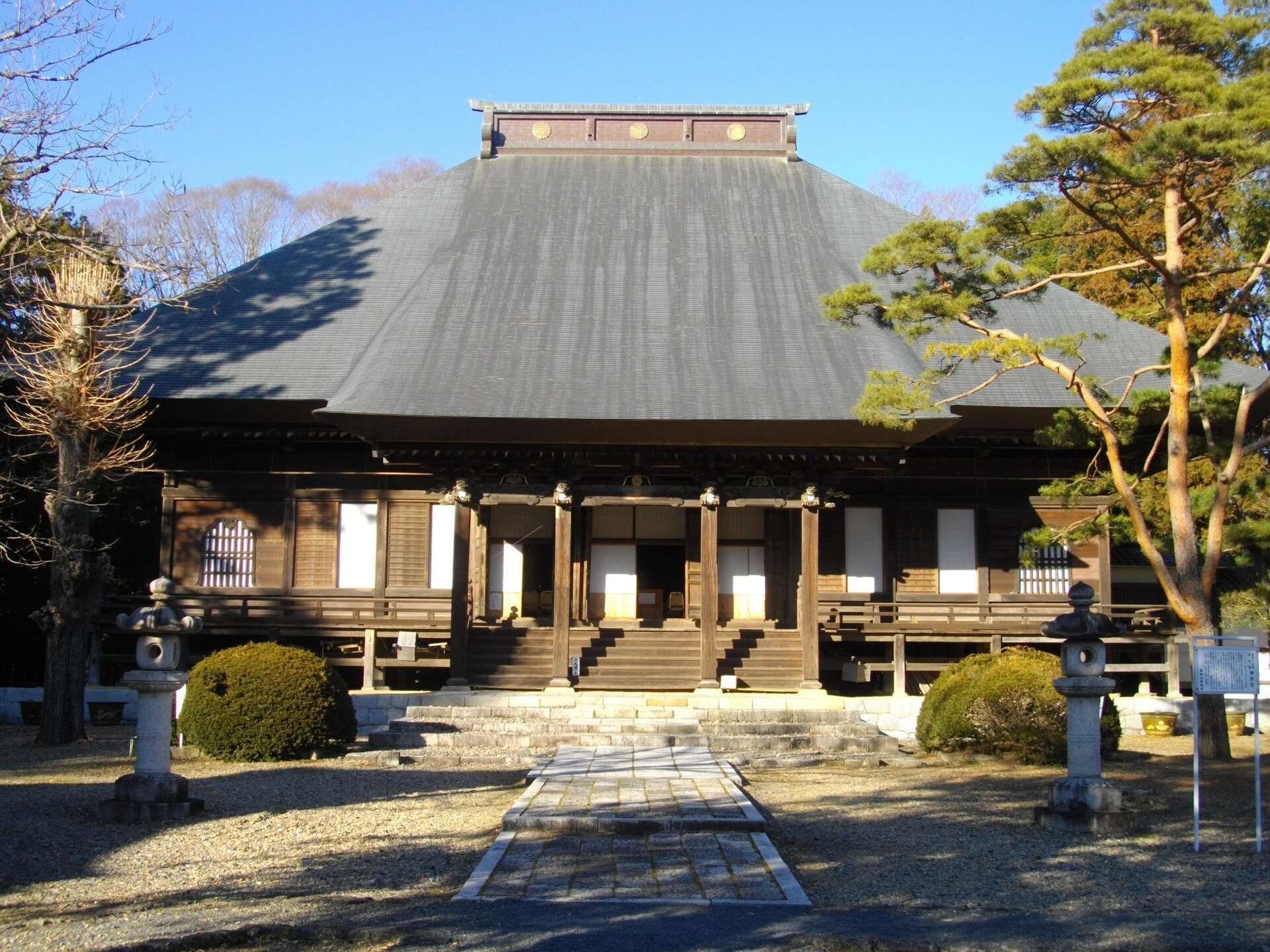
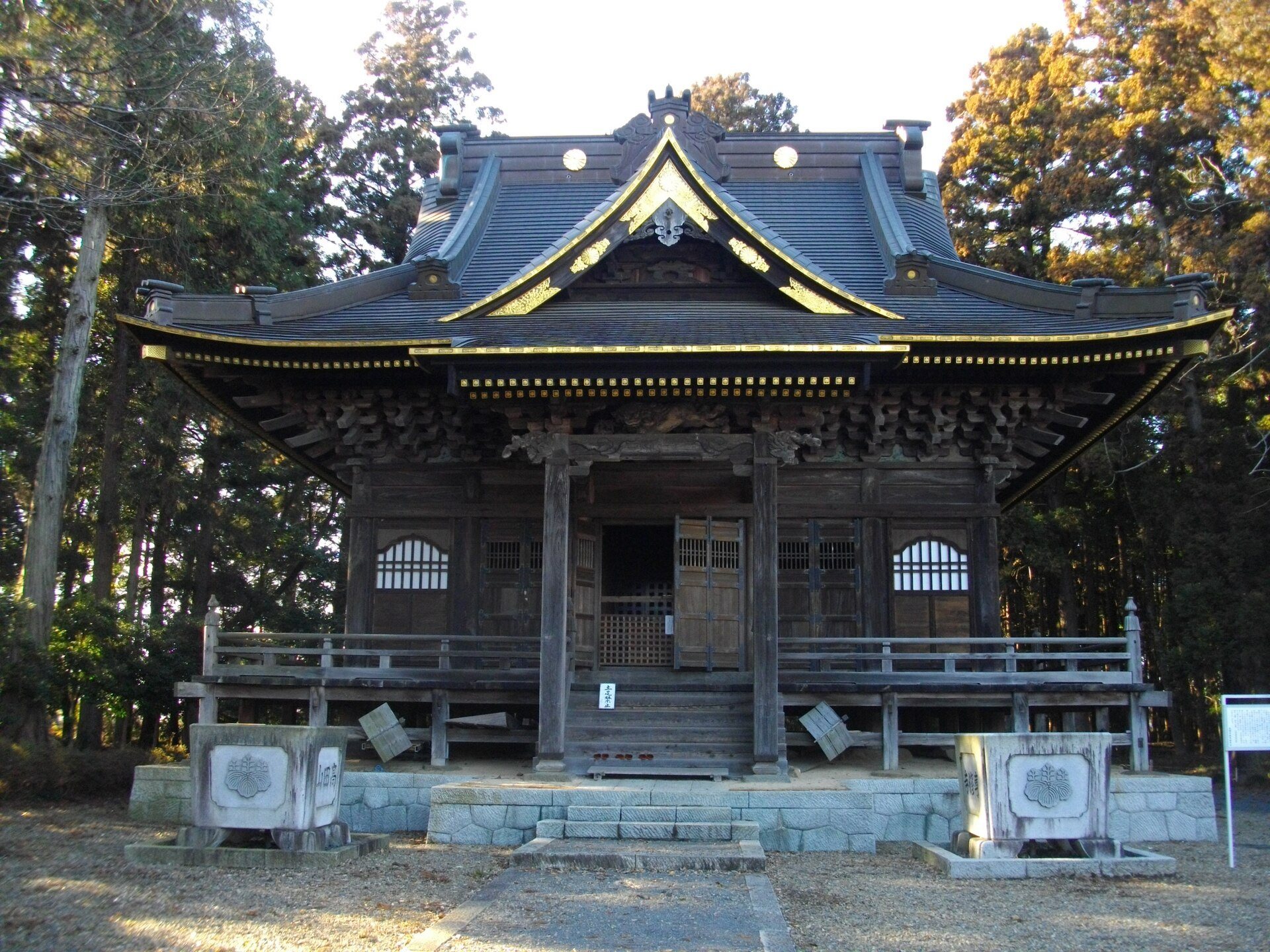
The present complex at Takada bears the mountain name Takadayama and derives mainly from early Edo-period reconstruction. Its documented buildings include the Miei-do and Nyorai-do, together with the Romon or Sanmon and the Somon gates. The precinct also preserves the Banju Stone, while the reconstructed Mitani Hermitage lies about two kilometers southeast of the temple.
Principal buildings and precinct features
Miei-do
The Miei-do, a principal building of the rebuilt complex, dates to 1743. It forms part of the surviving group of temple structures that includes the Nyorai-do and the two named gates.
Nyorai-do and gates
The Nyorai-do stands within the same reconstructed precinct. The Romon, also called the Sanmon, and the Somon provide the documented gate structures of the complex.
Banju Stone and Mitani Hermitage
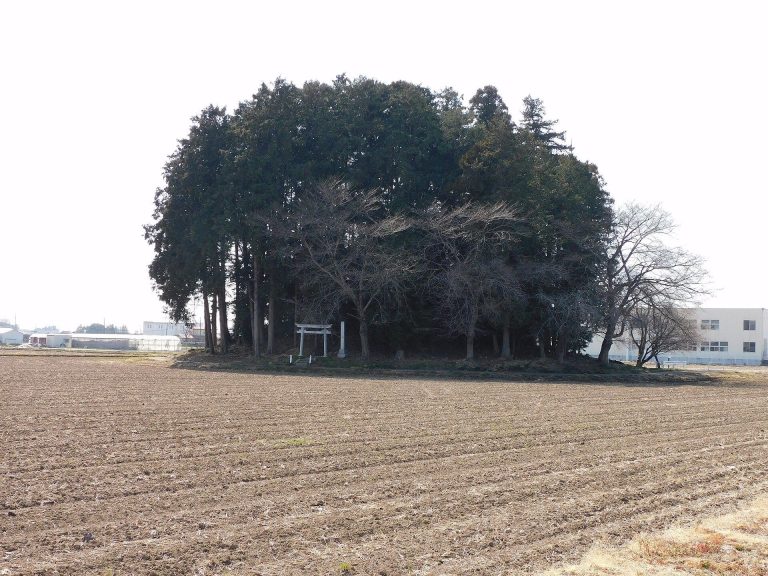
The Banju Stone lies approximately 200 meters northeast of the temple and is traditionally associated with the vision that led to Shinran’s foundation of Senju-ji. The reconstructed Mitani Hermitage stands about two kilometers southeast and is traditionally identified as Shinran’s temporary residence while the temple was being built.
Sculpture and devotional images
Amida images
The principal object of worship is a Zenkoji-style Amida triad, consisting of Amida Buddha with two attendant figures and also known as the One-Light Three-Buddha image. A wooden substitute image of the triad is also associated with the temple. A separate wooden standing image of Amida Buddha, identified as the temple’s household Buddhist image and shown in a preaching form, dates from the later Kamakura period.
Images of Kenchi and Shinbutsu
A wooden seated statue of Kenchi bears an inscription naming Dōe and Enkei and giving the date 1310. An associated wooden seated statue of Shinbutsu carries an inscription dated 1480.
Other wooden images
The temple preserves a wooden Namu-butsu Prince image, a devotional representation of Prince Shotoku as a child, dating from the fourteenth century. It also has a wooden reclining Buddha made in 1702 by Kyūbei of Yushima in Edo.