Nishinorikura Kofun: A Keyhole-Shaped Burial Mound in Japan
Site at a Glance
- Rating
- 3.6
- Popularity
- Very Low
- Country
- Japan
- Primary era
- Classical
- External website
- Open
- Eras represented
- Classical
- Civilizations
- Yamato
- Site type
- Burial
- Remains
- Burial Mound
On this page7 sections
History
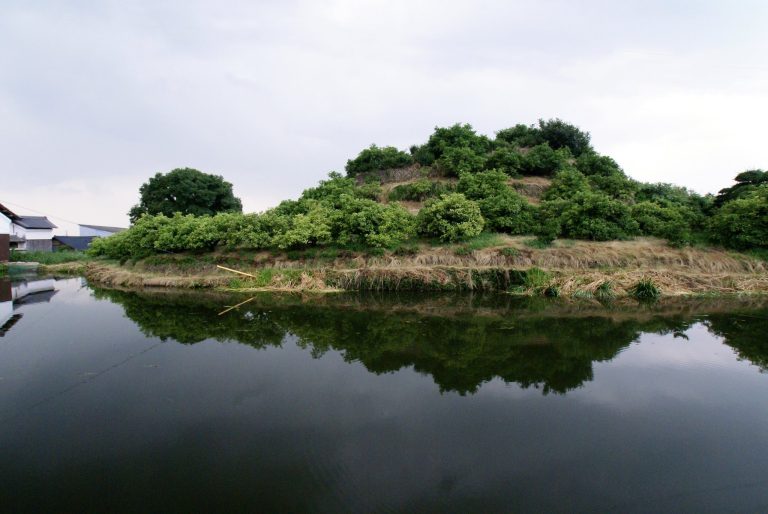
Nishinorikura Kofun is a large keyhole-shaped burial mound in Japan, located in Tenri, Nara, and built during the late fifth century in the final part of the Middle Kofun period. The Kofun period, generally dated from the third to the sixth centuries, was marked by the construction of large burial mounds for powerful elites. Nishinorikura Kofun was among the largest such monuments after royal tombs.
Formation within the Somanouchi group
The mound stands at the eastern edge of the Nara Basin as part of the Somanouchi Kofun Group. It forms a group with East Norikura Kofun and another nearby tomb. Several nearby kofun from the first half of the Late Kofun period have been proposed as burials of chiefs of the Mononobe clan, a powerful ancient Japanese clan associated with military affairs and the defense of indigenous religious practices.
Surveys and modern history
Nishinorikura Kofun appears in an illustrated survey of ancient tombs compiled in 1893. The Tenri University Historical Research Society carried out a mound survey in 1970, followed by archaeological investigations south of the mound in 1981, on its western level ground in 1999, in fiscal year 2012, and in fiscal year 2014 to confirm the site boundary. An aerial laser survey followed in fiscal year 2015.
During the Imperial Army Special Maneuvers in 1932, Emperor Showa, who reigned from 1926 to 1989, supervised the entire army from an outdoor command post established on the mound. Nishinorikura Kofun became a national historic site on February 13, 2018. It was added to the previously designated Nishiyama Kofun site, whose name was changed to the Somanouchi Kofun Group designation.
Remains
Mound form and construction
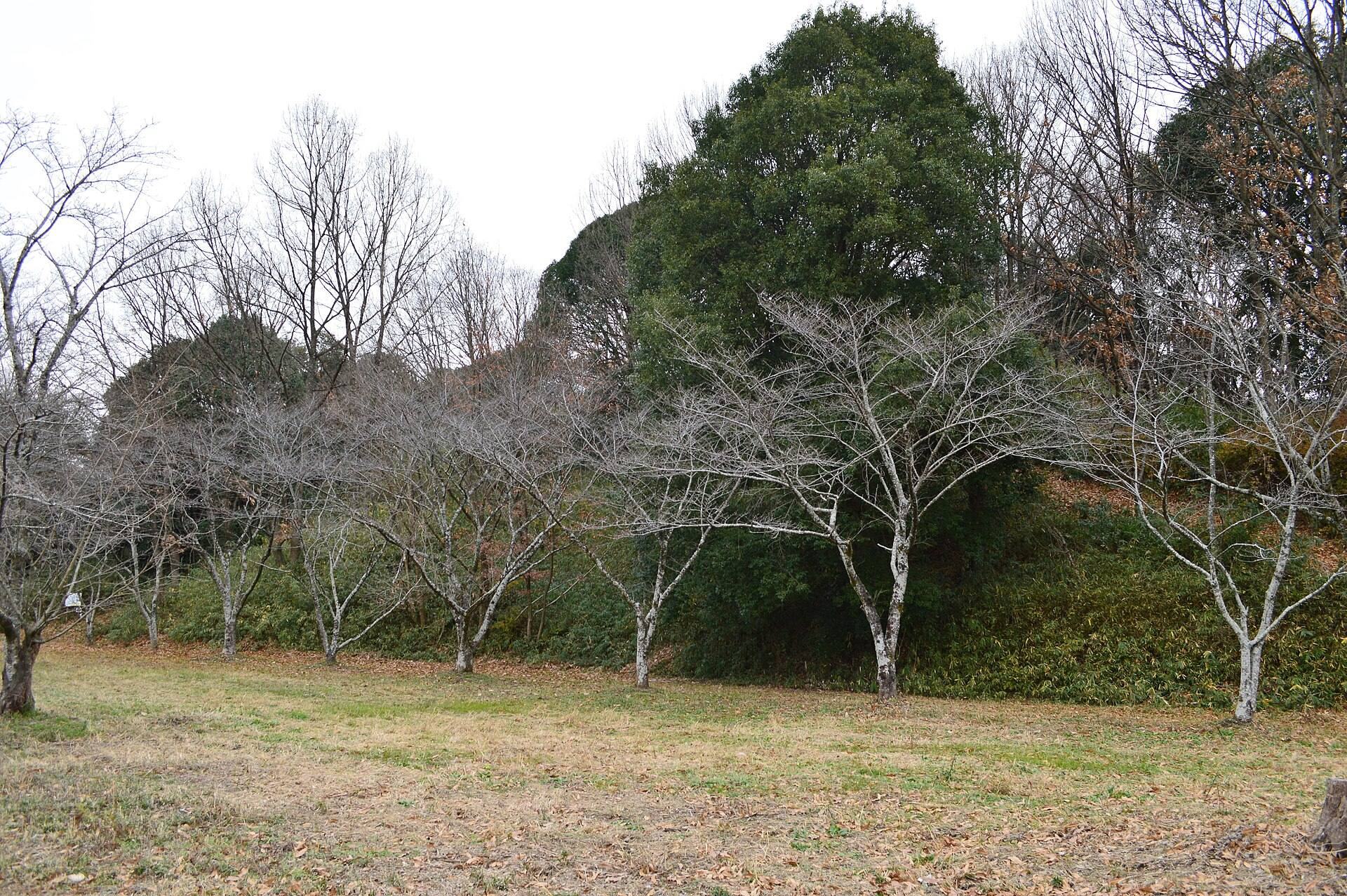
Nishinorikura Kofun is a keyhole-shaped kofun, a monumental Japanese burial mound combining a circular rear section with a projecting square front section. Its square front points south, and the mound was made by cutting across the lower part of a hill that runs from east to west. The monument is approximately 118 meters long. Its rear circular section measures about 66 meters across and rises 15.5 meters, while the front section is about 88 meters wide and 16 meters high.
The rear section was probably built in two tiers, and the entire mound is also considered likely to have had two tiers. Projections extend from both the eastern and western sides of the narrow junction between the front and rear sections. Nishinorikura Kofun is the second-largest mound in the Somanouchi Kofun Group.
Moats, embankments, and western platform
An inner moat and an outer embankment surrounded the mound. Both have become buried and now form level ground, extending the monument’s overall north-south span to approximately 165 meters when included with the mound. A ditch identified south and east of this level ground may represent an outer moat, suggesting that the tomb may once have had two surrounding moats.
At the foot of the mound on the western side is a platform-like level area measuring approximately 20 to 30 meters from east to west and 130 meters from north to south. Excavation indicates that this area was created when the inner moat and outer embankment were buried.
Haniwa and burial evidence
Cylindrical and figural haniwa were excavated from the exterior of the mound. Haniwa are fired-clay objects placed on or around burial mounds; cylindrical examples commonly marked the outer edge, while figural examples could represent people, animals, buildings, and other forms. Excavated materials also include Sue ware, a high-fired ceramic often made in climbing kilns, and Haji ware, a lower-fired earthenware tradition of the Kofun period.
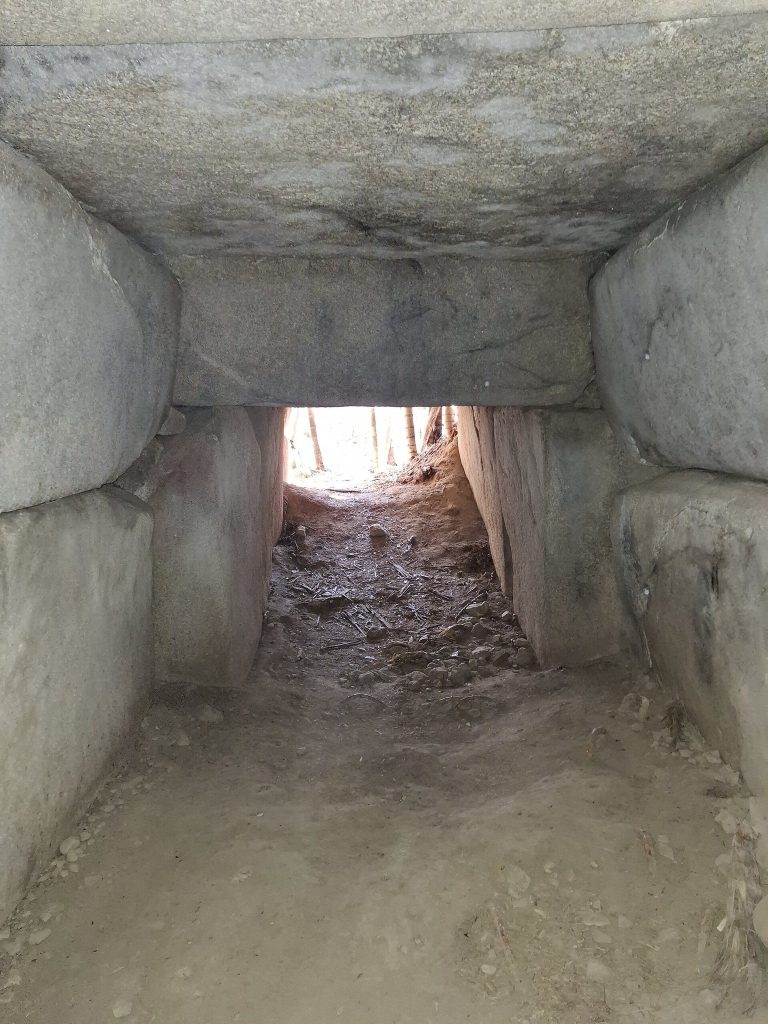
The burial facility itself has not been confirmed, although a horizontal stone chamber has been proposed. Such a chamber would have been entered through a passage running horizontally into the mound. The full range of burial goods is likewise not known, leaving the excavated ceramics and haniwa among the principal materials available for interpreting the monument.