Honshō-ji Temple: A Fortified Jōdo Shinshū Temple in Japan


Site at a Glance
- Rating
- 4.2
- Popularity
- Low
- Country
- Japan
- Primary era
- Early Modern
- External website
- Open
- Eras represented
- Medieval, Early Modern
- Civilizations
- Tokugawa
- Site type
- Religious
- Remains
- Temple
On this page12 sections
History
Honshō-ji Temple is a Japanese Buddhist temple in Anjo, Japan, founded around 1206 by Kyouen, a disciple of Shinran, the founder of the Jōdo Shinshū Buddhist tradition. The temple belongs to the Ōtani-ha branch of Jōdo Shinshū, which emphasizes reliance on the vow and compassion of Amida Buddha. It is also known as Nodera Gohon-bō, a name that identifies it as a principal temple or head-temple residence in the Nodera area.
Medieval Religious Authority
Honshō-ji, Jōgū-ji, and Shōman-ji were regarded as the three principal Jōdo Shinshū temples of Mikawa. They served as major branch-temple authorities, giving the three institutions an important religious position in the region. Honshō-ji also had a subordinate temple among the group known as the three Hama temples.
During Japan’s Sengoku period, an era of political fragmentation and warfare from the fifteenth to the late sixteenth century, Honshō-ji became one of the strongholds of the Mikawa Ikkō-ikki. These were leagues of Buddhist followers, local warriors, and other supporters who organized around Pure Land Buddhist institutions and could exercise military and political power. The temple community possessed considerable regional influence. In 1549, 115 warrior followers signed a covenant associated with Honshō-ji.
Destruction, Abandonment, and Revival
The Mikawa Ikkō-ikki was defeated at the Battle of Azukizaka and the Battle of Ogawa in 1564. After the movement’s leader fled, Honshō-ji temporarily ceased to function as a temple and remained abandoned for about a century. Its later revival had taken place by 1663, reportedly through an order from Shogun Tokugawa Ietsuna. A shogun was Japan’s supreme military ruler, and the restored temple served as a place of prayer for the prosperity of the Tokugawa clan.
During the Edo period, which followed the Sengoku era under Tokugawa rule from 1603 to 1868, Honshō-ji maintained close ties with the Edo shogunate and the Owari-Tokugawa family, one of the principal branches of the Tokugawa ruling house. These connections included formal audiences held when the shogun and the head of the Owari-Tokugawa family succeeded to their positions.
The temple grounds were designated a National Historic Site of Japan in 2015. Its surviving Edo-period buildings are also protected as Aichi Prefectural Important Cultural Properties.
Remains
Fortified Layout and Construction
Honshō-ji preserves a rare surviving example of a fortified Buddhist temple complex from the Sengoku period. Its layout followed the pattern of a flatland-style Japanese castle, with high walls, two concentric moats, earthen ramparts, and corner yagura, or tower-like fortification structures. At Honshō-ji, these towers served as installations for drums or bells.
Moats and Ramparts
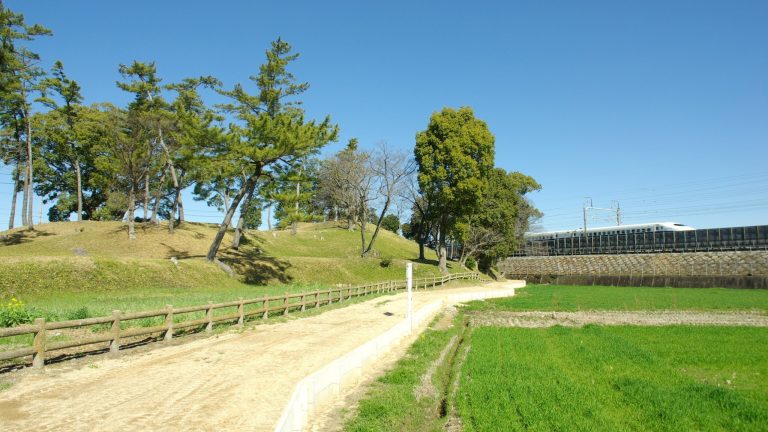
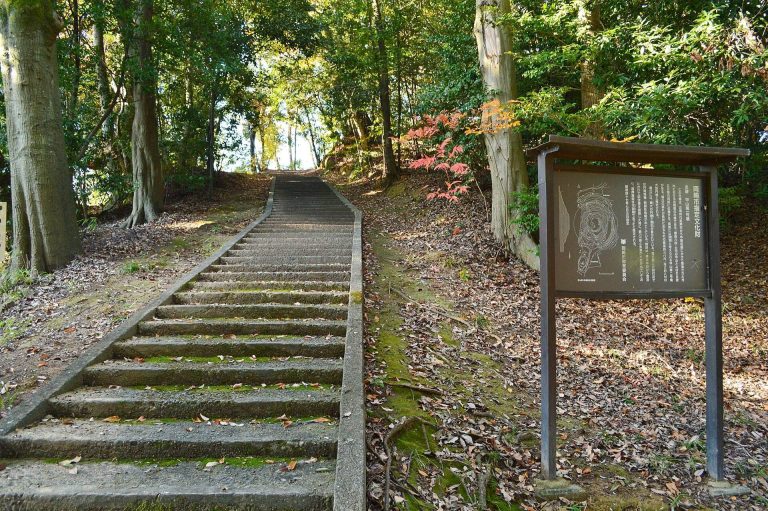
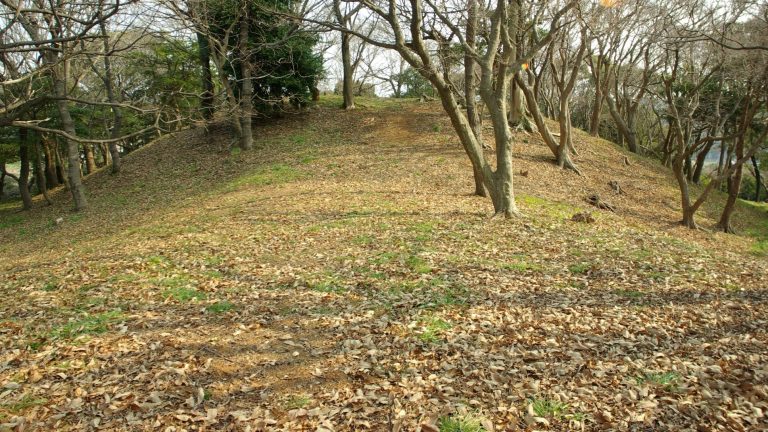
The complex is enclosed by a water moat and includes earthen defensive embankments. The outer moat has been buried beneath modern urban development, while approximately half of the inner moat survives. Together with the walls and ramparts, these features preserve the defensive organization of the temple compound.
Temple Towers
A drum tower remains within the complex, forming part of the fortified temple arrangement. The surviving towers reflect the adaptation of castle-like structures for religious and practical purposes, including the sounding of drums and bells.
Edo-Period Buildings
Main Hall
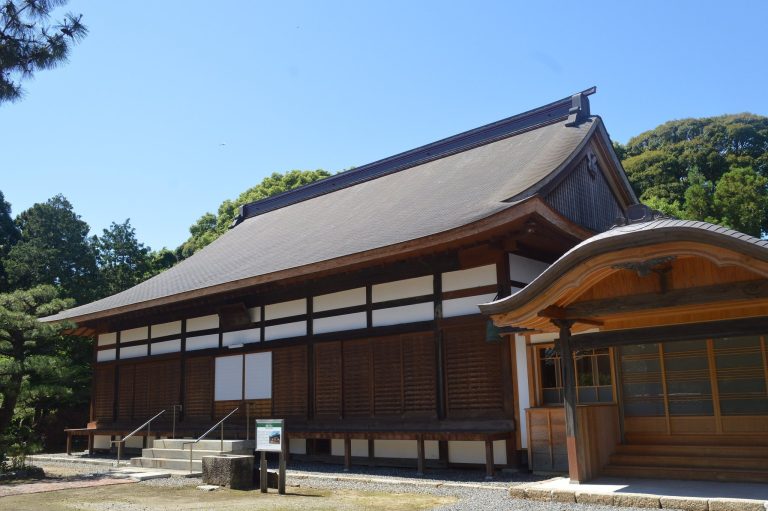
The Main Hall dates from 1663, the year associated with Honshō-ji’s revival. It is part of the group of surviving Edo-period buildings that gives the present temple grounds their architectural character.
Bell and Drum Towers
The Bell Tower was built in 1703, while the Drum Tower dates from 1760. Both structures belong to the temple’s continuing development under Tokugawa rule and retain the functions associated with the towers in the fortified complex.
Sutra Library and Gates
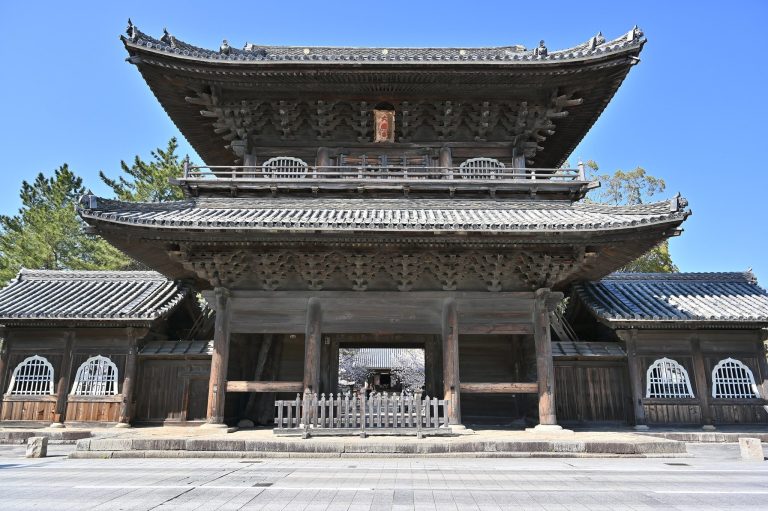
The Sutra Library was built in 1823. The gates date from approximately 1700 and form part of the surviving architectural fabric of the grounds. The temple complex covers approximately 33,000 square metres.
Religious and Artistic Heritage
The principal image at Honshō-ji is a standing statue of Amida Nyōrai, also called Amitabha Buddha, the central Buddha of Pure Land Buddhism and a figure associated with the Western Pure Land. A traditional story says that Shinran once stayed in the temple’s study. According to the story, rain leaked as far as the ceiling space but did not enter the room, giving the building its traditional designation as the “Rain-Leak Palace.”
Two paintings from the Kamakura period are associated with Honshō-ji. One depicts Prince Shōtoku, while the other depicts the principal images of Zenkō-ji. Both paintings are registered as Important Cultural Properties of Japan.