Seiunji Temple: A Rinzai Buddhist Temple in Japan


Site at a Glance
- Rating
- 4.2
- Popularity
- Low
- Country
- Japan
- Primary era
- Medieval
- External website
- Open
- Eras represented
- Medieval, Early Modern
- Civilizations
- Ashikaga shogunate
- Site type
- Religious
- Remains
- Monastery
On this page17 sections
History
Seiunji Temple is a Rinzai Buddhist temple in Koshu, Japan, founded in 1348 during the Northern and Southern Courts period, the fourteenth-century conflict between rival imperial courts. It belongs to the Kenchoji branch of Rinzai, a Zen school emphasizing disciplined meditation and direct religious insight. The temple was established by Gokkai Honjo as a place to practice the teachings of his Chinese master Puo Kokushi, and it remains associated with the religious and political history of the Kai region.
Foundation and Chinese Chan connections
Honjo traveled to the Yuan dynasty, the Mongol-led dynasty that ruled China from 1271 to 1368, in 1318 with five companions. At Tianmu Mountain, an important Chinese center of Chan, the tradition that developed into Zen in Japan, he studied under Puo Kokushi and received certification from his master. Honjo returned to Japan in 1326, then spent more than 20 years traveling in search of a suitable place for religious practice.
He founded the temple on a mountain then called Mount Tokusayama. Because its scenery reminded him of Tianmu Mountain, he named the institution Tenmoku Mountain Gokoku Zenji. Its mountain name is now Tenmokuzan, while its principal image is Shakyamuni Buddha. The temple was also originally known as Gokoku Zenji. Honjo strongly criticized the influential Japanese Zen master Muso Soseki and his school, placing Seiunji within the religious debates of medieval Japanese Buddhism.
A tradition about Honjo’s early practice tells that he placed an image of Puo Kokushi in a rock cave, meditated beneath a tree, maintained little contact with local residents, and used a cow as a messenger. He died four years after the temple was founded. These traditions emphasize the austere form of religious practice associated with the temple’s founder.
Takeda patronage and memorial history
After Honjo’s death, Seiunji prospered under the protection of the Takeda clan, the military governors of Kai. The mountain gradually became known as Tenmokuzan. Seiunji was paired with Kogenji in Hyogo Prefecture under the designations Eastern Tenmoku and Western Tenmoku.
In the early fifteenth century, Takeda Nobumitsu, the thirteenth head of the Takeda clan and military governor of Kai, took his own life in the mountain. The Muromachi shogunate had attacked him because he supported the Uesugi Zenshu Rebellion, an uprising against shogunal authority. Nobumitsu’s remains were reportedly brought to Seiunji for burial. His funerary monument and the memorial stones for retainers who died with him preserve this connection between the temple and the Takeda house.
Takeda Shingen is traditionally said to have presented Seiunji with a military banner, a command fan, and a military camp mirror. These objects associate the temple with the later Takeda leadership and its military culture.
Destruction, protection, and later history
The temple buildings were burned in 1592 in a fire attributed to the Oda family, near the end of the Warring States period, the era of political fragmentation and warfare that preceded Tokugawa consolidation. The monastic quarters were rebuilt in the same year.
In 1583, after the destruction of the Takeda clan, Tokugawa Ieyasu guaranteed temple lands valued at approximately three kanmon, a historical monetary unit, and issued three prohibitory articles protecting Seiunji. Ieyasu later founded the Tokugawa shogunate. In 1643, his grandson Tokugawa Iemitsu, the third shogun, issued a vermilion-seal document, a shogunal authorization marked with a red seal, confirming the temple’s land grant. A land survey in 1716 recorded approximately 20 koku, a unit used to assess land or agricultural yield, in vermilion-seal land.
Seiunji held a six-hundredth memorial service for Takeda Nobumitsu on October 2, 2016. The temple and associated features have nationally, prefecturally, and municipally protected cultural-property status. Its garden is designated a prefectural place of scenic beauty. These recognitions cover the temple’s historical buildings, sculpture, garden, and other material remains.
Remains
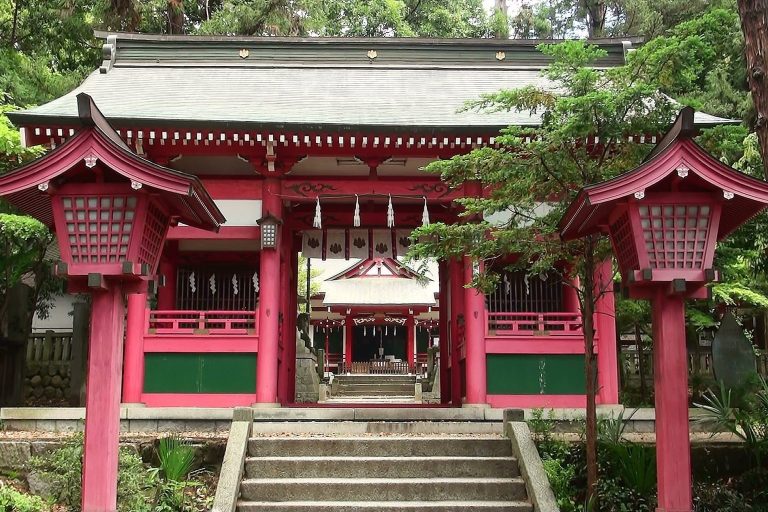
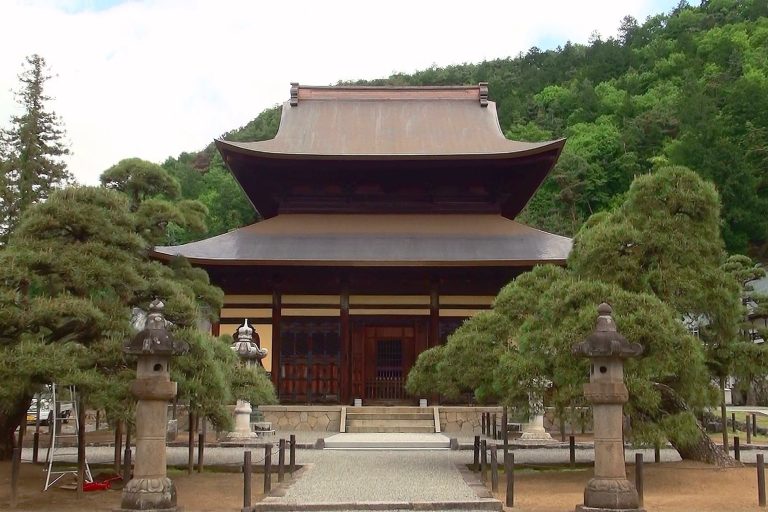
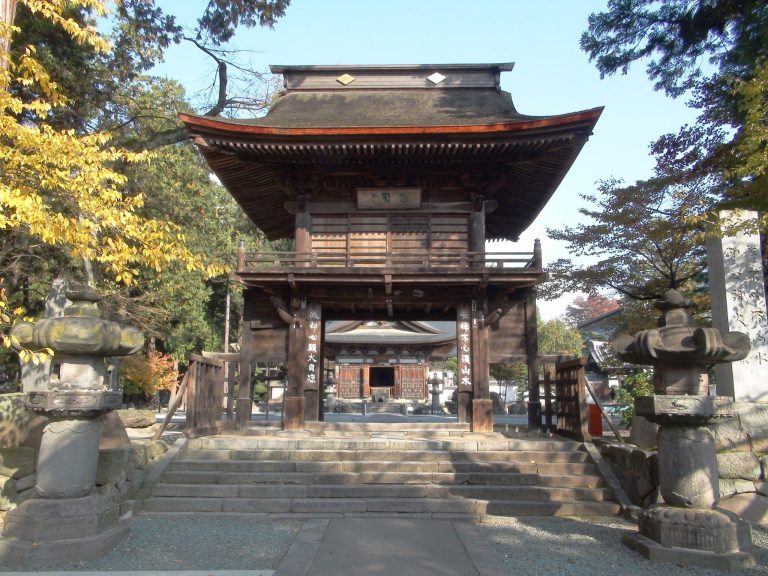
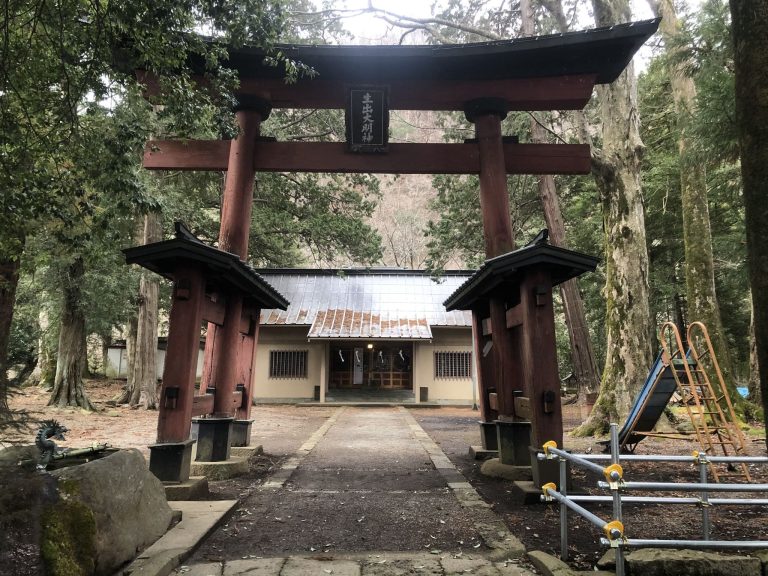
Seiunji stands at approximately 1,050 meters above sea level on the left bank of the upper Nichikawa Valley in the Tenmokuzan mountains. The complex includes the main hall, monastic quarters, Dentoan, the Tenmoku district assembly hall, the Stone Garden Hall, and the main hall of Sanno Shrine. A garden occupies the mountainside behind the temple, while memorial monuments, pagodas, rock-cut Buddhist images, and other religious features extend across the grounds.
Temple buildings and mountain garden
Monastic quarters
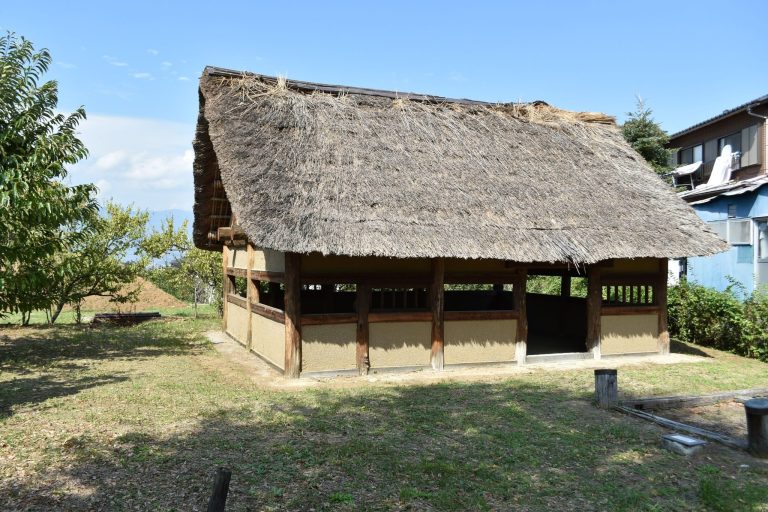
The monastic quarters are a single-story building with a gabled roof covered in copper plates. Facing south, they stand east of the main hall. The structure was rebuilt after the 1592 fire, then dismantled and reconstructed between 1996 and 2001. The work restored its former appearance while retaining its importance as part of the temple complex.
Stone garden
The garden, commonly described as a stone garden, lies on the slope behind the temple. A tradition based on Honjo’s writings holds that a lake once existed higher on Mount Tokusayama and overflowed during heavy rain. According to this explanation, water carried soil and sand down the mountainside and exposed large rocks, forming the garden. Traces interpreted as an old watercourse have been cited in support of this tradition.
Sculptures and painted images
Puo Kokushi and Gokkai Honjo
A wooden seated statue of Puo Kokushi is preserved at Seiunji and is designated a nationally Important Cultural Property. The temple is also associated with a wooden seated statue of Gokkai Honjo, linking the surviving sculpture tradition to the founder and his Chinese teacher.
Crowned Shakyamuni Buddha
The principal image is a wooden seated statue of crowned Shakyamuni Buddha. It measures 62.0 centimeters in height and was made from joined pieces of Japanese cypress. Its eyes are colored, and the figure wears a crown and chest ornaments. The crowned Buddha is presented in a form resembling a bodhisattva, a Buddhist figure devoted to awakening and the aid of others.
Mani Holding a Cross
The silk painting known as Mani Holding a Cross measures 153.3 by 58.7 centimeters. Made in China during the Yuan dynasty, probably in the thirteenth or fourteenth century, it is deposited at the Yamanashi Prefectural Museum. A single haloed figure sits on a multiple lotus pedestal beneath a canopy. The figure wears layered robes decorated with gold and holds a cross in the left hand. Square inscriptions containing crowned heads appear on the robe.
The image has been interpreted both as Akashagarbha and as Mani, the Iranian religious teacher associated with Manichaeism. One tradition attributes the painting’s arrival at Seiunji to Gokkai Honjo, while another connects it with Arima Harunobu, a Christian feudal lord who died at the temple. The attribution to Arima Harunobu has been considered more plausible because the reason Honjo would have brought a principal image bearing a cross remains uncertain.
Memorial towers, bell, and rock-carved images
Hokyoin pagodas
One Hokyoin pagoda, a Buddhist memorial tower associated with relics or commemorative remains, dates to 1353 and stands 1.84 meters high. Made of quartz diorite, it has a plain body without the outline wrapping associated with the Kanto style. Inscriptions appear on its front and back, and its form is a rare Kansai-style example in Kai.
A second Hokyoin pagoda is identified as the founder’s pagoda. It bears an inscription dated July 1352 and is presumed to have been erected by Muininogen, Honjo’s Dharma heir and the temple’s second abbot. Made of quartz andesite, it now stands 1.45 meters high. Unlike the other pagoda, it represents a variant of the Kanto style.
Bell and Takeda memorials
A bronze bell traditionally cast in 1359 by Shami Dogane is counted among the Five Bells of Kai. It is traditionally associated with Seiunji’s second abbot and may have served as a battle bell. Takeda Nobumitsu’s tomb includes a Hokyoin pagoda, while five-ring pagodas, a Buddhist memorial form whose five elements represent earth, water, fire, wind, and space, commemorate retainers said to have died with him.
Cliff-carved Buddhist images
East of the monastic quarters are two Buddhist images carved directly into cliff rock. One is a 70-centimeter-high Jizo Bodhisattva cut into a large granodiorite rock. Some parts are carved in relief and others in lines. Although the stone has weathered, the image has endured for approximately 600 years. The other identified figure is a cliff-carved Manjushri Bodhisattva, the Buddhist figure associated with wisdom.
Other religious and commemorative features
Other identified features include Bon’on Cave, a stone used for seated meditation, another stone called Nendo, and a representation of Marishiten, a Buddhist deity traditionally associated with protection and martial power. The grounds also contain a stone monument commemorating Seiunji as the birthplace of soba cutting.