Hōkaku-ji Temple: Head Temple of a Shingon Buddhist Branch in Japan


Site at a Glance
- Rating
- 4.1
- Popularity
- Very Low
- Country
- Japan
- Primary era
- Medieval
- External website
- Open
- Eras represented
- Medieval
- Civilizations
- Unclassified
- Site type
- Religious
- Remains
- Monastery
On this page6 sections
History
Hōkaku-ji Temple is a Buddhist temple in Japan, located in Kurotaki in Nara Prefecture. Temple tradition places its foundation in 678, during the Hakuhō period, a late-seventh-century era of Japanese history, when En no Ozunu opened it by imperial order. The temple is a head temple of the Hōkaku-ji branch of Shingon Buddhism, an esoteric tradition centered on ritual, mantra, meditation, and sacred images. Its principal image is Nyoirin Kannon, a form of Kannon associated with compassion and the granting of wishes.
Foundation and Revival
The traditional founder, En no Ozunu, also known as En no Gyōja, was a legendary ascetic regarded as the founder of Shugendō, a Japanese mountain religious tradition combining Buddhist, Shinto, and ascetic practices. The same temple tradition attributes Hōkaku-ji’s revival in 895 to Shōbō, a ninth-century Buddhist monk associated with the development of esoteric Buddhist institutions in Japan.
Authority over Shugendō
In 1700, Hōkaku-ji became affiliated with Daigo-ji Sanbō-in, the subtemple complex of Daigo-ji in Kyoto. It then served as the “head of the kesa for all provinces” and exercised authority over the Tōzan branch of Shugendō. The temple flourished in this role until 1872, when the government abolished Shugendō by decree.
Modern Religious Organization
After the Second World War, Hōkaku-ji became independent in 1951 and established the Hōkaku-ji branch, with the temple as its head temple. Its mausoleum tower, attributed to Shōbō, is designated a National Important Cultural Property. A statue of Shōbō and a seated statue of Nichizō Shōnin are designated cultural properties of Kurotaki Village.
Remains
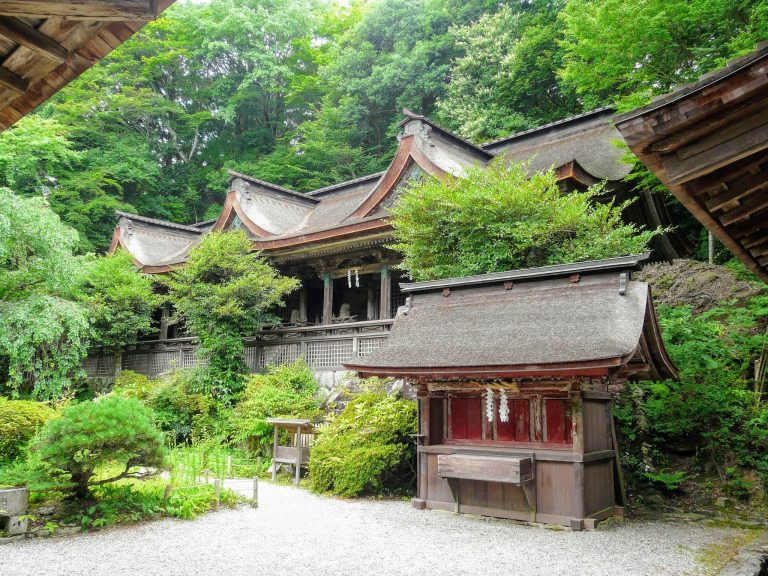
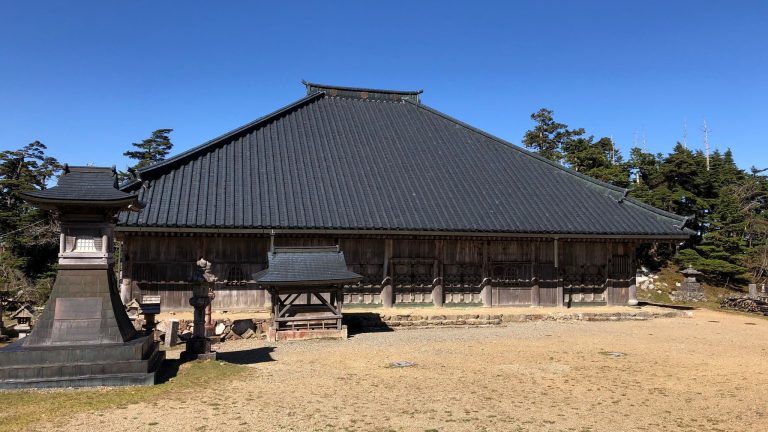
Hōkaku-ji stands on the mountainside of an 860-meter mountain, east of the Torizumi settlement beyond Jizō Pass. The temple lies north of central Kurotaki Village and south of Yoshino Mountain. Its precinct includes a main hall, a stone fence, a temple bell, and an administrative building. Inari, a Japanese deity associated with rice, agriculture, and prosperity, and Jizō, a Buddhist bodhisattva associated with protection, are also enshrined within the grounds.
Shōbō’s Mausoleum
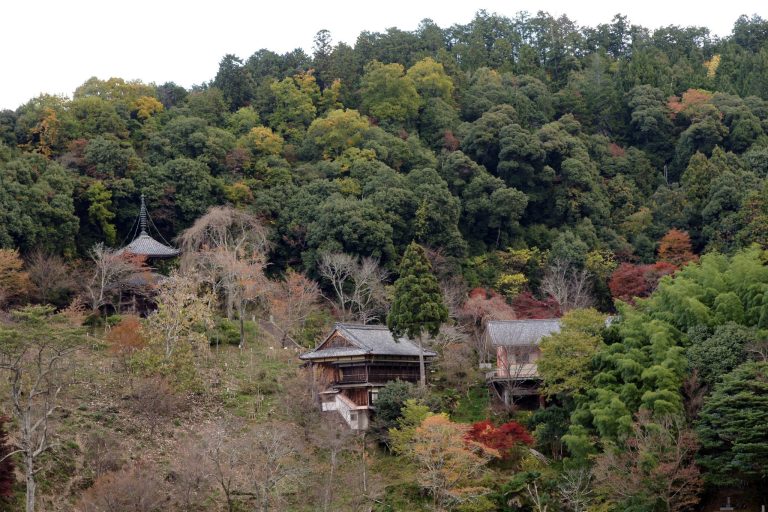
A treasure pagoda, a tower-shaped Buddhist monument used for religious and memorial purposes, is identified as Shōbō’s mausoleum. It stands approximately 0.6 kilometers from the temple on the mountain path leading from behind the kitchen and residential quarters toward the mountain. A replica of the pagoda stands behind those same quarters.