Zaōsan Shrine: A Summit Shrine in Japan’s Zaō Mountains


Site at a Glance
- Rating
- 4.3
- Popularity
- Very Low
- Country
- Japan
- Primary era
- Medieval
- External website
- Open
- Eras represented
- Medieval
- Civilizations
- Yamato
- Site type
- Religious
- Remains
- Sanctuary
On this page8 sections
History
Zaōsan Shrine is a religious shrine in Japan, standing on Mount Kumano in the Zaō mountain range above Yamagata. Its predecessor, Kumano Shrine, was traditionally founded there in 708, and the shrine’s principal deity is Susanoo, a Shinto deity associated with storms, the sea, disorder, and the slaying of the serpent Yamata no Orochi.
Origins of the Zaō religious landscape
The wider religious landscape of Zaō developed across the Miyagi side of the Ōu Mountains. A Gongen shrine was established on Mount Fubō in 680. Gongen refers to a Buddhist manifestation of a kami, or Shinto deity, within the historical tradition that connected kami worship and Buddhism in Japan. In 690, the ascetic En no Ozunu, traditionally regarded as the founder of Shugendō, is said to have invited Kongō Zaō Gongen from Kinpusenji in Yoshino and enshrined it on the summit of Mount Katta. Shugendō is a Japanese tradition of mountain-based ascetic practice involving ritual training and pilgrimage. The mountain later became known as Zaō, and the surrounding area developed as a center of this practice.
Kumano Shrine’s own sacred associations expanded when Kumano and Hakusan Gongen were enshrined there at a later date. Sanjō-in was established at Shimotakarazawa in 712 as a base for mountain asceticism. Sukawa Shrine followed during 834–847, and Jikaku Daishi opened Mount Takiyama in 851. Jikaku Daishi was the posthumous title of Ennin, a ninth-century Tendai Buddhist monk and prominent religious figure.
The three-shrine system
From this period, Kumano Shrine formed a three-shrine religious system with Takiyama as the primary shrine, Sukawa Shrine as the entrance shrine, and Kumano Shrine as the detached shrine. A detached shrine was located apart from the principal shrine within a larger sacred arrangement. This organization reflected the characteristic structure of Kumano worship.
Takiyama later became the center of Zaō mountain practice. Numerous religious lodges surrounded it, and the area was described as having “300 bō,” referring to its many religious establishments. Takiyama was eventually ordered to close after incurring the displeasure of Hōjō Tokiyori, a thirteenth-century regent of the Kamakura shogunate.
Relocation and continuing traditions
After Takiyama closed, its religious institutions moved to the foothills and continued through Shinpuku-san Ishigyōji, a Tendai Buddhist temple that had originally been one of Takiyama’s lodgings, the related Tendai temple Ryūzanji, and Takiyama Shrine, which was later transferred there. In 1952, Kumano Shrine was renamed Zaōsan Shrine.
The interpretation of Takiyama as an independent Takiyama cult, separate from Zaō Gongen, remains possible. The continuing Takiyama annual festival is jointly conducted by Zaōsan Shrine and Takiyama Shrine, however, preserving a connection between the summit shrine and the relocated institution. Although the three-shrine system remains recognized, Takiyama has long been closed and Zaōsan Shrine stands at the summit, so Sukawa Onsen Shrine administers the three shrines.
On the annual mountain-opening day, parishioners of Zaōsan Shrine and Katta Mine Shrine gather at the Katta Pass parking area to pray together for safety in the mountains. The former ascetic center at Shimotakarazawa is also associated with a wooden standing image of Zaō Gongen, preserved in the private residence of a descendant household of Sanjō-in. Each year on August 3, the image is transferred to Sukawa Onsen Shrine in Zaō Onsen in connection with the eve of the Yamagata Hanagasa Festival. The Zaō Onsen Summer Festival is held there on the same day.
Remains
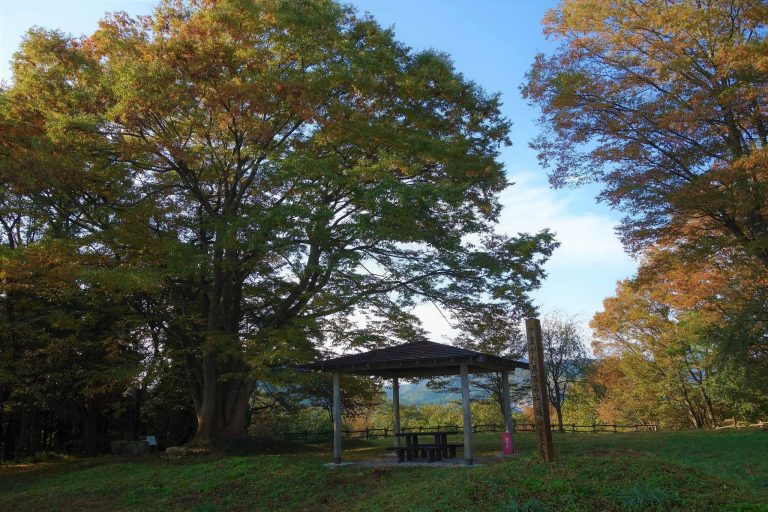
Zaōsan Shrine occupies the 1,841-meter summit of Mount Kumano and overlooks Zaō Onsen. The surviving site combines a modest summit shrine building with a wooden torii and stone retaining walls that reinforce the area around the structure. Other physical reminders of the wider religious network remain at the foothills and in Shimotakarazawa.
Summit shrine
The summit buildings consist of a modest shrine structure covered by a corrugated-metal roof. A wooden torii marks the shrine, while stone retaining walls strengthen the ground around the building. Its high position on Mount Kumano places the shrine within the mountain landscape associated with Zaō worship and ascetic practice.
Foothill remains of Takiyama
Takiyama Shrine survives at the foothills after the closure and relocation of the former Takiyama religious center. The associated grounds of Ishigyōji contain a large Zaōsan stone memorial tablet. Several stone torii in Yamagata City are used for distant worship of Takiyama, extending the shrine’s religious presence beyond the former mountain center.
Zaō Gongen image
The wooden standing image of Zaō Gongen associated with the former Sanjō-in center is preserved in a private residence at Shimotakarazawa. It is temporarily transferred each year to Sukawa Onsen Shrine, where its ritual movement continues the connection between the former ascetic center and the Zaō religious landscape.