Otsuka Kofun: A Fifth-Century Keyhole Burial Mound in Japan
Site at a Glance
- Rating
- 3.6
- Popularity
- Very Low
- Country
- Japan
- Primary era
- Classical
- External website
- Open
- Eras represented
- Classical
- Civilizations
- Yamato
- Site type
- Burial
- Remains
- Burial Mound
On this page7 sections
History
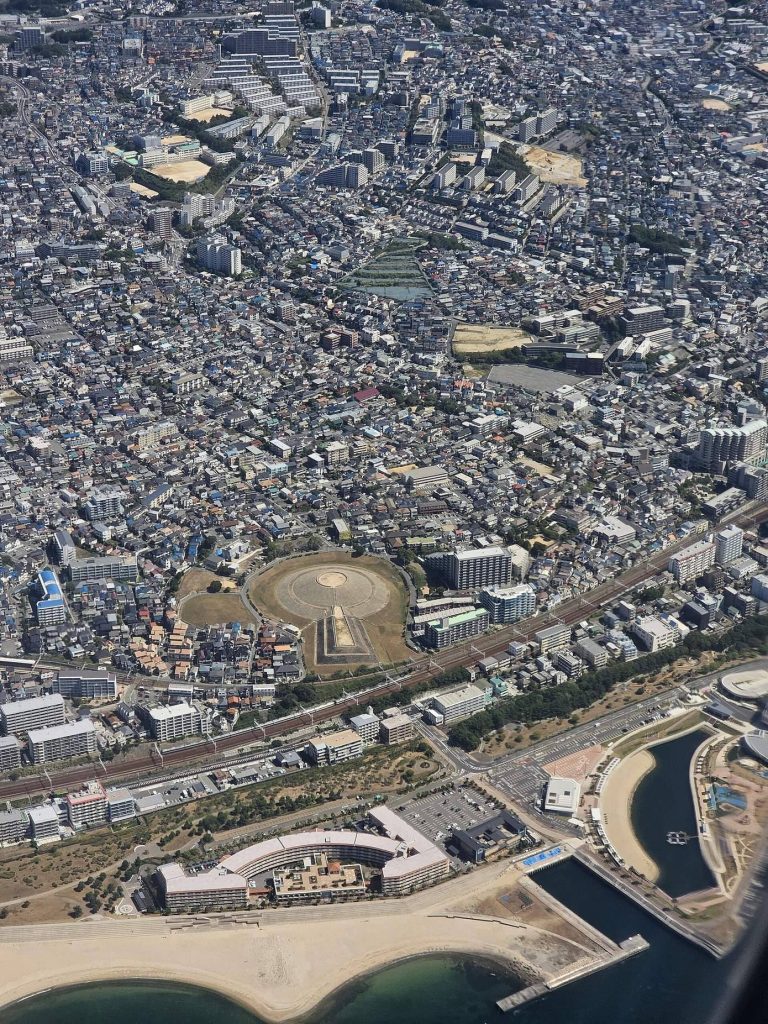
Otsuka Kofun is a keyhole-shaped burial mound in Japan, built in the early fifth century during the middle Kofun period, an era of large elite burial mounds that lasted broadly from the third to the sixth centuries. It stands on the eastern edge of the Inamino Plateau, on the right bank of the Akashi River in southern Hyogo, within present-day Kobe. In the Akashi River basin, it followed Hakusui Hyotan-zuka Kofun as a chief’s tomb, and in the former Akashi District it followed Goshikizuka Kofun.
Regional succession
Otsuka Kofun was built after the larger Goshikizuka Kofun, but its position farther from the Akashi Strait and its smaller scale indicate a change in the regional sequence of elite tomb construction. The large-scale production system for haniwa, fired clay objects placed on or around burial mounds, associated with Goshikizuka was not continued at Otsuka Kofun. A settlement of the early to middle Kofun period, the Yoshida-Minami Site, lay near the mound. The possibility that it contained a residence connected with the person buried at Otsuka Kofun has been raised. Nearby remains also include the Yayoi-period Harima Yoshida Site and the Deai Site, which spans the Kofun period and the medieval period.
The proposed imperial association
The identity of the person buried at Otsuka Kofun is unknown. The Imperial Household Agency, the Japanese government institution responsible for designated imperial tombs and related sites, manages the mound as the Tamatsu Reference Site for an Imperial Tomb. It lists Toneri no Himemiko, consort of Prince Toma and a member of the imperial family during the Asuka period, as the proposed occupant, without formally specifying an interment.
This association derives from a tradition in the Nihon Shoki, an eighth-century Japanese chronicle. In 603, Toneri no Himemiko accompanied Prince Toma when he set out as a commander for an expedition against Silla, an ancient Korean kingdom. She died in Akashi in July of that year and was buried on Hikasa Hill, whose location remains uncertain. The proposed identification does not fit the chronology of Otsuka Kofun, which was built roughly a century before her death. The mound received its reference-site designation because it was equated with her reported burial place, rather than because her burial has been archaeologically demonstrated.
Investigation and management
The Imperial Household Agency’s Archives and Mausolea Department investigated the foot of the mound in 2000. The work established that the mound foot had been cut away around its entire circumference, a finding that informed estimates of the mound’s original dimensions. Two associated subordinate mounds also remain under the agency’s management and are designated as subordinate mounds of the Tamatsu Reference Site for an Imperial Tomb.
Remains
Main mound
Otsuka Kofun has a circular rear section joined to a squarish front section, forming the keyhole plan characteristic of many elite Kofun-period tombs. The square front faces south. The mound measures 69 metres in length today, while its reconstructed length is estimated at about 74 metres. The rear circular section measures 38 metres across, with an estimated original diameter of about 44 metres, and the front section is 34 metres wide, with a reconstructed width of about 42 metres. These estimates take account of the removal of the mound foot around the full circumference.
Both the rear and front sections are thought to have been built in three stages, although no tiers are visible today. A moat following a form similar to the mound surrounded the structure. Stones quarried mainly from the Akashi River were laid over the mound surface as facing, helping protect and reinforce the earthwork. Cylindrical haniwa and figurative examples were found, including objects shaped as houses, shields, umbrellas, and jars.
Subordinate mounds
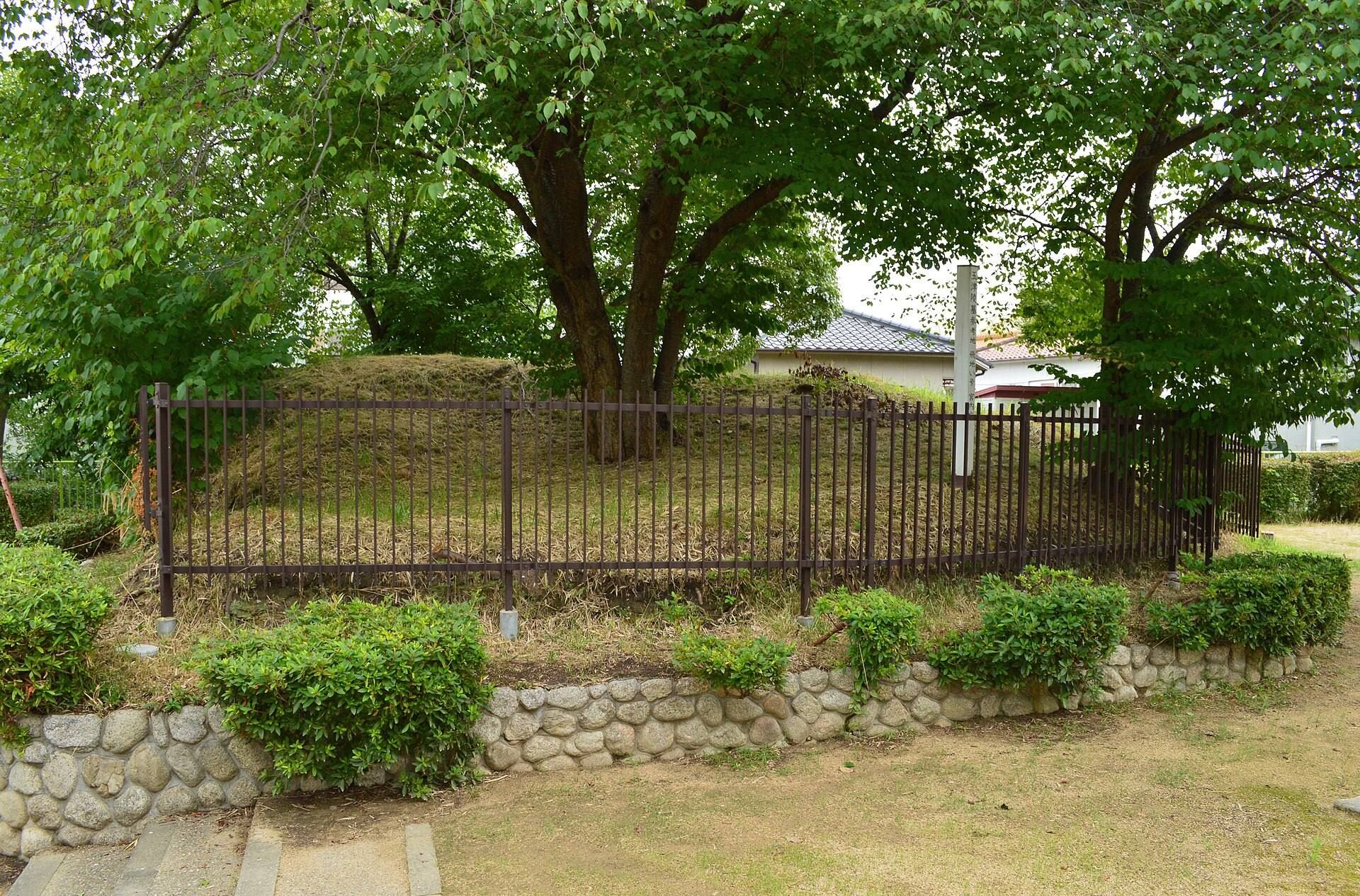
Two subordinate mounds survive around Otsuka Kofun. The northern mound lies within a park north of the principal mound and is approximately 10 metres in diameter. It appears to be circular. The eastern mound stands east of the main mound and appears to be square, measuring about 15 metres on each side. Both are managed as subordinate mounds of the Tamatsu Reference Site for an Imperial Tomb.