Ōdomari Kofun Group: A Maritime Cemetery of the Kofun Period


Site at a Glance
- Rating
- 5
- Popularity
- Very Low
- Country
- Japan
- Primary era
- Medieval
- Eras represented
- Medieval
- Civilizations
- Yamato
- Site type
- Burial
- Remains
- Necropolis
On this page8 sections
History
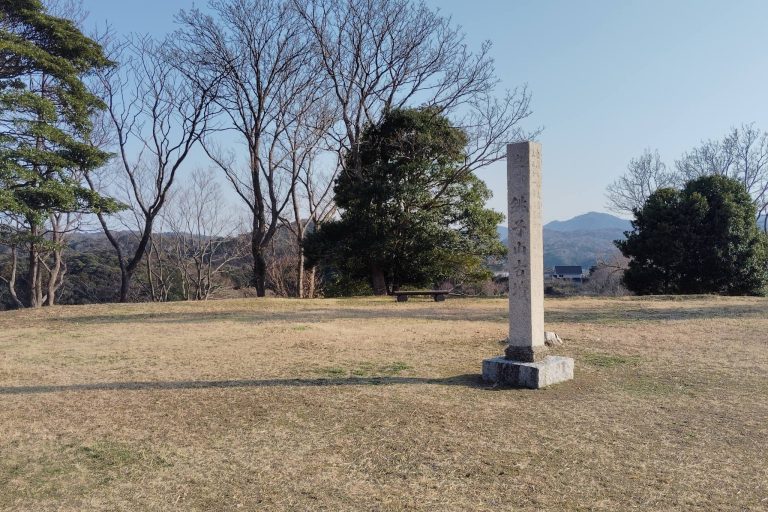
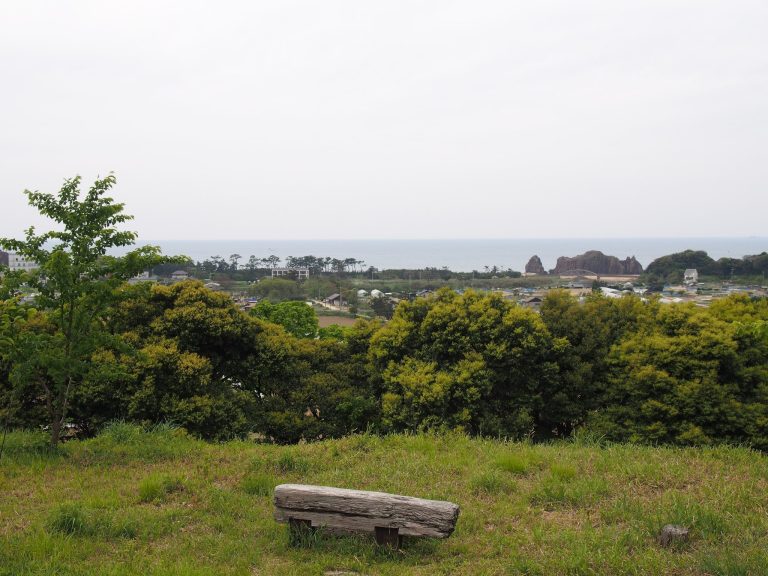
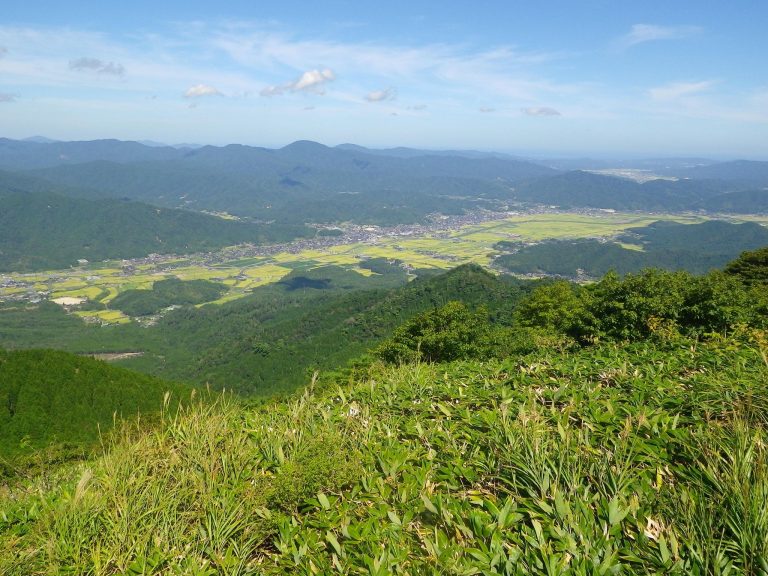
The Ōdomari Kofun Group is a cemetery of three late Kofun-period burial mounds in Kyotango, Japan, built during the latter half of the sixth century through the beginning of the seventh century. The Kofun period was the era of large burial mounds in ancient Japan, conventionally dated from about the third to the seventh century. Set on a hillside of a cape facing the Sea of Japan, the group is regarded as the burial place of influential people connected with maritime activity.
Construction and dating
All three tombs are circular mounds containing horizontal stone chambers. This type of chamber is entered through a passage extending sideways from the mound rather than through a vertical shaft. Their construction belongs broadly to the sixth and seventh centuries. More precise dating comes from Sue ware, a high-fired stoneware tradition of ancient Japan, including vessels assigned to the TK209 type, a typological category used to date a form of Sue ware. These objects place part of the group’s use in the later sixth century and around the start of the seventh.
The placement of the tombs reflects a divided arrangement on the cape. Mound 1 stands on the southwestern side of a ridge near the tip, while Mounds 2 and 3 occupy the northeastern side. Mounds 2 and 3 are about 70 metres northeast of Mound 1 and lie approximately 10 metres apart. The three mounds were partly damaged over time, affecting the surviving form of the burial earthworks.
Investigation in 1962
Modern archaeological attention began with a distribution survey undertaken by the Doshisha University Archaeological Society from 1 August 1962. The week-long work examined archaeological sites in the area, as well as the Ōdomari mounds and their surrounding topography. Pottery and Sue ware were found scattered inside one stone chamber, and pottery was confirmed from another mound.
The disturbed condition of the finds was attributed to an earlier non-academic investigation by local middle-school students. This prompted a recommendation for scholarly excavation. The Doshisha University Archaeological Society conducted a further investigation from 28 to 30 November 1962 and prepared a report. That work excavated Mounds 1 and 3, while the archaeological investigation of Mound 2 remained outside the excavation programme.
Remains
The Ōdomari group consists of three circular burial mounds with chambers cut into or constructed within the mound bodies. The chambers of Mounds 1 and 3 were built from tuff breccia, a rock formed when volcanic fragments become consolidated in a fine volcanic matrix. The burial spaces preserve evidence of weapons, ornaments, and pottery associated with the people interred there.
Stone burial chambers
Mound 1
Mound 1 has a right-offset chamber plan with its entrance opening toward the south-southeast. The chamber measures 6.6 metres in total length. Its main chamber is 3.9 metres long, with a rear wall 1.7 metres wide. The passage extends for 2.7 metres and is 1.3 metres wide. The ceiling stones have been lost, and the interior was disturbed before the 1962 archaeological investigation.
The burial goods from Mound 1 include an agate magatama, a curved comma-shaped bead of the type used in ancient Japanese burial contexts, together with a straight sword. The pottery assemblage consists of ten Haji ware vessels and twenty-seven Sue ware vessels. Haji ware was a low-fired earthenware tradition, while Sue ware was fired at a higher temperature to produce a harder stoneware body.
Mound 2
Mound 2 is one of the circular tombs on the northeastern side of the cape. Its burial chamber has not been archaeologically excavated. Eleven Sue ware vessels are associated with the mound, providing material for comparison with the excavated tombs and contributing to the dating of the group.
Mound 3
Mound 3 has a stone chamber at least 4.5 metres long, 1.9 metres wide, and 1.8 metres high. Its ceiling stones have been lost. The chamber was built with tuff breccia and yielded a varied group of weapons, fittings, ornaments, and pottery.
The finds include a gilt-bronze sword with a keito-style pommel, a pointed and angular form used on certain early Japanese swords, as well as a straight sword, two iron arrowheads, a chisel-shaped iron implement, and an ear ornament. Eleven Sue ware vessels were also recovered. One catalogue entry describes a fitting with an estimated total length of 9.5 centimetres. Its length from the end of the tang to the tip is 8 centimetres, while the keito-style head measures 7.5 centimetres. Made of gilt bronze, the head has openings for the sword fittings and carrying cord, resembles a head-pommel form, and retains part of its wooden core.
Other recorded objects preserve details of the burial equipment and its construction. A fragment of fine thread survived among the finds. Another gilt-bronze object measures 8 centimetres in diameter and 6 centimetres across its shorter axis. It is shaped like an inverted egg, has a thickened rim, and contains six trapezoidal openwork apertures. A flat-forged blade has a cutting width of 3.5 centimetres and a spine 1.6 centimetres wide, with a peg still present in its tang.
Additional pieces include an iron object 1.6 centimetres long and a gilt-bronze object 6.3 centimetres long. Two larger gilt-bronze components measure 7.5 centimetres in length, 3.7 centimetres in diameter, and 2.9 centimetres across the shorter axis for one piece, and 13.8 centimetres in length, 3.1 centimetres in diameter, and 1.9 centimetres across the shorter axis for the other. Wood survives inside both objects, preserving evidence of their original composite construction.