Onsen-ji Temple: Guardian Temple of Kinosaki’s Hot Springs


Site at a Glance
- Rating
- 4.2
- Popularity
- Low
- Country
- Japan
- Primary era
- Medieval
- External website
- Open
- Eras represented
- Medieval, Early Modern
- Civilizations
- Ashikaga shogunate, Tokugawa
- Site type
- Religious
- Remains
- Temple
On this page10 sections
History
Onsen-ji Temple is a Buddhist temple in Japan, located above Kinosaki in Toyooka, Hyogo Prefecture. Traditionally founded in 738 by Dochi Shonin, the Buddhist religious figure associated with the establishment of Kinosaki Onsen, it belongs to the Koyasan Shingon school, a major Japanese tradition within esoteric Buddhism. The temple serves as the guardian temple of the Kinosaki hot-spring resort and holds the status of a special head temple.
Traditional foundation
Temple tradition places the foundation of Onsen-ji in the eighth century, when Dochi Shonin established it on Mount Daishi. The same tradition states that Emperor Shomu bestowed both the mountain name and the temple name at that time. Emperor Shomu was an eighth-century ruler associated with imperial support for Buddhist institutions, linking the temple’s origin to the period when Buddhism received strong patronage from the Japanese court.
Onsen-ji remains associated with religious pilgrimage. It is the 29th station of the Saigoku Forty-Nine Yakushi Sacred Sites, a circuit devoted to temples connected with Yakushi Nyorai, the Buddha associated with healing and medicine. It is also the 33rd station of the Tajima Saigoku Thirty-Three-Temple Pilgrimage. These affiliations place the temple within established networks of Buddhist worship in the region.
Muromachi and Edo periods
The temple’s principal hall was built around 1387, during the early Muromachi period, a medieval era in Japanese history. It is regarded as the oldest wooden building in the Tajima region. Later additions and rebuilding shaped the complex during the Edo period, the early-modern era ruled by the Tokugawa shogunate. The guardian gate was built between 1764 and 1772, while the Yakushi Hall dates from 1804 to 1818. The Tahoto pagoda was rebuilt in 1768, and the bell tower was constructed in the early Edo period.
The main hall and other designated cultural properties, including a stone Hōkyō-in stupa, are Important Cultural Properties of Japan. A Hōkyō-in stupa is a stone memorial tower traditionally associated with the enshrinement of Buddhist texts or sacred formulae. The designation reflects the architectural and religious value of parts of the temple complex and its surviving objects.
Recent additions
The Mother Kannon statue was erected on October 28, 2007. The inner sanctuary was rebuilt in 2010 according to a design by the Eitaro Kurahashi Architectural Design Office. These changes form part of the temple’s continuing physical development while its older buildings and religious associations remain central to its identity.
Remains
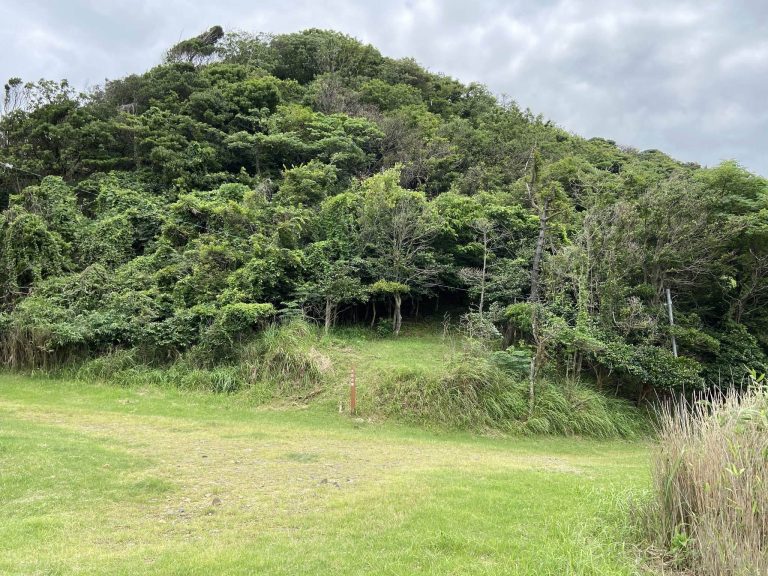
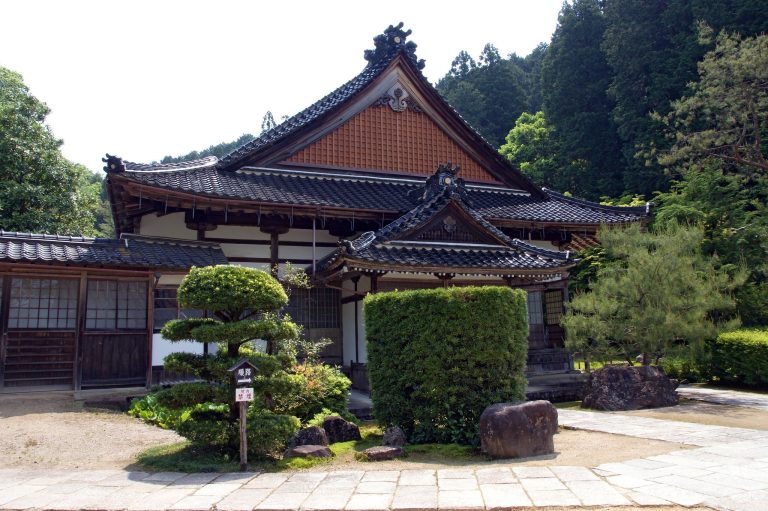
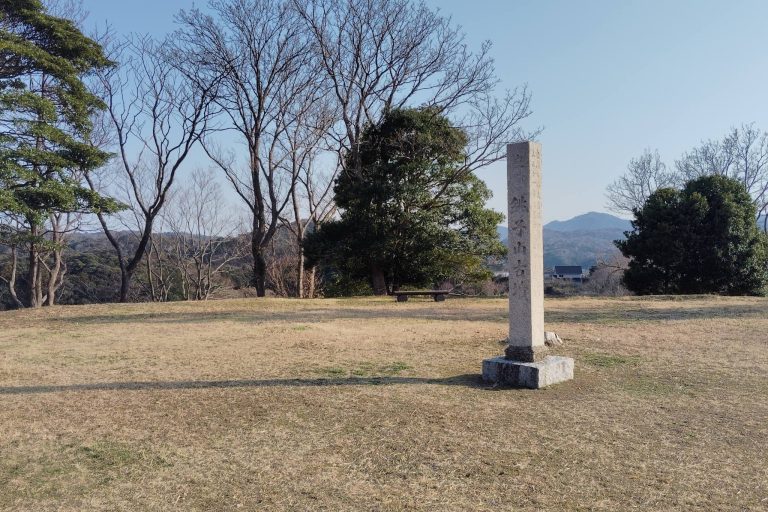
Onsen-ji occupies Mount Daishi above the Kinosaki hot-spring settlement. A stone-stepped approach of 450 steps leads from the foot of the mountain to the main hall. The complex includes the principal temple buildings, the abbot’s quarters, the inner sanctuary, a Tahoto pagoda, a bell tower, the Mother Kannon statue, a stone Hōkyō-in stupa, and a monument known as the Crab Mound. The Kinosaki Art Museum lies to the northeast of the main hall.
Principal buildings
Main hall
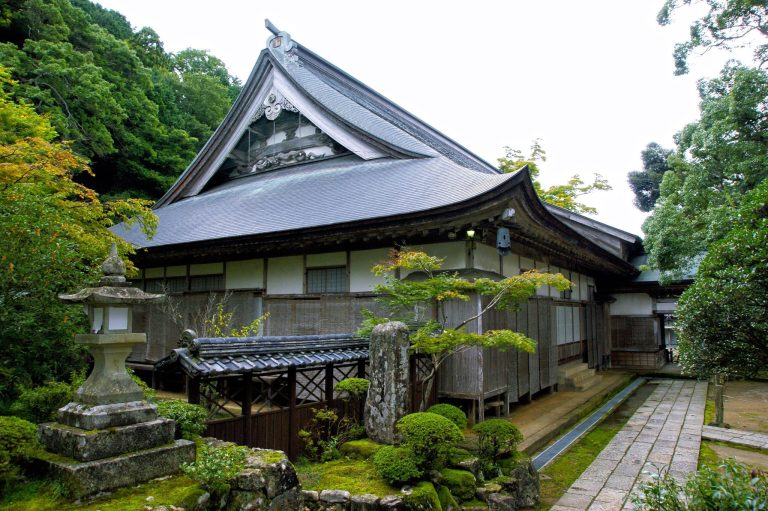
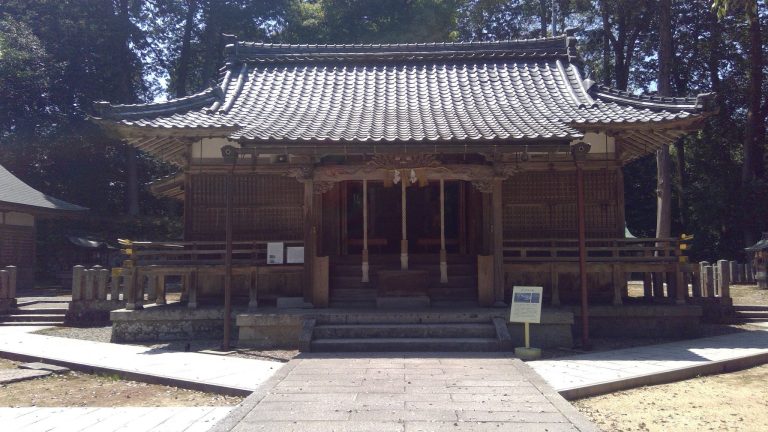
Built around 1387, the main hall is a wooden early Muromachi-period structure with an irimoya roof, a form combining a gabled central section with sloping hipped sides. Its front spans five structural intervals, or bays, between columns. The building combines Japanese, Zen, and Great Buddha architectural styles. Inside is the temple’s principal image, a statue of Eleven-Headed Kannon, a devotional form of the bodhisattva associated with compassion. The wooden standing image of Eleven-Headed Kannon is included in the temple’s cultural-property inventory.
Niomon and Yakushi Hall
The Niomon, or guardian gate, dates from the Meiwa era of the Edo period, between 1764 and 1772. It is an eight-legged, two-story structure marking the approach to the temple buildings. The Yakushi Hall was built during the Bunka era, between 1804 and 1818, and houses a statue of Yakushi Nyorai, the Buddha traditionally connected with healing and medicine.
Tahoto and bell tower
The Tahoto pagoda was rebuilt in 1768 during the middle Edo period. A Tahoto is a Japanese Buddhist pagoda form. The structure houses an image of Dainichi Nyorai of the Diamond Realm, the central cosmic Buddha of esoteric Buddhism associated with one of that tradition’s principal mandalas. The bell tower belongs to the early Edo period and forms another surviving element of the temple complex.
Sanctuary, images, and memorial features
The inner sanctuary was rebuilt in 2010, and the Mother Kannon statue was erected in 2007. Other surviving features include the stone Hōkyō-in stupa and the Crab Mound monument. The cultural-property inventory also includes a wooden standing image of Thousand-Armed Kannon and a silk painting of the Sixteen Benevolent Deities. Eleven-Headed Kannon and Thousand-Armed Kannon are forms of Kannon representing expanded powers of compassion and assistance.