Sairin-ji Temple: An Early Buddhist Temple in Osaka, Japan
Site at a Glance
- Rating
- 3.7
- Popularity
- Very Low
- Country
- Japan
- Primary era
- Classical
- External website
- Open
- Eras represented
- Classical, Medieval
- Civilizations
- Kamakura shogunate, Yamato
- Site type
- Religious
- Remains
- Temple
On this page11 sections
History
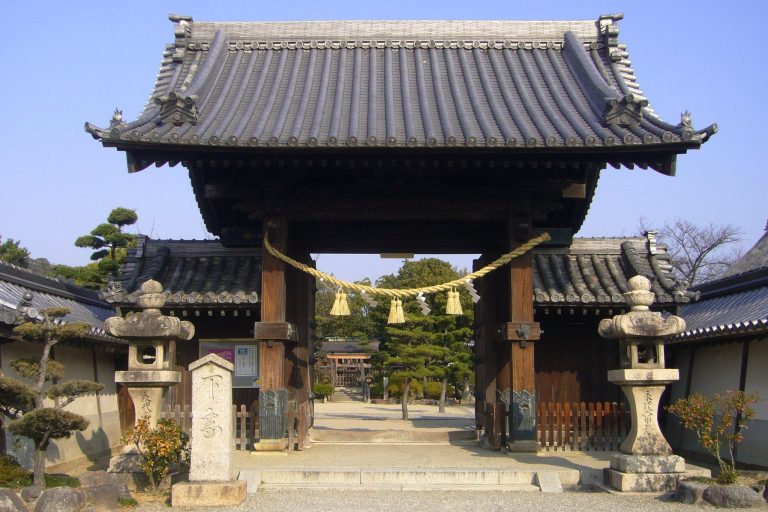
Sairin-ji Temple is a Buddhist temple in Habikino, Osaka, Japan, traditionally associated with the Nishifumi clan and likely founded in 619 during the reign of Emperor Suiko, in the Asuka period. Its principal image is a standing Yakushi Nyorai, the Buddha associated with healing and relief from suffering. Affiliated with Kōyasan Shingon-shū, a Japanese school of esoteric Buddhism, the temple is considered one of the earliest temples in the Kinai, the historical central region surrounding Japan’s imperial capitals.
Foundation traditions
Sairin-ji is traditionally linked to the Nishifumi clan, whose members were regarded as descendants of Wani, a scholar figure associated with the transmission of Chinese learning to early Japan. The temple’s foundation tradition names members of the Nishifumi and related families among its founders. One interpretation places the foundation in 619, while another tradition connects it with a commemoration of Emperor Kinmei about fifty years after his death.
The Sairin-ji Chronicle, also known as the Sairin-ji Origin Account, was compiled in 1271 by a monk traditionally identified as a nephew of Eison. It drew on older documents and stone inscriptions preserved at the temple. A record quoted in the chronicle gives 559 as the foundation date, but archaeological analysis of excavated roof tiles supports the later date of 619. This difference preserves two distinct traditions about the temple’s beginnings rather than establishing a single uncontested chronology.
The early temple precinct
At its foundation, Sairin-ji occupied a much larger precinct than the present grounds. The compound measured approximately 109 metres from east to west and 218 metres from north to south, and it stood along the Takeuchi Road, an ancient route connecting Naniwa Palace with Asuka. The original arrangement is thought to have followed the plan of Hōki-ji, an Asuka-period temple in present-day Nara Prefecture, with the pagoda to the east and the main hall to the west.
Loss and later recognition
Nearly all of Sairin-ji’s halls and pagodas from before the medieval period were lost through warfare during the Azuchi-Momoyama period, the late sixteenth-century era of political unification before the Tokugawa shogunate, and through the Meiji-era suppression of Buddhism after 1868. Surviving objects and excavated architectural fragments have nevertheless preserved evidence of the temple’s early history.
The stone five-ring tower and its associated stone base and reliquary became an Osaka Prefecture tangible cultural property in 1970. A seventh-century roof-ridge ornament excavated within the precinct was designated a Habikino City cultural property in 1996. An early-Heian-period wooden standing eleven-faced Kannon, a compassionate bodhisattva in one of its established forms, is kept at Choen-ji in Habikino and has been a national Important Cultural Property since 1938. Its traditional connection with Sairin-ji remains possible rather than certain.
Remains
The surviving evidence presents Sairin-ji as a reduced temple precinct retaining elements from its early Buddhist foundation and later history. The original compound extended approximately 109 metres east to west and 218 metres north to south. Its planned arrangement is associated with the Hōki-ji-style layout, in which the pagoda stood east of the main hall.
Early architectural remains
Pagoda foundation stone
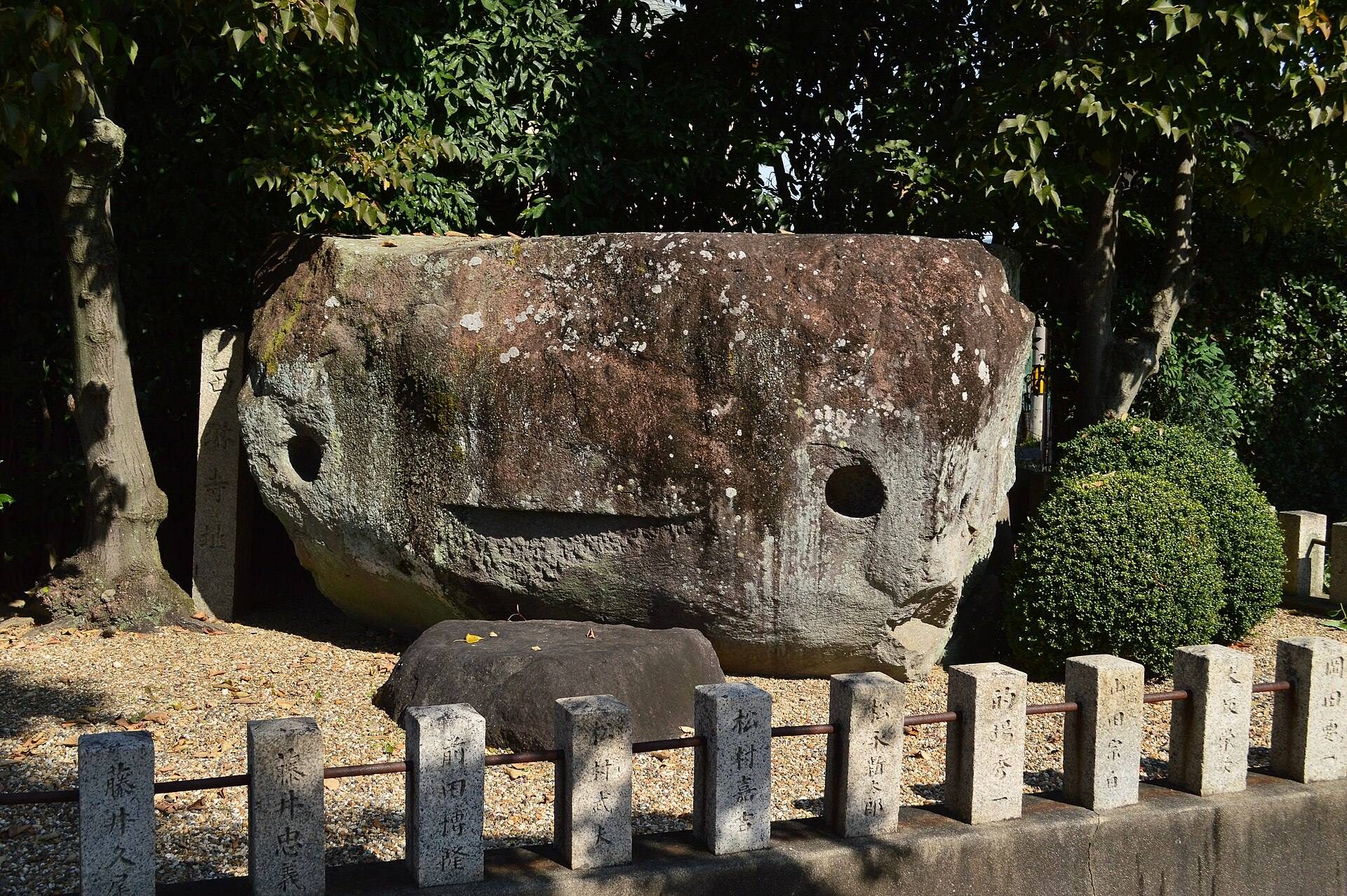
A nearly two-metre-high pagoda foundation stone stands within the temple grounds. It weighs more than 27 tonnes and is described as the largest pagoda foundation stone of the Asuka period. Its scale provides a substantial surviving element of the pagoda complex within the original temple plan.
Roof-ridge ornament
A roof-ridge ornament dating from the seventh century was excavated inside the temple precinct. The fragment came from the original buildings and is preserved as archaeological evidence of the early structures that once occupied the site. It is designated a Habikino City cultural property.
Stone memorial feature
Five-ring tower
The stone five-ring tower, or gorintō, is a late-Kamakura-period Buddhist monument. Its stacked forms represent earth, water, fire, wind, and space. The monument is accompanied by one stone base and one stone funerary container, forming an associated group of surviving stone elements. Together they are designated an Osaka Prefecture tangible cultural property.
Associated Buddhist image
The wooden standing eleven-faced Kannon now transmitted at Choen-ji is an early-Heian-period Buddhist image traditionally considered to have come from Sairin-ji. Its provenance is regarded as possible rather than certain, so the image provides an association with the temple rather than an established surviving part of its present precinct.