Anshō-ji: A Kōyasan Shingon Buddhist Temple in Kyoto


Site at a Glance
- Rating
- 4.1
- Popularity
- Low
- Country
- Japan
- Primary era
- Early Modern
- External website
- Open
- Eras represented
- Early Modern, Modern
- Civilizations
- Japanese, Tokugawa
- Site type
- Religious
- Remains
- Monastery
On this page22 sections
History
Anshō-ji is a Kōyasan Shingon Buddhist temple in Kyoto, Japan, founded in 848 through the vow of Gojo Empress Fujiwara no Junshi. Its principal image is the Eleven-Headed Kannon, and its mountain name is Kichijōzan, while Hōtō-in is its honorary title. The temple became one of the court-affiliated jōgakuji, officially recognized Buddhist institutions supported or supervised by the imperial court, and developed a close relationship with the imperial household.
Foundation and Court Patronage
Fujiwara no Junshi was the consort of Emperor Ninmyō and the mother of Emperor Montoku. Anshō-ji was established through her religious vow, and the monk Keiun played a central role in its early history. After travelling to Tang China, Keiun brought a guardian deity from Qinglong Temple in Chang’an and enshrined it at Anshō-ji.
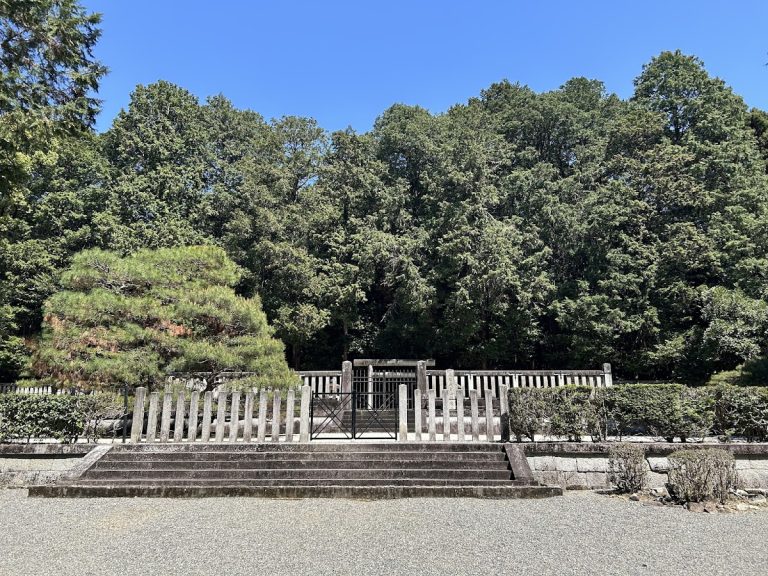
The temple received jōgakuji status in 855, apparently because of its connection with the emperor’s mother. The Engishiki, a tenth-century compilation of laws, regulations, and court procedures, places Fujiwara no Junshi’s tomb in Yamashina. This location indicates the close relationship between the empress and the temple founded through her patronage.
Like nearby Daigo-ji, historical Anshō-ji comprised an upper temple in the mountains and a lower temple at the mountain’s foot. The exact dates when these two parts were established are uncertain. The prevailing interpretation is that the upper temple began as a place for monastic training, while Junshi later founded the lower temple after becoming a devotee of Keiun.
Decline of the Upper Temple
After Junshi’s death, Anshō-ji gradually lost court patronage and declined. The Shōyūki, a diary by the courtier Fujiwara no Sanesuke, already describes the route to the upper temple as severely deteriorated. The separation of the upper and lower complexes became increasingly important as the mountain foundation weakened while the lower temple remained the focus of religious activity.
During the later Heian period, the eleventh abbot, Sōi, left the upper temple in its existing condition and concentrated on restoring the lower temple. He also established the Anshō-ji lineage of Shingon esoteric Buddhism, a form of Buddhism using ritual, meditation, and mandalas. This lineage was transmitted through successive eminent monks as a direct continuation of the teachings associated with Kūkai, the ninth-century founder of Japanese Shingon Buddhism.
The upper temple survived only tenuously until the Enbun era, from 1356 to 1361. By that time it had no resident monks, and most of its principal buildings had apparently fallen into ruin. In 1378, Kenpō, a monk of Tō-ji, discovered that the remaining Five Great Hall had collapsed in a typhoon. The Five Great Ākāśagarbha statues from Anshō-ji, a group of five related manifestations of the bodhisattva associated with space, wisdom, and inexhaustible virtue, were found broken and covered with mud. Kenpō carried them to Tō-ji’s Kanchiin, where they were repaired and installed as the principal images.
War, Abandonment, and Edo-Period Revival
The lower temple was burned during the Ōnin War, a fifteenth-century civil conflict that devastated much of Kyoto. Anshō-ji then became completely abandoned, and many of its treasures were dispersed. The destruction ended the continuous operation of the medieval complex, although important images and objects survived through transfer to other institutions.
Revival began through the efforts of Seihen, the temple’s twenty-eighth abbot. Seihen had the deep devotion of Tokugawa Ieyasu, founder of the Tokugawa shogunate and a major patron of religious institutions in the early Edo period. In 1613, Ieyasu secured most of the former precinct for Anshō-ji, allowing the lower temple to be revived. The upper temple was never rebuilt.
During the same period, the Tendai monk Tenkai was restoring Izumo-ji. Ieyasu granted Izumo-ji the northeastern part of Anshō-ji’s precinct, where it was revived and later became known as Bishamondō. From the beginning of the Edo period, the head of Hōshō-in at Kōyasan also served as Anshō-ji’s abbot. As a result, the temple came to be called Kōyadō.
Later Changes and Modern Recognition
The Tahō Pagoda was rebuilt in 1759, and the Kannon Hall was rebuilt in 1817. In 1870, during the separation of Buddhism and Shinto and the movement to suppress Buddhism, Anshō-ji became independent from its former status as a subsidiary institution of Kōyasan Hōshō-in. The temple subsequently declined further, selling most of its temple lands to Bishamondō and becoming substantially smaller.
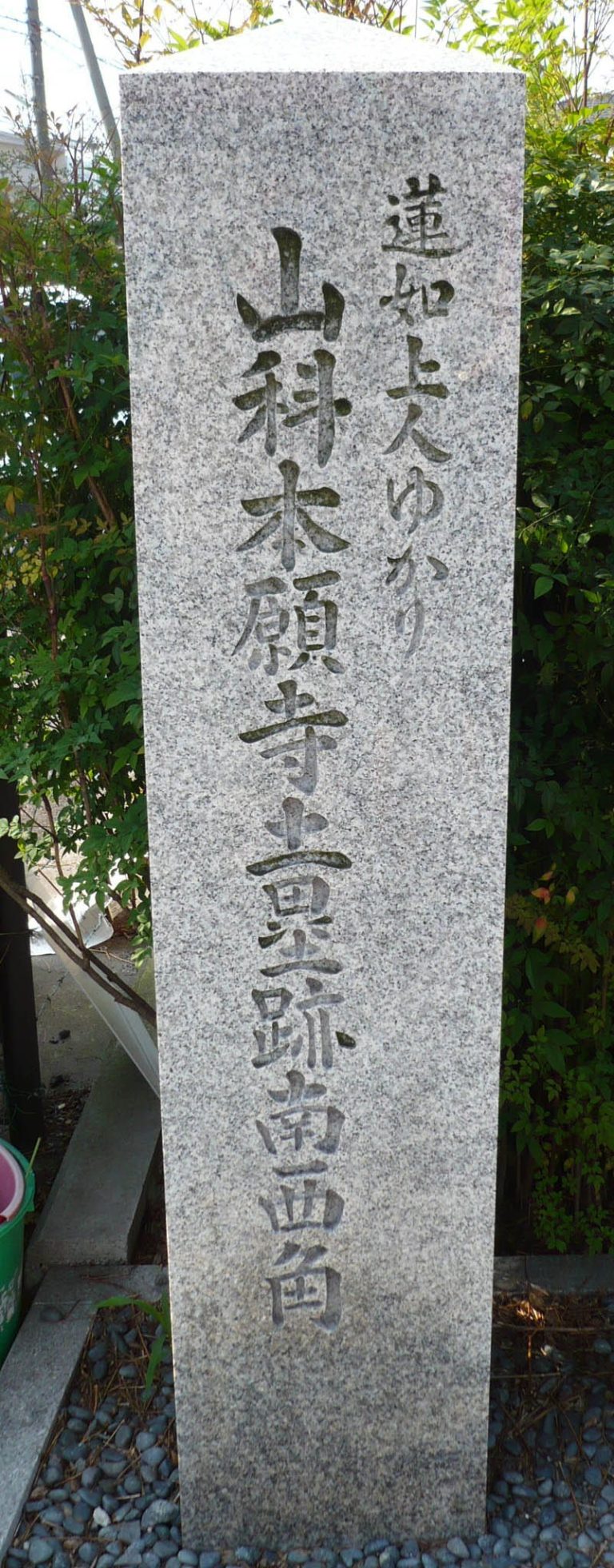
The First Lake Biwa Canal was constructed through the precinct in 1890. Running from east to west, it divided the remaining temple grounds into northern and southern parts. The Tahō Pagoda burned on November 8, 1906. In 1962, the former main temple residence south of the canal was moved to its present location on the north side, together with associated buildings including the kitchen, bell tower, and main gate.
Anshō-ji had generally been closed to the public, but its principal Eleven-Headed Kannon was displayed for the first time in a public exhibition from April 26 to May 10, 2019, during Kyoto’s special spring opening of normally inaccessible cultural properties. The Five Wisdom Tathāgata seated statues were designated National Treasures in 2019. The Eleven-Headed Kannon is an Important Cultural Property, and the temple bell is a tangible cultural property designated by Kyoto Prefecture.
Remains
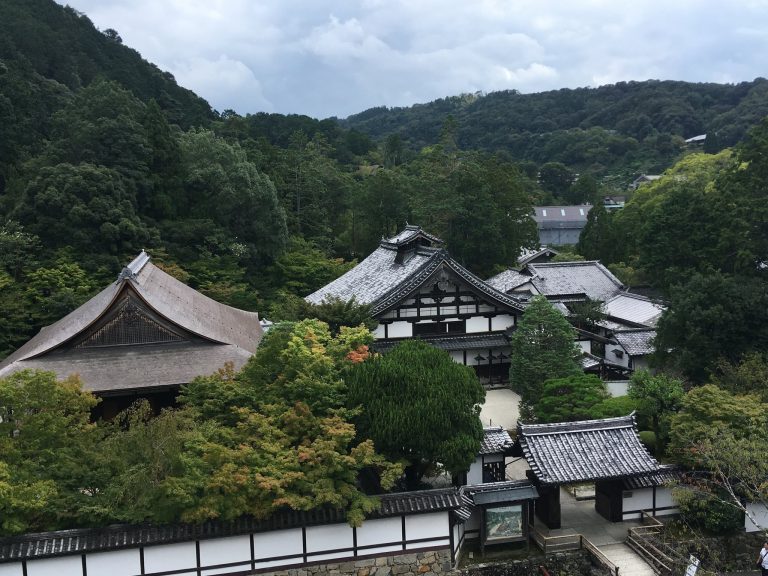
The surviving precinct represents the lower temple of a complex that once extended from the foot of the mountain into the upper mountain temple. Historical descriptions give the lower temple an area of approximately 20,000 square metres, with a pagoda, Buddhist halls, monks’ quarters, and a two-story gate. More than 700 subtemple buildings were also reportedly associated with it. An 867 record compiled by Keiun describes the upper complex with a worship hall, a Five Great Hall, eastern and western monks’ quarters, a kitchen, and a bathhouse.
Main Temple Buildings
Kannon Hall
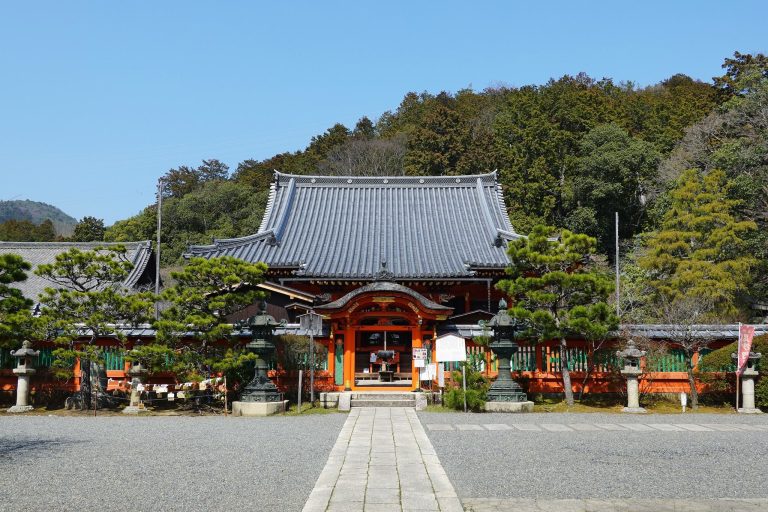
The present Kannon Hall serves as Anshō-ji’s main hall. Rebuilt in 1817, it is a three-bay by three-bay building with an irimoya roof, a hipped roof combined with gabled ends. Inside stands the principal Eleven-Headed Kannon, together with images of the Four Heavenly Kings from the Heian period, a Kamakura-period image of Fudō Myōō, and an Edo-period seated statue of Tokugawa Ieyasu.
The Eleven-Headed Kannon is carved from a single block of kaya wood and measures 252.5 centimetres high. Temple tradition attributes the image to the Nara-period monk Taichō, although the statue was made before Anshō-ji was founded. Its date and association with the temple therefore belong to different stages of the site’s history.
Daishi Hall
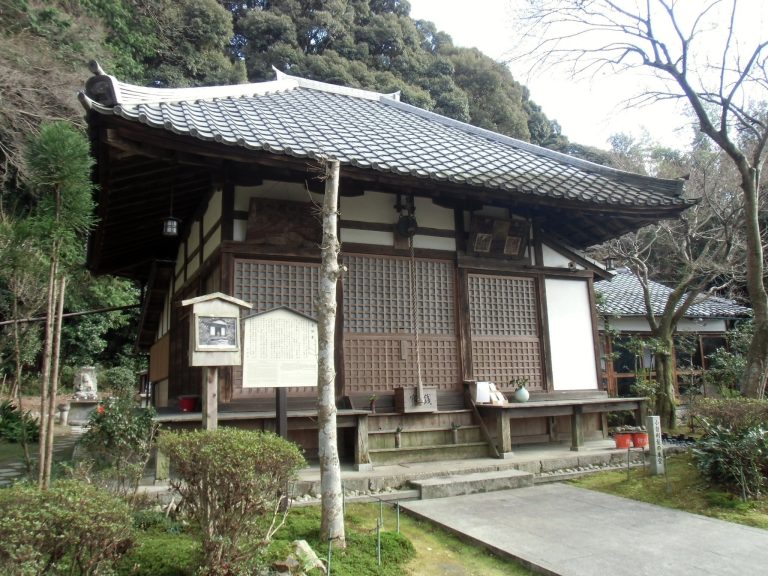
The Daishi Hall was rebuilt in 1773. Its principal image is a statue of Kūkai made by the mid-Edo-period sculptor Shimizu Ryūkei. Statues of the Heian-period monks Keiun and Sōi stand beside it, along with images of the Edo-period religious figures Kōga and Yūkai.
Jizō Hall
Built in 1772, the Jizō Hall houses a late-Kamakura-period image of Jizō Bosatsu. The building and its principal image preserve a later phase of Anshō-ji’s religious use within the reduced lower-temple precinct.
Pagoda and Buddhist Sculptures
Tahō Pagoda Site
The former Tahō Pagoda site retains its foundation platform and foundation stones. The pagoda was rebuilt in 1759, but the structure was destroyed by the fire of November 1906. Its surviving foundations preserve the location of a major Buddhist building even though the pagoda itself no longer stands.
Five Wisdom Tathāgatas
The five wooden Five Wisdom Tathāgata seated statues represent the five principal Buddhas of the Vajradhātu, or Diamond Realm, mandala, with Dainichi Buddha at the centre. They are believed to have been made when Anshō-ji was founded and originally served as the principal images in the upper temple’s worship hall. The statues were later installed in the Tahō Pagoda.
The group survived the pagoda fire because it had already been deposited with the Kyoto National Museum. The five images are regarded as the oldest complete surviving set of this type and were designated National Treasures in 2019.
Five Great Ākāśagarbha Statues
The Five Great Ākāśagarbha statues now held by Tō-ji’s Kanchiin date from the Tang period and are Important Cultural Properties. Keiun brought them from Tang China, and they originally belonged to Anshō-ji’s Five Great Hall. After the hall collapsed in 1378, the damaged images were recovered, repaired, and transferred to Kanchiin.
Guardian Shrines and Garden
Seiryū Hall
The Seiryū Hall is a one-bay shrine in the nagare-zukuri style, a shrine form with a roof extending over the entrance side. It serves as Anshō-ji’s guardian shrine and enshrines the Seiryū deity associated with the temple’s foundation. The hall was rebuilt in 1853, restored in 2022, and is surrounded by the Sentaibanryū moss garden, created around it in the same year.
The hall had previously been rebuilt in 1594 by Mokujiki Ōgo, who prayed there for the successful construction of the Great Buddha Hall at Hōkō-ji. It was moved to its present location in 1619. The building therefore incorporates both the religious history of Anshō-ji and changes made during the temple’s early modern revival.
Twelve-Sha Shrine
The Twelve-Sha Shrine serves as the guardian shrine of the Ueno district and enshrines Susanoo. Its function relates the surviving temple precinct to the religious protection of the surrounding district.
Benten Shrine
The Benten Shrine is a one-bay nagare-zukuri structure dedicated to Benzaiten. It was rebuilt in 1925 and dismantled and repaired in 1998.
Ancillary Buildings and Bell
Kitchen and Main Residence
The precinct includes a pond and the former kitchen quarters. The kitchen and the former main temple residence were moved to their present location north of the Lake Biwa Canal in 1962, together with associated buildings. The Gochi Henmyō-tei garden was laid out in the precinct in May 2024.
Bell Tower and Temple Bell
The bell tower was rebuilt during the Hōreki era, from 1751 to 1764, and moved to its present location in 1962. Its temple bell was cast in 1306 and carries an inscription identifying it with Azumidera of Watanabe in Settsu. Tradition connects the bell with Toyotomi Hideyoshi’s invasion of Korea, during which bells from the Kinai region were allegedly taken for use as military camp bells. The tradition further holds that the bell belonging to Azumidera was returned to Anshō-ji by mistake.
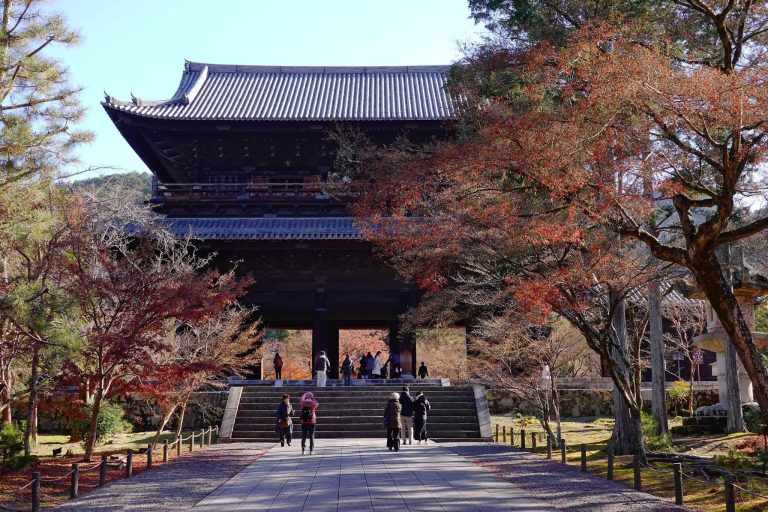
Former Front Gate
The former front gate of the main temple residence was rebuilt during the Genroku era, from 1688 to 1704, and moved to its present location in 1962. It survives as part of the group of buildings rearranged after the canal divided the precinct.