Jikō-ji Temple: A Tendai Buddhist Temple in Japan


Site at a Glance
- Rating
- 4.2
- Popularity
- Low
- Country
- Japan
- Primary era
- Medieval
- External website
- Open
- Eras represented
- Medieval, Early Modern
- Civilizations
- Ashikaga shogunate, Tokugawa
- Site type
- Religious
- Remains
- Monastery
On this page14 sections
History
Jikō-ji Temple is a Tendai Buddhist temple in Japan, located in Tokigawa, Saitama, whose foundation is traditionally associated with the seventh and eighth centuries. Tendai is a major Japanese Buddhist school combining meditation, devotional worship, and esoteric ritual. The temple’s principal image is the Eleven-Faced, Thousand-Armed, Thousand-Eyed Kannon, a compassionate bodhisattva represented in forms expressing the ability to perceive suffering and respond in many ways. Jikō-ji is the ninth temple on the Bandō Thirty-Three Kannon pilgrimage route.
Foundation and imperial patronage
The circumstances of Jikō-ji’s foundation remain uncertain. Tradition says that in 673 the monk Jikun of Kōfuku-ji established a chapel for a Thousand-Armed Kannon. In 770, the priest Dōchū, a disciple of Ganjin of Tōshōdai-ji, opened or formally established the temple. Ganjin was the Chinese monk who helped transmit Buddhist ordination and learning to Japan, while Tōshōdai-ji is the Nara temple associated with his work.
In 871, at the request of Emperor Seiwa, Jikō-ji became an imperial prayer temple. It joined the Tendai school and developed into an important Tendai center in the Bandō region. The same year is associated with the Large Prajñāpāramitā Sutra collection commissioned and transcribed by Abe no Komizumaro, a minor noble who held an official position in Kōzuke Province.
Hatakeyama patronage and medieval decline
During Minamoto no Yoritomo’s campaign against the Ōshū-Fujiwara, Hatakeyama Shigetada made Jikō-ji the Hatakeyama clan’s bodaiji, or memorial and funerary temple. The Ōshū-Fujiwara were a powerful lineage based in northern Honshu, and Yoritomo’s campaign brought the region under direct military control. As the Hatakeyama clan’s religious foundation, Jikō-ji temporarily expanded to approximately 75 hermitages.
The temple declined during the Muromachi period after the rulers of Matsuyama Castle, identified as the Ueda family, attacked and sacked it. Jikō-ji later recovered under the Tokugawa shogunate and continued as an important regional temple.
Fires and reconstruction
The original Thousand-Armed Kannon image was lost in a fire in 1802. A replacement was made in the same year, and the present Kannon Hall was built in 1803. In 1985, arson caused another destructive fire, which destroyed the Shaka Hall and bell tower. A Shaka Nyorai statue, a Zao Gongen statue, and other objects were also lost. Zao Gongen is a mountain deity associated with Japanese Buddhist-Shinto religious traditions. The bell tower was subsequently rebuilt.
Jikō-ji’s associated cultural properties include decorated Lotus Sutra manuscripts, the Kaisan-tō pagoda, the bronze bell, esoteric Buddhist ritual implements, and the Large Prajñāpāramitā Sutra manuscripts. Some objects are entrusted to the Tokyo National Museum, while a replica of the Kaisan-tō is displayed at the Saitama Prefectural Museum of History and Folklore.
Remains
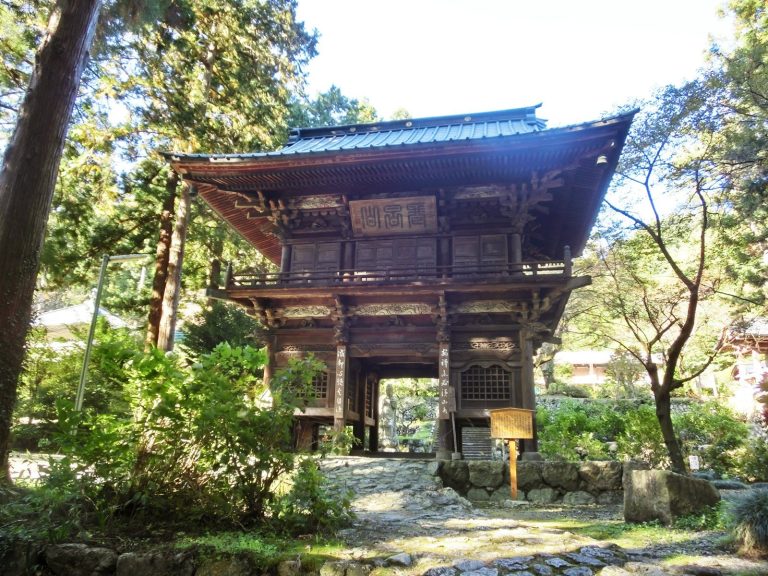
Jikō-ji’s buildings and associated features are dispersed among the mountains below Mount Toki. A route toward the principal buildings passes a group of nine stone grave tablets dating from the Kamakura through Muromachi periods. They were probably gathered at the beginning of the Meiji period from abandoned hermitages, and the group is registered as a cultural property of Tokigawa.
Principal buildings and memorial pagoda
Main and founding structures
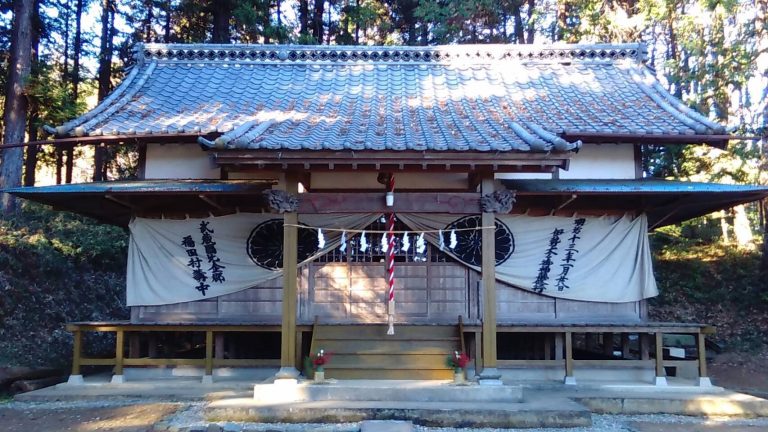
The main hall, or Hondō, is also called the Amida Hall. Nearby stands the Kaisan-tō, a pavilion containing the pagoda that commemorates the temple’s founder or founding teacher. The present Kaisan-tō was built in 1556 during the late Muromachi period. It is a wooden hōtō-style pagoda, a Japanese Buddhist memorial form with a cylindrical lower section and an upper domed or polygonal element, and measures 5.1 metres in height. Its roof is covered with wooden shingles.
The pagoda reconstructs an earlier Heian-period monument. Repairs and excavation around it revealed a Sue ware jar approximately 1,200 years old, a large Tokoname jar approximately 900 years old, and decorative elements from the predecessor pagoda. The Kaisan-tō is enclosed, and a full-size replica is displayed at the Saitama Prefectural Museum of History and Folklore.
Bell tower
The rebuilt bell tower contains a bronze Buddhist temple bell cast in 1245. The bell is 150 centimetres high and weighs 709 kilograms. It was made by the bell founder Mononobe Shigemitsu, who also cast the bell at Kenchō-ji in Kamakura.
Western halls
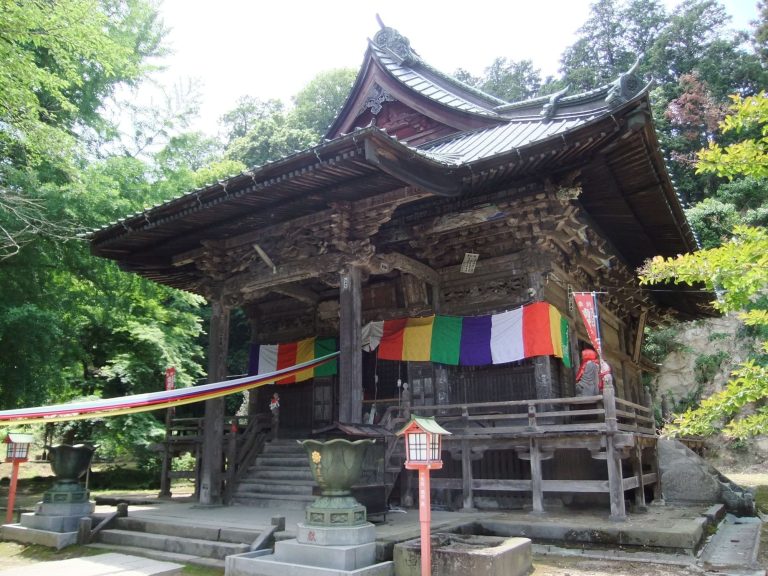
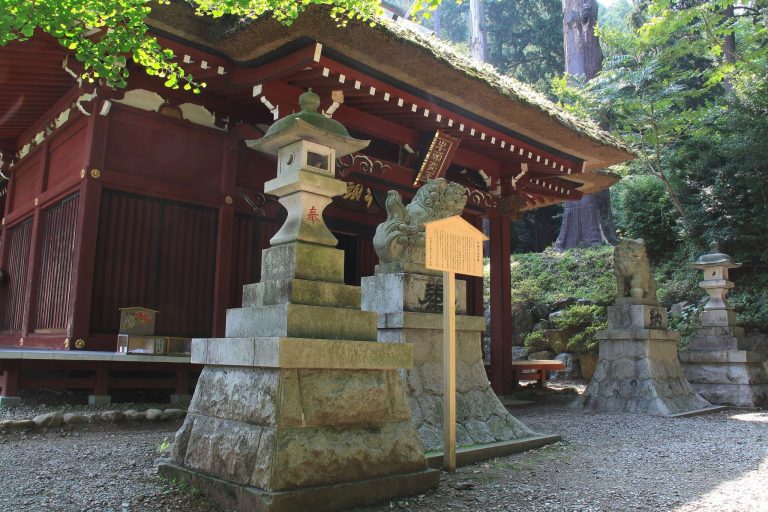
West of the principal buildings stands the Hannya Shingyō Hall, dedicated to the Heart Sutra. Farther west is the Kannon Hall, whose present building dates from 1803. The hall houses a standing Thousand-Armed Kannon made from assembled pieces of hinoki cypress and covered with paint. The image is 270 centimetres high.
The precise history of the statue is uncertain. An ink inscription found inside it during repairs to the hall in 1994 attributes its carving to the Buddhist sculptor Hōgen Nagayoshi in 1549. The image is also described as the replacement made in 1802 after the earlier figure was destroyed by fire. The statue is opened to the public annually on the second Sunday of April and on the seventeenth day of each month.
The Zao Hall, Shaka Hall, and original bell tower were destroyed in the 1985 fire. The present bell tower is a reconstruction.
Manuscripts and ritual objects
Jikō-ji Sutra collection
The Konrenzō treasure house preserves the decorated Lotus Sutra collection known as the Jikō-ji Sutra. These Kamakura-period manuscripts consist of 33 scrolls: 29 volumes of the Lotus Sutra, together with one volume each of the Muryōgikyō, Kanfugenkyō, Amida Sutra, and Heart Sutra. Members of the court-noble Kujō family copied most of them at the beginning of the Kamakura period, with participation by retired Emperor Go-Toba. Gold and silver sand and silver foil were used in their decoration.
Large Prajñāpāramitā Sutra
The Large Prajñāpāramitā Sutra collection dates from 871. Abe no Komizumaro commissioned and transcribed it. Its surviving manuscripts preserve varied handwriting by numerous copyists, generally of high quality. The original collection contained 600 scrolls, and surviving volumes are now dispersed among several locations in Japan.
Esoteric implements and sculpture
Jikō-ji’s Kamakura-period gilt-bronze esoteric Buddhist ritual implements date from 1307. The set includes vajras, ritual bells, pagoda bells, a jewel bell, a five-pronged vajra, karmas, flower vases, a kinpei, and a wheel implement. Esoteric Buddhism uses ritual implements, mantras, mandalas, and specialized ceremonies.
A seated statue of Monju Bosatsu, shown as a Buddhist priest, measures 94 centimetres in height. It was made from joined pieces of hinoki cypress. An inscription inside dates it to 1295 and identifies the sculptor as Kōkei.
A seated, crowned Amida Nyorai is approximately 55 centimetres high. It was formerly the principal image of Jōdō-in, a subsidiary temple of Jikō-ji abolished in the early twentieth century, and was then moved to the main temple. Its topknot and crown have disappeared, leaving the crown base. Its possible original role as Jōdō-in’s principal image is associated with an early Kamakura-period memorial service held in Jikō-ji’s Jōgyō Hall.
Other surviving features
The temple also preserves a sutra box, a set of nine stone pagodas or grave tablets, and burial vessels and other archaeological objects recovered during excavations around the Kaisan-tō. A building within the grounds preserves part of an aircraft donated by Masao Iwata, an aviation researcher from the former Tokigawa Village. The grounds also contain the grave of the poet Bunmei Tsuchiya.