Kudara-ji: A Baekje-Descended Buddhist Temple in Japan
Site at a Glance
- Rating
- 3.7
- Popularity
- Low
- Country
- Japan
- Primary era
- Medieval
- External website
- Open
- Eras represented
- Medieval
- Civilizations
- Japanese
- Site type
- Religious
- Remains
- Temple
On this page8 sections
History
Baekje ancestry and foundation
Kudara-ji was a Buddhist temple in Japan, located in Hirakata, Osaka, and founded around AD 750 by the Kudara-no-Konishiki clan during the Nara period. The clan traced its ancestry to Baekje, an ancient Korean kingdom that fell in AD 660 to an alliance between Silla and Tang China. Its ancestor Zenkō settled in Japan and received the family name Kudara no Konikishi from the Japanese emperor. Although the family initially enjoyed privilege, it was assimilated into the Japanese aristocracy in 691.
Kudara-no-Konishiki Kyōfuku, Zenkō’s great-grandson, played the central role in the temple’s foundation. In 749, he discovered gold in Mutsu Province and presented it to Emperor Shōmu, whose reign was associated with the completion of the Great Buddha at Tōdai-ji. Kyōfuku was promoted from Junior Fifth Rank, Upper Grade, to Junior Third Rank and became governor of Kawachi Province. Afterward, the Kudara-no-Konishiki clan appears to have shifted its base from Settsu Province to Katano in Kawachi, where it established Kudara-ji.
The temple began in the Nara period, but its complete seven-hall arrangement, meaning a complex organized around seven principal buildings or functional structures, is thought to have taken until the beginning of the Heian period to finish. Before the clan’s move to Kawachi, it had links with a Kudara-ji and a Kudara convent in Naniwa, in Settsu Province. The former temple is identified with the site at Dōgashiba in present-day Tennōji, while the convent is identified with the Saikudani archaeological site. Similarities between roof-tile forms from those two sites have helped connect them with the clan’s earlier activity.
Destruction and historical importance
Kudara-ji burned several times and was destroyed around the eleventh or twelfth century. It was not rebuilt, roughly coinciding with the disappearance of the Kudara-no-Konishiki clan from the political landscape. The temple’s history therefore reflects both the rise of a Baekje-descended family within Japan and the eventual loss of its political position.
The wider evidence associated with the clan includes eighth-century pottery from Saikudani bearing inscriptions that refer to the Kudara convent. A branch-shaped casting of Wadō Kaichin coins was also found there, together with artifacts connected with coin casting. These finds provide context for the earlier network of institutions linked to the Kudara-no-Konishiki family.
Kudara-ji is important for understanding relations between ancient Japan and the Korean Peninsula. Its arrangement was first interpreted as resembling Yakushi-ji, a Buddhist temple plan with a central Main Hall and two symmetrically placed pagodas. Later investigation revised that interpretation and identified closer similarities with the Silla temple of Gameunsa.
Excavation and preservation
The first excavation took place in 1932 under the Osaka Historical Society. Investigators examined building platforms and the foundation stones of the cloister, initially interpreting the remains as a twin-pagoda temple of Yakushi-ji type. The ruins were designated a National Historic Site in 1941 and received Japan’s highest historic-site designation, Special National Historic Site, in 1952.
A second excavation began in 1965 after old trees and shrubs had become overgrown and damaged, or threatened to damage, the remains. Hirakata mayor Soichirō Terashima promoted the project. The investigation revised the earlier understanding of the complex. A third excavation and redevelopment program began in 2005 to address damage and shortcomings in the second survey. By December 2007, three excavations had been conducted, with the third investigation still under way.
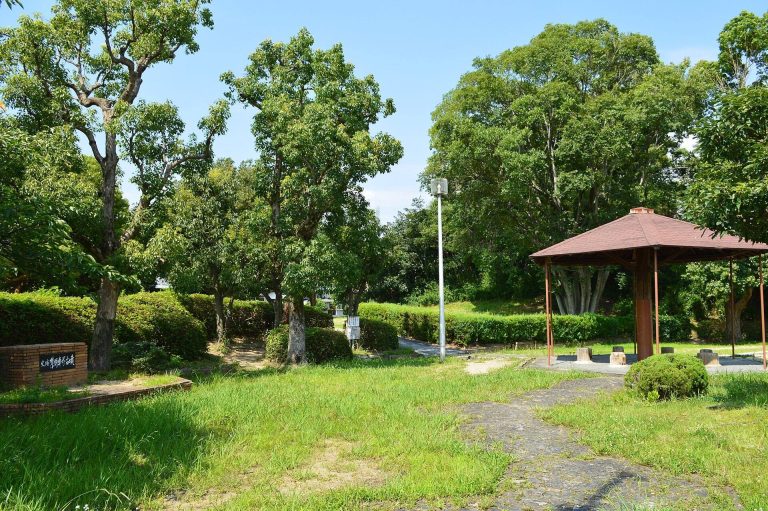
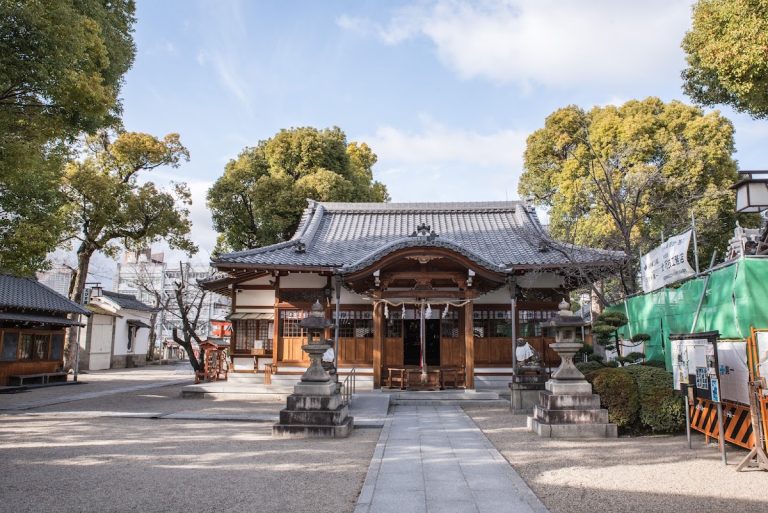
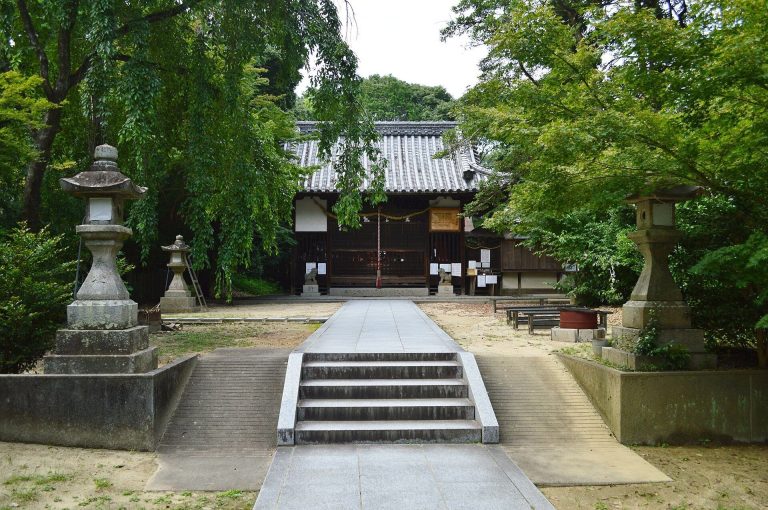
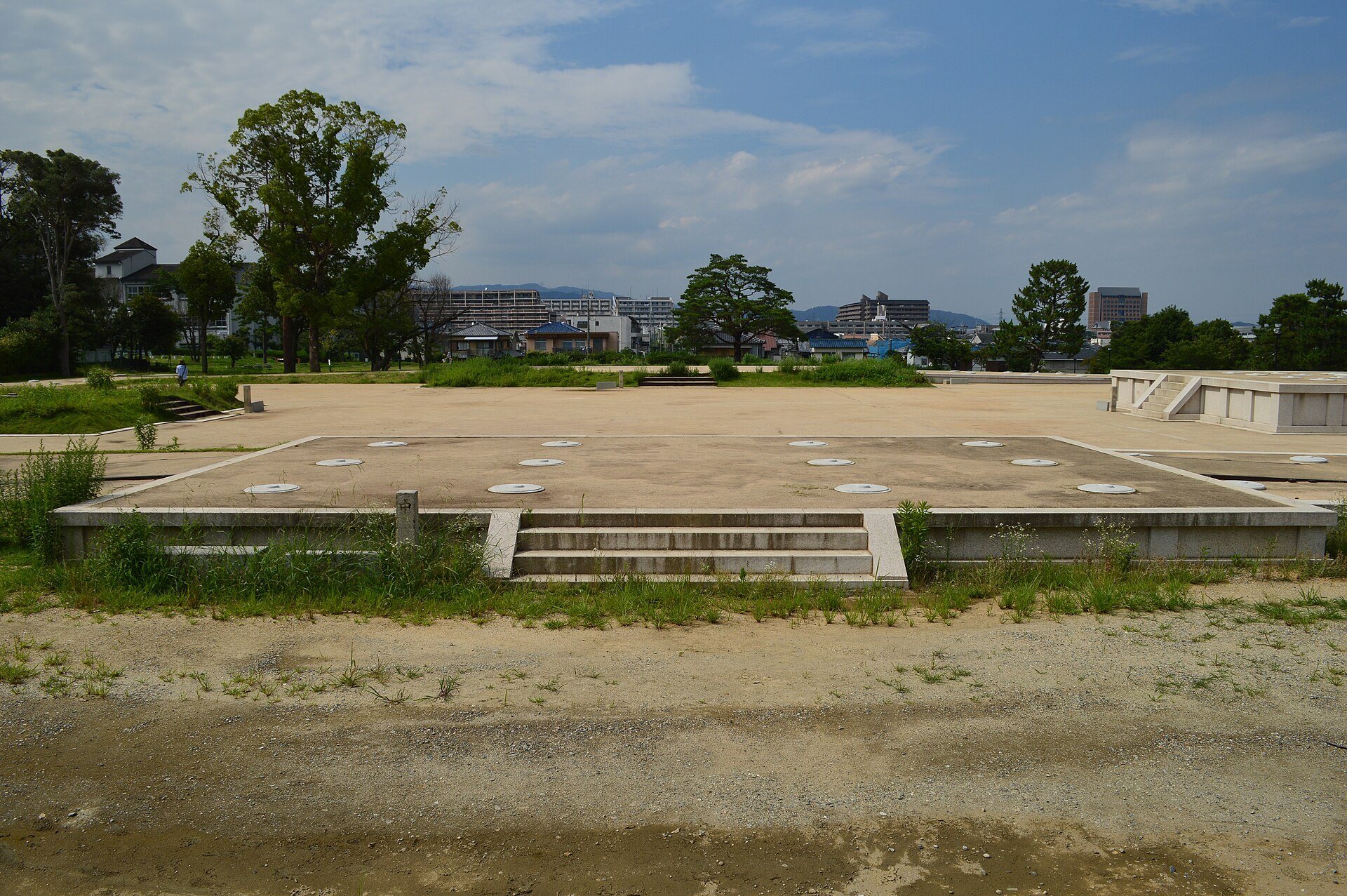
Between 1965 and 1967, the former precinct was developed as a historic archaeological park, described as Japan’s first such park. The area is now maintained as Kudara-ji Ruins Park, although redevelopment was still under way during the modern period described. The Kudaraō Shrine, a Shinto shrine dedicated to the Kudara no Konikishi clan, stands immediately west of the ruins.
Remains
Temple layout
The ruins occupy a low hill in the Katano-ga-hara area of Hirakata. The former precinct covered approximately 200 meters on each side. Its principal buildings were arranged along a central axis, with the Main Hall at the center, the Lecture Hall behind it, and the Refectory farther to the rear. A pagoda stood on each side of the central group.
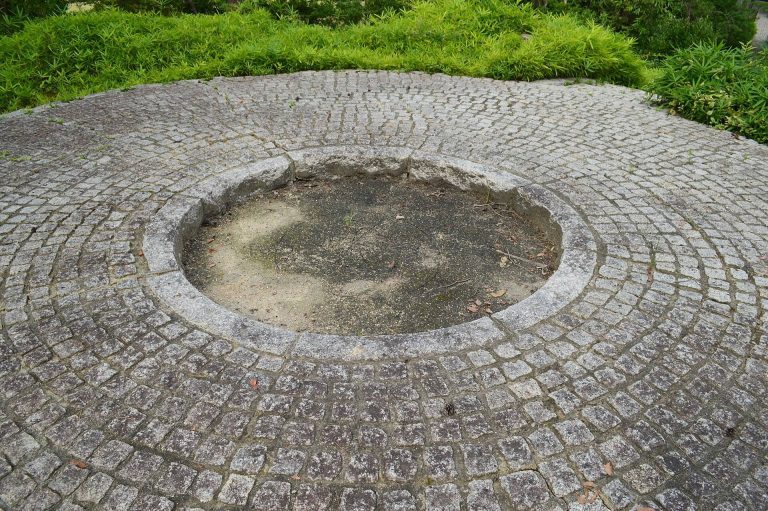
The complex also included a South Gate, Middle Gate, East Gate, an eastern precinct, and cloisters. The cloisters formed an enclosed covered passage around the two pagodas and extended from the Middle Gate to the Main Hall. The temple buildings themselves were destroyed by repeated fires, but their platforms and foundation stones have been reconstructed in the archaeological park. Foundation stones associated with the Main Hall, pagodas, and cloisters remain identifiable.
Architectural interpretation
The 1965 excavation clarified the relationship between the cloister and the principal buildings. At Yakushi-ji, the cloister joins the Lecture Hall, while at Kudara-ji it joined the Main Hall. This arrangement is closer to the plan associated with Gameunsa, a Silla-period Buddhist temple, than to the Yakushi-ji model initially assigned to the ruins. The surviving foundations therefore preserve evidence not only of the temple’s layout but also of the architectural connections considered in interpreting its origins.
Brick relief Buddha
Excavation during the third investigation produced fragments of a large multi-figure Buddha image made as a relief-like brick sculpture. The fragments belong to the Nara period. Their scale and the circumstances of their discovery have been interpreted as evidence of the temple’s high status and of the power held by the Kudara-no-Konishiki clan.