Katanoamatsukami-no-yashiro: A Shinto Shrine in Hirakata, Japan
Site at a Glance
- Rating
- 4.2
- Popularity
- Low
- Country
- Japan
- Primary era
- Medieval
- External website
- Open
- Eras represented
- Medieval
- Civilizations
- Ashikaga shogunate
- Site type
- Religious
- Remains
- Sanctuary
On this page6 sections
History
Katanoamatsukami-no-yashiro is a Shinto shrine in Hirakata, Japan, whose origin is traditionally traced to a ritual platform established in 787 by Emperor Kanmu to enshrine his father, Emperor Konin. Its main sanctuary preserves medieval architectural features, while the precinct is also associated by tradition with Emperor Keitai’s Kusuba Palace.
Imperial Foundation and Shrine Development
The Shoku Nihongi and the origin record of Iwashimizu Shrine state that Emperor Kanmu established the ritual platform in Katano District on November 5, 787. Emperor Kanmu ruled from 781 to 806, and Emperor Konin, the person enshrined, was his father and had reigned from 770 to 781. This imperial memorial act is regarded as the beginning of the shrine.
The shrine’s principal deities are Emperor Konin, Ame-no-Koyane-no-Mikoto, and Sugawara no Michizane. Ame-no-Koyane-no-Mikoto is traditionally connected with ritual authority and regarded as the ancestral deity of the Nakatomi and Fujiwara lineages. Sugawara no Michizane, a Heian-period scholar and court official, was later revered as Tenjin.
The local tutelary shrine was originally Kifune Shrine, which is now a subsidiary shrine within the precinct. After a new sanctuary dedicated to Emperor Konin was established, it became the main sanctuary, while Kifune Shrine was given a subsidiary position. The new shrine then served as the tutelary shrine of the surrounding communities.
Names, Reunification, and Historical Traditions
The shrine was first known as Katano Amatsukami. It later took the names Kusuba Shrine, Tenjin-gu, and Tenjin Shrine before receiving the present name in February 1888. During the Keicho era, from 1596 to 1615, local communities separated and established Kasuga Shrine for Ame-no-Koyane-no-Mikoto and Tenmangu for Sugawara no Michizane. Both were reunited with Katanoamatsukami-no-yashiro in 1872.
The precinct is traditionally identified as the site of the Kusuba Palace, a residence associated with Emperor Keitai, an early Japanese sovereign traditionally dated to the sixth century. This identification is a historical tradition rather than an uncontested ancient record. The Gokinai-shi, Kawachi Meisho Zue, and Yodogawa Ryogan Ichiran do not include it, and historian Takahiro Umabe argues that the claim emerged in the nineteenth century after the neighboring Katano Shrine presented a competing origin tradition.
The shrine was classified as a village shrine under Japan’s prewar shrine-ranking system. The traditional Kusuba Palace site was designated an Osaka Prefecture historical site in 1971. In 1984, Hirakata City designated the precinct grove as “The Grove of the Kusuba Palace Site,” one of the Eight Views of Hirakata. The main sanctuary and the sanctuary of the subsidiary Hachiman Shrine received special protected-building status in 1917, equivalent to present-day Important Cultural Properties. Kifune Shrine’s sanctuary became a Hirakata City tangible cultural property in 2004. Typhoon 21 caused extensive damage in September 2018 by toppling numerous trees in the precinct.
Remains
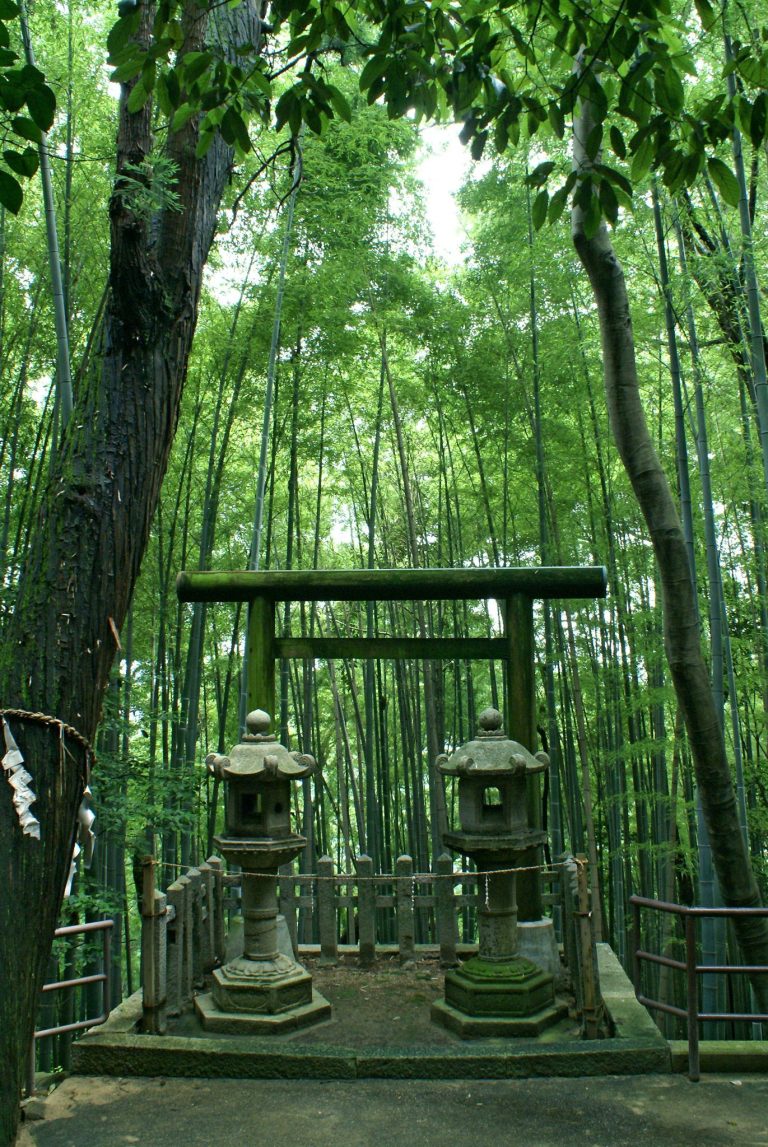
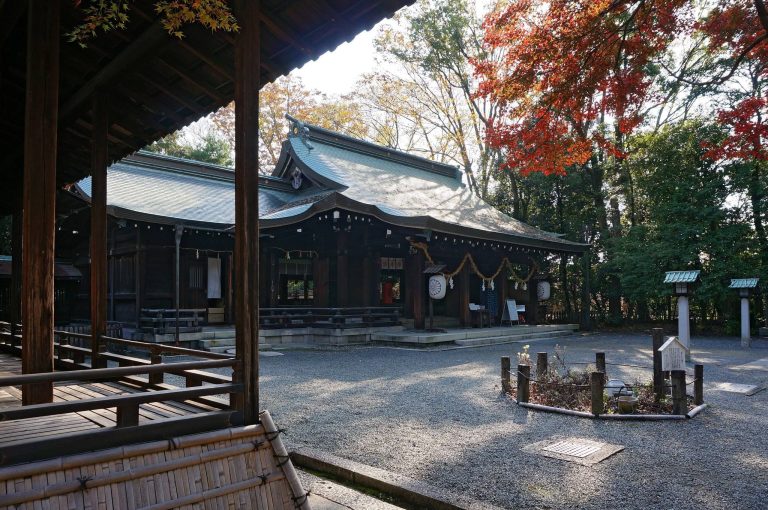
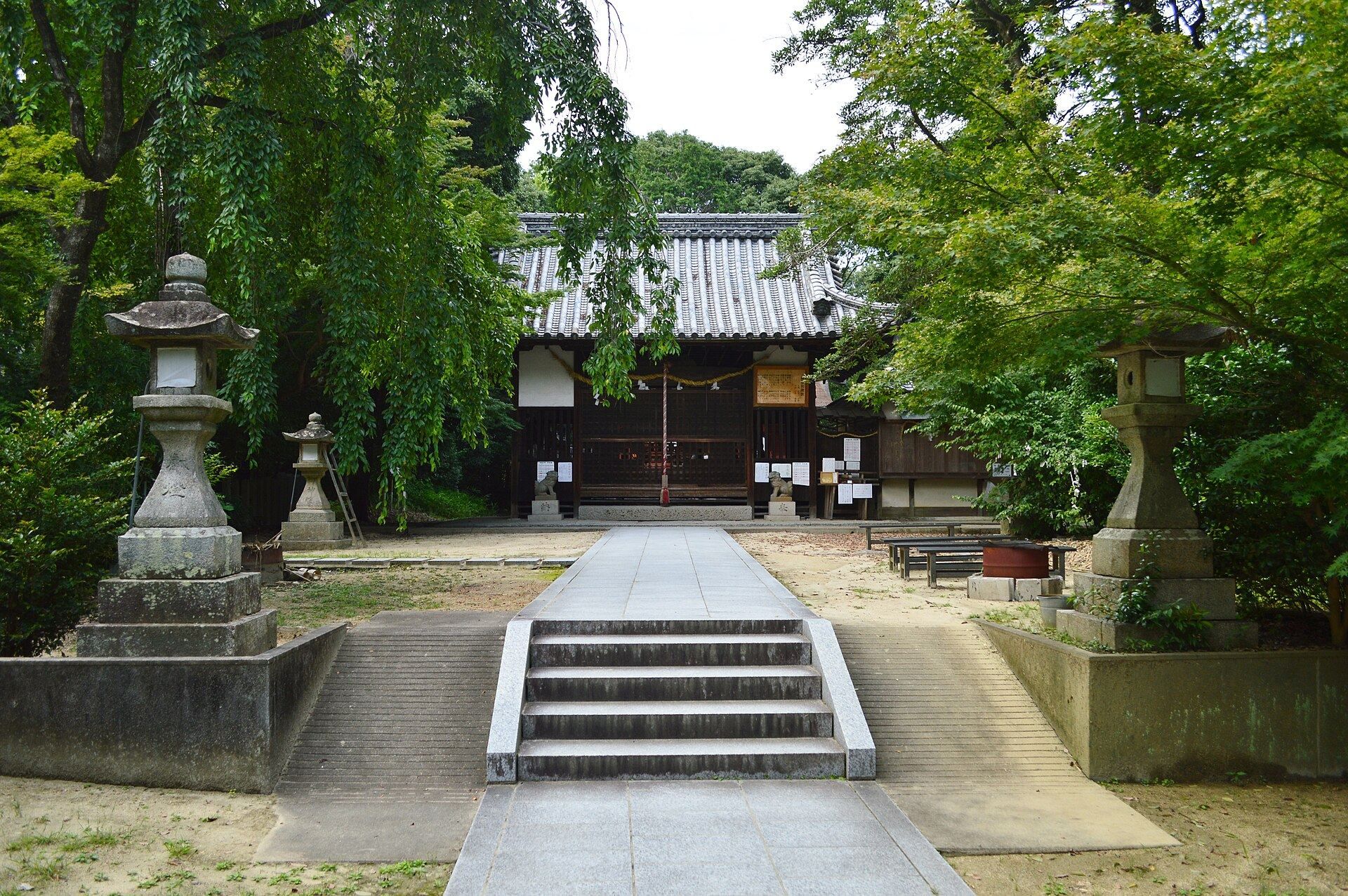
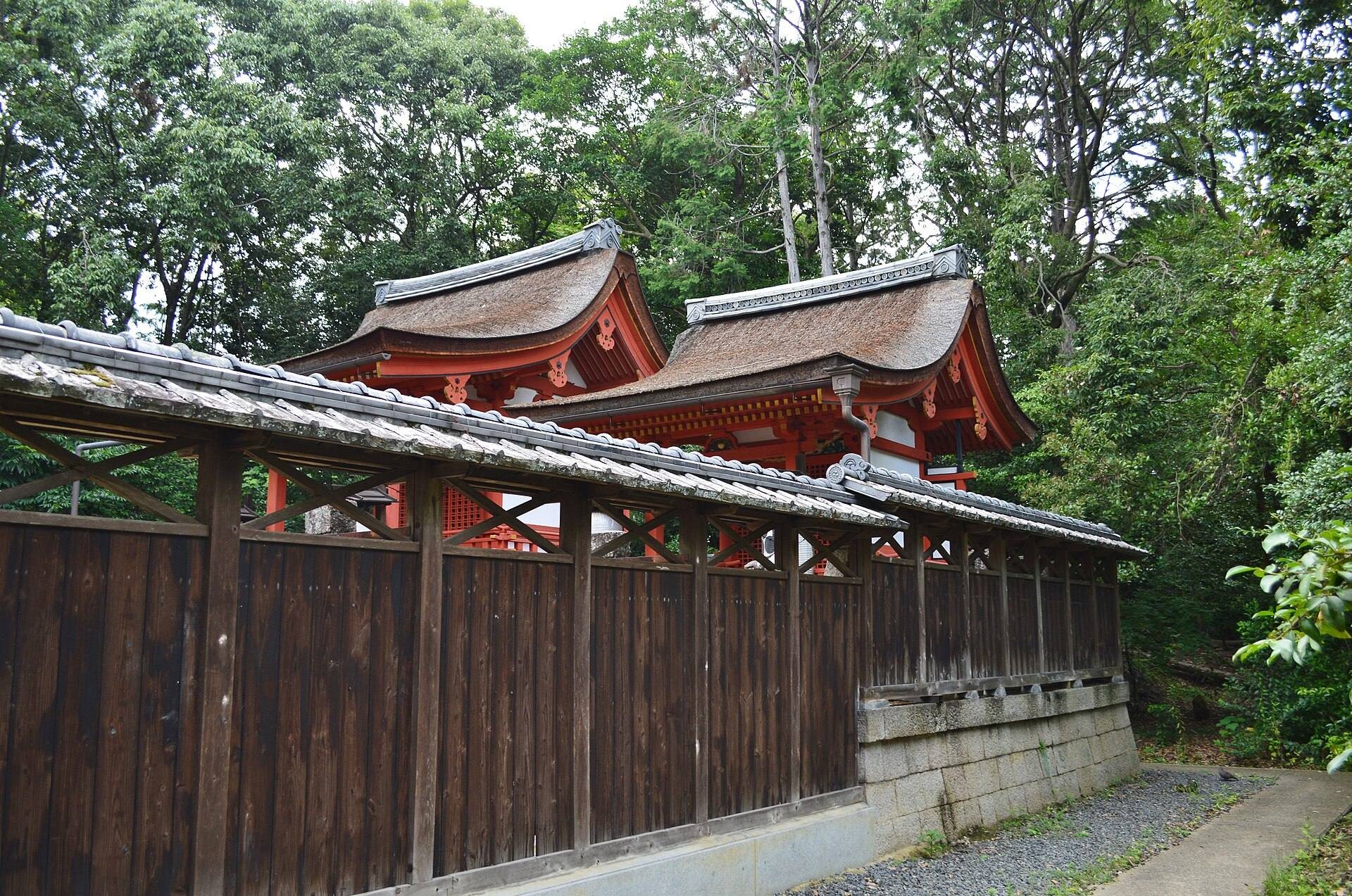
The shrine stands within a dense grove of old-growth forest. Kifune Shrine is located inside this wooded precinct after being moved there from another site. The surviving sanctuaries are arranged as compact, single-bay buildings with cypress-bark roofs. Their principal form, nagare-zukuri, uses a roof that sweeps forward over the worship area.
Main Sanctuary
The main sanctuary is a one-bay nagare-zukuri building covered with layered strips of hinoki, or Japanese cypress, bark. It is generally dated to 1402, although another dating places its original construction in the Kamakura period and identifies repairs in 1238 and 1401. Its monumental treatment preserves Kamakura-period stylistic features, while delicate carvings, including kaerumata bracket ornaments, show characteristics of the early Muromachi period. A kaerumata is a carved support placed between structural members.
Two ridge plaques associated with the sanctuary preserve dates connected with its fabric. One states that the building was raised on February 16, 1402, and the other records reroofing on November 26, 1442. The sanctuary is regarded as the oldest example in Japan of a one-bay nagare-zukuri building.
Hachiman and Kifune Sanctuaries
The Hachiman Shrine sanctuary stands beside and parallel to the main sanctuary. It is slightly smaller but follows the same one-bay nagare-zukuri form and has a cypress-bark roof. Estimated to date from the medieval period, it is classified as a mid-Muromachi-period building. Its bracket ornament beneath the projecting worship porch and its openwork transom carvings, pierced decorative panels above an opening, are notable features.
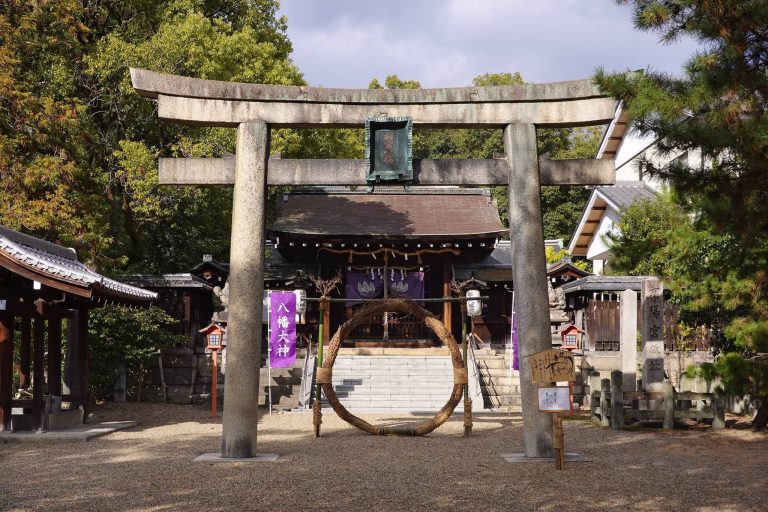
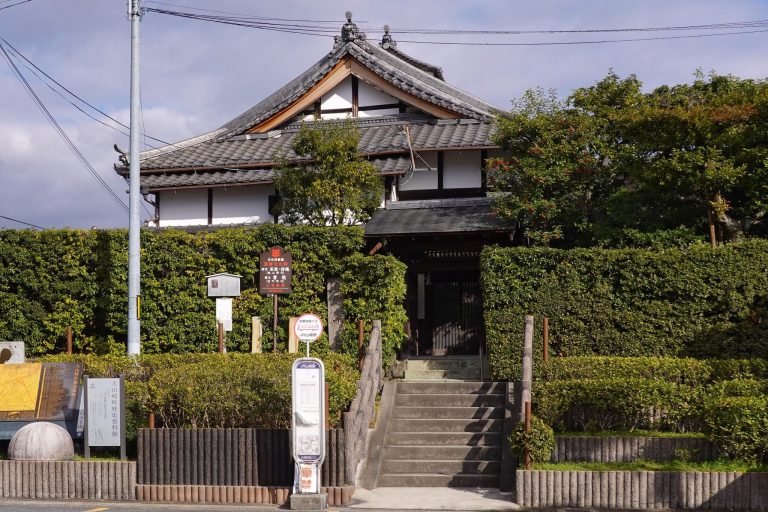
The subsidiary Kifune Shrine sanctuary is also a one-bay nagare-zukuri structure with a cypress-bark roof. Other components of the precinct include a worship hall, an administrative office, and the subsidiary shrine called Daijinja.