Kitayama Kofun: A Fifth-Century Keyhole Burial Mound in Japan
Site at a Glance
- Rating
- 3.6
- Popularity
- Very Low
- Country
- Japan
- Primary era
- Classical
- Eras represented
- Classical
- Civilizations
- Yamato
- Site type
- Burial
- Remains
- Burial Mound
On this page9 sections
History
Kitayama Kofun is a fifth-century burial mound in Yurihama, Tottori Prefecture, Japan, built by the ruling elite of the ancient Kofun period. Constructed during the first half of the fifth century, it belongs to the middle Kofun period, when large earthen mounds were raised for chiefly burials. The mound formed part of a sequence of elite burial monuments around Lake Togo, and the tradition of building large mounds in this area ended with Kitayama Kofun.
Burial and archaeological investigation
Kitayama Kofun is also known as Kitayama No. 1 Tomb and belongs to the Kitayama Kofun Group, located in the Nohana and Nagawada areas of Yurihama. An excavation in 1966 revealed several burial facilities. The first had been robbed in antiquity, so most of its grave goods had been lost. Small quantities of surviving material included tubular beads and part of an armor piece. A second burial contained human bones together with associated objects.
Modern recognition
Japan designated Kitayama Kofun a National Historic Site in 1980. Finds from the mound and from the nearby Kitayama No. 27 Tomb are kept at the Kurayoshi Museum. Kitayama No. 27 Tomb lies 50 meters east of the rear circular section and produced a deformed Four Deities and Four Beasts Mirror, a bronze mirror decorated with figures of deities and animals.
Remains
Mound form and surface features
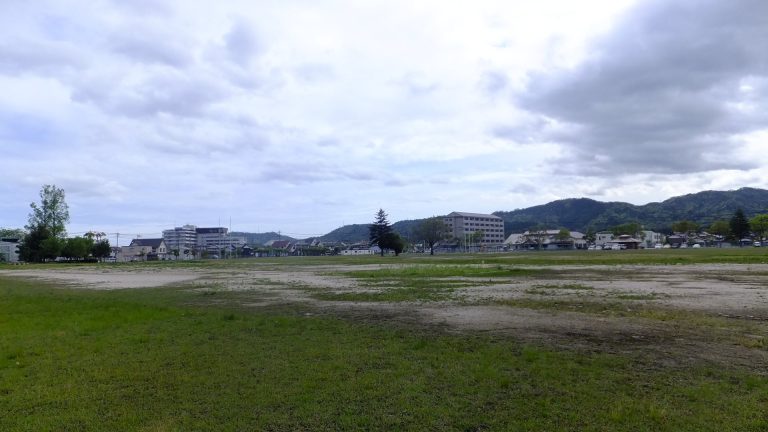
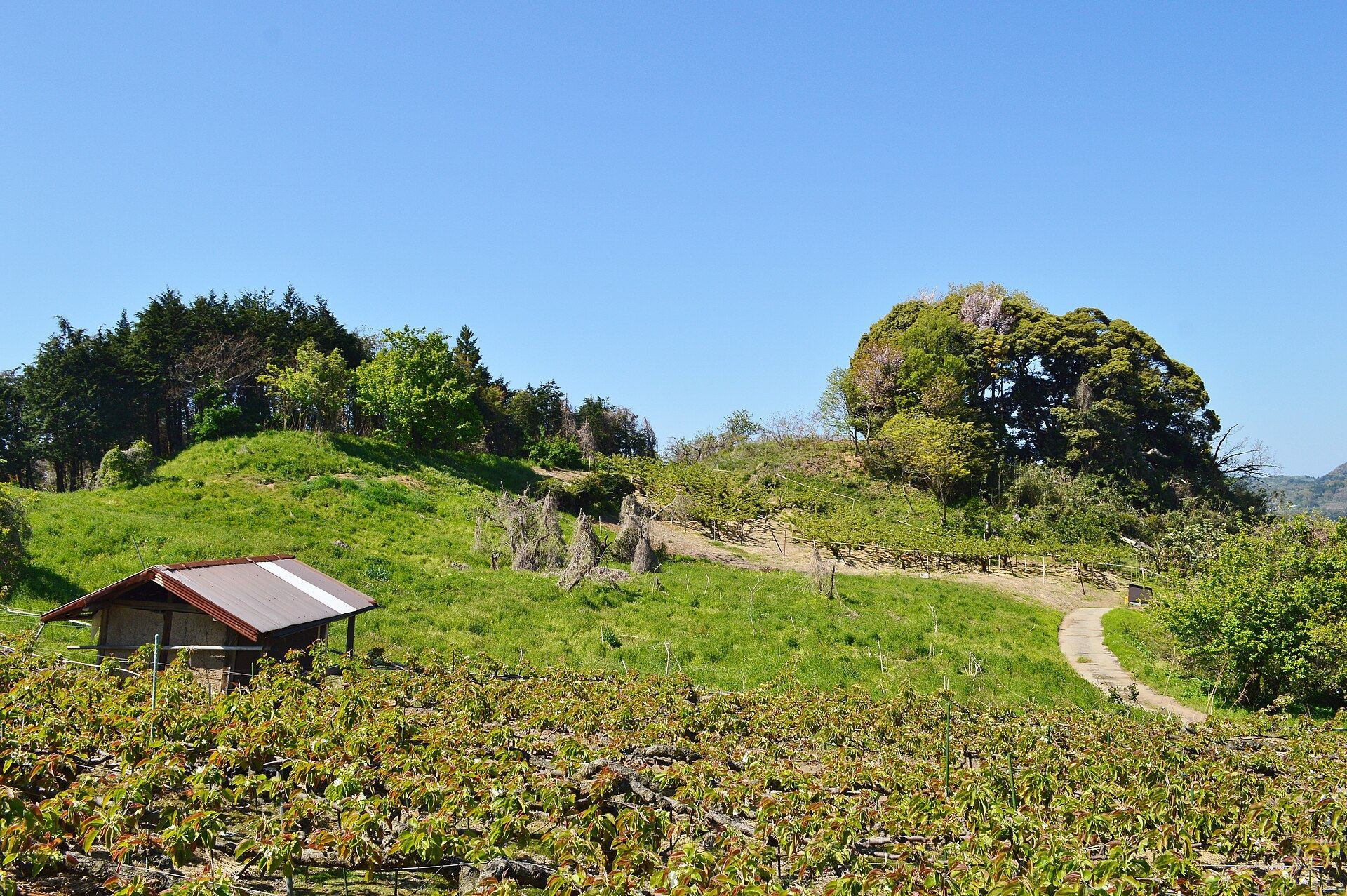
Kitayama Kofun is a keyhole-shaped mound, a form combining a rectangular front section with a circular rear section when viewed from above. It is oriented toward the west-southwest and measures 110 meters in total length. This makes it the largest kofun in Tottori Prefecture and places it among the largest in the San’in region.
The rear circular section measures 70 meters across and rises 12 meters high. The front section extends for 62 meters, reaching 5.5 meters along its central axis and 9.5 meters at the sides, while the connecting section is 43 meters wide. The mound was built on a slope, so its base levels differ. In absolute elevation, however, the rear section stands only about 1 meter higher than the front. The front section was developed to approximately the same scale as the rear section.
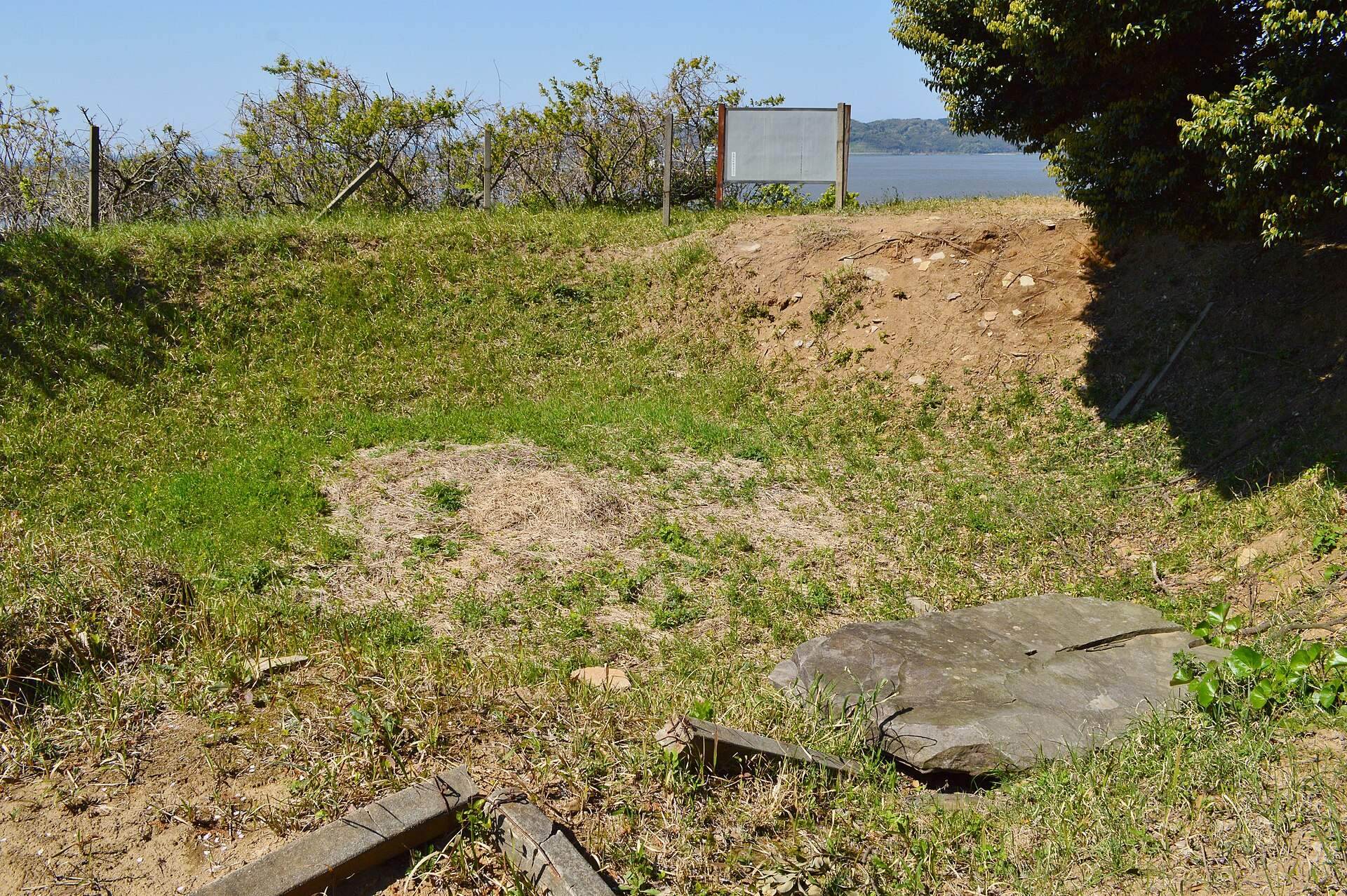
Stone revetment, a covering of stones applied to the outer slopes, protected the mound surface. Cylindrical haniwa, clay funerary objects placed on or around burial mounds, marked the exterior, while morning-glory-shaped and figurative examples also stood on the mound. The figurative haniwa represented shields, cuirasses, helmet neck guards, and chickens.
Burial facilities
First burial facility
The first burial facility lay within the rear circular section. Robbery makes its complete structure uncertain, but the gravel floor and surviving stone arrangement indicate a pit-style stone chamber, meaning a burial chamber constructed in a vertical pit. The rectangular chamber ran parallel to the mound’s main axis. Excavation identified a gravel floor 6.2 meters long and 4.4 meters wide, along with a drainage ditch leading toward the front section. Basket-pattern pottery was found around the chamber.
Stone sarcophagus
A second burial facility, a stone sarcophagus, was positioned 2 meters south of the first. It measures 1.7 meters long, 0.5 meters wide, and 0.5 meters deep. Human bones remained inside with a bronze Dragon-Tiger Mirror, a mirror decorated with dragon and tiger imagery, as well as magatama, curved comma-shaped beads, tubular beads, jujube-shaped beads, an iron axe, and a sword.
Possible third burial area
A possible third burial area lay 3 meters north of the first facility. It consisted of a white-sand-covered space measuring 3 meters by 1.8 meters, where a small quantity of artifacts was recovered.