Watanuki Kannon-yama Kofun: A Late Kofun-Period Burial Mound in Japan


Site at a Glance
- Rating
- 4.1
- Popularity
- Low
- Country
- Japan
- Primary era
- Medieval
- External website
- Open
- Eras represented
- Medieval
- Civilizations
- Yamato
- Site type
- Burial
- Remains
- Burial Mound
On this page8 sections
History
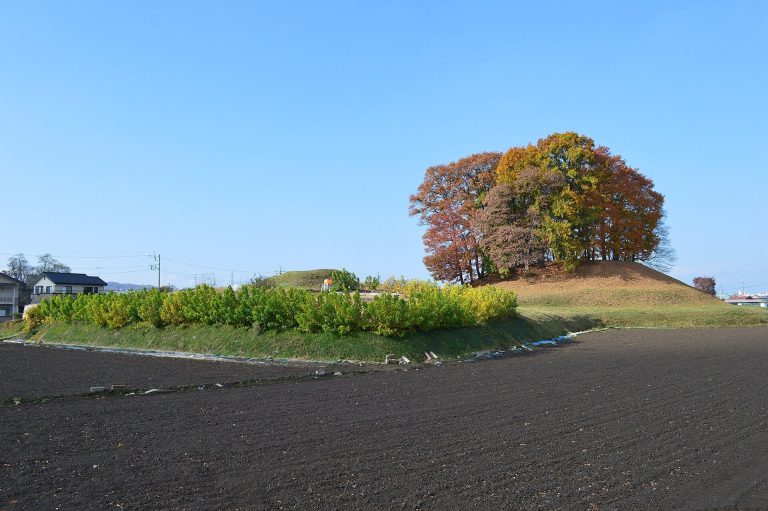
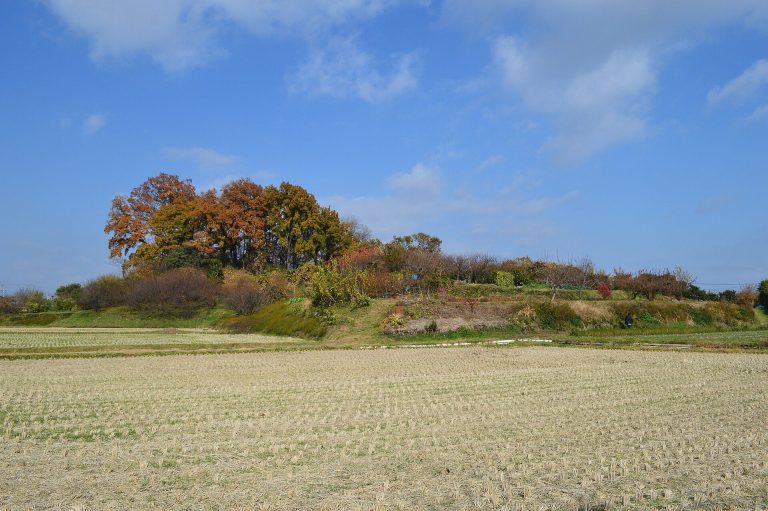
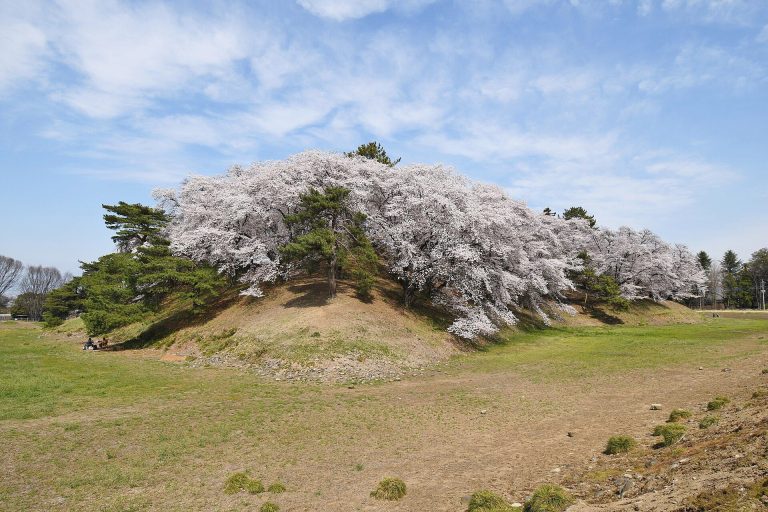
Watanuki Kannon-yama Kofun is a late sixth-century burial mound in Takasaki, Japan, built during the late Kofun period. A kofun was a burial mound used in ancient Japan between approximately the third and seventh centuries, and this example belongs to the Watanuki Kofun Group in Watanuki, on the west bank of the Ino River, about six kilometers east of central Takasaki. Its rich burial goods and carefully arranged clay figures provide evidence of the status and external connections of the person buried within it.
A burial mound and East Asian connections
The mound is estimated to have been constructed in the latter half of the sixth century or later. Its date is supported by the grave goods and by Sue ware, a high-fired gray pottery made with kiln technology. Among the objects were a copper water bottle in the style of Northern Qi, an ancient East Asian state; a bronze animal-band mirror cast from the same mold as a mirror found in the tomb of King Muryeong of Baekje at Gongju; horse equipment associated with Silla; and a protruding helmet of Gaya type. Baekje, Silla, Gaya, and Northern Qi were states or regional powers of ancient East Asia.
These objects place the tomb within a wider network of relations across East Asia. They may indicate that the buried person participated in the Yamato polity’s external relations. The Yamato polity was the central authority developing in the Japanese archipelago during the Kofun period, maintaining political and diplomatic relationships with neighboring states. The objects may also reflect a rank that allowed such prestigious items to be bestowed.
Excavation and protection
The Gunma Prefectural Board of Education excavated the kofun in 1967 and 1968. More than 500 grave goods were recovered, many in exceptionally good condition. The arrangement of the haniwa, clay figures and objects placed on or around burial mounds, has been interpreted as a possible succession ceremony for a new chief. The central scene shows a seated man receiving a container from a woman, with three other women and three men carrying quivers.
Watanuki Kannon-yama Kofun was designated a National Historic Site in 1973 under the name Kannonyama Kofun. Its excavated artifacts became National Important Cultural Properties in 1994 and were collectively elevated to National Treasure status in 2020. The collection comprises 3,346 artifacts. The site opened to the public in 1981 as Gunma Prefecture’s first historic park, while some of the excavated objects are displayed at the Gunma Prefectural Historical Museum.
Remains
Mound and surrounding features
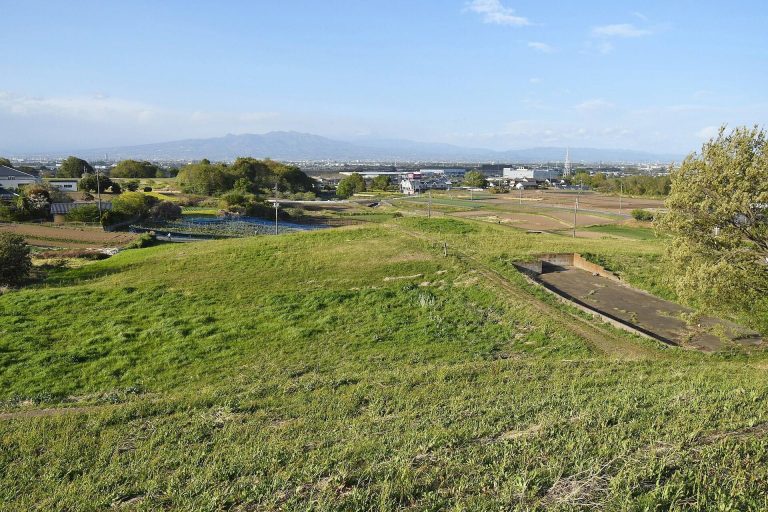
Watanuki Kannon-yama Kofun is a north-facing, keyhole-shaped mound measuring 97 meters in total length. This form combines a circular rear section with a projecting rectangular front section. The rear section rises 9.6 meters high. The mound has two construction levels and is surrounded by two horseshoe-shaped moats. Its proportions are notably regular, with the front section approximately as wide as the diameter of the rear section and with the two sections also close in height.
Haniwa were placed at various points on the mound, including along the middle terrace from the opening of the stone chamber toward the front section. The inventory includes 18 haniwa and 23 Sue and Haji ware vessels or fragments. Haji ware was lower-fired earthenware made by hand-building techniques, in contrast to kiln-fired Sue ware.
Haniwa arrangement
The principal haniwa group presents a seated man receiving a vessel from a woman. Three women accompany them, while three men carry quivers. Other figures include a woman with a leather bag, a formally posed woman, a richly dressed man, armored warriors, farmers, and figures carrying shields. Together, these figures may represent elements of a chief’s succession ceremony and convey aspects of ritual and social standing.
Decorated horse haniwa were positioned separately in the front section. The summit of the rear section held several house-shaped haniwa, a chicken-shaped animal haniwa, and haniwa representing equipment. The weapons and ornaments recovered from the stone chamber also appear in reproduced form among the figures. One warrior wears a protruding helmet of Gaya type. Comparable helmets show that the projection could bear gilt-bronze decoration, which is considered to represent the helmet’s original appearance.
Horizontal stone chamber
The burial facility is a double-sleeved horizontal stone chamber set within the middle of the circular rear section and opening toward the southwest. A horizontal stone chamber is a later megalithic burial facility entered through a side passage. In a double-sleeved example, projecting sections mark the junction between the burial room and the passage. The chamber has a trapezoidal plan and, apart from localized collapse, retains conditions close to those at the time of burial.
At 12.65 meters in total length, the chamber is the largest known stone burial chamber in Gunma Prefecture. Its burial room measures 8.12 meters, while the passage measures 4.53 meters. The burial room is 3.95 meters wide at the rear and 3.16 meters at the front. The passage narrows from 2.40 meters at its rear to 1.34 meters at its front.
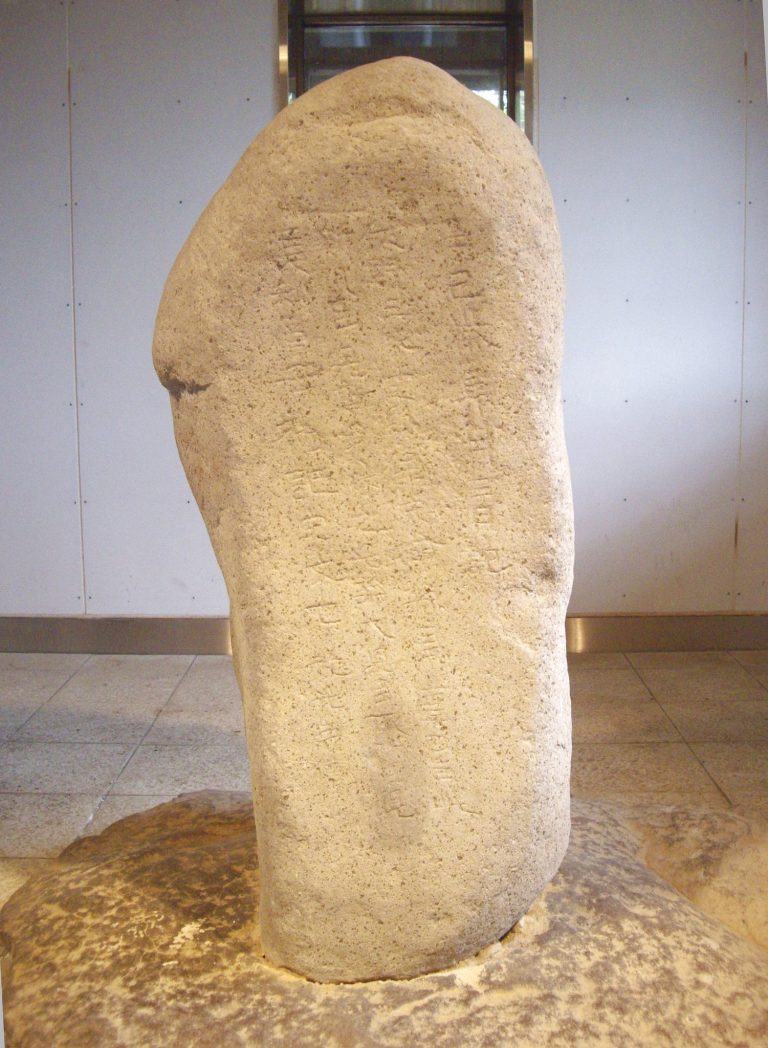
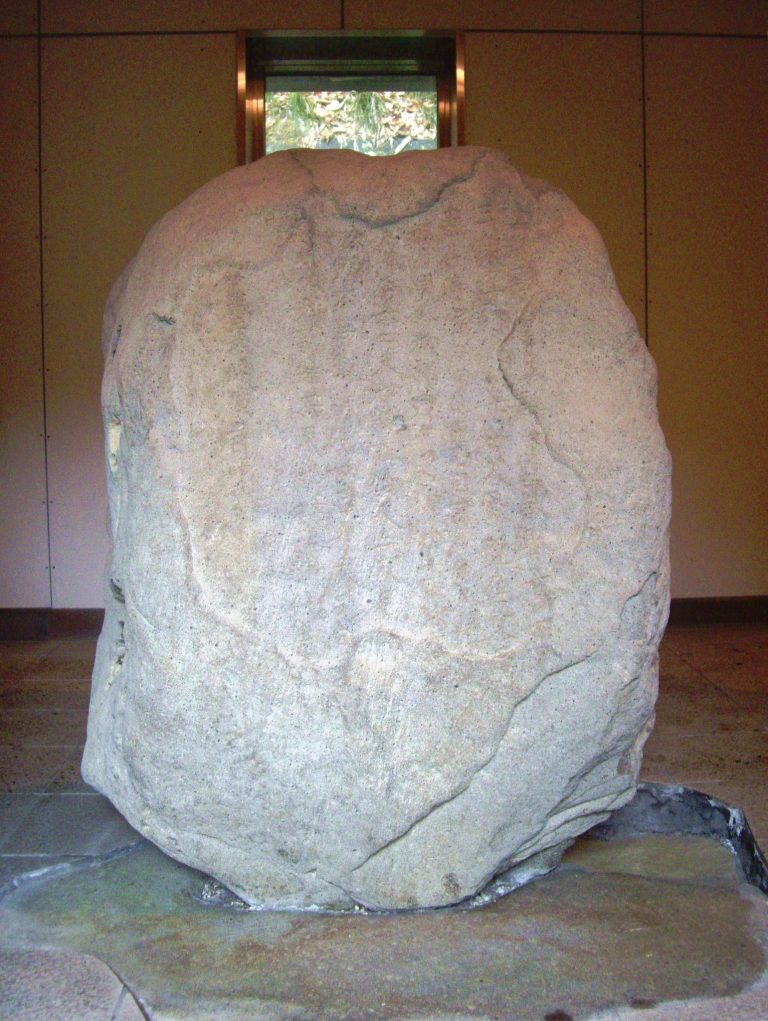
The walls were built from block-shaped hornblende andesite, a volcanic rock containing the mineral hornblende. The ceiling stones are Ushibuse sandstone, a sedimentary rock formed from consolidated sand. The largest stones weigh as much as 22 tons and were probably brought from a source in the Kabura River basin, where comparable stones occur. During excavation, the second ceiling stone from the rear and adjoining wall stones had fallen. The collapse made investigation difficult but probably helped protect the chamber from looting.
Beyond the partition stones, the body was placed directly on a roughly 3.9-by-3-meter corpse bed in a horizontal position. This burial arrangement was common in sixth-century horizontal stone chambers in the Kanto region.
Grave goods
The chamber contained two bronze mirrors, ornaments of gold, silver, and glass, swords, short swords, dagger blades, spears, iron arrowheads, helmets, and lamellar armor. The military equipment was accompanied by imported and locally produced horse gear, including gilt-bronze bits, saddles, stirrups, and harness fittings.
Pottery included large Sue ware jars, other jars and cups, Haji ware jars, and tall stemmed cups. The copper water bottle and the imported-style weapons, ornaments, and horse equipment add to the evidence for connections between the burial and the wider political world of sixth-century East Asia.