Ana Hachimangū: A Shinto Shrine of Edo Religious and Archery Traditions


Site at a Glance
- Rating
- 4.4
- Popularity
- Medium
- Country
- Japan
- Primary era
- Medieval
- External website
- Open
- Eras represented
- Medieval
- Civilizations
- Japanese
- Site type
- Religious
- Remains
- Sanctuary
On this page9 sections
History
Ana Hachimangū is a Shinto shrine in Tokyo, Japan, whose traditions are associated with Hachiman worship and the Tokugawa period. Its principal enshrined deities are Emperor Ojin, Emperor Chuai, and Empress Jingu. Shrine tradition places its origins in 1062, when the warrior Minamoto no Yoshiie deposited his helmet and sword while returning from Oshu and enshrined Hachiman, a deity associated with warfare and protection.
Origins and the name Ana Hachimangū
The shrine was formerly known as Takada Hachimangu. In 1636, a target range was established at the site, and the shrine became its tutelary sanctuary. Five years later, the shrine-associated monk Ryosho opened the southern foothills to construct a hermitage. Ground cutting revealed a horizontal cave containing a gilt-bronze sacred image. This discovery gave the shrine its later name, Ana Hachimangū, meaning “Cave Hachimangu.”
Tokugawa Iemitsu, the third shogun of the Tokugawa shogunate, heard of the discovery and designated Ana Hachimangū as a shogunal prayer sanctuary and the principal guardian of northern Edo. Successive shoguns visited the shrine, strengthening its connection with the ruling house during the Edo period, the era of Tokugawa government in Japan.
Tokugawa patronage and yabusame
In 1728, the eighth shogun, Tokugawa Yoshimune, dedicated a yabusame performance to pray for the recovery of his heir from smallpox. Yabusame is a mounted-archery ritual in which riders shoot arrows at targets along a course. The dedication established a continuing association with prayers for the birth of heirs and protection against misfortune. A picture scroll connected with the shrine depicts a performance held in 1738 to celebrate the birth of Takechiyo, the future tenth shogun Tokugawa Ieharu.
Ana Hachimangū also attracted widespread popular devotion in Edo, especially from people praying against childhood intestinal disorders. In 1879, a prayer for this purpose was performed for the Crown Prince, who later became Emperor Taisho. The shrine remains associated with the winter-solstice custom of distributing the Ichiyo Raifuku amulet, which is given out from the winter solstice through Setsubun.
War, reconstruction, and continuing traditions
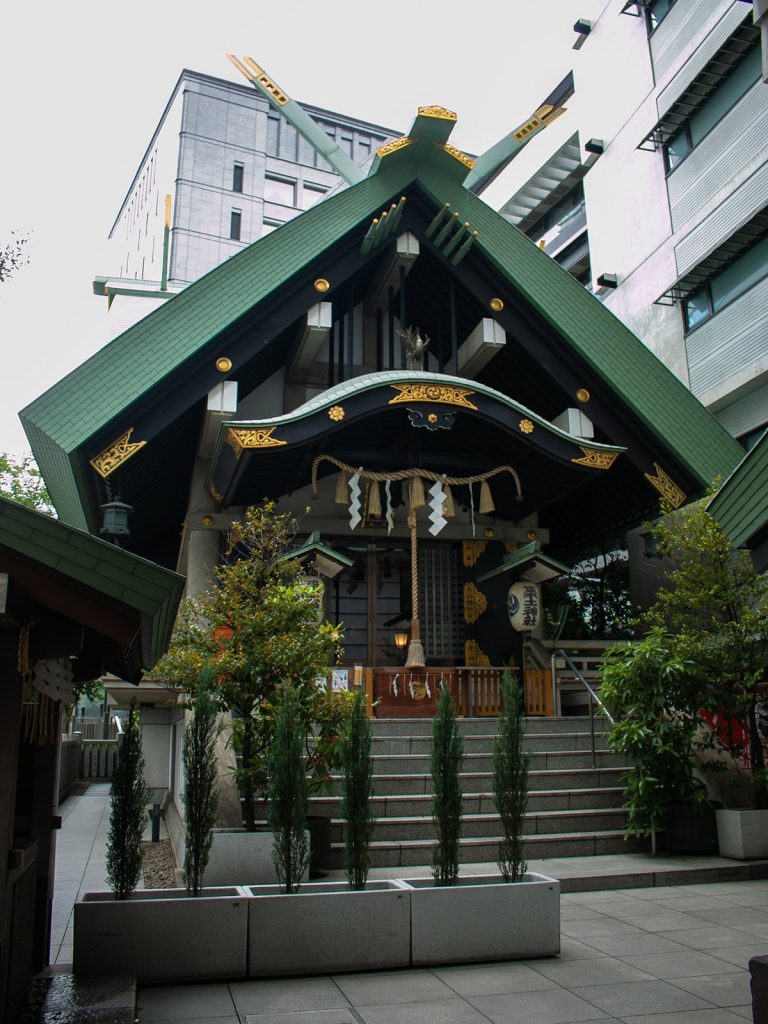
Much of the shrine’s building complex was destroyed in the 1945 Tokyo air raid. Reconstruction of the main sanctuary began in 1961 during a project commemorating the shrine’s 900th anniversary. The offering hall and worship hall followed in 1989, while the guardian gate was rebuilt in 1998 in a style associated with the Muromachi period, the Japanese era from approximately the fourteenth to the sixteenth century. Reconstruction of the entire precinct, based on old books, was still described as incomplete.
Takadanobaba yabusame began as a dedication by Tokugawa Yoshimune. After a long interruption following the Meiji Restoration, the political transformation that ended the Tokugawa shogunate, it was revived in 1934 to celebrate the birth of Crown Prince Akihito, later Emperor Emeritus Akihito. Since 1979, the performance has been held annually on Sports Day at Toyama Park rather than within the shrine precinct.
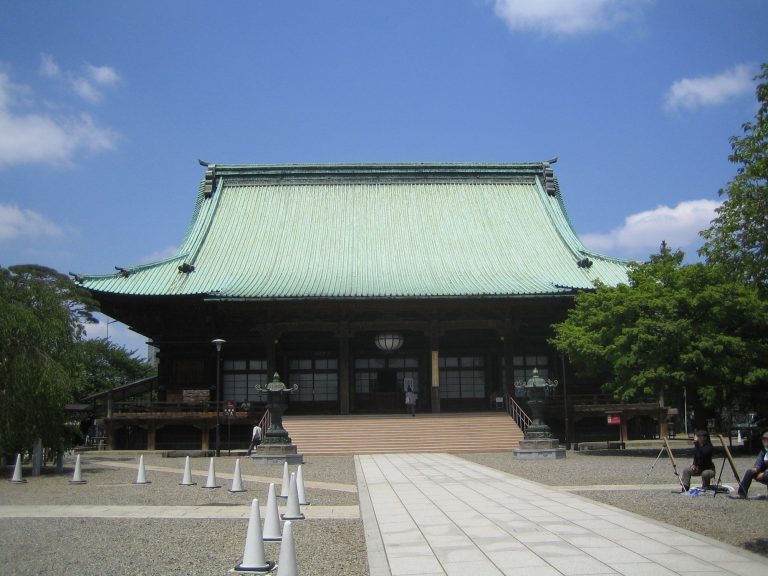
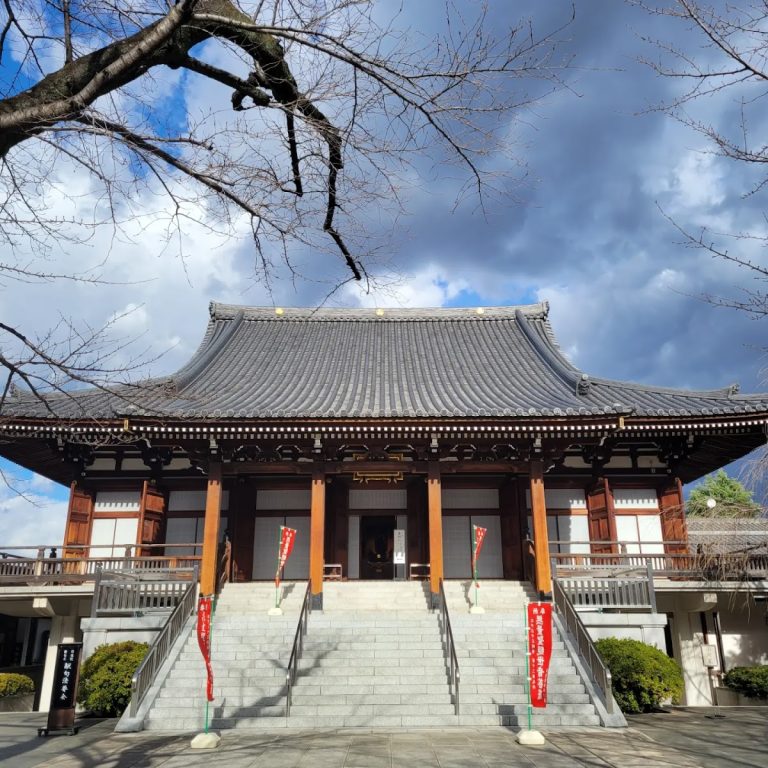
The Hotei water basin is designated by Shinjuku City as a tangible cultural property, while the Takadanobaba yabusame tradition is designated as an intangible folk cultural property. The shrine formerly held the rank of village shrine. It stands beside the former administrative temple Hōshōji and Waseda Church of the United Church of Christ in Japan, placing Shinto, Buddhism, and Christianity within the same urban setting.
Remains
Urban setting and precinct
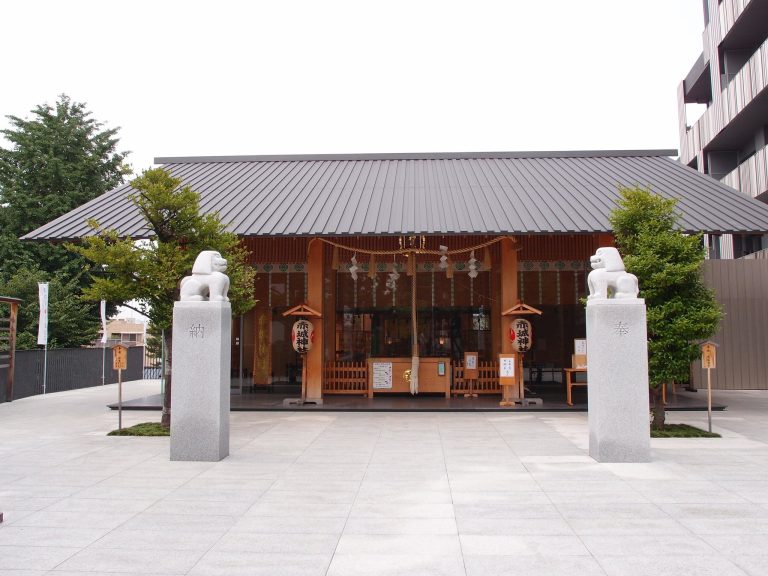
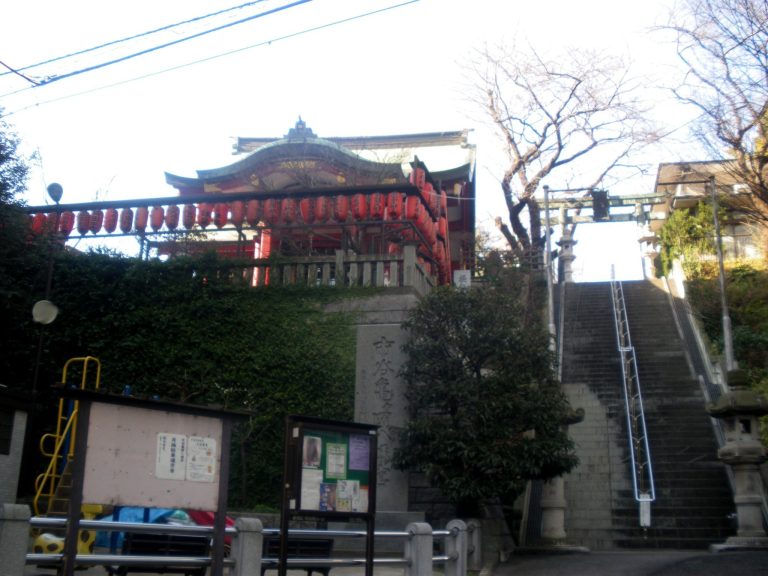
Ana Hachimangū occupies an urban site in Nishi-Waseda, Shinjuku, at the convergence of Waseda Street and Suwa Street. The surrounding area is described as a keyhole-shaped burial mound, an ancient Japanese tomb whose plan combines a rectangular rear section with a circular front section. The southern foothill contains the horizontal cave discovered during ground cutting in 1641, where the gilt-bronze sacred image was found.
Reconstructed shrine buildings
The main sanctuary, offering hall, and worship hall were rebuilt or reconstructed during the postwar campaigns. The guardian gate was reconstructed in 1998 in a Muromachi-period style, using architectural forms associated with that era. These buildings form the principal surviving shrine complex within a precinct whose reconstruction was based on old books.
Water basin
The shrine preserves a water basin depicting Hotei, made in 1649. It is described as the oldest water basin in Shinjuku. The basin had previously stood in the Fukiage Gardens of Edo Castle and was reportedly dedicated by Tokugawa Iemitsu.
Archery-related objects and records
The shrine preserves an asymmetrical bow associated with a historical user. Its yabusame tradition employs several types of arrows, and the associated picture scroll records the practice in the eighteenth century. The performance is now conducted at Toyama Park, an explicitly associated venue outside the shrine precinct.