Kōzuke Kokubun-ji Temple: Provincial Buddhist Temple of Nara-period Japan
Site at a Glance
- Rating
- 3.9
- Popularity
- Low
- Country
- Japan
- Primary era
- Medieval
- External website
- Open
- Eras represented
- Medieval
- Civilizations
- Yamato
- Site type
- Religious
- Remains
- Temple
On this page9 sections
History
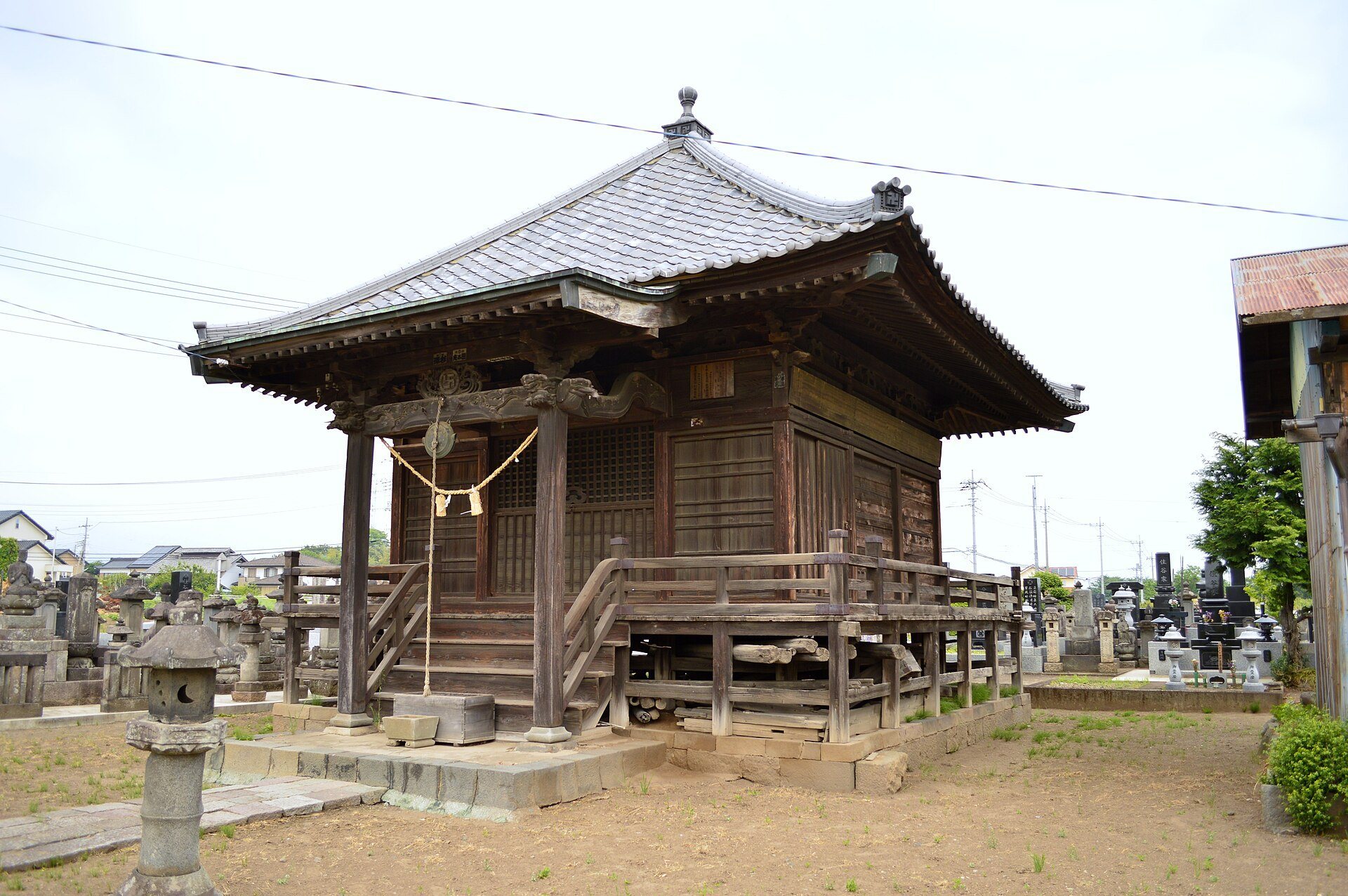
Kōzuke Kokubun-ji Temple is a former provincial Buddhist temple in Takasaki, Japan, established by the Japanese imperial government around 741 during the Nara period. It was the monks’ temple of ancient Kōzuke Province and followed the standard kokubunji plan, the arrangement used for provincial temples created under Emperor Shōmu’s system of state-supported Buddhism.
Foundation under Emperor Shōmu
In 741, Emperor Shōmu ordered the establishment of provincial temples and nunneries across Japan. The policy connected Buddhism with centralized imperial administration, making the kokubunji a religious and governmental institution in each province. The exact foundation date of Kōzuke Kokubun-ji is unknown, but its creation is placed around 741. The Shoku Nihongi, an eighth-century imperial chronicle, records offerings made to the temple in 749. This indicates that construction had begun soon after the decree and that at least part of the complex was functioning by that time.
Maintenance and decline
The temple continued to receive official support. The Engishiki, a tenth-century compilation of regulations and administrative practices, assigned 50,000 bundles of rice to Kōzuke Province for the temple’s upkeep. By 1030, however, the Kōzuke no Kuni Kōtaijitsuroku-chō described the temple buildings as damaged and dilapidated.
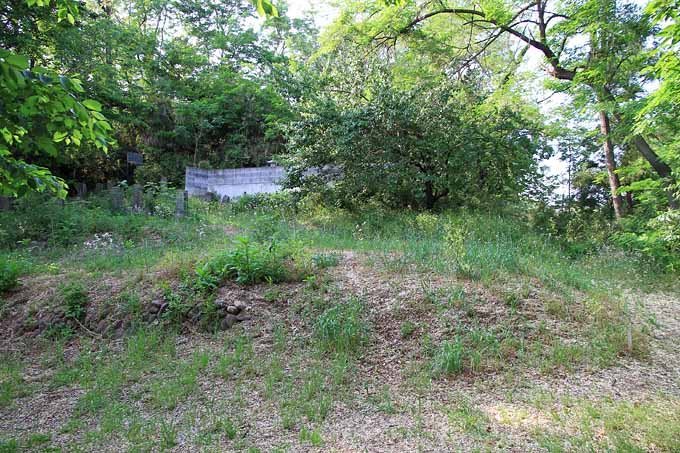
The date and cause of abandonment remain unknown. One possible connection is the 939 incursion of Taira no Masakado into the Kōzuke provincial government compound. Another proposed connection is the burning of that compound by Ashikaga Toshitsuna in 1180. By the fourteenth century, part of the former Lecture Hall area had become a cemetery, showing that the temple complex had largely disappeared and that its institutional and physical scale had been greatly reduced.
Archaeological protection and the associated nunnery
Kōzuke Kokubun-ji Temple became a National Historic Site in 1926. The Gunma Prefectural Board of Education carried out archaeological investigation and historic-site maintenance from 1980 to 1988, followed by further investigation and site improvement from 2012 to 2014. The associated Kōzuke Kokubun-niji nunnery site lies about 300 meters east of the monks’ temple. Its boundaries were examined in 1969–1970 and 1999–2000, with Takasaki City Board of Education excavations continuing from 2016. The nunnery site received National Historic Site designation on October 11, 2024. An earlier interpretation placed the nunnery at the Sannō temple ruins about 1.5 kilometers to the northeast, but the nunnery is now located beside the monks’ temple.
Remains
The monks’ temple occupied an estimated precinct about 220 meters from east to west and 235 meters from north to south. It stood on a plateau between the Someya and Ushiike rivers, at the southeastern foot of Mount Haruna, in the present-day area of Maebashi and Takasaki. The main buildings were arranged on a straight north–south axis, with the South Gate, Middle Gate, Kondō, or principal image hall, and Lecture Hall following one another from south to north. A pagoda stood west of the Kondō, and the two buildings formed a distinctive parallel arrangement.
Monks’ temple precinct
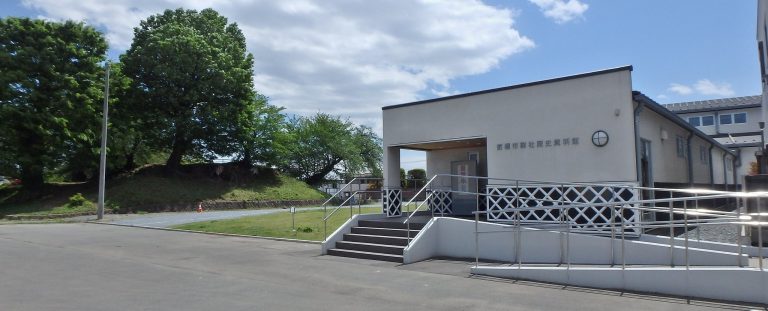
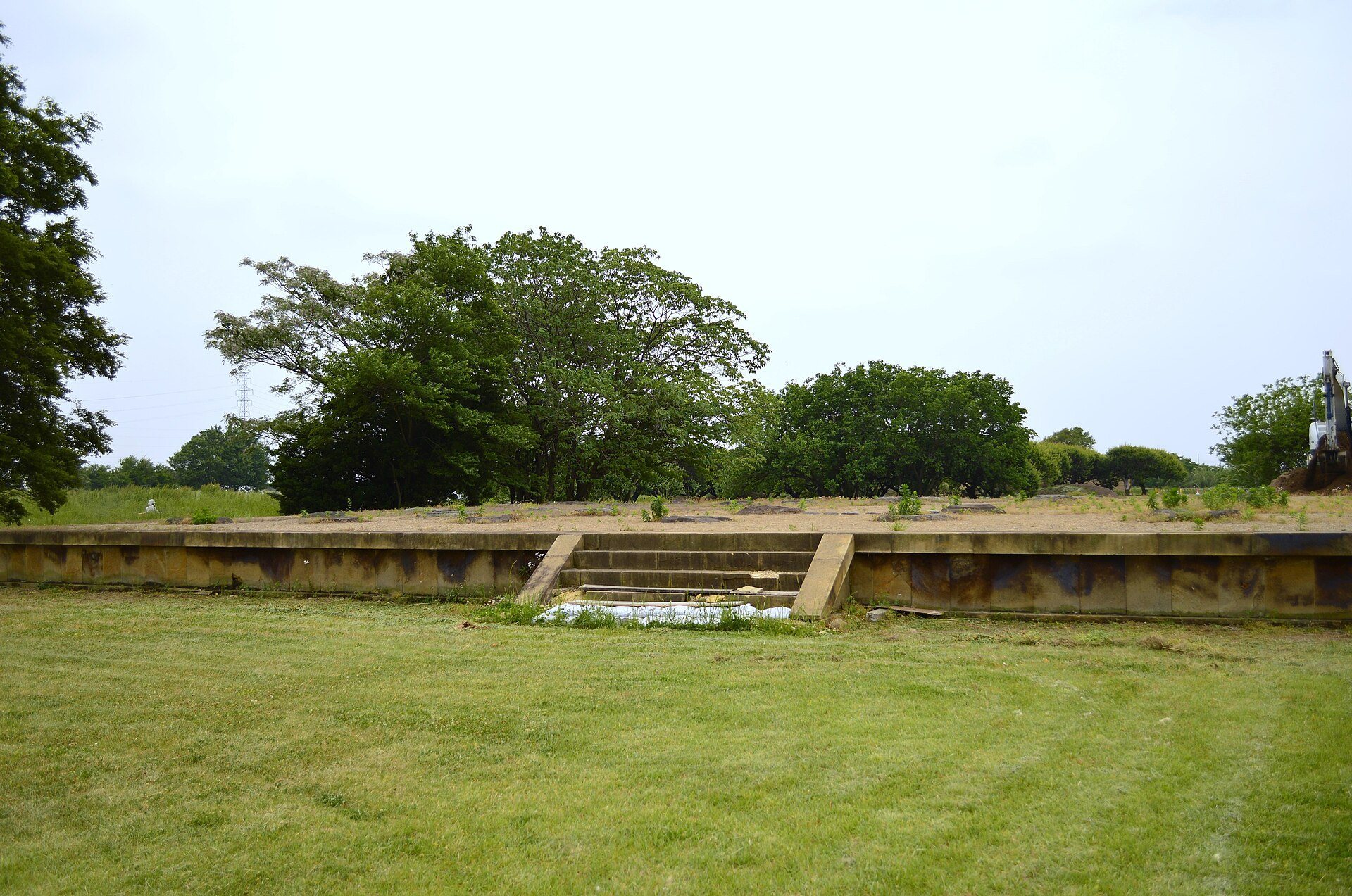
The layout is classified as the Tōdai-ji-style plan, also called the standard kokubunji arrangement. Covered cloisters, passages linking and enclosing temple buildings, extended from both sides of the Kondō to the sides of the Middle Gate. The presence or absence of monks’ residences cannot be established from the surviving evidence. The raised platforms of the pagoda and the building then identified as the Kondō, together with part of the enclosing wall, were reconstructed or restored during site improvement between 1990 and 1993. A guidance facility opened in 1994, and a reconstructed gate also stands within the site.
Kondō and Lecture Hall platforms
The Kondō was the principal image hall of the temple, while the Lecture Hall served Buddhist instruction and ritual teaching. Before the investigations of 2014, the platform now identified as the Kondō had been interpreted as the Lecture Hall platform. This change in interpretation altered the understanding of the central arrangement of the complex.
Pagoda and enclosing features
The pagoda stood west of the Kondō and is estimated to have had seven stories. Its base platform, the Kondō platform, and part of the enclosing wall were restored or reconstructed between 1990 and 1993. These features help define the temple’s principal architectural organization, including the parallel relationship between the hall and pagoda.
Kōzuke Kokubun-niji nunnery
The monks’ temple and the nunnery were positioned with their southern boundaries aligned, although the Kanetsu Expressway now separates the two sites. The nunnery precinct is estimated to have measured about 1.5 chō square, with its eastern boundary the only side described as confirmed. Excavation identified base platforms for a Middle Gate, Kondō, Lecture Hall, and nuns’ quarters. The complex is thought to have followed a plan modeled on Tōdai-ji or Hokke-ji, but without a pagoda. Its enclosing wall was more simply constructed than the wall of the monks’ temple. The foundation stones and other remains have been reburied.