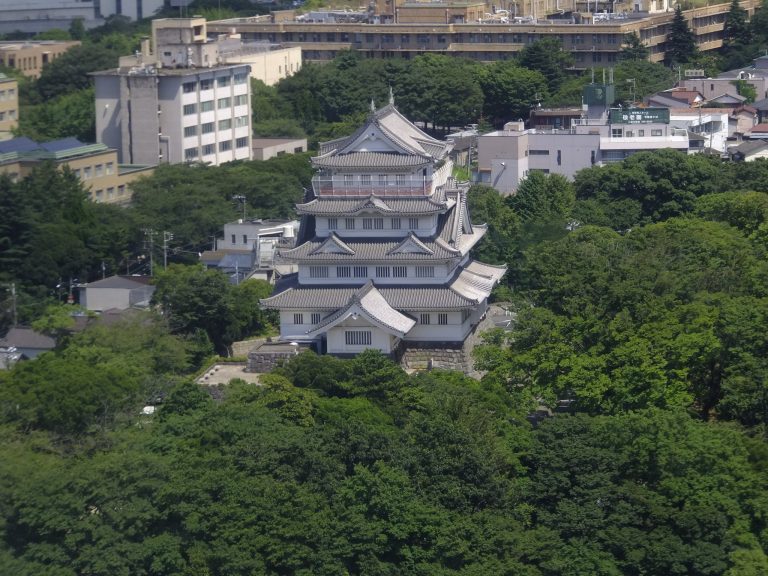
Moto Sakura Castle: A Muromachi-Period Chiba Clan Stronghold in Japan


Site at a Glance
- Rating
- 4
- Popularity
- Low
- Country
- Japan
- Primary era
- Medieval
- External website
- Open
- Eras represented
- Medieval, Early Modern
- Civilizations
- Ashikaga shogunate
- Site type
- Military
- Remains
- Castle
On this page8 sections
History
Moto Sakura Castle in Japan was a late fifteenth-century stronghold of the Chiba clan, built during the Muromachi period, the era of the Ashikaga shogunate from the fourteenth to the sixteenth century. It became the principal base of the later Chiba clan and developed into the headquarters of a major regional domain before its abandonment in 1615.
Foundation and the Chiba Clan
The Chiba clan had controlled the region since the late Heian period, but its power declined after internal conflict following the fall of the Kamakura shogunate. By the middle of the fifteenth century, the clan was subordinate to the Hara clan. During conflicts of that period, the Makuwari clan defeated the Chiba main line and adopted the Chiba name.
Moto Sakura Castle was established farther inland than the earlier Chiba stronghold at Inohana Castle, shifting the clan’s base toward the Sakura area. Its construction is traditionally attributed to Chiba Suketane from 1469 onward, although another interpretation places its construction or major development under his son, Chiba Kōtane. The precise sequence remains uncertain. The castle was probably incomplete when Suketane took refuge at Usui Castle during Ōta Dōkan’s attack in 1479. A record places Kōtane’s transfer of the clan headquarters to Sakura on June 25, 1484, while markets established in 1490 show that the castle town and headquarters were then developing on a substantial scale.
Chiba Rule and Hōjō Protection
Moto Sakura Castle served as the headquarters of the Chiba clan’s main line for nine generations. The clan faced pressure from the Satake clan of Hitachi and the Satomi clan of Awa, but maintained its position through an alliance with the Hōjō clan based at Odawara. The Hōjō were a major military power in the Kantō region during the Sengoku period, when regional warlords competed for territory and authority.
With Hōjō support, Chiba Tanetomi repeatedly resisted attacks by Uesugi Kenshin and the Satomi clan. After Tanetomi’s death, however, the Chiba clan weakened and became direct vassals of the Hōjō. The Hōjō then enlarged the castle’s earthen ramparts and added dry moats, strengthening its defenses.
Tokugawa Administration and Abandonment
In 1590, Toyotomi Hideyoshi defeated the Hōjō in the Odawara campaign, a military operation that ended Hōjō power in the region. The Chiba clan was dispossessed and ceased to rule. The Tokugawa administration subsequently seized Moto Sakura Castle, demolished much of its defensive system, and established a jin’ya, a domain administrative and military headquarters generally smaller and less fortified than a full castle, in the castle town.
The headquarters was initially assigned to Takeda Nobuyoshi, the fifth son of Tokugawa Ieyasu. Matsudaira Tadateru briefly received the area in December 1602 before being transferred to Kawanakajima in February 1603. In 1610, Ogasawara Yoshitsugu and later Doi Toshikatsu entered the area for military reasons. While the later Sakura Castle was being built, the administrative headquarters of Sakura Domain remained at Moto Sakura Castle.
The site was abandoned in 1615 when the domain headquarters moved to Sakura Castle. This followed the Tokugawa policy of one castle per domain, a regulation that limited each feudal domain to a principal castle and led to the abandonment or dismantling of many secondary fortifications. The castle town is thought to have moved to Shisui-juku, which became a post station on the Narita Kaidō highway.
The ruins were designated a National Historic Site in 1998 under the name “Moto Sakura Castle Ruins.” It was the first castle site in Chiba Prefecture to receive that designation. In 2017, the site was selected as Castle No. 121 in the Continued Top 100 Japanese Castles.
Remains
Hill, Marshes, and Castle Plan
Moto Sakura Castle was a linked-enclosure, hirayama-style castle, meaning a fortified settlement built on a hill rising from relatively level land. It occupied a long, narrow hill about 30 meters high, roughly two kilometers east of the later Edo-period Sakura Castle. The castle area extended approximately 800 meters from east to west and 700 meters from north to south, forming an approximately L-shaped plan.
In the Muromachi period, marshlands surrounded three sides of the hill and formed an important part of the defensive system. The hill stood beside the former Gulf of Kashima, an inlet that extended into areas now occupied by Lake Kasumigaura, Lake Teganuma, and Lake Inbanuma. This water system marked the historical boundary between Shimōsa and Hitachi provinces.
Inner Enclosure
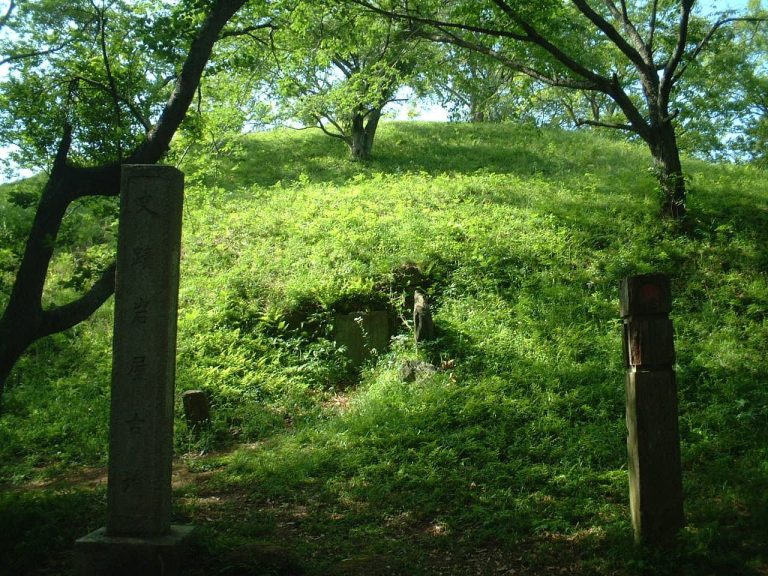
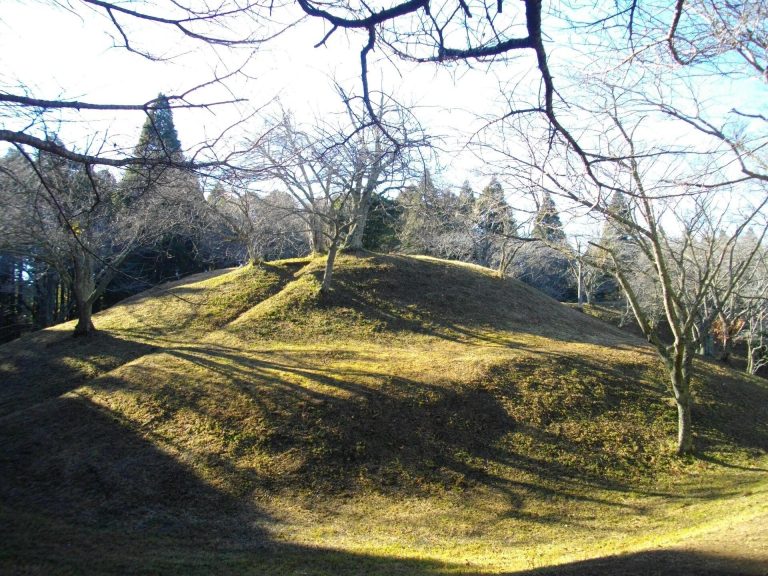
The inner enclosure occupied a peninsula-like hill with a valley cut into its southern side. Its surviving remains form part of the central castle area, where portions of the earthen ramparts, dry moats, entrances, and other enclosure features can still be traced.
Outer Enclosure
The outer enclosure extended across connected hills and was separated from the natural terrain by dry moats. It expanded as the Chiba clan’s power grew and is thought to have provided residential land for the clan’s retainers. The earthworks and moats survive in a largely intact form, although the castle itself is now in ruins.
The central enclosures and associated defensive earthworks are maintained as a historical park. Together, the surviving ramparts, moats, entrances, and enclosure remains preserve the structure of the former hilltop stronghold.