Kasugayama Castle: A Sengoku-Period Mountain Fortress in Japan


Site at a Glance
- Rating
- 4.4
- Popularity
- Medium
- Country
- Japan
- Primary era
- Medieval
- External website
- Open
- Eras represented
- Medieval, Early Modern
- Civilizations
- Uesugi
- Site type
- Military
- Remains
- Castle
On this page9 sections
History
Kasugayama Castle is a Sengoku-period mountain castle in Jōetsu, Japan, built and first controlled by the Nagao clan. The Sengoku period was an era of political fragmentation and warfare that broadly covered the fifteenth and sixteenth centuries. An older castle occupied Mount Kasuga by the fourteenth century, although the early history of the site remains uncertain.
The Nagao and Uesugi Lords
The castle was probably constructed by Nagao Tamekage and later passed to Nagao Harukage. In 1548, Harukage’s younger brother, Nagao Kagetora, became lord of the stronghold. He later took the name Uesugi Kenshin and made Kasugayama his principal fortress. From here, he set out for the 1561 Battle of Kawanakajima, one of his repeated confrontations with the warlord Takeda Shingen.
After Kenshin died in 1578, a brief succession struggle developed between his two adopted sons, Uesugi Kagekatsu and Uesugi Kagetora. Kagekatsu gained control and eventually reunited the Uesugi clan. Continued conflict with Oda Nobunaga and the Odawara Hōjō clan weakened the Uesugi position, however, and the clan later submitted to Toyotomi Hideyoshi. Hideyoshi, the military ruler who brought most of Japan under his authority, transferred the Uesugi to Aizu in 1598.
The Hori Administration and Abandonment
Kasugayama then passed to Hori Hideharu, the son of Hori Hidemasa. The departure of the Uesugi deeply angered the local population, so Hideharu built a large water moat around the castle town below the mountain. In 1600, he moved his seat to Fukushima Castle near the coast and the port of Naoetsu. The Hori rulers considered Kasugayama’s mountain position unsuitable for governing the area, and the castle was deserted by 1607. It is said never to have been attacked.
Kasugayama Shrine was founded at the foot of the mountain in 1901. The castle and its history were also mentioned in Tanki manroku by Takizawa Bakin and Yamazaki Yoshishige. Kasugayama has been protected as a National Historic Site of Japan since 1935 and is included among Japan’s Top 100 Castles. It is also regarded as one of Japan’s five greatest mountain castles, together with Nanao, Odani, Kannonji, and Gassantoda castles.
Remains
Mountain Layout and Earthworks
Kasugayama occupied two ridges on the summit of 180-meter Mount Kasuga, northeast of the Kubiki Plain. Its position helped control roads through the Hokuriku region, while a network of smaller forts extended within roughly 2 to 6 kilometers of the main castle. The site was a yamashiro, or fortified mountain castle, designed around steep ground, terraces, and earthworks rather than stone walls.
Numerous kuruwa, meaning fortified castle enclosures, were arranged at different elevations. Earthen or clay ramparts and dry moats bounded these terraces, creating a defensive network across the two ridges. Smaller enclosures housed retainers, while barracks and warehouses supported the castle’s military and administrative work. A large water moat later enclosed the castle town below the mountain.
Central and Ridge Residences
The Central Enclosure
The honmaru, or principal central enclosure, lay just below the summit at about 180 meters above sea level. It contained a watchtower, a Buddhist temple, Uesugi Kenshin’s residence, and a garden. The remains overlook Jōetsu, the Kubiki Plain, and the Sea of Japan.
The Ridge Residences
The south ridge held the fortified residence of Uesugi Kagekatsu, with the residence of his retainer Kakizaki Kageie below it. On the north ridge stood the residence of the retainer Naoe Kagetsuna, while Uesugi Kagetora’s residence lay immediately below the central area. These residences formed part of the wider arrangement of enclosures and support buildings across the mountain.
Surviving Gate and Museums
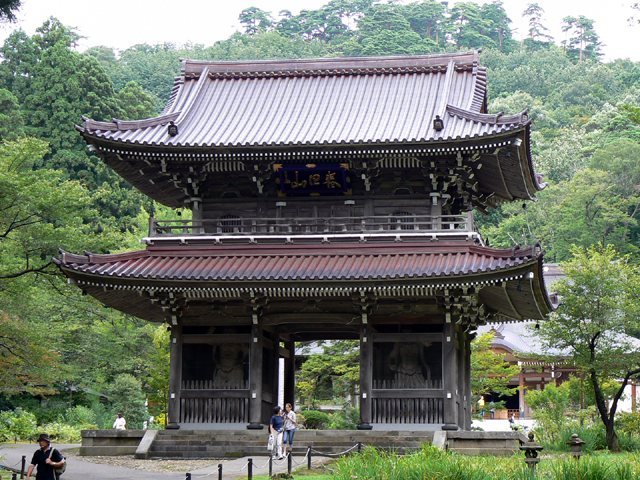
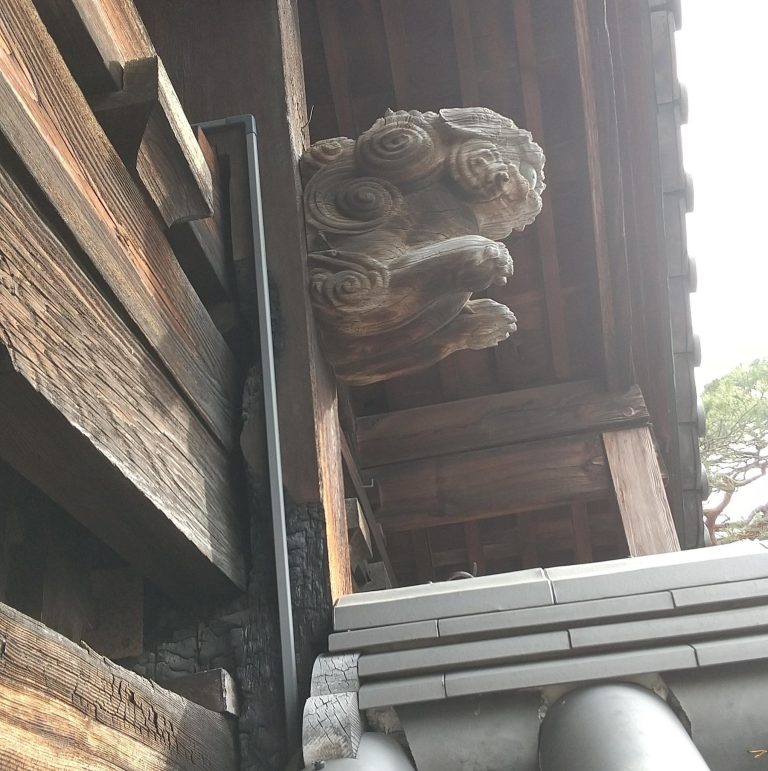
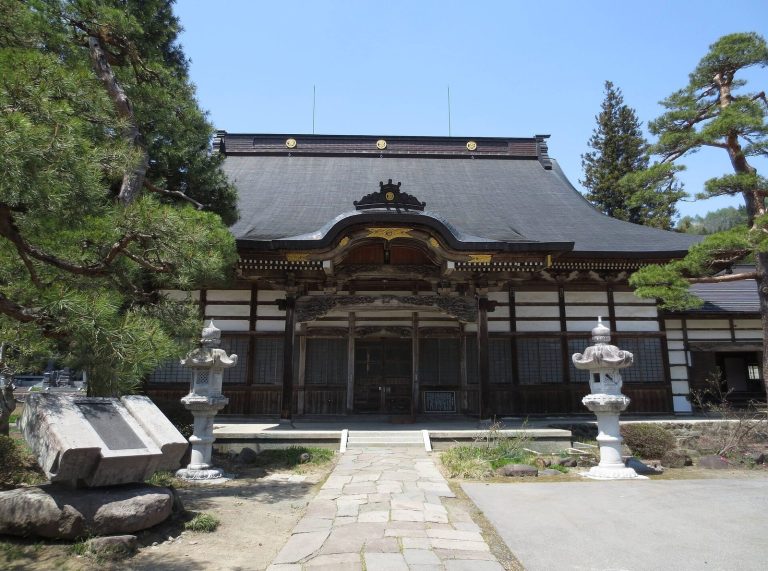
No original buildings survive within the castle grounds. The visible remains consist of earthwork walls and dry moats. One castle gate has been preserved nearby at Rinsen-ji Temple, which also contains a small museum. The Jōetsu-shi Maizō Bunkazai Center, a historical museum, stands near the castle.