Matsukura Castle: A Mountain Fortress in Japan


Site at a Glance
- Rating
- 4.1
- Popularity
- Very Low
- Country
- Japan
- Primary era
- Medieval
- External website
- Open
- Eras represented
- Medieval, Early Modern
- Civilizations
- Uesugi
- Site type
- Military
- Remains
- Castle
On this page10 sections
History
Matsukura Castle is a Japanese mountain castle in Uozu, Japan, built around 1335 by the Bōmon clan in what was then Niikawa District of Etchū Province. Known as a yamajiro, a castle that uses a steep ridge or summit for defense, it became an important stronghold during the political and military struggles of medieval Japan.
Foundations and the Shiina Clan
The castle later came under the control of the Momonoi clan, which lost possession after its defeat at the Battle of Nagasawa in 1370. By the Nanboku-chō period, a fourteenth-century conflict between rival Northern and Southern Imperial Courts, Matsukura had become the principal base of the Shiina clan.
The Shiina served the Hatakeyama clan and held the office of shugodai, a deputy provincial military governor whose position could provide substantial regional authority. Matsukura was one of the three major mountain castles of Etchū, alongside Matsuyama Castle in central Etchū and Moriyama Castle in western Etchū.
Conflict with the Jinbō and Uesugi
The Shiina’s principal rivals were the Jinbō clan, whose base was Toyama Castle. The Jinbō gained the advantage during the 1550s, leading the Shiina to seek an alliance with Uesugi Kenshin, a powerful sixteenth-century warlord and head of the Uesugi clan.
In 1568, Shiina Yasutane turned to Kenshin’s rival, Takeda Shingen, for assistance. Kenshin then besieged Matsukura Castle. The fortress resisted for two years before falling in 1571. Yasutane escaped and continued fighting the Uesugi until his death in 1576.
Uesugi and Oda Campaigns
After capturing the castle, Uesugi Kenshin rebuilt it as a base for operations in Etchū. From Matsukura, the Uesugi expanded westward and came into conflict with Oda Nobunaga, a major military leader in the political reunification of Japan.
Kenshin’s death in 1578 changed the balance of power. Oda forces commanded by Shibata Katsuie overran Kaga and Noto by the end of 1580, and by 1581 they controlled all of Etchū except the Uozu area. The Uesugi strengthened Matsukura as part of their final defensive line.
During the Siege of Uozu in 1582, Shibata Katsuie captured Uozu Castle after a three-month battle. He withdrew on the day of his victory when news arrived that Oda Nobunaga had been assassinated in the Honnō-ji Incident. The withdrawal occurred before Matsukura Castle was taken. In 1583, Sassa Narimasa returned with a new army and captured the stronghold.
Abandonment
Matsukura Castle was abandoned sometime during the Keichō era, which lasted from 1596 to 1615, after the region became part of Kaga Domain. This major Edo-period feudal domain was governed by the Maeda clan. The castle grounds remain associated with seasonal cherry-blossom viewing, and the Sengoku Noroshi Festival is held there in late May.
Remains
Mountain Setting and Defenses
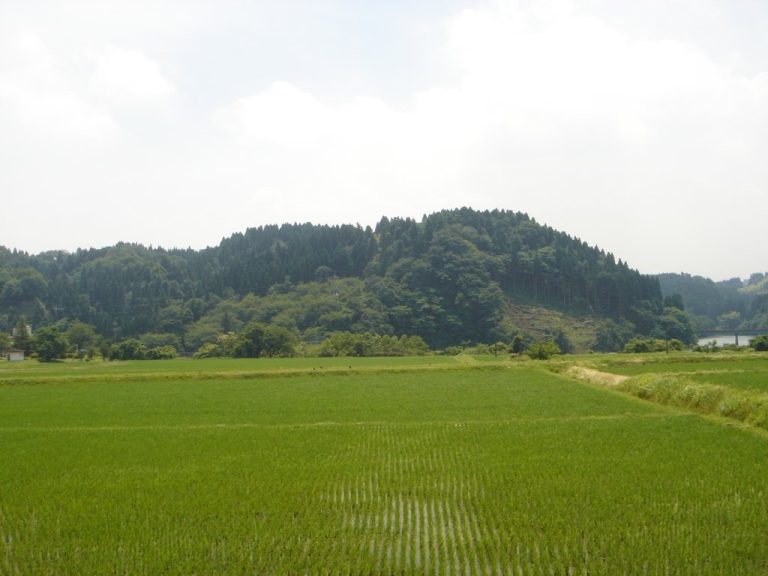
Matsukura Castle occupies the 430.9-metre summit of Mount Matsukura, also called Mount Kakuma, on a ridge extending from the Tateyama Mountain Range. The ridge follows an L-shaped configuration toward the north and east, providing the physical framework for the castle’s enclosures and defensive works.
A deep dry moat surrounds the rectangular inner bailey, while second, third, and fourth enclosures continue along the ridge. Each enclosure is separated from the next by another dry moat. Surviving sections of stone ramparts, moats, and baileys define the site, which is otherwise in ruinous condition.
Enclosures and Residential Areas
Inner Bailey
The inner bailey measures approximately 100 metres from north to south and 40 metres across. Within it are the foundations of a building about 40 metres square. This substantial structure may have been a donjon, or main tower.
Western Ridge
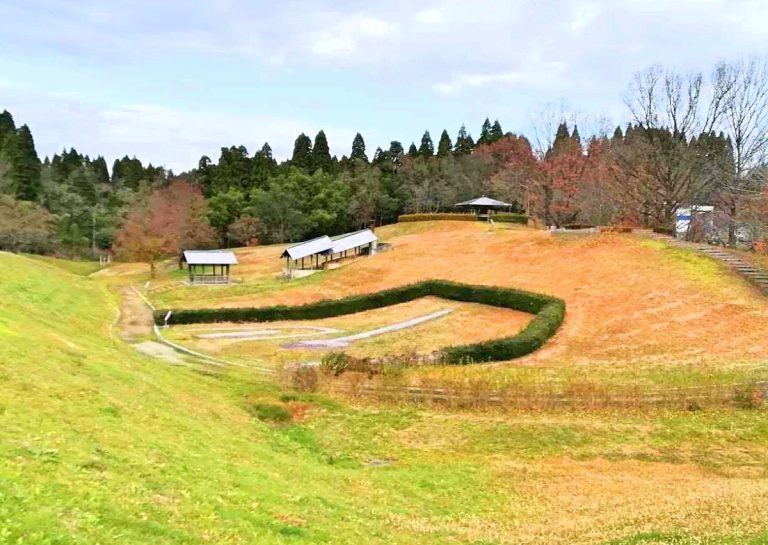
A broad level area on the western ridge may have held the castellan’s residence. Smaller level spaces around it may have accommodated the residences of senior retainers, barracks, and storehouses. Several hundred cherry trees now grow around the castle grounds.