Taki-no Castle: A Japanese Hill-and-Mountain Fortress in Tokorozawa


Site at a Glance
- Rating
- 4.1
- Popularity
- Low
- Country
- Japan
- Primary era
- Medieval
- External website
- Open
- Eras represented
- Medieval
- Civilizations
- Unclassified
- Site type
- Military
- Remains
- Castle
On this page10 sections
History
Taki-no Castle is a Japanese hill-and-mountain fortress in Tokorozawa, Japan, traditionally founded around 1180 during the military movement associated with Minamoto no Yoritomo and later given its major fifteenth-century form. Also known as Hongo Castle, it stood near the eastern edge of the city beside the boundary with Kiyose in Tokyo, controlling a route between the northern Kanto region and Hachioji.
Traditional foundation and medieval development
Tradition holds that a local warrior established the castle around 1180 in response to Minamoto no Yoritomo’s uprising. Yoritomo later founded Japan’s Kamakura shogunate, but the early foundation story at Taki-no Castle remains unverified, and the founder is unknown. The fortress’s latest major medieval form is attributed to the fifteenth century and to Oishi Sadahisa, a samurai lord of the Oishi family.
The Oishi and Go-Hojo fortresses
During the Sengoku period, the sixteenth-century era of political fragmentation and warfare among regional military families, Taki-no Castle was associated with the Oishi clan. The Oishi served the Uesugi family as deputy governors of Musashi Province. Taki-no Castle functioned as a branch castle of Takiyama Castle, later called Hachioji Castle, and was linked with the Kiyoto guard station on the opposite bank of the Yanase River.
Under Oishi Sadahisa, the castle came under the control of the Go-Hojo clan and became a branch castle of Hojo Ujiteru, a sixteenth-century warlord. Ujiteru frequently led campaigns northward from Takiyama, making Taki-no Castle a mustering point for troops. A troop-assembly ceremony took place there in 1564 during a Go-Hojo expedition to Shimotsuke.
Fall and later commemoration
In 1590, Toyotomi Hideyoshi’s campaign against the Odawara Hojo reached Taki-no Castle. Hideyoshi, the military ruler who unified Japan in the late sixteenth century, sent forces under Asano Nagamasa against the main entrance on the northern side. The castle fell together with Hachioji Castle and was probably abandoned during the territorial reorganization that followed Tokugawa Ieyasu’s arrival in the Kanto region. Charred timber from two former gates supports the account of destruction in fighting.
A large black pine on the Nanamagari slope was traditionally known as the Blood-Dripping Pine. Its sap was said to turn red when the bark was injured, while local tradition associated the tree with soldiers killed during the castle’s fall. The pine died and was felled in 1972. Part of the castle and the former rice fields to the south were incorporated into Taki-no Castle Site Park in the same year. The site was designated a Saitama Prefectural Historic Site in 1925. A scale reconstruction model, completed in 2008 after about a year of work by the local Taki-no Castle Site Preservation Society, is permanently exhibited at Yanase Community Hall.
Remains
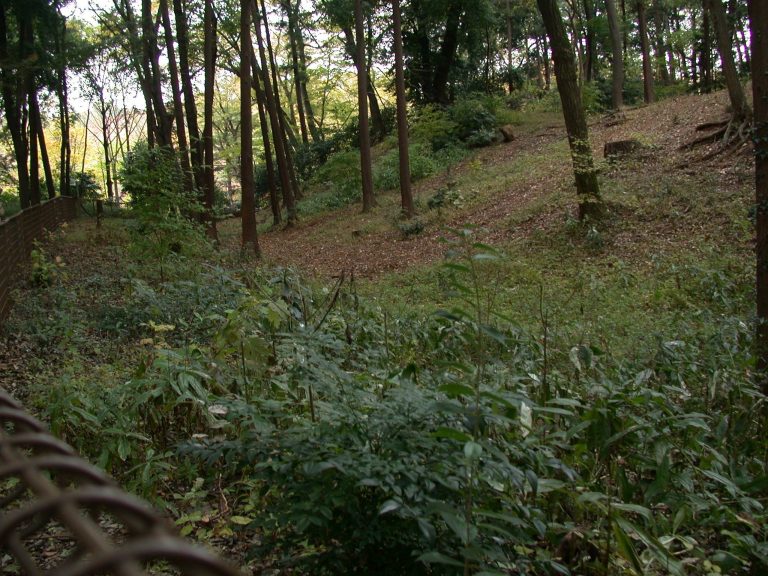
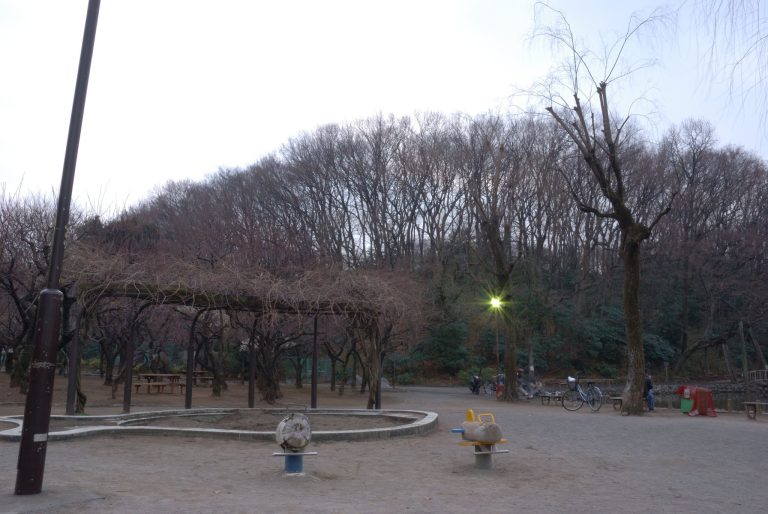
Taki-no Castle occupied approximately 66,000 square metres on a wooded cliff above the north bank of the Yanase River. Its surviving layout centers on the honmaru, the principal fortified enclosure, with the ninomaru and sannomaru, the second and third principal enclosures, arranged among other enclosures and defensive features. Earthen ramparts, dry moats, an earthen bridge, a watchtower site, and an outer defensive line form parts of the ruin. Taki-no Castle Site Park now covers part of the former castle ground, with maintained paths, a baseball field, tennis courts, and a pond within the wider landscape.
Enclosures and defensive works
The main entrance lay north of the honmaru, while a rear entrance was reportedly positioned to the northwest. The continuation of the plateau toward the northeast was protected by an outer defensive line. Complex dry moats strengthened the compounds, including a shoji-bori, a dry moat divided by earthen partitions into a grid-like defensive arrangement. Excavation in 1986 identified remains of this type of moat in the sannomaru area.
Gate and entrance structures
A four-legged gate occupied a break in the western part of the honmaru’s northern rampart. White rounded stones had been laid at the gate, and a bridge is thought to have crossed the moat from this point to the umadashi, a projecting enclosure outside a gate that protected movement through the entrance and supported defensive operations. The earthen bridge and the gate position help define how the northern approach connected with the fortified compounds.
Watercourse and park landscape
A waterfall formerly called Kanatsu Waterfall lay in a small valley between the eastern enclosure and the area outside the castle. It is considered the source of the name Taki-no Castle. A slight flow continues among rocks on the slope, and the stream runs southward into a pond in the park. The park lies beside the Kan-Etsu Expressway on its northern and eastern sides, while the Yanase River follows its southeastern side and an elevated section of the JR Musashino Line crosses the southern edge. Surviving vegetation includes wild dogtooth violets, Anemone flaccida, and mountain lilies, along with plum and cherry trees. The cliff of the honmaru provides a view toward the Kiyose area across the river.
Shrine and commemorative remains
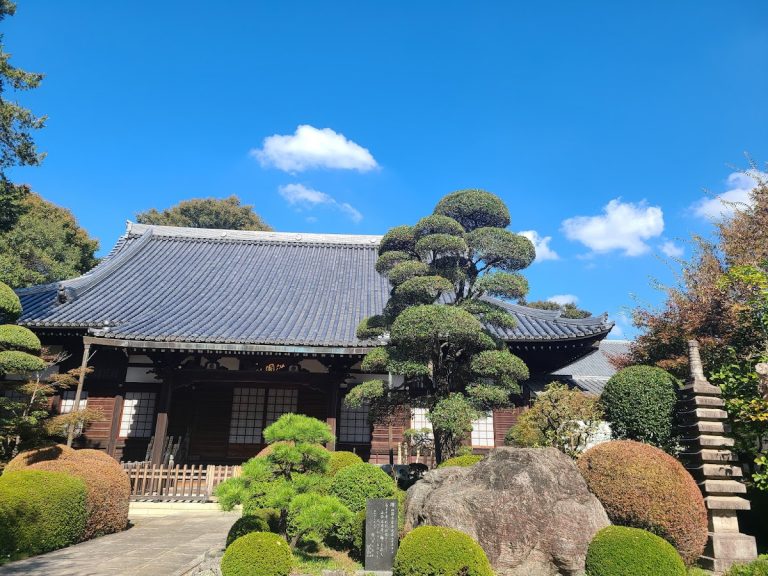
Shiroyama Shrine stands on the former honmaru. Its enshrined deities include those associated with Atago Shrine, two Inari shrines, Kumano Shrine, Tenjin Shrine, and Hachiman Shrine. On the Nanamagari slope, a monument marks the former location of the Blood-Dripping Pine, preserving the place associated with the local tradition about the castle’s fall.
Rock-cut tomb group
Near the cliff of the honmaru, reinforcement work followed the partial collapse of the southeastern main enclosure cliff after concentrated rainfall in autumn 1974 and later erosion. Excavation began on February 13, 1976, and revealed nine horizontal burial chambers. These were rock-cut tombs entered through passages excavated into the cliff or slope. Human-bone fragments, ancient gold earrings, small glass beads, and Sue ware pottery were recovered.
The burial chambers were arranged with notable regularity, and further chambers were considered likely to continue east and west beyond the area affected by the reinforcement work. After investigation between February 24 and March 9, 1976, the excavated area was backfilled. The Sue ware, a high-fired Japanese pottery, places the tomb group around the seventh century, in the later Kofun period.