Katsuyama Date: A Medieval Mountain Castle in Japan

Site at a Glance
- Rating
- 4.1
- Popularity
- Very Low
- Country
- Japan
- Primary era
- Medieval
- External website
- Open
- Eras represented
- Medieval
- Civilizations
- Japanese
- Site type
- Military
- Remains
- Castle
On this page9 sections
History
Katsuyama Date is a medieval Japanese mountain castle and fortified residence in Katsuyama, Japan, traditionally associated with the military leader Takeda Nobuhiro and believed to have been built around 1473. As a yamajiro, or mountain castle using slopes, terraces, earthen banks, and excavated ditches, it formed part of the network of fortified sites that developed in southern Hokkaido.
Foundation and the Hachiman Shrine
The proposed date of construction is closely linked to the establishment of Hachiman Shrine in 1473 at a place described as being “above Kaminokuni Date.” The shrine remained within the castle site until the beginning of the Meiji period, which began in 1868. The later identification of Kaminokuni Date with Katsuyama Date is also associated with the religious practices of the Matsumae lords. At the beginning of each year, they sent retainers to worship at the shrine, and each lord personally visited it once during his tenure.
The name Katsuyama may originally have been given by Nobuhiro to Shusaki Date after his victory in the Battle of Koshamain. It was later transferred to the present site west of the Amanogawa River. The site is also known as Kaminokuni Date, Waki Date, Waki-no-yakata, and Katsuyama Castle.
A Secondary Stronghold of the Kakizaki Lineage
In 1514, Takeda Nobuhiro’s son Kakizaki Mitsuhiro and Mitsuhiro’s son Kakizaki Yoshihiro moved their main base to Matsumae Otate, also called Tokuyama Date. Katsuyama Date then became an important secondary stronghold. Yoshihiro’s younger brother, Takahiro, was installed as its lord, and the names Waki Date and Waki-no-yakata expressed its subordinate relationship to Matsumae Otate. Yoshihiro nevertheless travelled frequently between the two sites.
The first documentary reference to Katsuyama Date dates from 1529. In that year, an Ainu leader, representing the Indigenous people of northern Japan including Hokkaido, attacked the castle. Yoshihiro pretended to seek reconciliation and shot the leader while presenting treasures as compensation. The Waki Date named in the record is associated with Katsuyama Date.
In 1548, Kakizaki Motohiro, Takahiro’s son, attempted to poison Kakizaki Suehiro during Suehiro’s inspection of Kaminokuni. Motohiro was executed, and Suehiro’s son-in-law, Nanjo Hirotsugu, served as castellan of Katsuyama Date until 1552. The site remained a residence of the Matsumae family until the beginning of the Keicho era, which lasted from 1596 to 1615. During the period of Matsumae Yoshihiro, Sakai Shichinosuke served as its castellan.
Administrative Role and Abandonment
During the early modern period, Kaminokuni became a production area for salmon and timber and attracted many Wajin, a historical term for ethnic Japanese settlers and communities in Hokkaido. Katsuyama Date is considered a likely location for the local bansho, an administrative checkpoint or guard office.
Logging began around Menazawa in 1639 and later expanded toward Todogawa and Gokatte near present-day Esashi. As the area of activity changed, the Kaminokuni checkpoint became inconveniently placed and was moved to Esashi in 1678. Katsuyama Date was probably abandoned at the same time.
Recognition and Heritage Protection
Kono Tsunekichi identified the site as the ruins of Katsuyama Castle in a 1924 report on Hokkaido’s historical sites. It became a Hokkaido historic site in 1959 and a National Historic Site on April 12, 1977. The original national designation covered approximately 209,343 square meters, and an additional designation in 1987 expanded the protected area to 353,923.98 square meters.
In 2001, Katsuyama Date was included in the first selection of Hokkaido Heritage under “The Medieval Fortified Sites of Kaminokuni.” In 2006, the National Historic Site designation was renamed to include the remains of Kaminokuni Date, Hanazawa Date, Shusaki Date, and Katsuyama Date. In 2008, 921 artifacts excavated at Katsuyama Date received Important Cultural Property status, a Japanese classification for important movable or built cultural properties. The site was selected in 2017 as one of Japan’s Continued 100 Fine Castles.
Remains
Mountain Setting and Defensive Layout
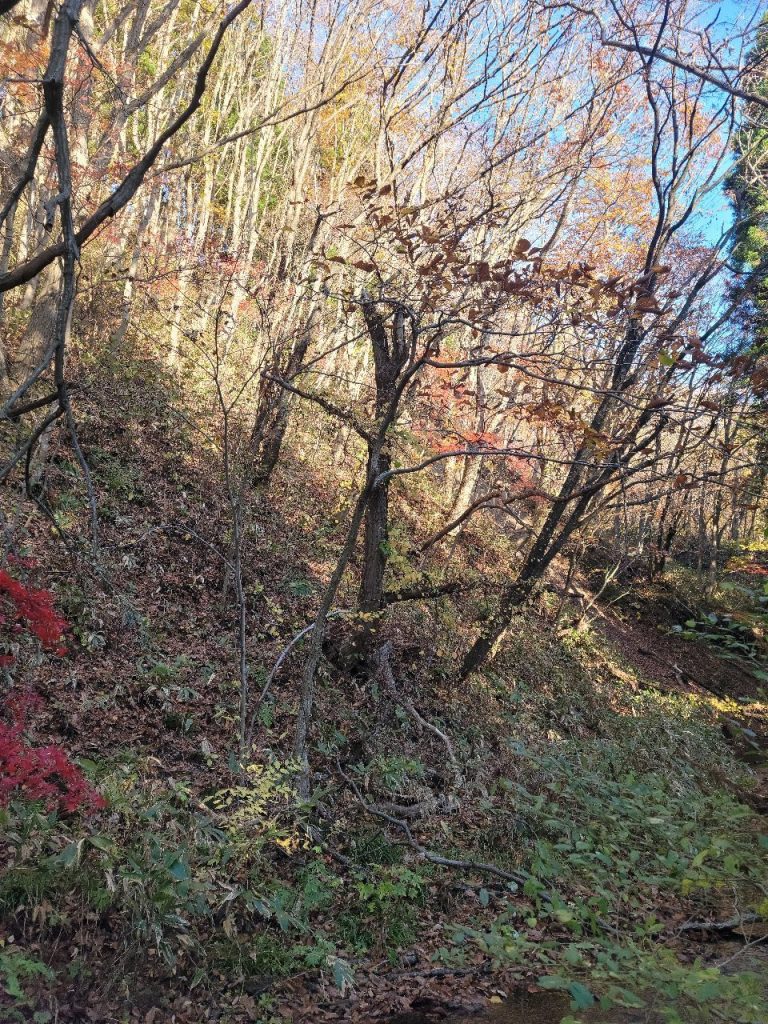
Katsuyama Date occupies a south-to-north sloping area on the mountainside of Mount Iozan, with relative elevations ranging from approximately 13 to 113 meters. The castle lies near the mouth of the Amanogawa River, with the Miyanosawa River to the east and the Teranosawa River to the west. The broader plateau extends about 270 meters from east to west and roughly 500 meters from north to south, while the castle is described as approximately 270 meters long. The castle area is reported as about 100 meters wide and covers 20.9 hectares.
Earthen ramparts, dry moats, and enclosed castle terraces shape the surviving layout. A dry moat is a defensive ditch without standing water, while an earthen rampart is a bank made primarily from packed earth. Stone remains associated with water storage lie on the western side. The site has no identified keep or recorded reconstructed building. Fencing, sections of moat, and a bridge are among the reconstructed elements associated with the remains.
Hachiman Shrine and the Wider Archaeological Area
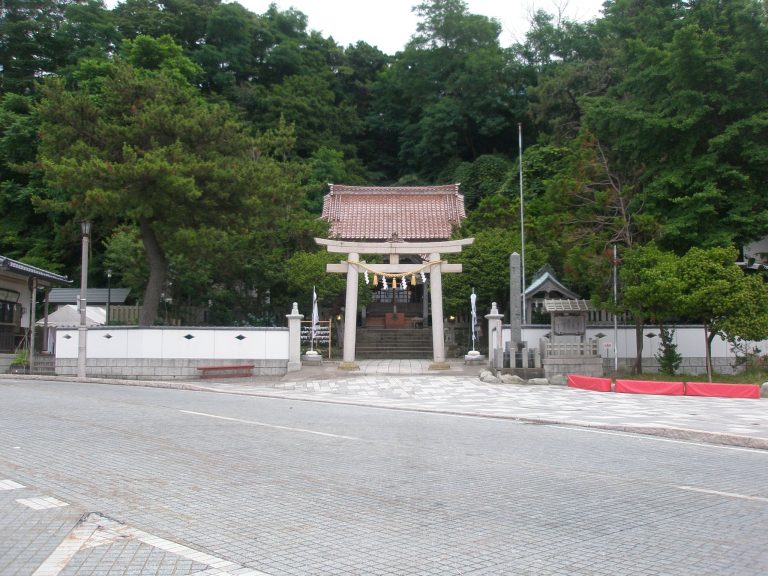
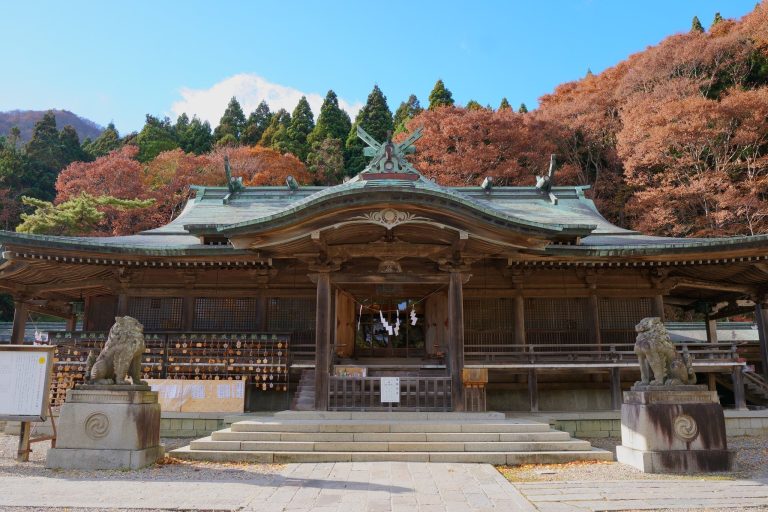
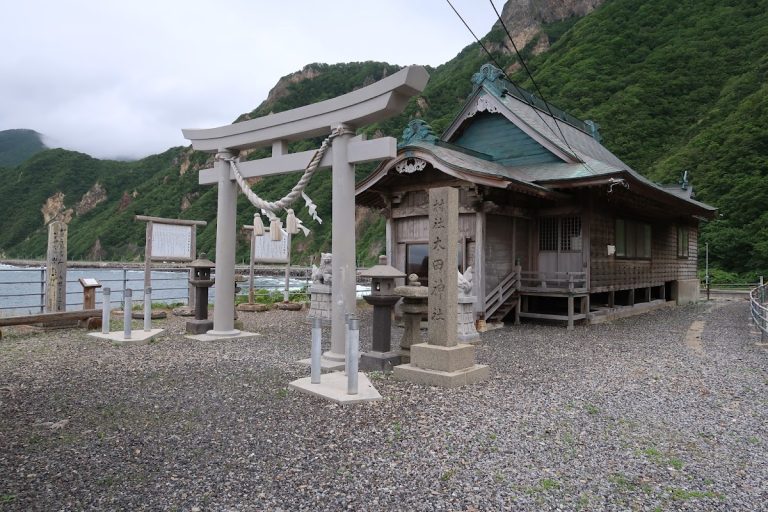
Hachiman Shrine stood at the northern end of the castle area and remained within the site until the beginning of the Meiji period. Its position and establishment in 1473 are central to the proposed dating of Katsuyama Date, linking the northern part of the fortified area with the castle’s early history.
The surrounding archaeological landscape includes the Iozan burial mound group southwest of the castle, across the Teranosawa River. Hanazawa Date lies approximately one kilometer south of the Amanogawa River, Shusaki Date lies to its north, and Hishi Date is approximately 2.3 kilometers away.
Excavated Objects
Archaeological investigations have produced approximately 70,000 artifacts dating from the late fifteenth to the late sixteenth century. The assemblage includes ceramics, metal objects, lacquerware, and artifacts made from bone and antler. Among these finds, 921 principal artifacts received Important Cultural Property status in 2008, providing material evidence for the period when Katsuyama Date functioned as a fortified residence and secondary stronghold.