Miharashidai Site: A Multi-Period Archaeological Site in Nagoya, Japan


Site at a Glance
- Rating
- 4
- Popularity
- Low
- Country
- Japan
- Primary era
- Iron Age
- External website
- Open
- Eras represented
- Iron Age, Classical, Modern
- Civilizations
- Japanese, Yayoi
- Site type
- Domestic
- Remains
- House
On this page12 sections
History
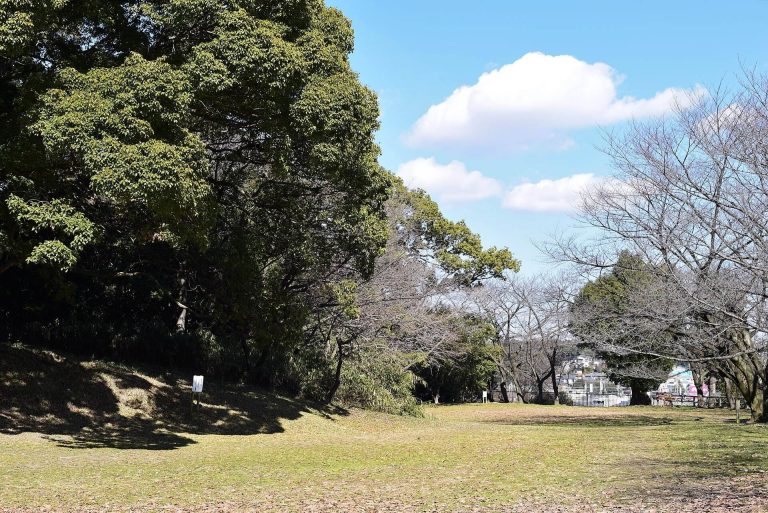
Miharashidai Site is a multi-period archaeological site in Nagoya, Japan, occupied from the Paleolithic period through the Muromachi period. It lies within Kasadera Park in Minami Ward and preserves evidence of changing settlement and land use over thousands of years.
Early occupation and the Yayoi settlement
The earliest known activity at Miharashidai dates to approximately 20,000 years ago, when people used stone tools at the site. Pottery fragments from the Jomon period, a phase of Japanese prehistory associated with established pottery traditions, have also been recovered.
The area attracted particular archaeological attention after fish-shaped pottery was found at the adjacent Sakurada Shell Mound in 1917 and 1918. Around 1940 and 1941, Miharashidai became known for a Yayoi-period clay object modeled on a bronze bell. It was reported as Japan’s second known example of this type, following the specimen from Nishishiga Shell Mound reported in 1937. The Yayoi period saw the spread of agricultural communities and the use of metal objects in Japan.
An investigation in 1964, carried out in connection with plans for postwar park development, revealed a Yayoi settlement enclosed by a ring ditch. Such a settlement used a deliberately excavated ditch as a boundary or defensive feature. The community is thought to have continued for approximately 200 years. Its ditch was filled at roughly the same time as those at Asahi Site and several other settlements around Nagoya, a pattern interpreted as possible evidence of political unification in the region.
Later settlement and wartime use
More than 200 overlapping pit-dwelling traces have been identified at Miharashidai. Pit dwellings were semi-subterranean houses with floors dug below ground level and superstructures supported above them. Later settlements existed from the Heian period onward. During part of this history, the area belonged to the estate of Kasadera Kannon, a Buddhist temple, and pottery dating from the Heian through Muromachi periods has been recovered.
During the Pacific War, an anti-aircraft-gun position was established at Miharashidai in 1942, with one company deployed there. Six Type 88 7-centimeter field anti-aircraft guns were installed, and the headquarters of an anti-aircraft-gun battalion, a unit larger than a company, was placed at the site in 1944.
Excavation and interpretation
The Miharashidai Archaeological Museum opened in 1979 as a site museum for collecting, researching, and exhibiting material from Miharashidai. Preliminary investigations repeatedly required changes to the planned building location as archaeological remains were found. The museum also conducts excavations of buried cultural properties elsewhere in Nagoya.
Organized excavations ran from the first through the eighteenth campaigns, except for the seventeenth. Annual summer public excavations continued afterward, apart from the thirty-fifth campaign, and 49 campaigns had been conducted by fiscal year 2009. Participants also contributed to public tours, an excavation-report meeting, and monthly sorting of excavated materials.
The forty-sixth campaign, in 2006, recovered a mass of duralumin believed to be the vertical tail of a B-29 bomber shot down during the war. The forty-eighth campaign, in 2008, examined both Miharashidai and the adjacent Sakurada Shell Mound, identifying Miharashidai as Area A and Sakurada as Area B.
Remains
Miharashidai occupies the eastern edge of the Kasadera Plateau at an elevation of approximately 10 to 15 meters. Its surviving archaeological features reflect both the large Yayoi settlement and the later military installation established across the site.
Yayoi settlement
Ring ditch
The Yayoi settlement extended approximately 120 meters from east to west and 200 meters from north to south. A surrounding ditch measured about 4 meters in width and 4 meters in depth. Its scale and position define the settlement’s enclosed layout and provide the physical basis for interpreting the community as a ring-ditch settlement.
Pit dwellings
More than 200 overlapping pit-dwelling remains occupy the settlement area. Their floors were dug below ground level, while the structures above them were supported over the excavated spaces. A replica is presented at the museum’s dwelling-remains observation shelter, and one dwelling has been reconstructed as a building.
Pacific War installation
Gun positions and ammunition store
The wartime gun positions were arranged in an arc along the southern side of the site, with six positions set at intervals of 25 meters. Two gun-emplacement remains and a gun-side ammunition store are preserved within the park. The excavated remains include gun-mount bases buried in the ground, parts of observation equipment, and a wooden shell used for loading practice.
Barracks and communications features
Other military remains include barracks, a communications office, and communications-cable trenches, narrow excavations used to protect communication lines. Tools, components, and daily-use objects were also recovered from the installation. A duralumin aircraft fragment recovered during excavation forms part of the material evidence for the site’s wartime history.
Museum collections
The Miharashidai Archaeological Museum exhibits excavated materials from Miharashidai and from other archaeological sites in Nagoya. The museum’s collections bring together evidence from the site’s prehistoric, historic, and wartime phases.