Tareyanagi Site: Evidence of Yayoi Rice Agriculture in Northern Japan


Site at a Glance
- Rating
- 4.3
- Popularity
- Very Low
- Country
- Japan
- Primary era
- Classical
- Eras represented
- Classical
- Civilizations
- Yayoi
- Site type
- Economic
On this page7 sections
History
Tareyanagi Site is a Yayoi-period archaeological site in Japan, located at Inakadate in Aomori Prefecture on Honshu, where wet-rice agriculture was established around 100 BC during the middle Yayoi period. It preserves the oldest known evidence of agriculture in northern Honshu and provides evidence for the northern expansion of Yayoi culture, a period associated with rice cultivation, metalworking, and more settled communities.
Discovery and dating
The site first came to attention through artifacts recovered during construction of National Route 102 in the 1930s. In 1950, archaeologist Nobuo Itō identified the excavated pottery as belonging to the Yayoi period. Further discoveries followed during agricultural land improvement in 1955 and 1956, when carbonized rice and pottery bearing rice-husk impressions were found.
Archaeologist Teruya Esaka initially classified this pottery as Jōmon-period material in 1957. The Jōmon period preceded the Yayoi period and is associated mainly with hunter-gatherer communities and cord-marked pottery. Itō’s excavation in 1958 uncovered more than 200 carbonized rice grains and stone tools. Carbonized rice, preserved through burning or heating, provides direct evidence of rice cultivation or use. A Tōhoku University excavation that autumn established that rice agriculture was already present in the region during the latter part of the middle Yayoi period.
Rice cultivation in northern Honshu
A survey carried out during bypass construction in 1981 revealed ancient rice paddies. Excavations by the prefectural education board in 1982 and 1983 clarified the scale of the agricultural landscape and confirmed its date. This evidence showed that wet-rice cultivation had reached northern Honshu much earlier than previously believed, strengthening the interpretation that Yayoi culture and rice agriculture had been adopted across the Tsugaru Plain.
Before the dating was confirmed in 1983, the prevailing theory placed the spread of agricultural culture from Kyushu into northern Honshu at the end of the Yayoi period. Northern Japan’s cold climate was considered unsuitable for rice growing, while the pottery from Tareyanagi resembled Zoku-Jōmon pottery from Hokkaido. Zoku-Jōmon refers to a post-Jōmon archaeological tradition of northern Japan, especially Hokkaido. Tareyanagi, together with the earlier rice-paddy remains and Yayoi pottery at the Sunazawa Site about 20 kilometers to the northwest, is associated with the northern limit of rice-growing culture.
Protection and interpretation
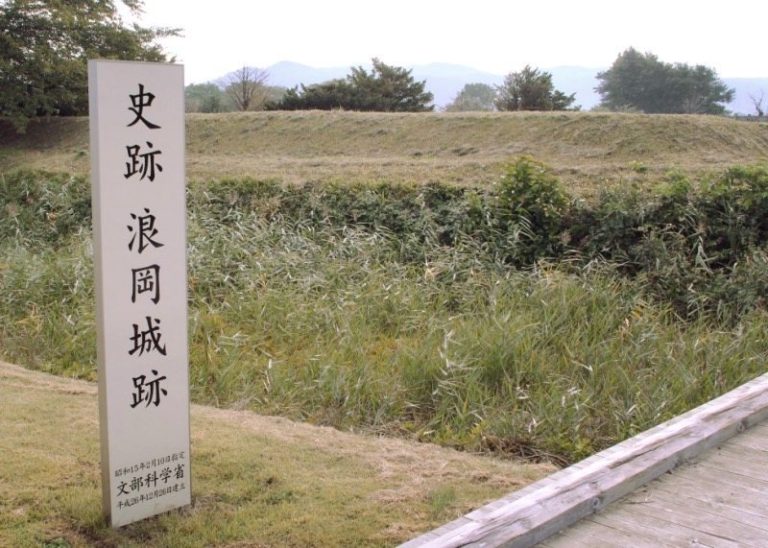
Archaeological investigation at Tareyanagi continued until 1997. The site was designated a National Historic Site of Japan on April 11, 2000. This designation provides national protection for places recognized for their historical or archaeological importance. Many artifacts from Tareyanagi are preserved and exhibited at the Inakadate Village Archaeological Materials Center, also known as the Inakadate Village Museum, a few meters from the site. Its permanent displays also include traditional agricultural tools used in local rice cultivation.
Remains
Tareyanagi occupies an approximately 8,000-square-meter strip of alluvial land at about 30 meters above sea level in the Tareyanagi and Takahi areas of Inakadate. Alluvial land consists of sediment deposited by flowing water, usually along a river or floodplain. The site lies on the left bank of the Asaseishi River, where ancient fields were arranged across the deposited sediments.
Ancient rice paddies
Excavation revealed 656 rice paddies separated by earthen banks. Their recorded areas range from approximately 1.11 to 22.43 square meters, showing a field system made up of many individually bounded plots. Irrigation channels divided the paddies and formed part of the agricultural layout. In the 2010s, 131 separate paddies were reconstructed with their channels for open-air display.
Some paddy layers preserve footprints made by both children and adults, with footprints recorded in 112 of the excavated paddies. These impressions remain within the buried field surfaces and provide physical evidence of people moving through the cultivated plots. A 140-square-meter portion of the excavated paddies is displayed inside the archaeological center, where the exposed remains form part of the permanent presentation of the site.
Buried layers and archaeological finds
Successive sediment layers at Tareyanagi record repeated flooding and the burial of the ancient fields. Some floods carried volcanic ash from eruptions of the Hakkōda Mountains east of Inakadate. The ash-bearing deposits helped protect the paddy remains beneath the later sediments. This stratigraphy, the study of successive soil and sediment layers, preserves the sequence through which the fields were covered.
Finds from the site include Yayoi pottery, pottery with rice-husk impressions, a single-edged stone axe, stone arrowheads, and carbonized rice grains. The pottery closely resembles Zoku-Jōmon pottery from Hokkaido and is associated with Inakadate-style pottery, a local archaeological designation for pottery linked with the Inakadate area and its Yayoi-period remains.