Ōyu Stone Circles: A Late Jōmon Archaeological Complex in Japan


Site at a Glance
- Rating
- 4
- Popularity
- Low
- Country
- Japan
- Primary era
- Bronze Age
- External website
- Open
- Eras represented
- Bronze Age
- Civilizations
- Jomon
- Site type
- Burial
- Remains
- Necropolis
On this page12 sections
History
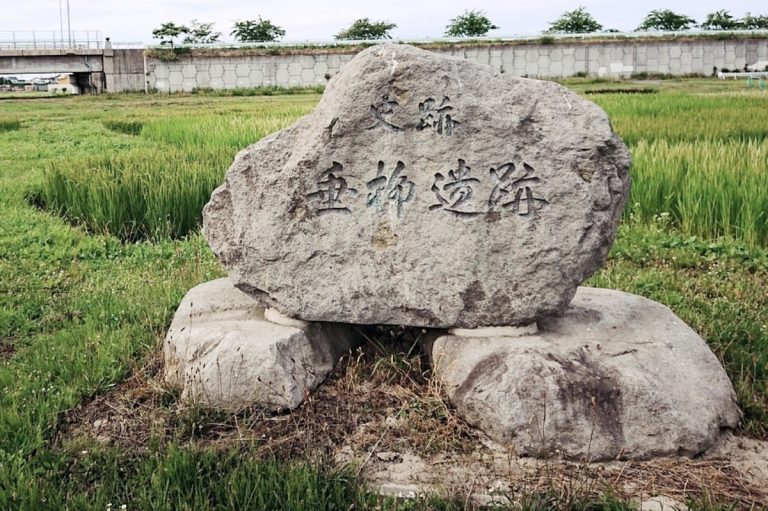
Ōyu Stone Circles is a late Jōmon-period archaeological complex in Japan, located in Kazuno and built by Jōmon communities around 2000–1500 BCE. The Jōmon period was Japan’s prehistoric era of hunter-gatherer and partly settled communities. The site consists of the Manza and Nonakadō stone circles, whose purpose is debated but is widely connected with communal burial and ritual activity.
Discovery and investigation
The site was discovered in 1931. Excavations began in 1946, followed by major investigations by Japan’s Cultural Properties Protection Commission, the national body responsible for cultural heritage protection at the time, and the Akita Prefectural Board of Education in 1951 and 1952. Work around the Manza Circle had already begun in 1948 and identified groups of buildings supported by upright wooden posts set directly into the ground.
The two circles lie about 100 metres apart. Akita Prefectural Route 66 and utility poles now pass between them, separating parts of the archaeological setting. Their removal has been requested as part of efforts to protect the World Heritage setting, and Kazuno began examining a bypass route in 2021.
Purpose and development
Burial pits containing grave goods were found beneath the stone arrangements. A nearby site with a similar plan has been identified as a cemetery, encouraging the interpretation of Ōyu as a large communal cemetery. Other interpretations regard the circles as communal ritual facilities, settlement-related complexes, or places combining settlement and ritual functions.
The post-built structures around the Manza area may have supported funerary ceremonies. Storage pits, middens, dwelling remains, additional stone arrangements, and other buildings also surrounded the circles. A midden is an accumulation of discarded material such as broken pottery, animal remains, and other refuse. Together, these remains indicate a complex setting, although the site does not clearly demonstrate permanent settlement.
One interpretation sees the circles as a development from circular Jōmon settlements. In that model, central burial areas gradually acquired prominent stone monuments while the surrounding dwellings became smaller. The construction of the circles may therefore be connected with large communal works, the organization of ceremonies, leadership or prestige, and increasing social differences during the later Jōmon period.
Solar interpretations and protection
A 1956 interpretation proposed that lines joining the centres of the two circles with their sundial-like stone arrangements followed the direction of the sunset at the summer solstice. This view was reassessed and widely accepted in 1994, but a 2022 analysis challenged the alignment. With corrected orientations, the Manza arrangement lies at 289 degrees from the centre, while the calculated summer-solstice sunset around 2000 BCE was at 302 degrees, a difference of 13 degrees.
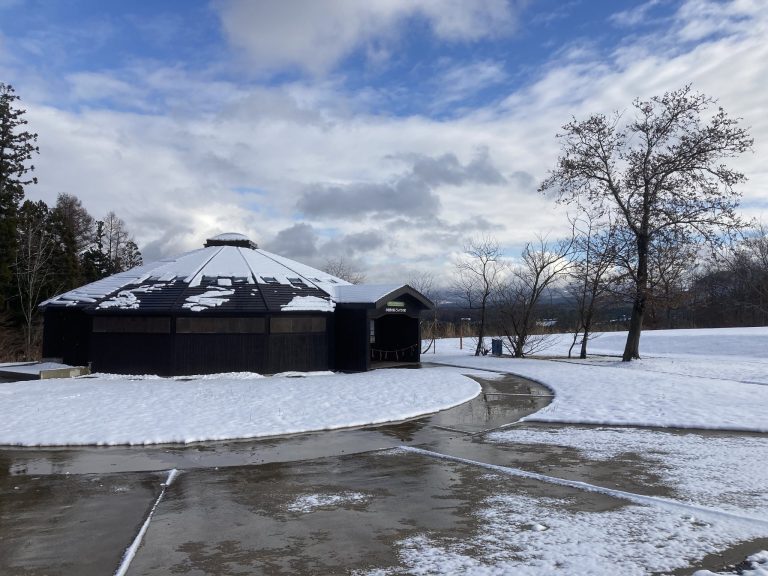
Ōyu Stone Circles became a National Historic Site in 1951 and a Special National Historic Site in 1956. Its protected area covers approximately 25 hectares. In 2021, the site became one of the component properties of the UNESCO World Heritage property Jōmon Archaeological Sites in Hokkaidō, Northern Tōhoku, and other regions. The Ōyu Stone Circle Museum provides interpretation of the site and preserves excavated material with the Akita Prefectural Museum.
Remains
The stone circles occupy an artificially levelled plateau at the tip of a tongue-shaped projection from mountainous upland. The plateau stands on the left bank of the Ōyu River, a tributary of the Yoneshiro River. The two circles are formed from rounded river stones arranged in concentric bands and associated with central, radiating designs.
The two stone circles
Manza Circle
The larger Manza Circle measures approximately 50 metres across and contains 48 stone arrangements. An outer and an inner band form two rings around an open intermediate strip about 8 metres wide. Within this zone, elongated stones radiate from a central standing stone, an intentionally erected upright stone. Three or four further rings of river stones surround the radiating elements, creating the sundial-like arrangement associated with interpretations of solar observation.
Nonakadō Circle
Nonakadō Circle measures approximately 40 metres across and contains 44 stone arrangements. Like Manza, it consists of inner and outer concentric rings with an intermediate space. Its rounded stones form diamond-shaped and circular patterns, and the circle includes a radiating arrangement centred on an upright stone.
Construction materials and orientation
The central standing stones are thought to have been carried from the Akuya River, about 7–8 kilometres east of Ōyu. Their transport indicates the concentration of substantial labour. The circles have been connected with the movements of the sun, including the solstices and equinoxes, although the proposed summer-solstice sunset alignment has been challenged by later analysis.
Surrounding archaeological remains
The area around the circles contains post-built structures, pit dwellings, storage pits, middens, and additional stone arrangements. Six-post structures with hexagonal ground plans and posts supporting the roof ridge are also recorded. These features form the wider archaeological complex around the two principal circles and help place the stone arrangements within a setting of funerary, ritual, and domestic-related activity.
Excavated objects
Excavations produced pottery, stone tools, clay figurines, bell-shaped clay objects, mushroom-shaped and animal-shaped clay objects, stone objects, pottery with animal-shaped attachments, triangular stone plaques, clay plaques, and other artefacts whose functions remain uncertain. A total of 325 excavated archaeological objects are preserved at the Ōyu Stone Circle Museum and the Akita Prefectural Museum.
Among the finds is a rectangular clay tablet perforated in a pattern thought to represent a human body. Nicknamed “Doban-kun,” it has holes on both faces interpreted as a mouth, eyes, and the numbers one through six. During computed tomography carried out while a replica was being made in 2022, a hole running from the mouth to the base was identified and may represent the digestive tract.
Other excavated examples include a deep bowl-shaped vessel on a stand with ornamental projections, a candlestick-shaped vessel on a stand, a bell-shaped clay object, a circular clay object, and a mushroom-shaped clay object. These objects are held by the Kazuno City Board of Education and are designated Akita Prefectural tangible cultural properties.
The mountain landscape
A mountain northeast of the circles forms a distinct triangle when viewed from the site. The possibility that it contains artificial stone arrangements related to Ōyu has been proposed, but this connection remains speculative.