Sparta: The Ancient Greek City-State and Its Archaeological Remains
Site at a Glance
- Rating
- 4.1
- Popularity
- Medium
- Country
- Greece
- Primary era
- Classical
- External website
- Open
- Eras represented
- Bronze Age, Classical, Medieval
- Civilizations
- Ancient Greek, Byzantine, Greek, Mycenaean, Roman
- Site type
- City
On this page23 sections
History
Sparta is an ancient Greek city-state in Greece, formed as a Dorian state in the southeastern Peloponnese and taking shape as a unified political community during the eighth century BC. Also called Lacedaemon, it developed in the Eurotas valley between Mount Taygetus and Mount Parnon. Its distinctive political order, military culture, territorial control, and long rivalry with other Greek powers made it one of the most influential states of the ancient Greek world.
Early settlement and the formation of the city
The region around Sparta had already been inhabited during the Mycenaean period, the Late Bronze Age civilization that flourished in mainland Greece from roughly 1600 to 1200 BC. Mycenaean Laconia contained palatial settlements and cemeteries, but the collapse of that political world in the twelfth century BC brought disruption and depopulation. Occupation resumed at Sparta and Amyclae by the tenth century BC.
Sparta emerged during the eighth century BC through synoecism, the political grouping of separate villages. Limnai, Kynosoura, Mesoa, and Pitana formed the core of the new community. Amyclae, several kilometres to the south, was incorporated at an uncertain date but remained physically separate. The identity of a possible fifth village, sometimes named Dima instead of Amyclae, remains uncertain.
During the eighth and seventh centuries BC, Sparta experienced internal conflict and lawlessness. Later tradition attributed the reforms that followed to Lycurgus, a semi-legendary lawgiver. Modern interpretations generally regard the Spartan system as the product of changes developed collectively over several generations. The constitutional order associated with the Great Rhetra established or consolidated two hereditary kings, a council of elders, five ephors, a citizen assembly, common dining groups, and public education. Together, these institutions combined monarchical, aristocratic, oligarchic, and limited democratic elements.
Expansion in the Peloponnese
Sparta traditionally conquered Amyclae after strong resistance and then expanded westward into Messenia. The First Messenian War is traditionally dated to the eighth century BC, while the Second Messenian War followed a Spartan defeat by Argos and a revolt in the seventh century BC. The conquered Messenian population was reduced to helot status, meaning a dependent labouring population controlled by the state. Other subject communities retained freedom in local affairs but became perioikoi, free non-citizens living in autonomous communities under Spartan authority.
Argos was Sparta’s principal rival in the Peloponnese during the seventh and sixth centuries BC. Sparta suffered defeat at Hysiae around 669 BC, but later defeated Argos and conquered the fertile Cynurian plain around 545 BC. Its northern frontier then remained broadly stable until the fourth century BC. After unsuccessful attempts to dominate Tegea, Sparta developed alliances with Tegea, Mantinea, Orchomenus, Elis, and Phlius. This network, conventionally called the Peloponnesian League, placed much of the Peloponnese under Spartan leadership.
By the late sixth century BC, Sparta was the leading land power in the Greek world. Its territory included Laconia, Messenia, Cynuria, parts of southern Arcadia, and numerous dependent communities. In the fifth century BC, the territory controlled by Sparta covered roughly two-fifths of the Peloponnese, or about 8,400 to 8,500 square kilometres. Sparta also intervened in the affairs of other Greek states, including Athens.
Persian Wars and rivalry with Athens
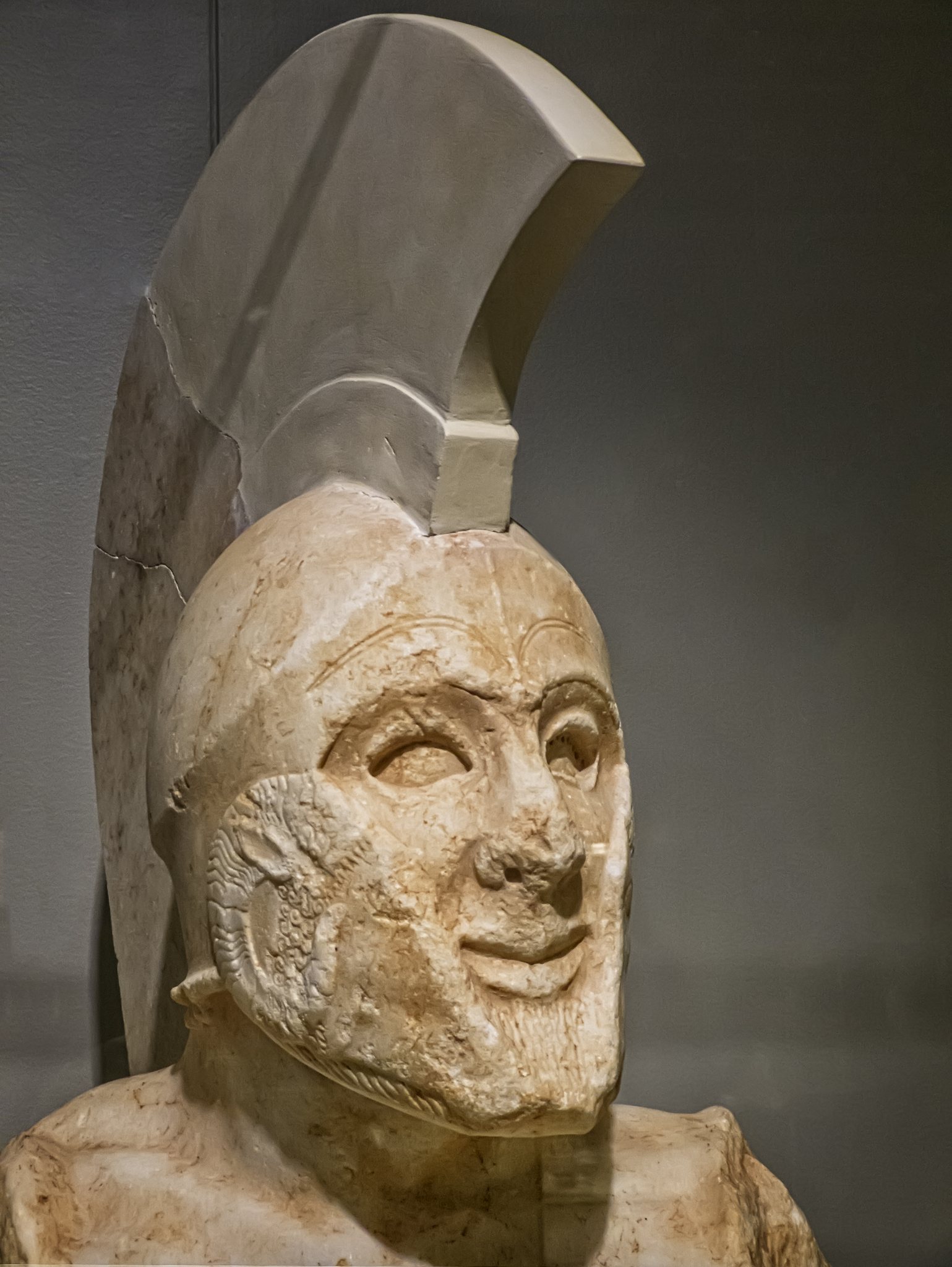
Sparta was chosen to lead the Greek alliance during the second Persian invasion of Greece. In 480 BC, King Leonidas I commanded Greek forces at Thermopylae, where 300 Spartiate citizens and 700 Thespians, together with other Greek troops, resisted the Persian army. The Spartiate and Thespian contingents were killed after being surrounded. In 479 BC, Spartan forces under Pausanias helped defeat Persia at Plataea.
After the Persian Wars, rivalry between Sparta and Athens intensified. Sparta and its allies withdrew from the pan-Hellenic alliance in 478 BC, while Athens organized the Delian League, an alliance whose members contributed ships or money for continued resistance to Persia. Conflict between the two powers included the First Peloponnesian War and later the Peloponnesian War.
A major earthquake struck Sparta in 464 BC. The traditional figure of approximately 20,000 deaths is associated with the disaster, which also helped provoke a large helot revolt. Sparta besieged the Messenian stronghold of Ithome and requested Athenian assistance, but later dismissed the Athenian troops. The revolt and the conflict that followed lasted for several years.
Victory and the end of Spartan hegemony
The Peloponnesian War began in 431 BC. Spartan armies invaded Attica under King Archidamus II, while Athens used its fleet against the Laconian coast. Sparta’s alliance controlled the land and Athens controlled the sea. The capture of Spartan prisoners at Sphacteria in 425 BC challenged the traditional image of Spartans as soldiers who never surrendered.
Sparta supported Syracuse during the Athenian expedition to Sicily and occupied Decelea in 413 BC, establishing a permanent base in Attica. With Persian financial support, it built a fleet under Lysander and defeated the Athenian fleet at Aegospotami in 405 BC. Athens surrendered in 404 BC, and victory established Spartan hegemony over Greece.
Sparta then campaigned in Persian territories in Asia Minor under Agesilaus II. Opposition from former allies, combined with Persian support for an anti-Spartan coalition, led to the Corinthian War. The Spartan naval defeat at Cnidus in 394 BC ended its maritime supremacy, while the Peace of Antalcidas in 387 BC restored Persian control over the Greek cities of Asia.
Spartan control over mainland Greece weakened after its garrison was expelled from Thebes in 378 BC. The Thebans under Epaminondas decisively defeated Sparta at Leuctra in 371 BC. The defeat ended Spartan hegemony, liberated Messenia, dissolved the Peloponnesian League, and removed much of Sparta’s economic base and political influence.
Hellenistic transformation and Roman rule
Sparta retained its independence during much of the later fourth century BC, although it had become a secondary power. The Thebans invaded Laconia without capturing Sparta itself. In 338 BC, the Macedonian king Philip II devastated Laconia and removed additional territory. King Agis III later led an unsuccessful revolt against Macedonian power and was killed at Megalopolis in 331 BC.
Sparta resisted the expansion of the Hellenistic kingdoms, the political era after the conquests of Alexander the Great, and repelled the attack of Pyrrhus of Epirus in 272 BC. The city’s first defensive fortifications were built around the end of the fourth or the beginning of the third century BC, when geography and hoplite warfare no longer provided sufficient protection.
Agis IV began reforms in 244 BC to address the concentration of land and the decline of the citizen body, but political opponents killed him. Cleomenes III continued the reforms from about 235 BC by redistributing land, restoring public education, and enlarging the citizen body through the admission of perioikoi and foreigners. Macedonian and Achaean forces under Antigonus Doson defeated him at Sellasia in 222 BC.
Nabis took power around 207 BC, rebuilt the army, fortified Sparta, and allied with King Philip V of Macedon. After Rome defeated Macedon, Roman and Achaean League forces besieged Sparta in 195 BC. Nabis surrendered, and Sparta lost its political independence. In 192 BC, it was forced into the Achaean League.
Under Roman rule, Sparta retained some autonomy and revived selected ancestral institutions and customs. Roman visitors were drawn to its distinctive traditions, especially the ritual associated with the sanctuary of Artemis Orthia. Spartan military contingents were also reportedly used as special units in the Roman army.
Late Antiquity and the medieval city
The Heruli plundered and burned Sparta in 267 or 268 AD. A Spartan phalanx reportedly defeated Visigoths after the Battle of Adrianople in 378, but Alaric and the Visigoths sacked and burned the city again in 396. Sparta contracted during Late Antiquity. Christianity is represented by churches and a bishopric, although parts of Laconia reportedly remained pagan until the tenth century.
During the Byzantine period, Lacedaemon became an important name for the city and sometimes for Laconia. A tradition describes abandonment during Slavic invasions in the late sixth century, but occupation continued on a reduced scale. Emperor Nikephoros I organized repopulation in the early ninth century. Walls were then repaired, and houses and churches were built.
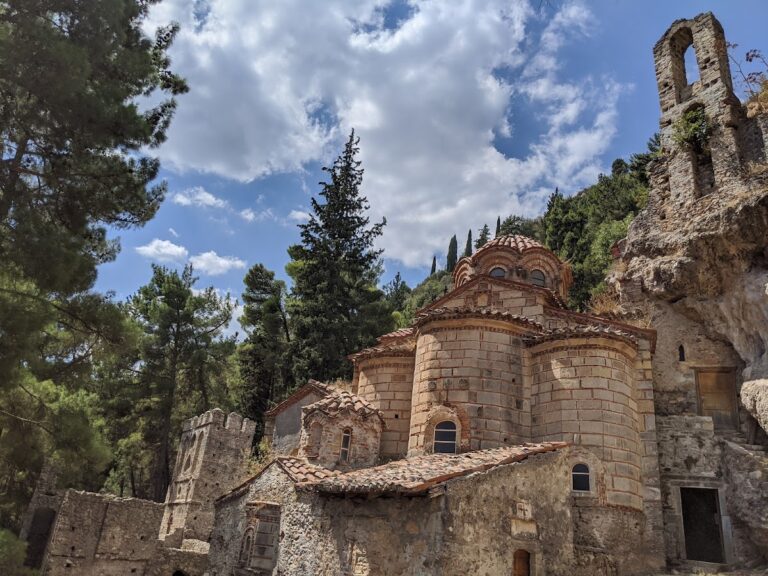
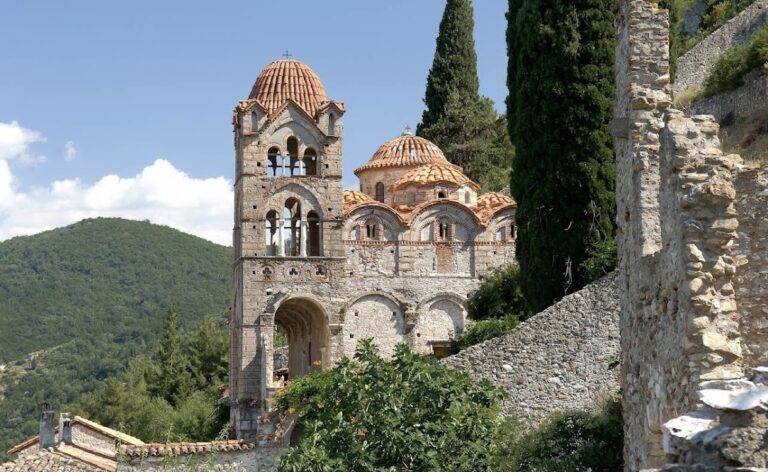
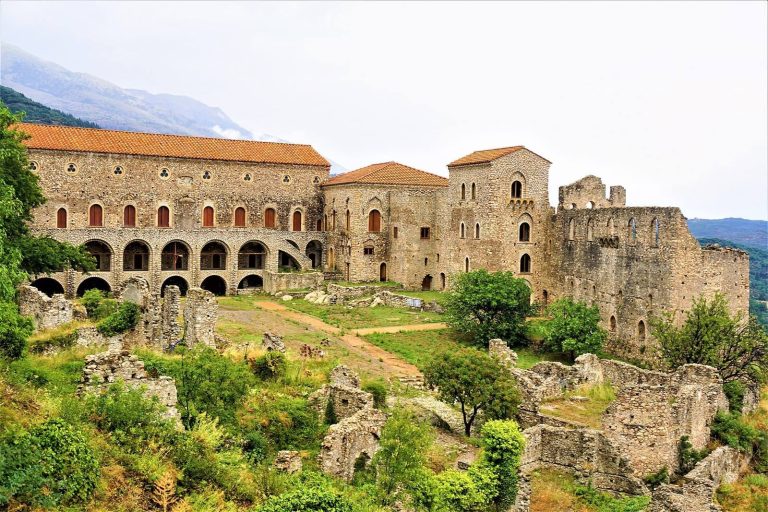
The foundation of Mystras, a fortified Byzantine and later medieval centre, on the western heights by William II of Villehardouin in 1249 reduced the importance of medieval Sparta. During warfare in 1263, the inhabitants of Lacedaemon took refuge at Mystras, and the bishop later followed them. Medieval Sparta was probably deserted before the middle of the fourteenth century.
Society, institutions, and later memory
Spartan society was divided principally among Spartiates, or full citizens; perioikoi; and helots, state-controlled dependent labourers. Helots formed the majority of the population, worked citizen estates, surrendered part of their produce, and repeatedly revolted. Messenian helots were freed after the Theban conquest, while Laconian helots remained under Spartan control until the time of Nabis.
Citizenship required descent from a citizen father and mother, completion of the agoge, Sparta’s compulsory public education and training system, participation in the common messes, and possession of a land allotment sufficient to meet communal obligations. Those unable to pay their contributions, or disgraced in war, could lose political rights and become hypomeiones, or “inferiors.”
The agoge began at about seven years of age and combined physical exercise, discipline, music, literacy, communal life, and military preparation. Its main stages ended at about twenty, while men remained in military service or reserve until sixty. Girls also received formal instruction in physical exercise, music, singing, and dance, an unusual arrangement in the Greek world. The compulsory common messes, or syssitia, reinforced communal life, military cohesion, and social discipline. Citizens normally joined them from the age of twenty, and continued contributions were necessary to retain full status.
The two hereditary kings belonged to the Agiad and Eurypontid families. Five annually elected ephors supervised the state, directed aspects of foreign policy, and checked royal authority. The Gerousia, or council of elders, consisted of 28 men over sixty together with the two kings. It exercised important judicial and preparatory functions. The Apella, the assembly of full citizens, approved or rejected major proposals and elected certain officials. After an incident involving the kings at Eleusis in 506 BC, only one king could lead the army on campaign at a time.
Sparta’s economy depended mainly on agriculture worked by helots, while perioikoi carried out much of the trade, craft production, and other productive activity. Laconia provided fertile land, forests, fisheries, and deposits of iron, copper, silver, lead, marble, and the green stone known as Lapis Lacedaemonius. Laconian art, poetry, bronze production, ivory carving, and painted pottery flourished during the Archaic period, although restrictions on luxury and declining artistic production became more pronounced toward the end of the sixth century BC.
Religious life included cults of Athena, Apollo, Artemis Orthia, Zeus, the Dioscuri, Helen, Menelaus, Agamemnon, Cassandra, Hyacinthus, and Heracles. Major festivals included the Hyacinthia, Gymnopaedia, and Carneia. Military campaigns were accompanied by sacrifices and consultation of divine signs.
Later ideas about Sparta were shaped by the “Spartan mirage,” an idealized or distorted image created by outside writers and later admirers. Laconophilia, meaning admiration for Sparta and its institutions, influenced political thinkers from the Renaissance through the French Revolution. In later periods, Sparta’s image was also appropriated by racialist, nationalist, and Nazi ideologies. Modern historical research has emphasized the limits of ancient accounts and the distance between Spartan ideals and the inequalities of Spartan society.
A modern city was refounded on the ancient site in 1834 by decree of King Otto of Greece. The settlement inherited the ancient name and occupies the same general location.
Remains
Ancient Sparta occupied the right bank of the Eurotas in a broad valley between Taygetus to the west and Parnon to the east. The settlement developed as a dispersed group of villages rather than a continuously built urban centre. Limnai lay beside the river, Kynosoura to the east, Mesoa in the centre, and Pitana to the northwest. Amyclae stood several kilometres south of the main settlement. The inhabited area probably covered about 300 hectares, while the surrounding countryside contained hamlets, isolated farms, estates worked by helots, roads, and bridges.
Urban buildings and fortifications
The acropolis and civic centre
The political and religious focus of the city appears to have been at Limnai and on the adjoining acropolis. The ancient city included an agora, athletic facilities such as a gymnasium and stadium, and a hippodrome for horse and chariot races. The Persian Stoa was built with booty taken during the Greco-Persian Wars. Gytheio, on the Laconian Gulf south of Sparta, served as the principal harbour of the predominantly land-based state.
The Skias
The Skias, an architectural complex usually described as a circular theatre or odeon, was built around 570 to 560 BC. It is one of the principal buildings associated with Archaic Sparta. Its form reflects the city’s early development as a political and religious centre gathered around the acropolis and the villages of the Eurotas valley.
Walls and later urban development
For most of its history, Sparta relied on its mountainous setting and military strength rather than a substantial city wall. A defensive wall was built in the Hellenistic period, probably after an earlier palisade and ditch. It eventually enclosed the dispersed villages, and traced sections measured about 48 stades, nearly 10 kilometres.
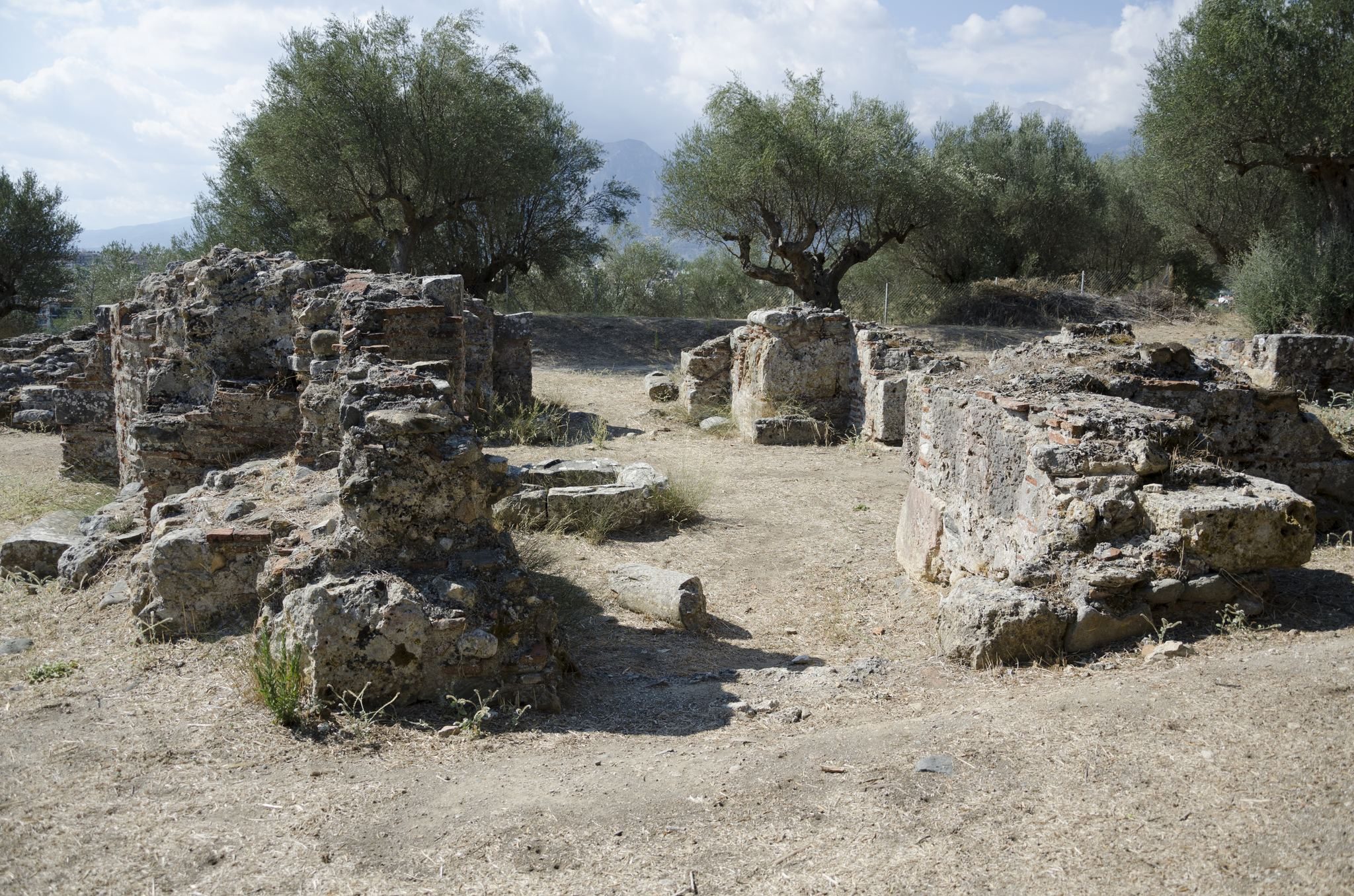
In the Hellenistic period, Sparta acquired a more conventional urban appearance. Streets were laid out, aristocratic residences with mosaic floors were built, and water-supply systems served houses, public buildings, and baths. A late Roman wall enclosed the acropolis, with part of it probably dating from the period after the Gothic raid of 262 AD. Other surviving remains include the foundations of an ancient bridge across the Eurotas, a circular structure later interpreted as a semicircular Hellenic retaining wall partly restored during the Roman period, brick buildings, and mosaic pavements.
The Roman theatre and public buildings
Roman-period Sparta has produced more surviving monumental fabric than earlier phases. The theatre was enlarged to about 114 metres in diameter and remodelled several times. Under Vespasian, a Roman-style stage was added, while a monumental stoa was constructed around AD 130 to 150. Wealthy Roman-style villas with mosaic floors and elaborate tombs appeared especially during the third century.
Sanctuaries and sacred landscapes
Sanctuary of Artemis Orthia
The sanctuary of Artemis Orthia stood outside the city. Its temple, dating to the second century BC, rested on the foundations of a sixth-century BC temple and beside remains of an even earlier temple dating to the ninth or possibly tenth century BC. In front of the temple, a theatre-like building was constructed soon after AD 200 around the altar. It hosted musical and gymnastic contests and the flogging ritual known as diamastigosis.
Excavations around the sanctuary produced abundant votive offerings, objects dedicated to a deity during worship. The deposits included clay, amber, bronze, ivory, and lead objects dating from the ninth to the fourth centuries BC. They provide important evidence for early Laconian art and for the changing ritual activity of the sanctuary.
Sanctuary of Athena Chalkioikos
The sanctuary of Athena Chalkioikos, meaning “Athena of the Brazen House,” stood on the acropolis immediately above the theatre. The temple has been almost entirely destroyed, but excavations recovered long Archaic inscriptions, bronze nails and plates, vessels, and numerous votive offerings. These remains connect the acropolis with Sparta’s religious institutions and early civic development.
The Menelaion
The Menelaion, a hero shrine where Menelaus and Helen were worshipped as heroic figures, lies east of Sparta on a hill above the Eurotas. It was built around the early eighth century BC, and the Spartans believed that it occupied the former residence of Menelaus.
Excavations around the shrine revealed remains of three Mycenaean mansions, probably destroyed by earthquake or fire, as well as Classical-period offerings dedicated to Helen and Menelaus. The surrounding settlement was roughly triangular, with its apex pointing north. Erosion has left mainly foundations and broken pottery.
Earlier settlements and burials
Mycenaean Laconia
The Mycenaean settlement associated with the Sparta region lay on the left bank of the Eurotas, southeast of the later city. Its area was approximately comparable to that of later Sparta, although its buildings were almost entirely destroyed. The remains of the Mycenaean mansions at the Menelaion provide part of the evidence for the region’s Late Bronze Age occupation.
Burial monuments
The archaeological record includes burials, some accompanied by substantial grave goods. A Geometric-period tomb dating to about 900 to 700 BC was later reused as a place of cult. Other two-level burials may reflect the gathering of remains from a family group.
During the Classical period, funerary monuments were generally restrained. Inscribed memorials were principally granted to men who died in war and women who died in childbirth. In the Hellenistic and early Roman periods, larger and more elaborate tombs appeared, including two-storey monuments with decorated facades, marble construction, and inscribed reliefs.
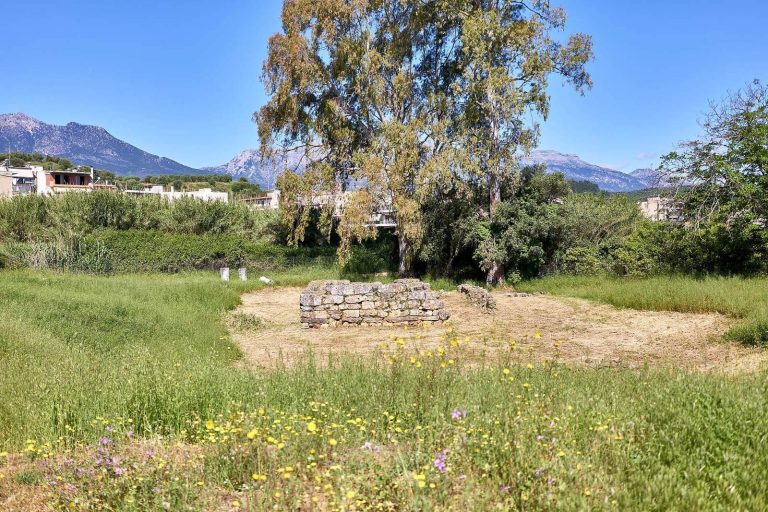
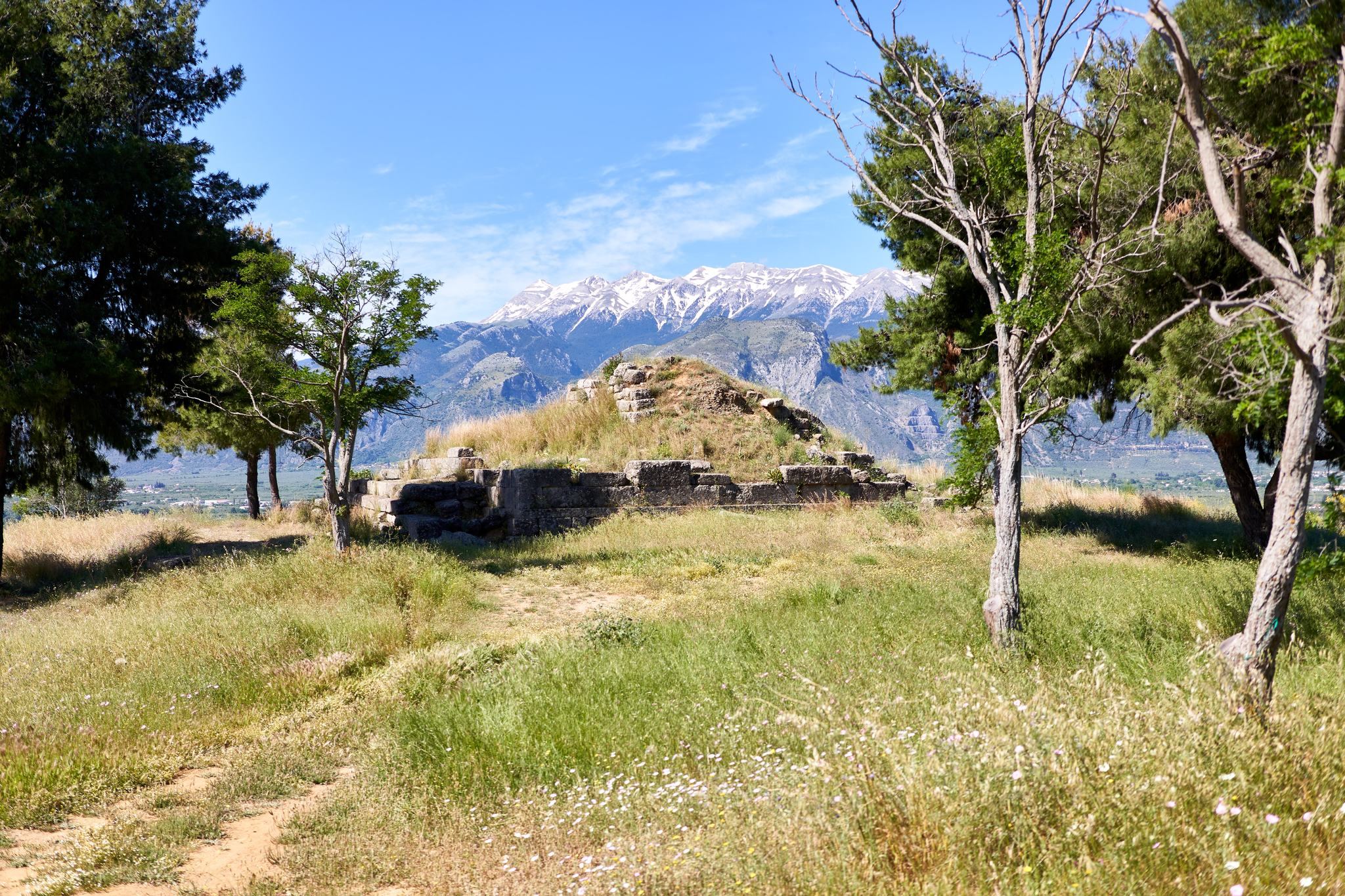
The so-called Tomb of Leonidas
The building traditionally called the Tomb of Leonidas is a quadrangular structure made from large stone blocks and divided into two chambers. Its identification as a tomb is traditional, while its architectural form has also led to the possibility that it was a temple.
Archaeological investigation and collections
The local archaeological museum was founded by Stamatakis in 1872 and enlarged in 1907. It contains inscriptions, sculptures, and other objects recovered from Sparta and the surrounding sanctuaries. The collections complement the remains in the archaeological area, particularly the inscriptions, votive objects, pottery, bronze, ivory, and lead offerings associated with the city’s religious and civic history.
Archaeological investigation in the wider region began during the nineteenth century and expanded after 1904, when the British School at Athens began systematic exploration of Laconia. Excavations within Sparta began in 1906, while work at the Menelaion and Amyklaion examined earlier sanctuaries and settlements. Comparative excavations across Spartan territory found small, open settlements with stone foundations and clay walls, helping clarify the dispersed character of the wider landscape.