Thick Tower, Sibiu: Medieval Artillery Tower and Theater Complex


Site at a Glance
- Rating
- 4.7
- Popularity
- Medium
- Country
- Romania
- Primary era
- Early Modern
- External website
- Open
- Eras represented
- Early Modern, Modern
- Civilizations
- Habsburg, Hungarian
- Site type
- Military
- Remains
- Tower
On this page9 sections
History
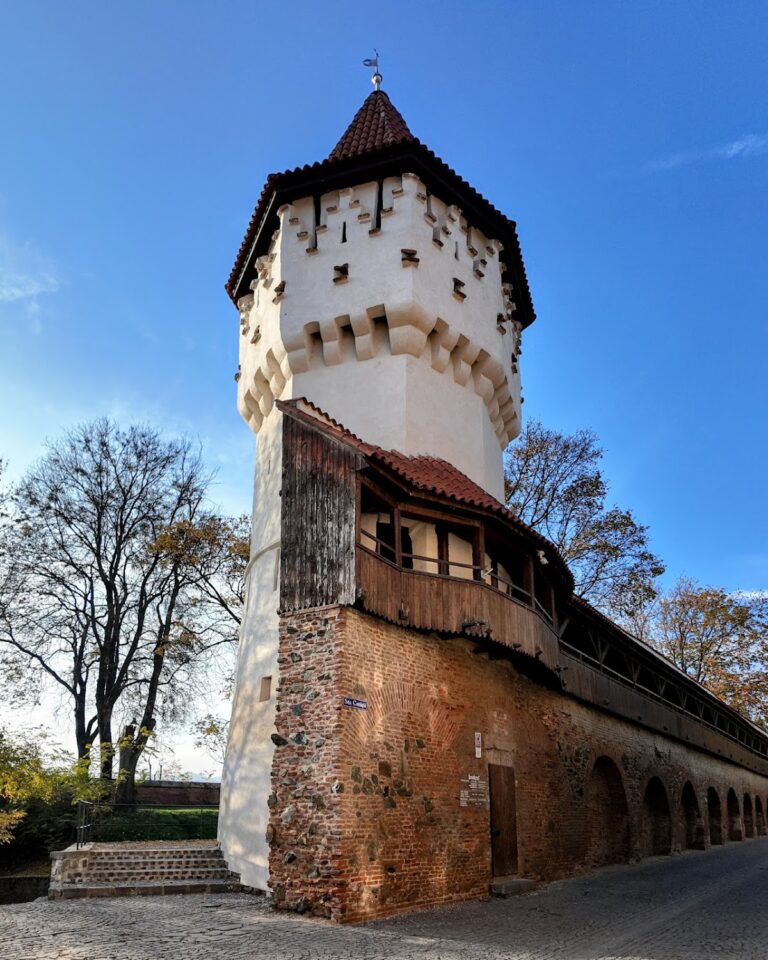
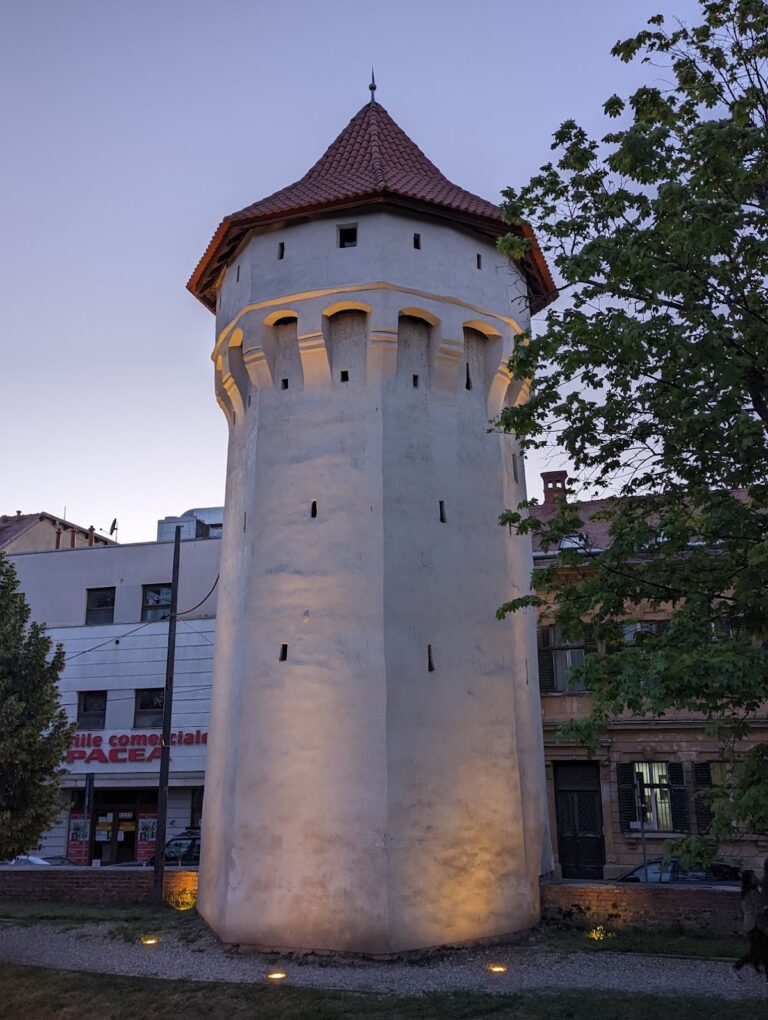
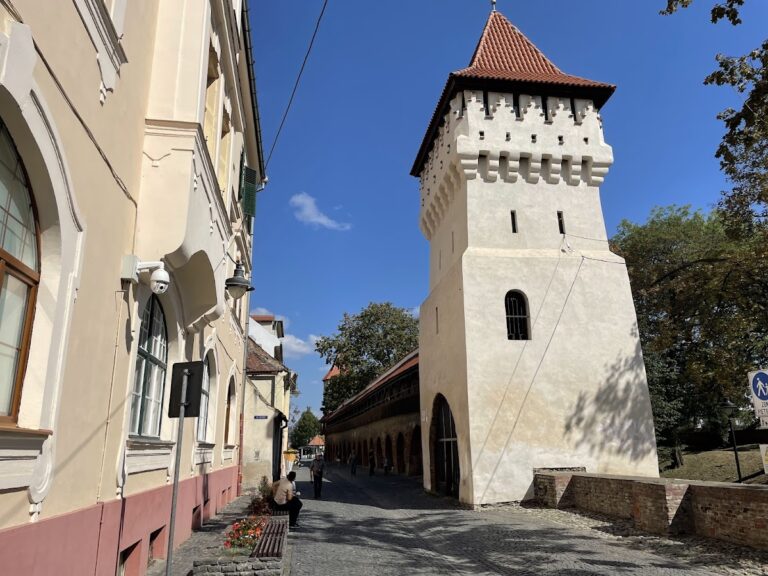
Thick Tower, also known as Turnul Gros, is a sixteenth-century defensive tower in Sibiu, Romania, built around 1540 as part of the city’s fifth medieval defensive wall. Mayor Petrus Haller directed the wall’s construction between 1540 and 1552, while Markus Pempflinger, Sibiu’s royal judge, funded the tower in 1540. Designed for infantry and artillery, it formed an important part of the city’s southeastern bastion during a period when Sibiu strengthened its defenses against the growing Ottoman threat.
Sixteenth-century fortifications
Thick Tower belonged to a wider system of artillery defenses that included other rounded artillery fortifications near the Cisnădiei Gate and elsewhere in the historic center. It is described as the only one of these artillery rondels, rounded fortifications projecting from a defensive wall, to have survived. The tower therefore preserves a phase in which Sibiu adapted its medieval defenses to the increasing use of cannon.
The theater at Thick Tower
During the eighteenth century, the tower and its annexes were converted into a city theater. Count Bánfy strongly supported the project, including through financial assistance, while Martin Hochmeister secured the building and established a self-financed theater. It opened on 1 June 1788. The project followed Viennese plans adapted to local conditions, and the theater presented dramas, operas, and operettas. Christoph Ludwig Seipp served as its first intendant from 1789 to 1791.
The conversion altered the surrounding urban space. The section of the third defensive wall in front of the tower was demolished to improve street traffic, the road linking the theater with the Great Square was paved, and a covered corridor was constructed between the courtyard and the theater entrance. A passage between the promenades, created in 1791, became known as the Theater Stairway before being closed again in 1818.
Fire, reconstruction, and changing ownership
On 6 August 1826, fireworks used during a stage performance caused the theater to burn completely, leaving the building in ruins. Martin von Hochmeister, the founder’s son, financed its full reconstruction. The restored theater followed the model of Vienna’s Leopoldstadt Theater, and a new performance took place on 1 March 1827.
Performances stopped in 1849 when General Józef Bem, a Polish commander in the Hungarian Revolution of 1848–1849, confiscated the theater. Activity resumed the following year. In 1865, Sibiu’s magistrate bought the theater from Hochmeister’s successors for 35,000 gulden, after which performances continued permanently.
During the summer of 1868, Mihai Pascaly’s company appeared at the theater as part of an artistic and national tour of Transylvania. Mihai Eminescu worked as the company’s prompter, and the visit brought the first Romanian-language performance to the stage. The company paid no rent, on the condition that it give several free performances for the city’s poor.
Late nineteenth-century and modern transformations
From 1876, the theater received a new facade intended to give it a monumental appearance. Its interior was renovated and decorated in white, red, and gold, and the theater reopened on 1 September 1887 with Goethe’s Faust. After the Union of Transylvania with Romania in 1918, figures from Romanian cultural life, including composer George Enescu, appeared there. Free performances for poorer residents continued periodically.
A devastating fire on 13 February 1949 ended the theater’s earlier use. After repairs, the factory Independența’s trade-union club occupied the tower’s platform, and the name Thalia became associated with the building during the communist period. The structure was also damaged during the Romanian Revolution of 1989.
Sibiu County Council reconstructed the theater complex between 1990 and 2004. Work begun in 1994 was completed ten years later, and the tower was renovated in 2006 and incorporated into the new complex. Since 2004, the complex has housed Thalia Hall of the Sibiu State Philharmonic, which uses it for concerts. The third compound of Sibiu’s medieval fortifications was added to Sibiu County’s historic-monuments list in 2004, with the Thick Bastion identified as one of its components. Thalia Hall has a separate heritage listing.
Remains
Fortification structure
Thick Tower is a massive semicircular brick building set on a U-shaped plan. Its base is constructed in stone masonry, while its several defensive levels rise to a gun platform. The projecting front extends approximately 25 metres beyond the outer defensive wall, giving the structure the form and function of a bastion-like artillery rondel. The lower level contained casemates, protected chambers from which weapons could be operated, with firing openings directed toward the approaches. Cannon positions on the platform allowed defenders to fire on attackers.
Theater architecture
The theater built over the tower in 1788 followed the Rococo style, an eighteenth-century European manner known for ornate decoration, graceful forms, and elaborate interiors. It contained two balconies arranged on separate levels, with 23 theater boxes on one level and 20 on the other. The governor’s box stood directly opposite the stage, and individual boxes could be rented for two or three ducats per month. During later restoration, the tower’s interior walls were demolished to reorganize the internal space.
Archaeological features and restored hall
Archaeological excavations uncovered two channels built of brick. One probably carried water away from the external moat, while the other probably allowed defenders on opposite sides of the tower to communicate. The restored complex now includes Thalia Hall, which can seat up to 500 people and serves as a concert venue for the Sibiu State Philharmonic.