Church of Saint Martin (Martinček): A Romanesque-Gothic Church in Slovakia


Site at a Glance
- Rating
- 4.8
- Popularity
- Very Low
- Country
- Slovakia
- Primary era
- Medieval
- External website
- Open
- Eras represented
- Medieval
- Civilizations
- Hungarian
- Site type
- Religious
- Remains
- Church
On this page6 sections
History
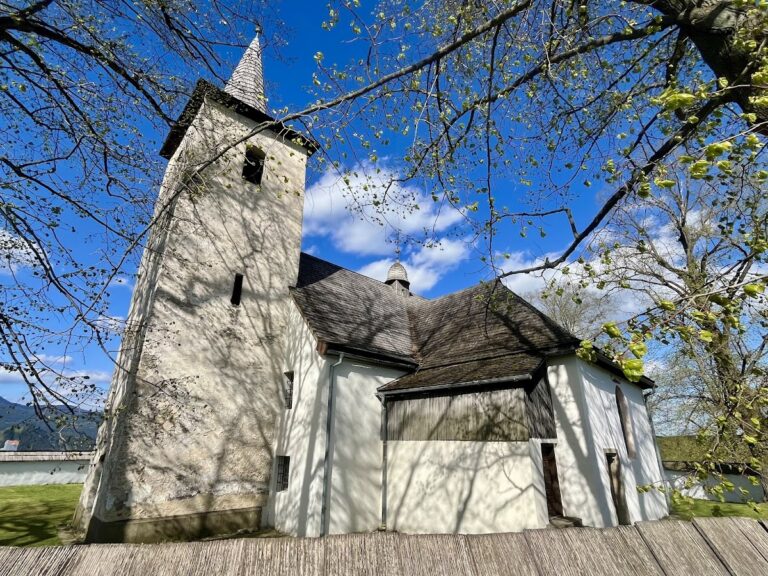
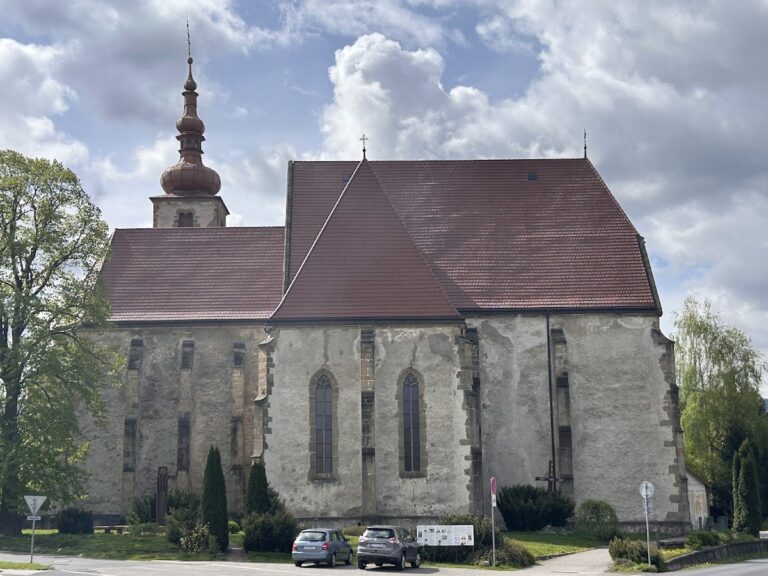
The Church of Saint Martin is a Romanesque-Gothic church in Martinček, Slovakia, constructed around 1260. Its style combines the heavy, rounded forms of Romanesque architecture with the pointed arches and stronger vertical emphasis developing in Gothic design. The church is regarded as an important example of almost intact medieval architecture in Slovakia.
Medieval origins
The earliest references to the church date from the mid-thirteenth century, close to the period of its principal construction. Unconfirmed traditions attribute its construction to the Knights Templar, a medieval religious-military order associated with the protection of Christian pilgrims and with religious and military institutions in medieval Europe. This tradition remains distinct from the church’s established thirteenth-century date.
Later alteration
A reconstruction or major alteration took place in 1737. The medieval building nevertheless retains much of its earlier character, while valuable wall paintings provide evidence of the church’s importance within the surviving religious architecture of Slovakia.
Remains
The church stands on a rise at approximately 580 metres above sea level, on the eastern spur of Mních Hill in the southern part of Martinček, east of Ružomberok. It is a single-nave stone building, constructed partly from dolomite, with a rectangular-ended presbytery, the part containing the main altar and sanctuary, and a tower attached to the front. Traditional wooden shingles cover the exterior, and the tower includes a Gothic window.
Church interior
The sanctuary vault carries a mural showing Christ, the Virgin Mary, and angels. In the nave, a painted cycle presents the Last Judgment, including a figure of Christ. These murals are among the oldest preserved wall paintings in Slovakia and remain an important part of the church’s medieval fabric.
Archaeological setting
The eastern spur of Mních Hill also contains evidence of Bronze Age activity. A hoard of swords and extensive ramparts belong to a hillfort associated with the Púchov culture, an archaeological culture of the northern Carpathian region generally linked with the later Iron Age. These remains place the church within a landscape that had been used and defended long before the medieval building was constructed.