San Sebastián, Toledo: A Historic Mudéjar Church

Site at a Glance
- Rating
- 4.5
- Popularity
- Low
- Country
- Spain
- Primary era
- Medieval
- Eras represented
- Medieval
- Civilizations
- Crown of Castile, Taifa Kingdoms, Umayyad
- Site type
- Religious
- Remains
- Church
On this page7 sections
History
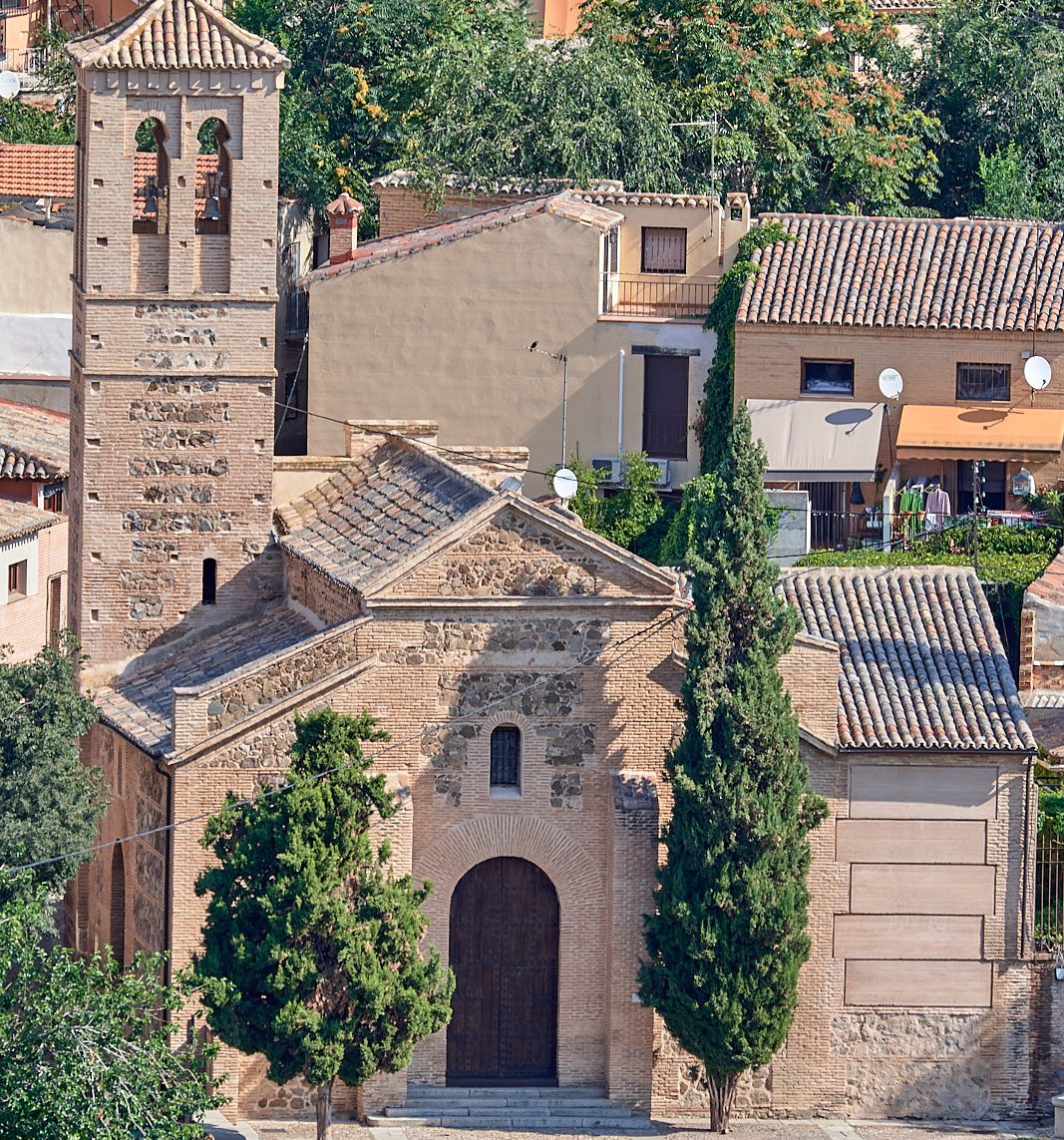
San Sebastián is one of Toledo’s oldest churches in Spain, with a history that begins in the tenth century as the Al-Dabbagin mosque. The surviving building reflects Mudéjar architecture, a medieval Iberian style that combined Islamic forms and decoration with construction under Christian rule.
Islamic origins
The mosque was enlarged in the eleventh century and stood near Bab-al-Dabbagin, the former city gate later called the Puerta de los Curtidores, or Gate of the Tanners. It was also close to the baths now known as the Baños de Tenerías. The name Al-Dabbagin is also transliterated as Adabaquín.
Conversion to a Christian parish
When Toledo was conquered by Alfonso VI of León and Castile in 1085, the building was converted into a church. Alfonso VI allowed it to become one of six Toledo parishes using the Mozarabic rite, a Christian liturgical tradition preserved in parts of medieval and later Christian Spain. San Sebastián is recorded as a Mozarabic church in 1168.
The church was reconstructed from the late twelfth to the thirteenth century and underwent further reforms from the thirteenth century onward. It retained its Christian dedication to Saint Sebastian for almost nine centuries. The church stood in Toledo’s medieval tanners’ quarter, an area renamed Solana de San Cipriano in the sixteenth century.
Modern use and protection
Since 1916, the building has been administered by the Consorcio de Toledo. After recent restoration, it ceased to serve as a place of worship and became a venue for concerts and exhibitions. Since 2010, it has also been the canonical seat of the International Brotherhood of Researchers of the Holy Christ of the Olive. San Sebastián is protected as a Bien de Interés Cultural, Spain’s designation for sites recognized as having cultural importance.
Remains
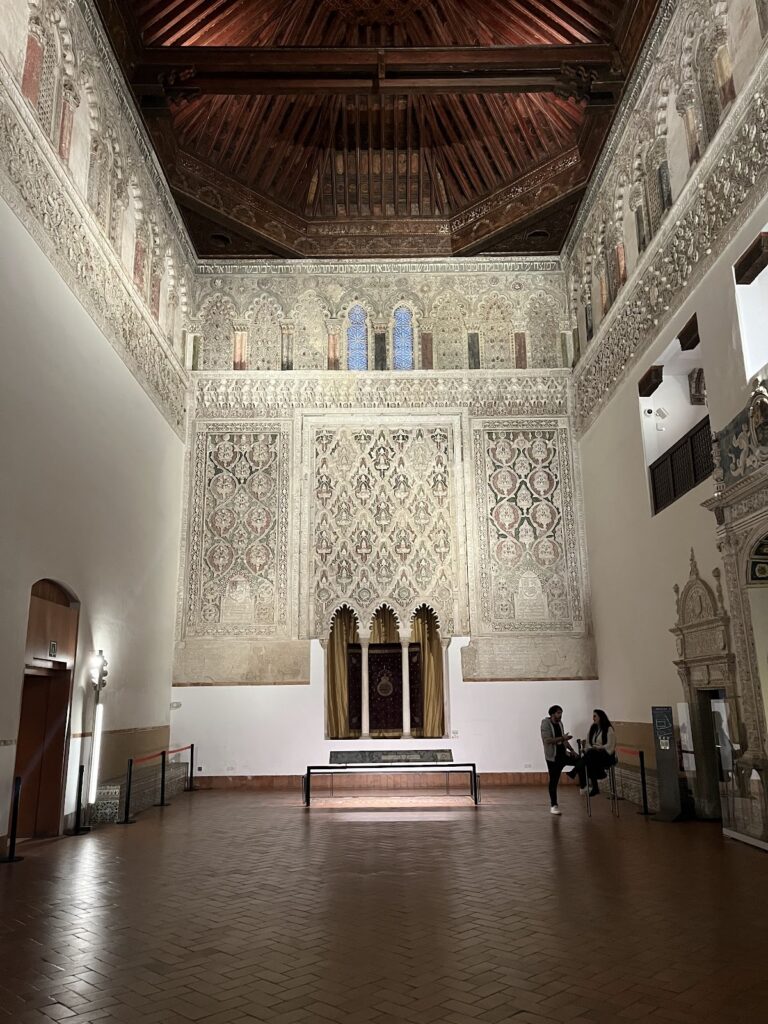
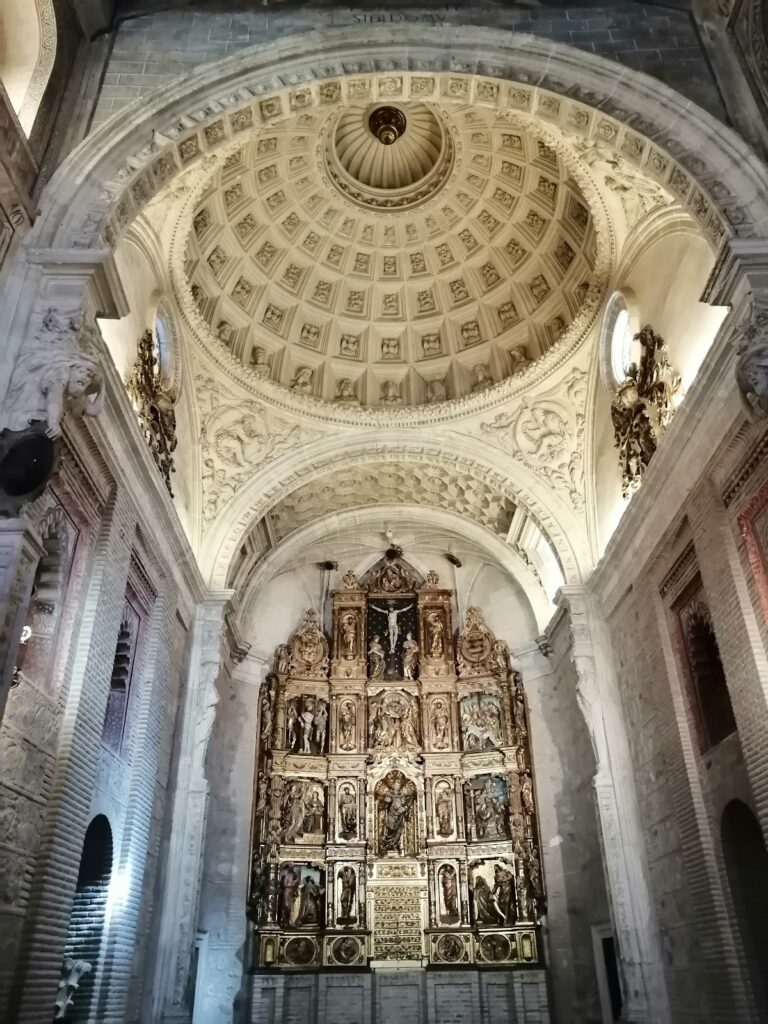
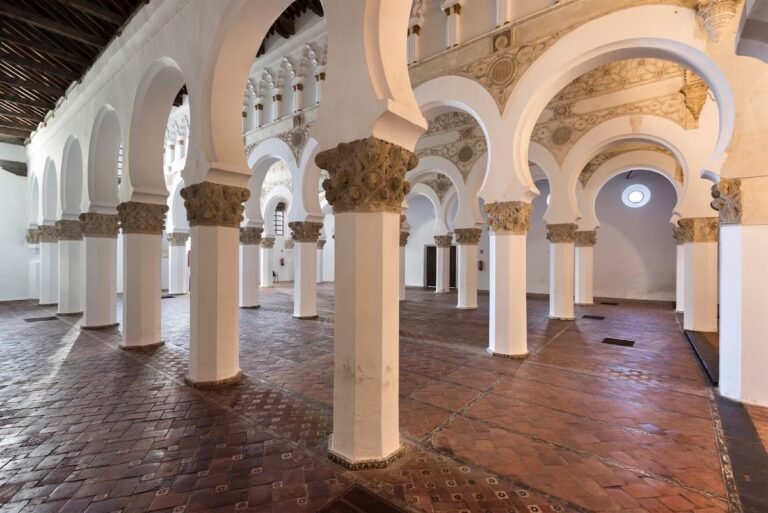
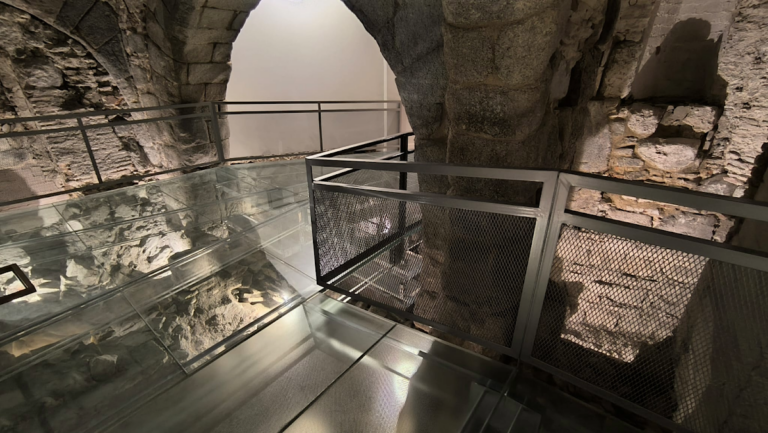
The surviving structure combines a tower, an interior supported by columns, and an altar within a Mudéjar building enriched with Arabic decoration. Its present form reflects the late twelfth- or thirteenth-century reconstruction, later alterations, and the continued use of the interior for exhibitions and concerts.
Tower
The tower dates from the fifteenth century. Its form preserves characteristics associated with the former minaret that occupied the same position, linking the standing Christian structure with the site’s earlier mosque phase.
Interior and setting
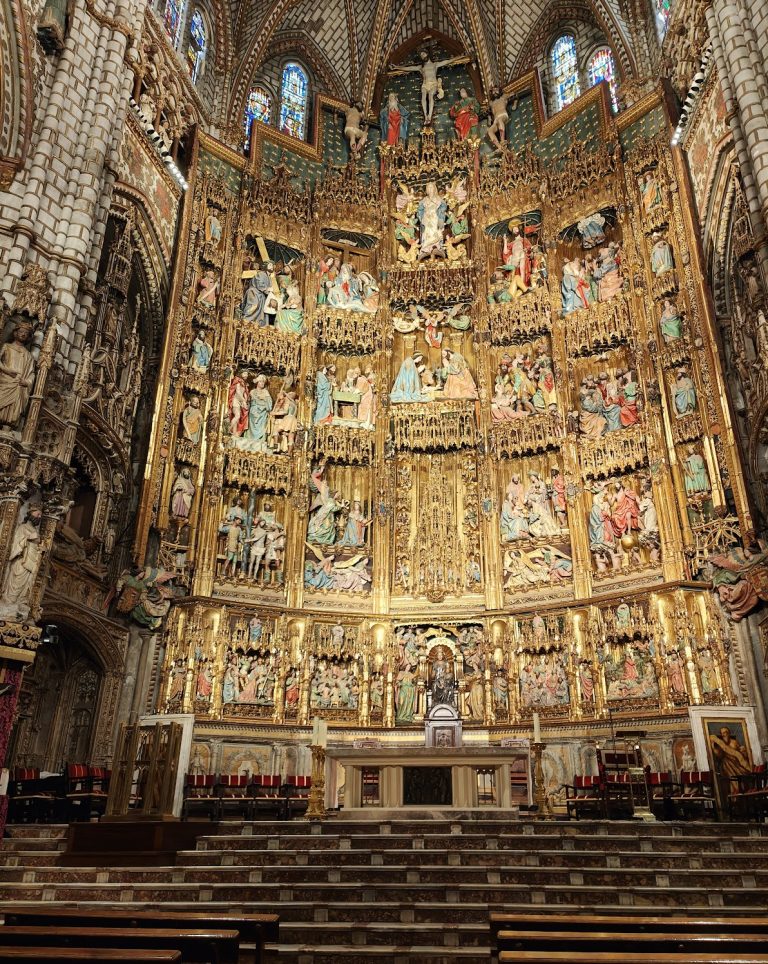
Inside, columns and an altar form part of the surviving church fabric. The building’s Arabic decoration remains an important element of its Mudéjar character. Its historical setting was beside the former Puerta de los Curtidores and near the Baños de Tenerías, within Toledo’s medieval tanners’ quarter.