Timios Stavros: A Byzantine Church in Cyprus


Site at a Glance
- Rating
- 4.7
- Popularity
- Very Low
- Country
- Cyprus
- Primary era
- Medieval
- Eras represented
- Medieval
- Civilizations
- Byzantine
- Site type
- Religious
- Remains
- Church
On this page6 sections
History
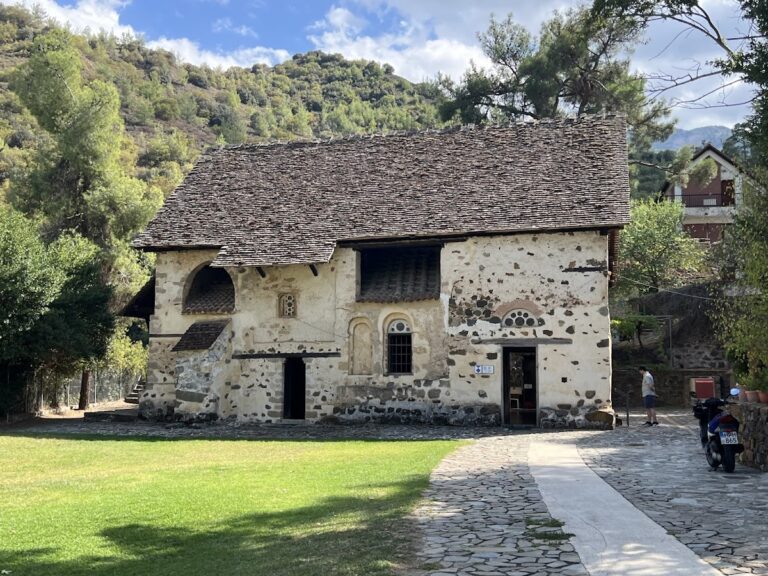
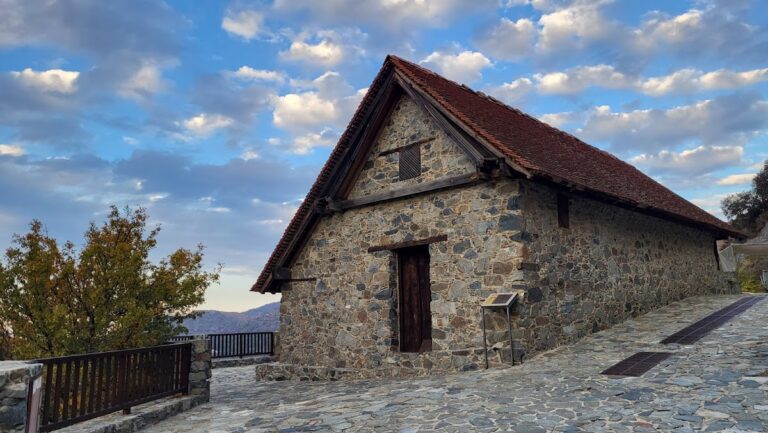
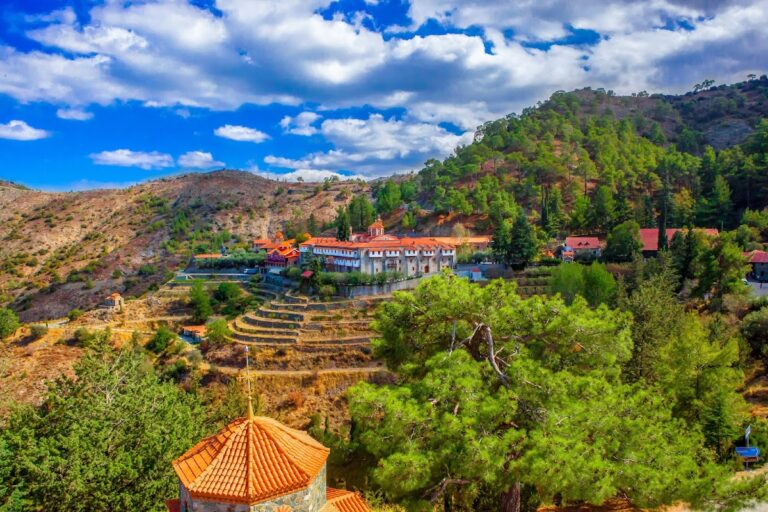
Timios Stavros is a Byzantine church in Cyprus, at the southern edge of Pelendri, probably built during the twelfth century in the Byzantine Christian tradition. Dedicated to the Holy Cross, it belongs to the Church of Cyprus, the self-governing Orthodox Christian church of Cyprus. The church forms part of the Painted Churches in the Troodos Region, a UNESCO World Heritage property inscribed in 1985 and extended in 2001.
Early Form and Expansion
Timios Stavros was probably established as a cemetery church or beside a burial ground. In the thirteenth century, it had a single nave. The northern and southern aisles were added later, changing the building into the three-nave church that survives today.
Destruction and Later History
The church was destroyed at an unknown date and for an unknown reason. It was later rebuilt, altered repeatedly, and restored, although the sequence of these interventions is not known. These successive changes form part of the building’s long history as a place of Orthodox Christian worship.
Remains
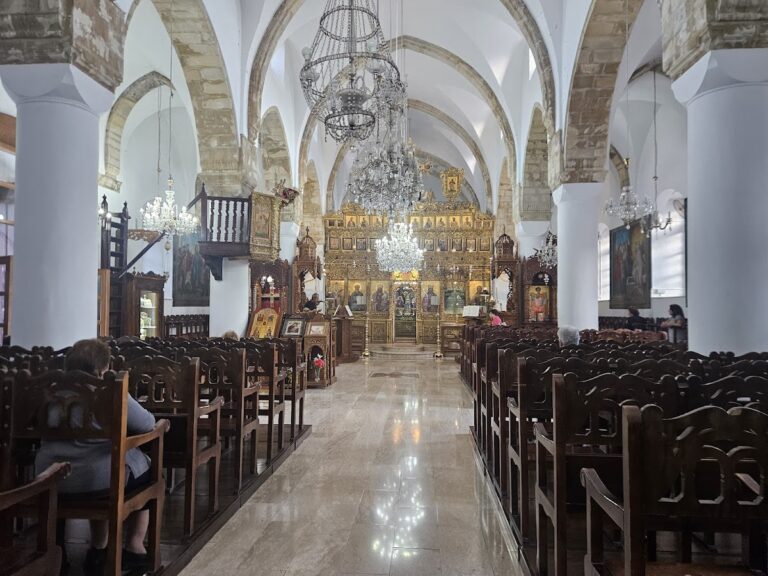
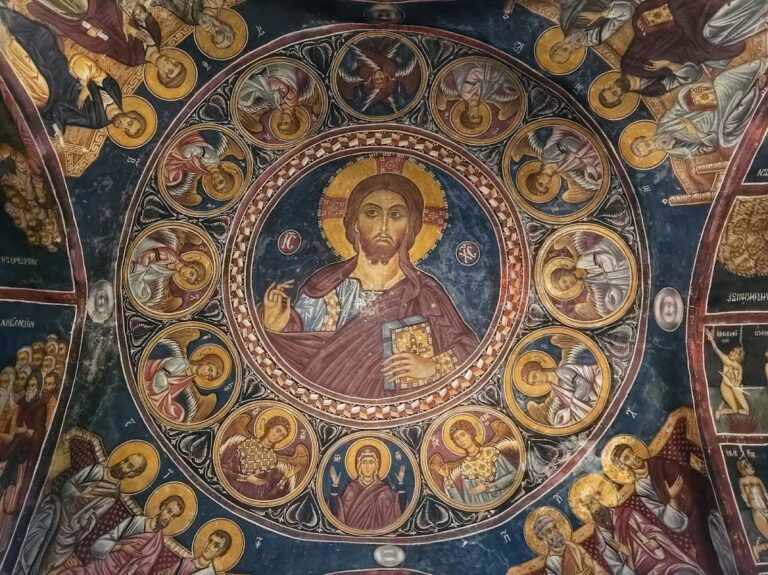
The church stands within a rectangular plan arranged around three naves, an architectural form that differs from other churches in the surrounding region. A dome rises over the center, giving the building a distinct Byzantine character. Its surviving decoration and furnishings preserve evidence of religious practice and artistic activity across several medieval periods.
Wall Paintings
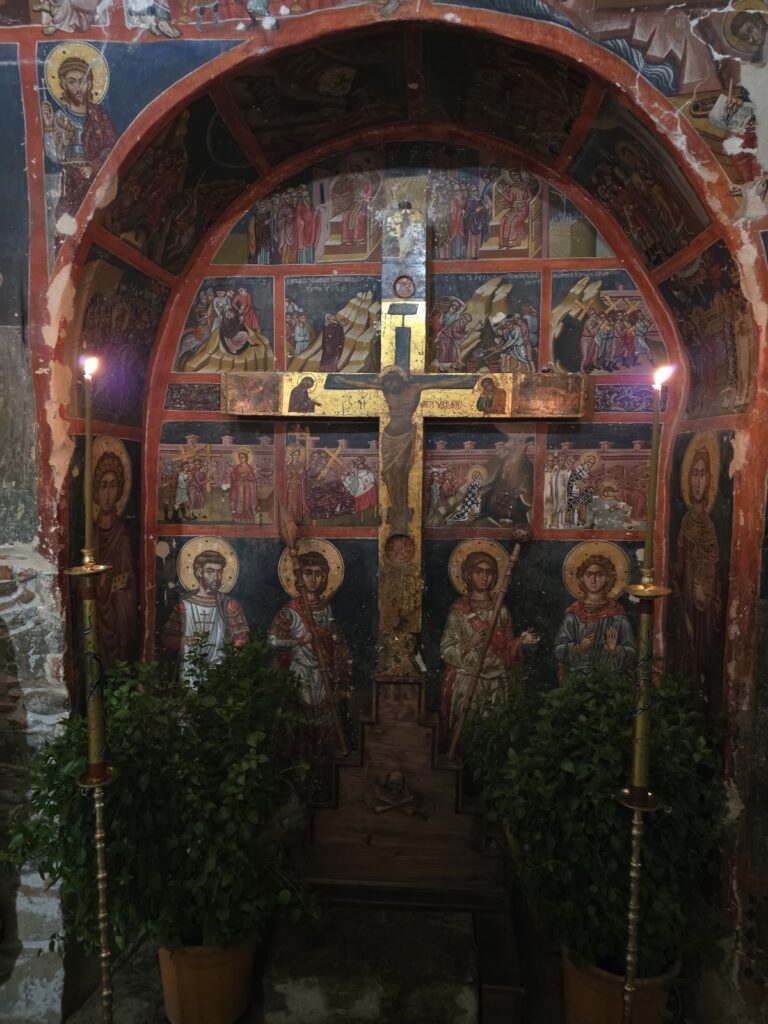
The oldest surviving parts of the wall-painting cycle are in the apse, the curved eastern end containing the sanctuary, and date to 1171–1172. Additional frescoes, or wall paintings made on plaster, were created during the fourteenth century. Their subjects include the genealogy of Jesus Christ, the Nativity, the Presentation of Jesus at the Temple in Jerusalem, and the Doubting of Thomas.
A scene of the Visitation, the episode in which Mary visits Elizabeth, includes two children shown within their mothers’ wombs. This unusual detail is described as rare in Byzantine art and forms one of the distinctive features of the church’s painted cycle.
Iconostasis and Cross
A gilded cross is built into the iconostasis, the screen separating the sanctuary from the main body of an Eastern Christian church. Tradition holds that the cross contains fragments of the True Cross, the cross associated with Jesus’ crucifixion.