Tekke Mosque: Remains of a Medieval Church in Romania


Site at a Glance
- Rating
- 4.6
- Popularity
- Low
- Country
- Romania
- Primary era
- Medieval
- External website
- Open
- Eras represented
- Medieval
- Civilizations
- Hungarian
- Site type
- Religious
- Remains
- Church
On this page5 sections
History
Franciscan Foundation and Orthodox Use
Tekke Mosque is a medieval church site in Drobeta-Turnu Severin, Romania, built at the beginning of the fourteenth century by Franciscans, a Catholic religious order associated with missionary and pastoral work. The friars came to the Severin area after 1321 to spread the Catholic faith.
From 1370, the church probably served the newly established Orthodox Metropolitanate of Severin. An Orthodox metropolitanate is an ecclesiastical jurisdiction led by a metropolitan, a senior bishop in the Eastern Orthodox Church. The church consequently became Orthodox and remained so until 1419, when Severin came under the authority of the Hungarian king Sigismund of Luxembourg.
Damage, Decline, and Excavation
The church suffered damage and underwent several renovations. After Severin came under Ottoman rule in 1524, the building began to deteriorate.
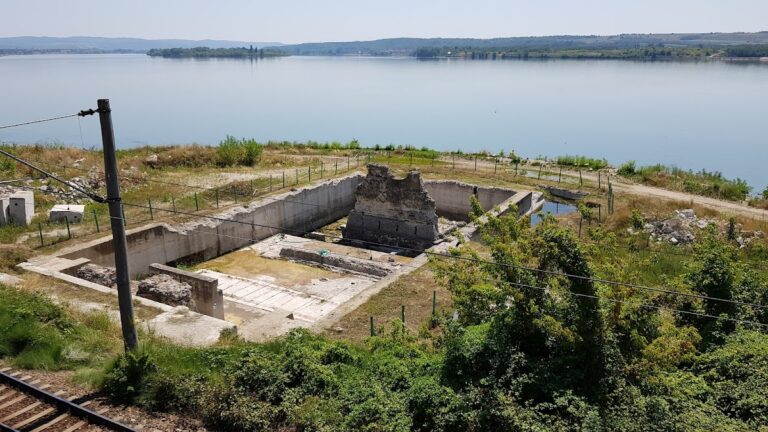
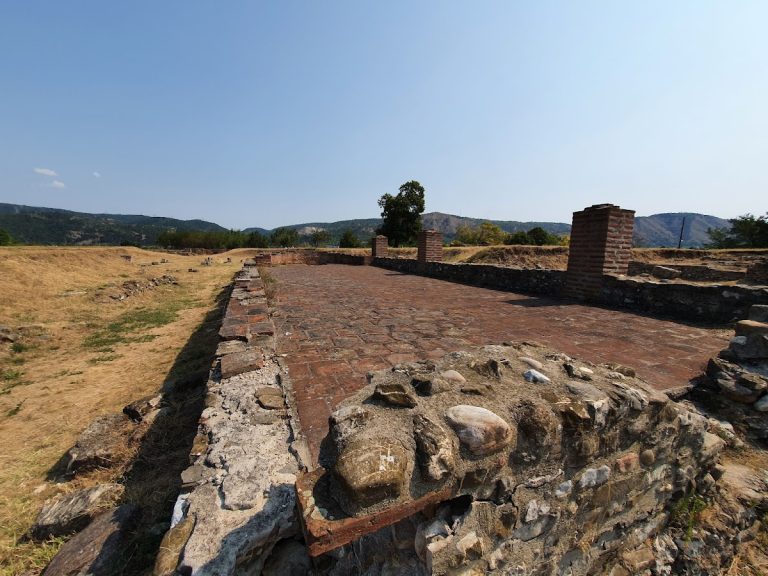
The first excavations took place in 1868. Grigore Tocilescu identified the ruins during investigations carried out between 1896 and 1899. The remains now lie in the courtyard of the Iron Gate Regional Museum and are protected as a nationally significant historic monument. They also form part of the archaeological site of Drobeta-Turnu Severin, which includes a Roman amphitheater, baths, fortifications, the Drobeta castrum, and the remains of Trajan’s Bridge. A castrum was a Roman fortified military settlement or camp.
Remains
Medieval Church Plan
The surviving remains belong to a medieval church with projecting buttresses, supports built against walls to help carry structural loads. Excavation revealed a main nave measuring 25.5 by 8.5 metres. At the altar end, an apse, the usually semicircular termination of a church, was supported by five buttresses. A sacristy stood to the north of the altar area, while two masonry blocks in front of the entrance supported a bell tower.