Sultan Han (Kayseri): A Seljuk Caravanserai in Türkiye


Site at a Glance
- Rating
- 4.6
- Popularity
- Low
- Country
- Turkey
- Primary era
- Medieval
- Eras represented
- Medieval
- Civilizations
- Seljuk
- Site type
- Economic
- Remains
- Caravanserai
On this page6 sections
History
Sultan Han (Kayseri) is a Seljuk caravanserai in Türkiye, located northeast of Kayseri on the road to Sivas in the area also known as Tuzhisar. Built between 1232 and 1237 during the reign of Sultan Ala ad-Din Kayqubad I, it belongs to the period when the Seljuks, a medieval Turkic dynasty, developed caravanserais, mosques, schools, and fortified structures across Anatolia. The complex served merchants, travelers, pack animals, and commercial caravans by offering lodging and basic services along an important regional route.
With an area of approximately 3,900 square meters, Sultan Han is described as the second-largest medieval caravanserai in Turkey, after Sultan Han near Aksaray. Its construction is also attributed to an architect from Damascus. The building reflects the commercial and architectural expansion associated with the reign of Ala ad-Din Kayqubad I, a Seljuk sultan of Rum whose rule brought major development to Anatolia.
Remains
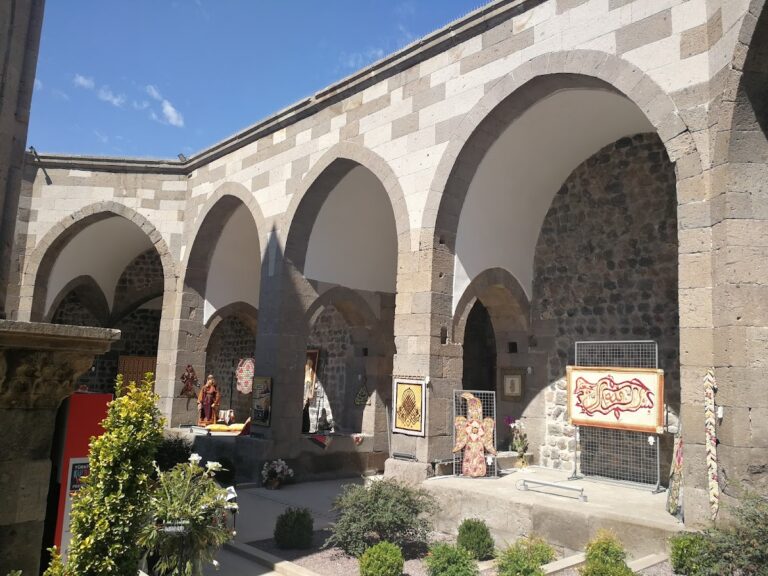
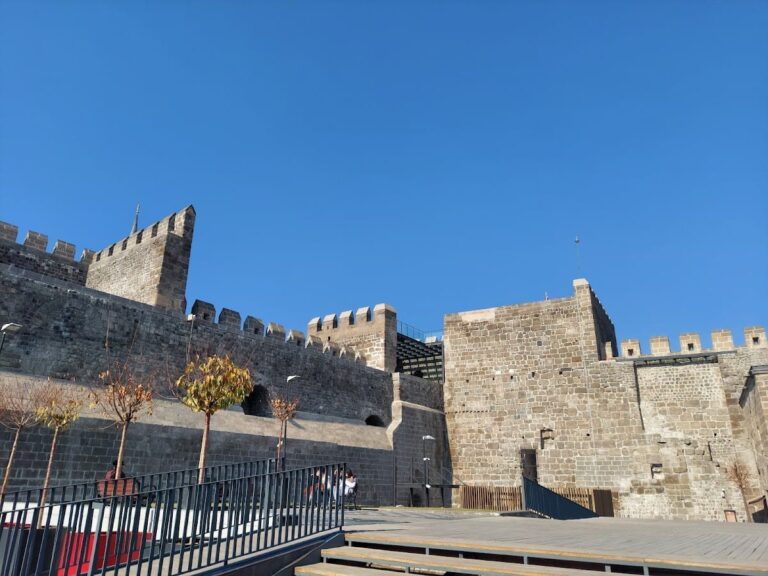
The stone complex combines a fortified exterior with a large courtyard and a separate winter hall. A richly carved entrance portal forms the principal approach, while arcades surround the courtyard within. Opposite the main entrance, another portal leads into the covered hall, whose vaulted spaces are gathered around a central domed section.
Entrance and courtyard
Monumental entrance portal
The main portal is richly ornamented with carved stone and has a vaulted muqarnas canopy. Muqarnas is a three-dimensional decoration made from stepped, niche-like elements that create a transition beneath a vault or canopy. The portal opens directly onto the large interior courtyard.
Courtyard mosque
At the center of the courtyard stands a small square stone chamber raised on four pillars. It served as a mosque for those using the caravanserai. Seljuk animal decoration appears on the structure, including serpentine dragon designs along the lower arches and drain spouts shaped like lion heads.
Winter hall
The second portal leads to the winter hall, designed as a covered area for colder conditions. Its principal vaulted space has a central dome, externally distinguished by a conical roof. Additional vaulted chambers open from both sides of the hall, extending the complex’s enclosed accommodation and service areas.