Çakır Ağa Mosque: An Early Ottoman Mosque in Edirne


Site at a Glance
- Rating
- 4.7
- Popularity
- Very Low
- Country
- Turkey
- Primary era
- Medieval
- Eras represented
- Medieval, Modern
- Civilizations
- Ottoman
- Site type
- Religious
- Remains
- Mosque
On this page9 sections
History
Çakır Ağa Mosque is an early Ottoman mosque in Edirne, Türkiye, commissioned in 1453 by Üsküplü Çakır Ağa, the chief falconer of Sultan Mehmed II. Mehmed II, also known as Mehmed the Conqueror, was the Ottoman sultan who ruled during the conquest of Constantinople in 1453. The mosque is affiliated with Sunni Islam and belongs to the formative architectural tradition of the Ottoman state before the mature classical style.
Construction and later changes
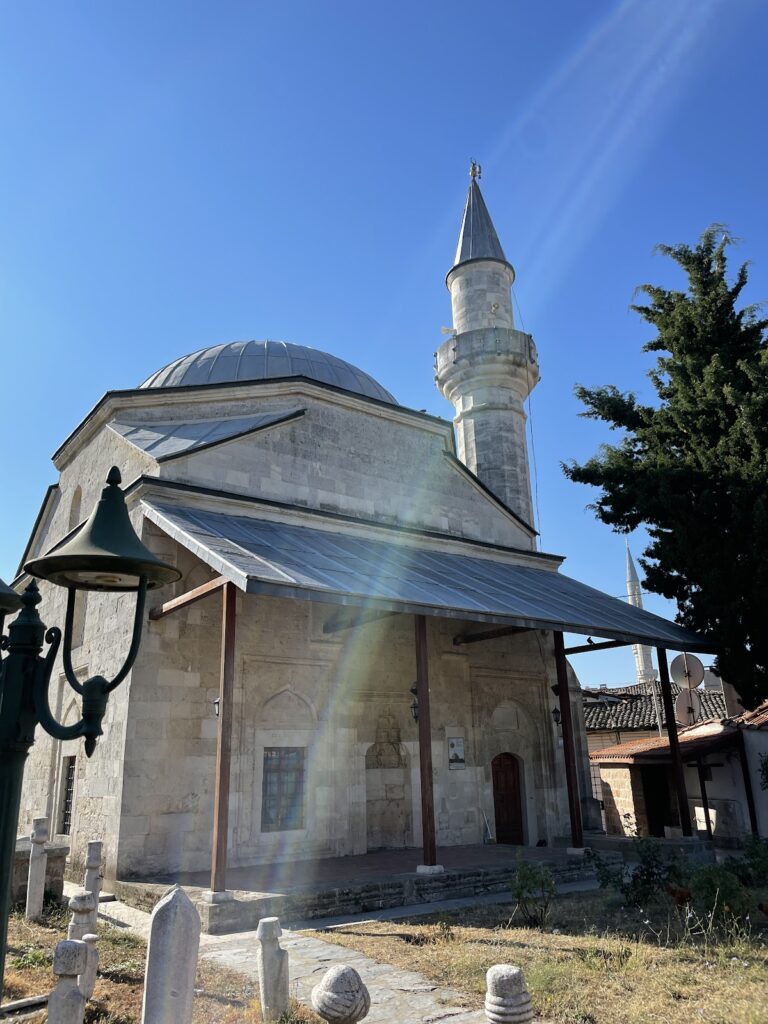
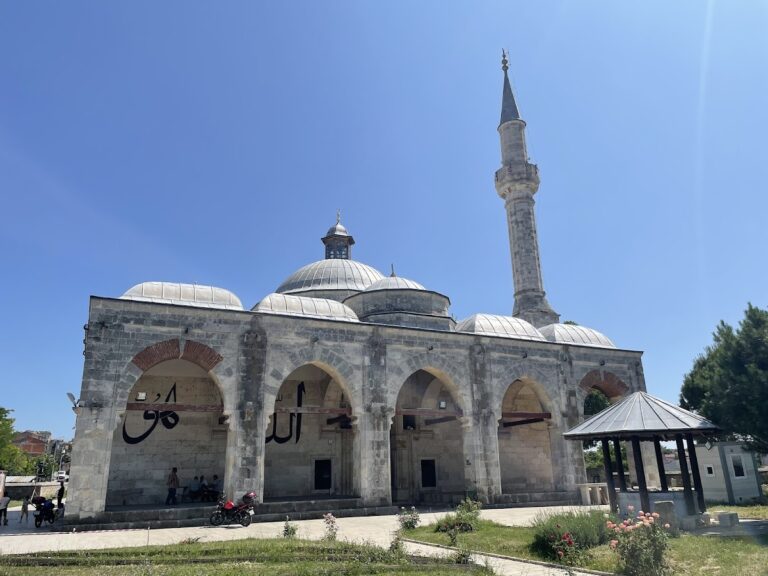
The mosque was originally covered by a dome. Major repairs took place in 1859, but the domed building was destroyed in 1905. It was then rebuilt with a roof rather than a dome, creating the form that defines the building today. Further repairs were carried out in 1973.
Modern restoration and continued use
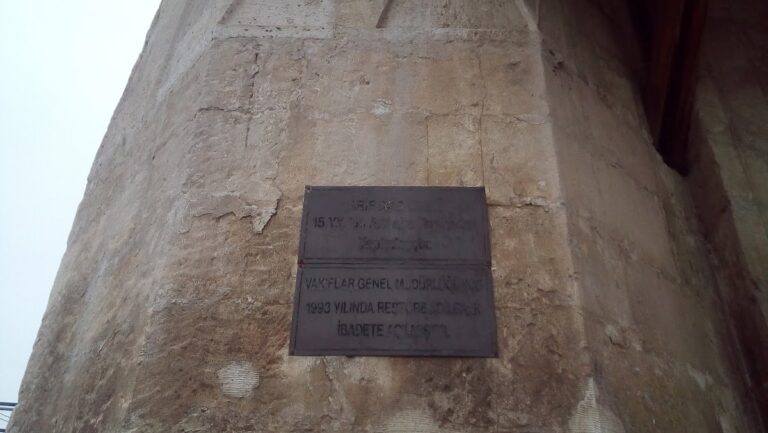
A restoration project began in November 2013 and lasted approximately 15 months. Çakır Ağa Mosque reopened for worship on 23 February 2015 and remains in use.
Remains
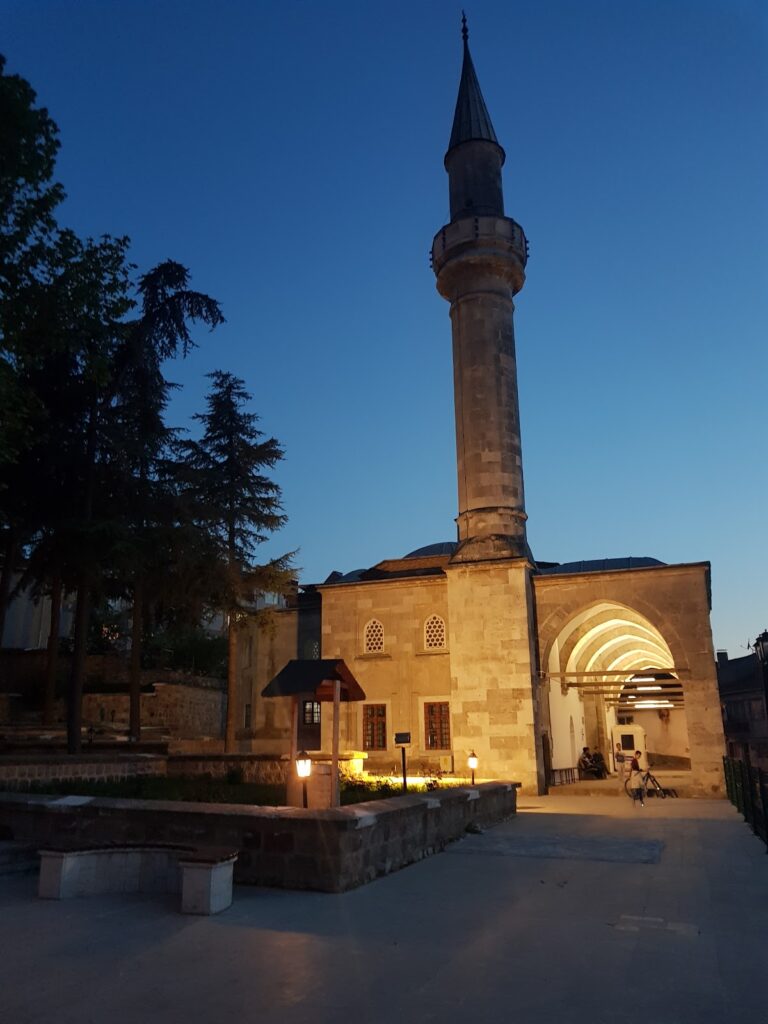
The mosque has a square main prayer space and stands within a walled courtyard. Its construction combines roughly dressed and rubble stone in the walls with brick and carefully dressed ashlar stone in the minaret. The facades contain windows arranged in two tiers, while the post-1905 rebuilding is expressed in the present roofed form.
Prayer space and courtyard
Main prayer space
The square prayer hall is enclosed by walls built from roughly dressed and rubble stone. Inside, the brown-painted wooden minbar, the raised pulpit used for the sermon, has richer decoration than the mihrab, the prayer niche indicating the direction of Mecca. The two-tier arrangement of windows continues across the facades.
Courtyard
The mosque occupies a courtyard enclosed by walls on its east, west, and north sides. Two entrances provide access to this enclosed area.
Minaret
Single minaret
A single minaret rises at the northeastern corner of the mosque. It is built with brick and carefully dressed ashlar stone, contrasting with the roughly dressed and rubble-stone walls of the main building.