Beylerbeyi Mosque: An Ottoman Mosque in Edirne
Site at a Glance
- Rating
- 4.8
- Popularity
- Very Low
- Country
- Turkey
- Primary era
- Medieval
- External website
- Open
- Eras represented
- Medieval
- Civilizations
- Ottoman
- Site type
- Religious
- Remains
- Mosque
On this page6 sections
History
Beylerbeyi Mosque in Edirne, Türkiye, is an Ottoman Sunni mosque built in 1428 and completed in 1429 during the reign of Sultan Murad II. It is regarded as one of the oldest mosques in Edirne and belongs to a small public complex that included a bath, a madrasa, or Islamic school, and a tomb.
Foundation under Murad II
The mosque was established during the reign of Sultan Murad II, whose rule covered 1421 to 1444 and again 1446 to 1451. Historical descriptions identify Sinaneddin Yusuf Pasha, the Ottoman governor of Rumelia, as its builder. Rumelia was the Ottoman administrative and military region covering much of the empire’s European territories. Another attribution names Abdullah Bey as the builder and assigns later repairs to Sinaneddin Yusuf Pasha, leaving the founder and builder identified differently in the historical record.
Damage and repair
Natural disasters damaged the mosque and other buildings in Edirne over the centuries. Further destruction occurred during the Balkan Wars. In 1950, a major part of the mosque collapsed. During the 1950s, cracks appeared in the dome walls of the tomb complex, while the madrasa section was lost and became largely ruined. The Foundations Administration carried out necessary repairs during the 1960s, after which the mosque reopened.
Remains
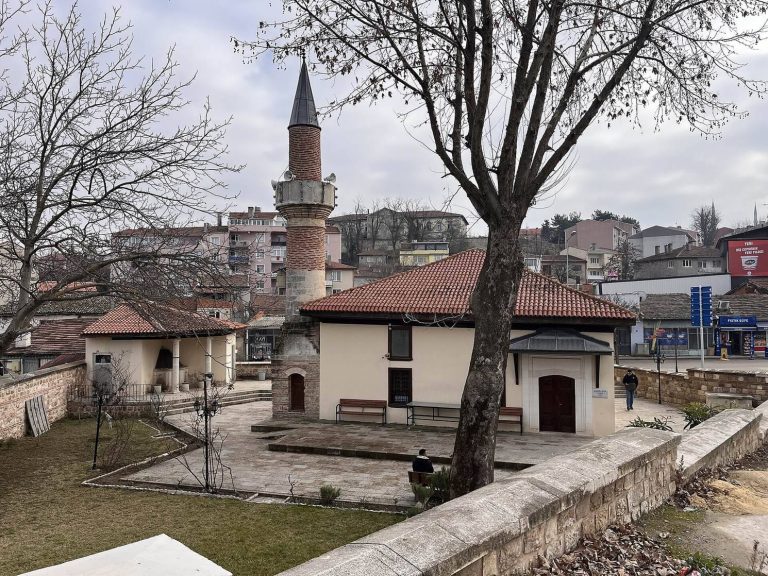
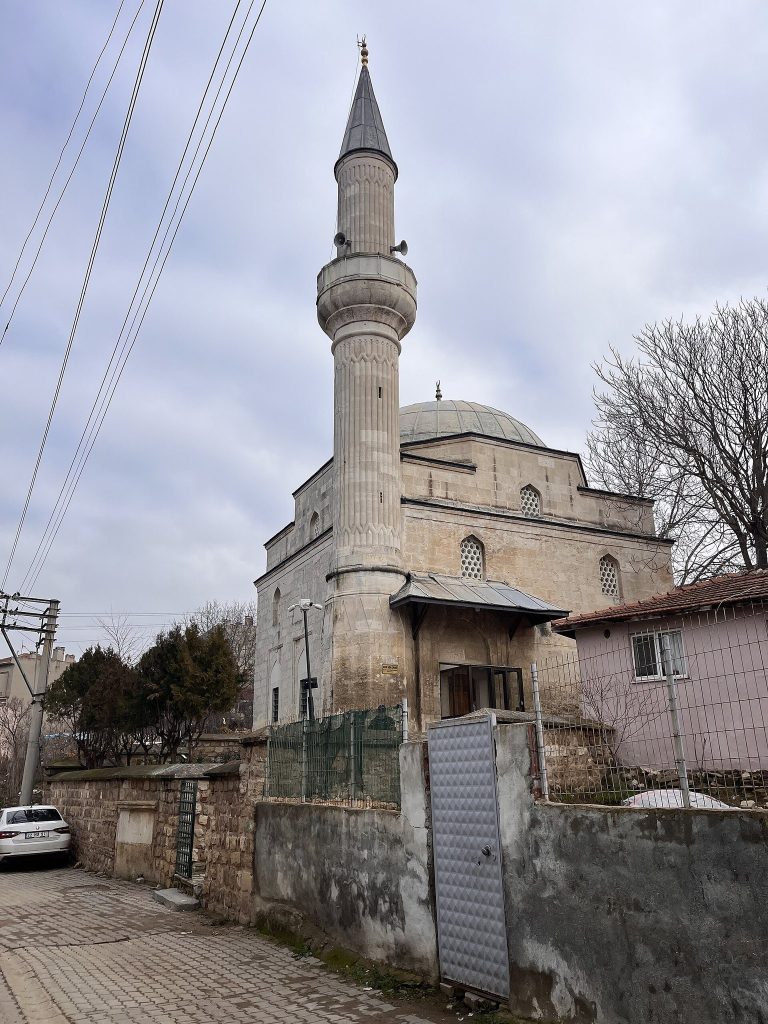
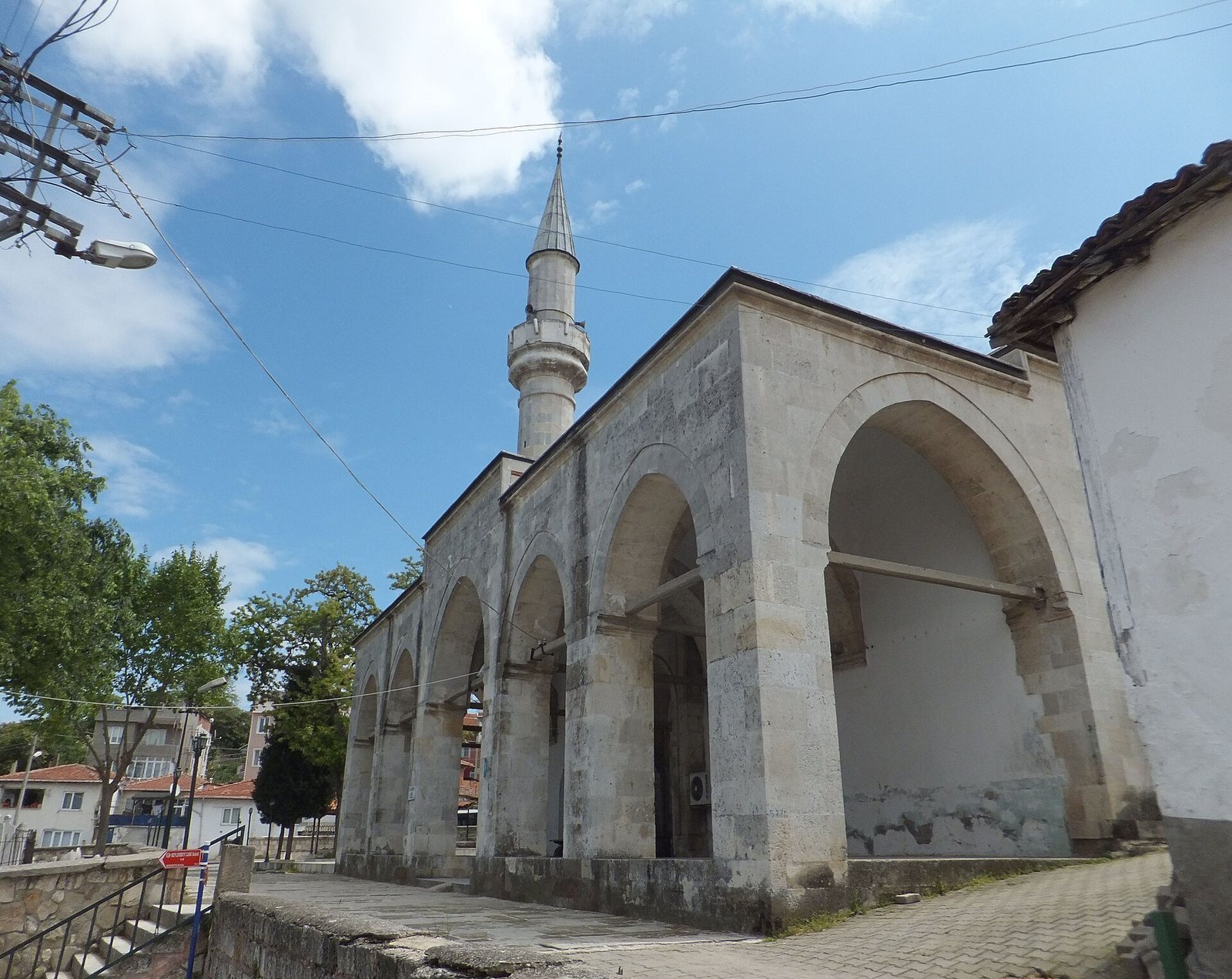
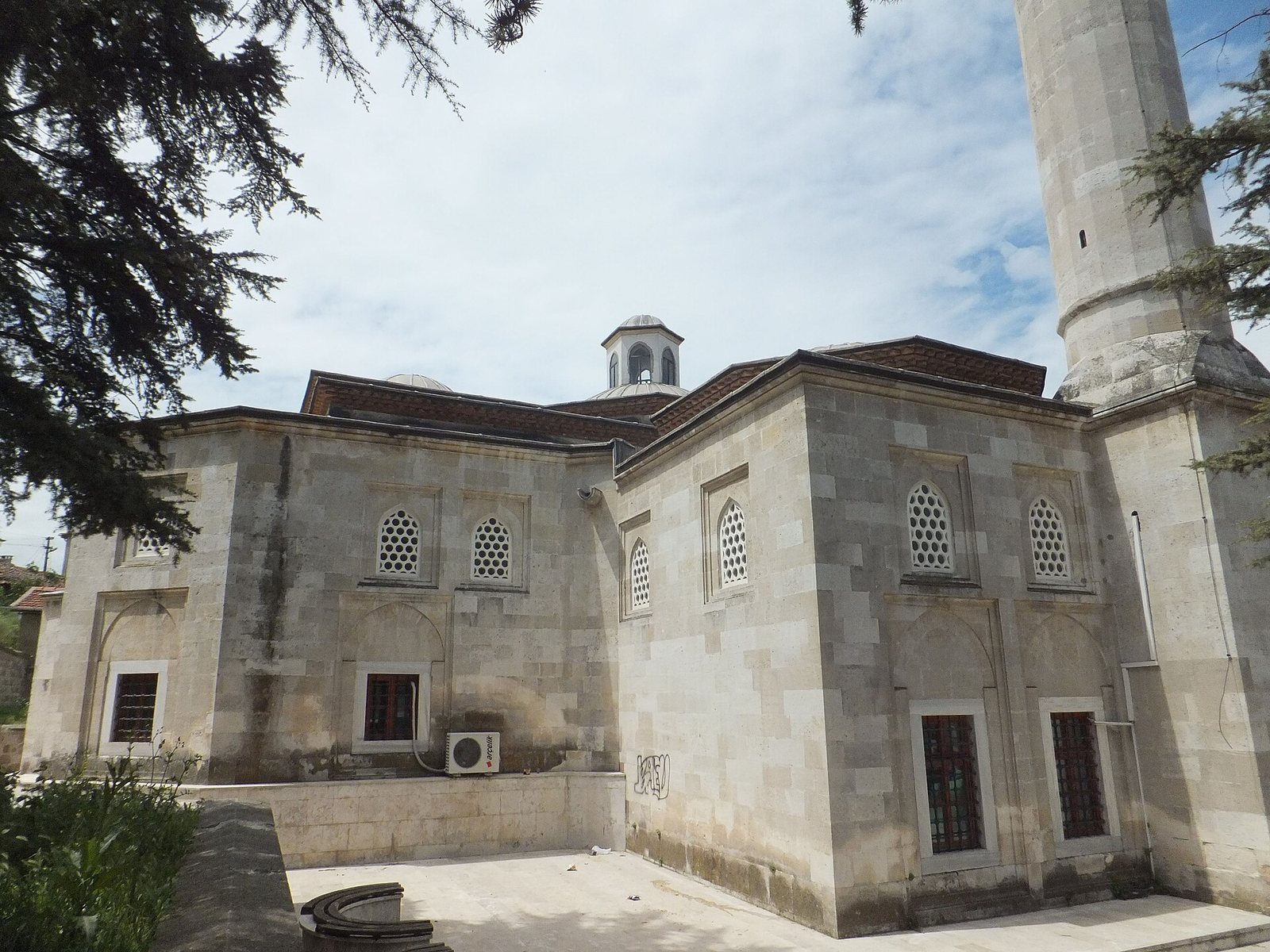
Beylerbeyi Mosque is a polygonal, single-domed Ottoman building with a T-shaped, or inverted-T, plan. Angled side spaces flank the central hall, while a single minaret rises from the structure. The mosque stands on the hills between Üç Şerefeli Mosque and Şahabeddin Pasha Bridge, between Edirne’s city center and the Sarayiçi district.
Prayer hall and entrance
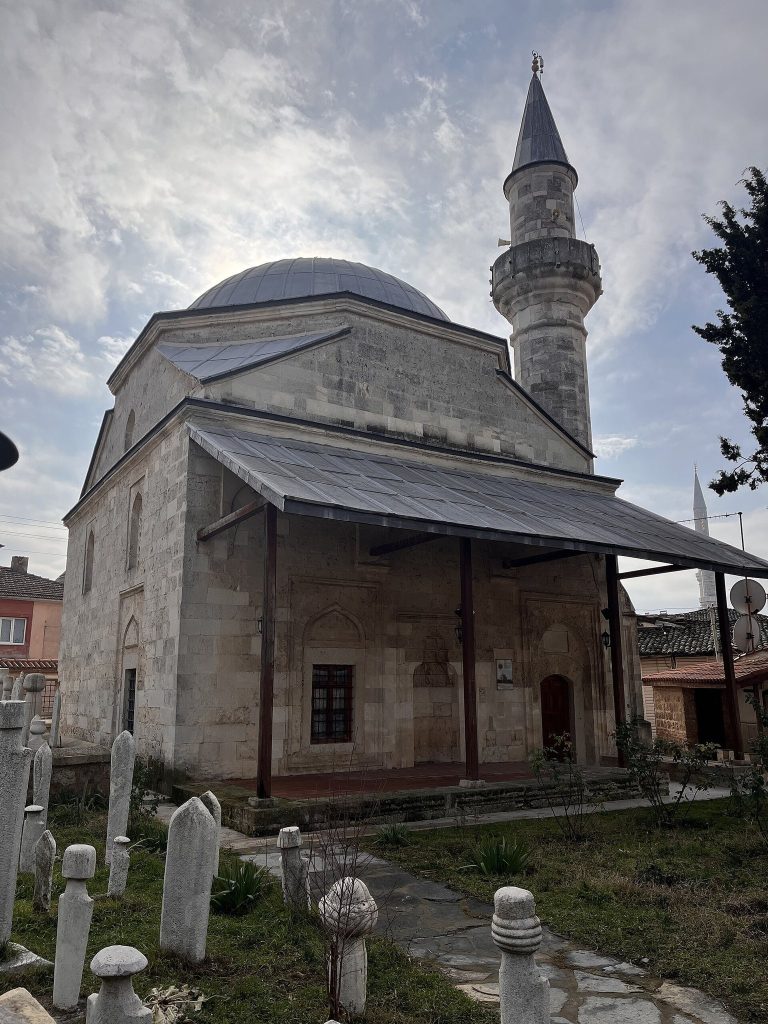
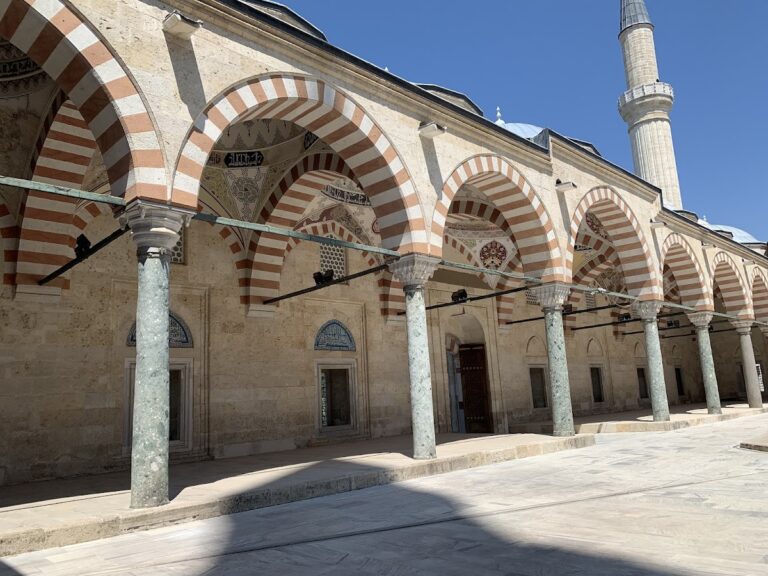
The central domed hall is flanked by tabhanes, lodging rooms attached to some Ottoman religious and charitable complexes for travelers and other guests. In front of the building, a five-bay entrance portico is supported by large columns, with partially preserved inscriptions above the entrance. The prayer hall at the main entrance is three-sided and richly decorated, and its covering includes a perforated semi-dome. The building’s T-shaped arrangement makes it an important example of this Ottoman plan type.
Ottoman cemetery
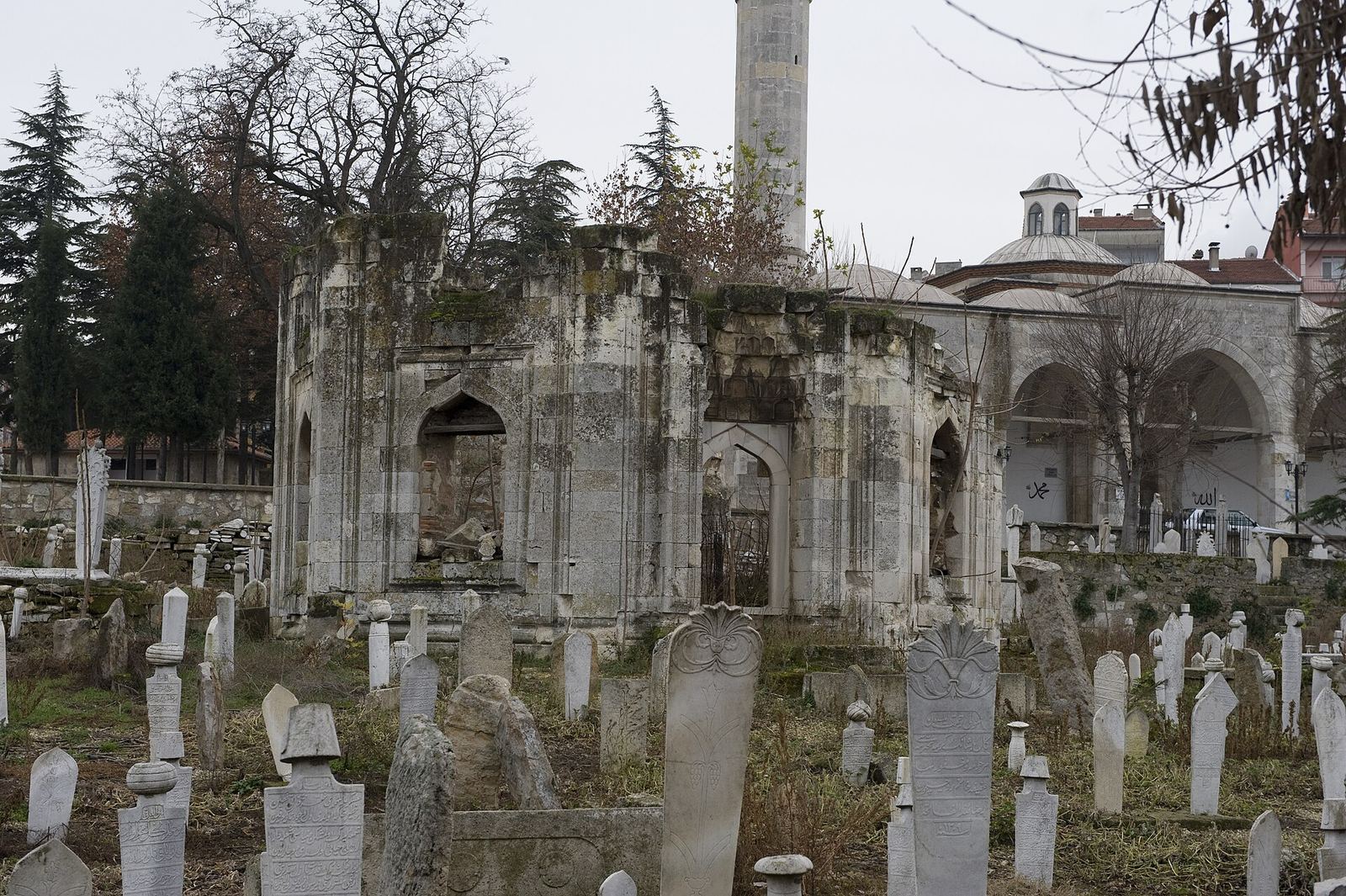
A large Ottoman-era cemetery lies opposite the mosque and contains approximately 1,000 gravestones. The oldest stones date from the fifteenth century, while most belong to the eighteenth and nineteenth centuries. Four principal groups can be distinguished: upright stones with floral designs; cylindrical stones ending in sculptural plant motifs; stones characteristic of Edirne with two broad inscription bands and tulip motifs; and symbolic sarcophagi marked by two small marble columns raised above the grave. The cemetery has recently been restored.