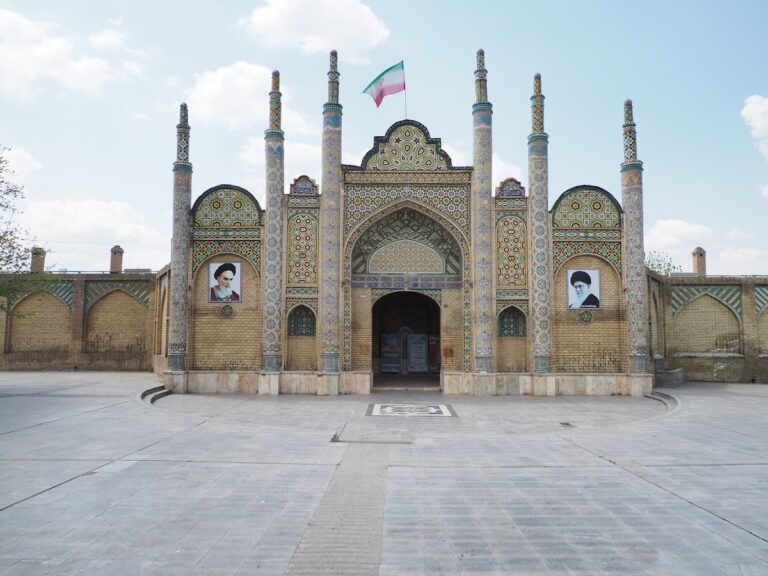
Yengi Emam Caravanserai: A Safavid Roadside Inn in Iran


Site at a Glance
- Rating
- 4.3
- Popularity
- Very Low
- Country
- Iran
- Primary era
- Early Modern
- Eras represented
- Early Modern
- Civilizations
- Safavid
- Site type
- Economic
- Remains
- Caravanserai
On this page5 sections
History
Yengi Emam Caravanserai is a historic roadside building in Hashtgerd, Iran, designed to accommodate travelers, caravans, animals, and goods. Its origins reach back to the Ilkhanid period, the era of Mongol rule in Iran from the thirteenth to the fourteenth century, while the surviving structure dates from the seventeenth-century Safavid period. The building is associated with the development of Iranian caravanserais along the Silk Road, the network of long-distance routes linking East Asia, Central Asia, the Middle East, and Europe.
Ilkhanid origins and Safavid rebuilding
Yengi Emam Caravanserai began as part of the roadside infrastructure connected with long-distance movement through Iran during the Ilkhanid period. The building that survives belongs to the Safavid era, when the Safavid dynasty ruled Iran from the sixteenth to the early eighteenth century. Its continued place within the history of Iranian caravanserais reflects the importance of such establishments to travel and commerce along the Silk Road.
Heritage recognition and rehabilitation
The caravanserai was registered as a National Heritage site of Iran under registration number 2175. The anniversary associated with its registration was later proposed as Hashtgerd Day, emphasizing the building’s historical and cultural importance to Savojbolagh and Iran. In 2023, it became part of The Persian Caravanserai, a serial World Heritage property in which multiple separate sites are recognized together as one linked designation. The property includes 54 historic caravanserais in 24 Iranian provinces. Yengi Emam Caravanserai is now being converted into a museum site, with rehabilitation supported by UNESCO, the United Nations Educational, Scientific and Cultural Organization, and the European Union through the Silk Roads Heritage Corridors program for Afghanistan, Central Asia, and Iran.
Remains
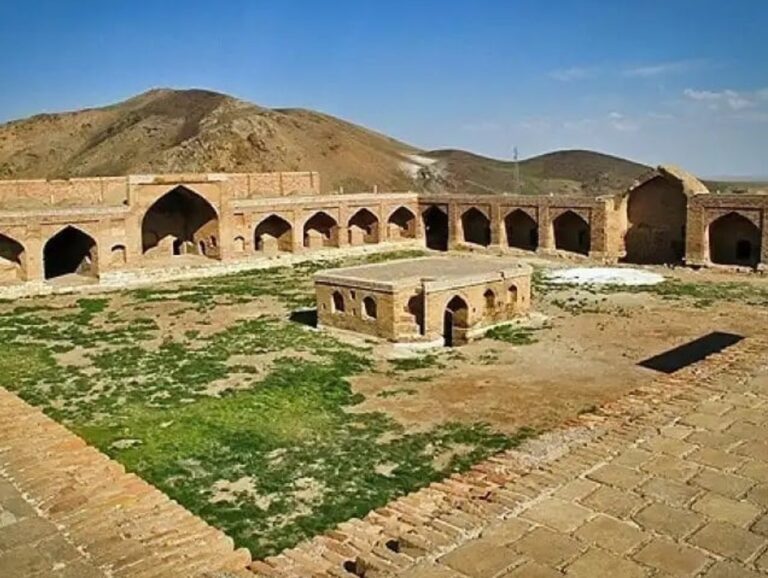
Courtyard and octagonal halls
The surviving caravanserai stands in the Yengi Emam neighborhood, in the hills of Yengi Emam, approximately 100 meters from a road. Its layout is organized around a square central courtyard whose corners are angled. Passageways connect the courtyard with octagonal halls, and these halls open onto wide corridors. The arrangement presents the courtyard, connecting passages, halls, and corridors as an integrated plan suited to a roadside establishment.