Abbey of Beaulieu: A Former Poor Clare Convent in Belgium


Site at a Glance
- Rating
- 5
- Popularity
- Very Low
- Country
- Belgium
- Primary era
- Medieval
- External website
- Open
- Eras represented
- Medieval
- Civilizations
- County of Flanders
- Site type
- Religious
- Remains
- Monastery
On this page7 sections
History
Foundation beside the Scheldt
The Abbey of Beaulieu is a former Poor Clare convent in Belgium, founded by Isabelle of Luxembourg, the wife of Guy of Dampierre. Construction began in 1290, and the nuns took possession on 26 December 1293. The Poor Clares, the female branch of the early Franciscan movement, followed a contemplative religious life associated with Clare of Assisi.
The convent stood near an older castle beside the Scheldt at Petegem. Guy of Dampierre, Count of Flanders, had acquired the barony of Petegem in 1286 and restored its castle. A diploma issued by Charles the Bald in 864 shows that the stronghold was already associated with the Frankish kings of the second royal dynasty. Around 1300, Guy used the castle as a country residence.
The name Beaulieu and the medieval community
The castle received Philip IV of France during his ceremonial entries into Flemish towns from May 1301 onward, after the French king had defeated Guy of Dampierre. At this time, the castle and its surroundings became known as Beaulieu, a name derived from the Latin expression Loco bello and referring to the beauty of the site beside the Scheldt.
The Poor Clare community remained at Beaulieu for approximately five centuries. Alongside their religious observance, the nuns maintained a scriptorium, a place where manuscripts were written or copied, and operated a school for children from the surrounding area.
Suppression and later history
In 1783, Emperor Joseph II suppressed the abbey as a supposedly useless convent. His reforms targeted religious houses judged not to provide services such as education or hospital care to the population, and the nuns were expelled. The estate was divided, and the buildings were sold in separate lots in 1786. Several structures were then demolished.
The remaining abbey buildings lost their religious function and passed to different private owners. The entrance gate, guesthouse, and chaplain’s house are associated with the Faveere and De Ruyck families. These surviving buildings are protected as listed heritage in Belgium. Beaulieu was also mentioned by Victor Hugo in Les Misérables, in a passage linking the location with a former Merovingian summer palace and a convent said to have been saved in 1793. The Merovingians were an early medieval Frankish ruling dynasty.
Remains
Surviving abbey buildings
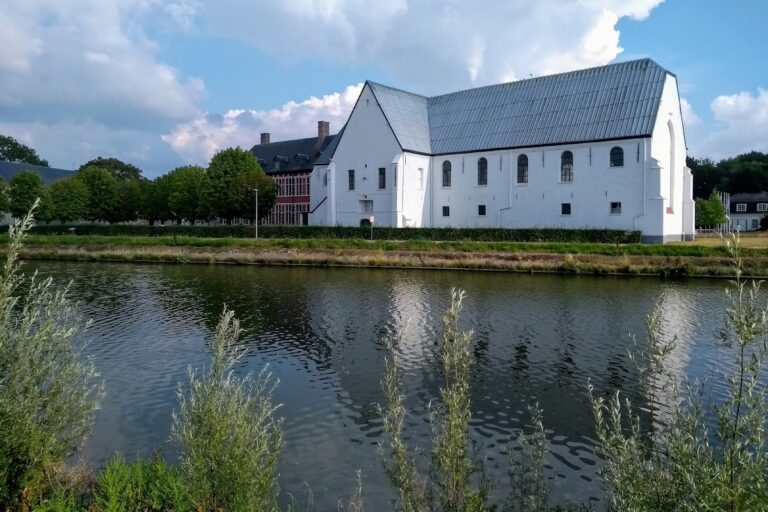
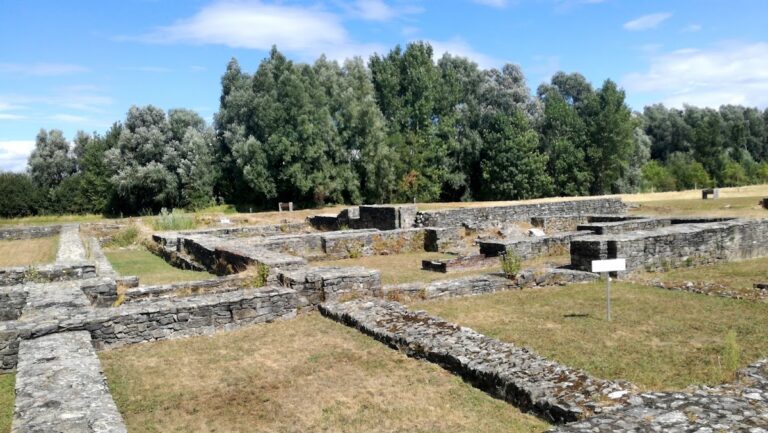
The former abbey lies near the Scheldt at Petegem, within walking distance of the older castle associated with the foundation’s early history. The surviving group includes the entrance gate, guesthouse, chaplain’s house, and several ancillary buildings. These structures are distributed among several private parcels and are now used as private residences. Above the entrance portal, the coat of arms of Guy of Dampierre, Count of Flanders, remains visible, preserving a direct sign of the lord connected with the castle and the convent’s setting.
Burial tradition
A burial connected with the abbey domain is traditionally identified as that of Isabelle of Luxembourg’s brother, a Templar knight who died during a crusade in Jerusalem, reportedly from plague. The Knights Templar were a medieval military religious order. Old writings state that he was buried at Beaulieu in a lead coffin with all his possessions.