Old Bø Church: A Medieval Parish Church in Norway


Site at a Glance
- Rating
- 4.5
- Popularity
- Very Low
- Country
- Norway
- Primary era
- Medieval
- Eras represented
- Medieval, Early Modern, Modern
- Civilizations
- Denmark–Norway, Norwegian
- Site type
- Religious
- Remains
- Church
On this page7 sections
History
Old Bø Church is a medieval stone parish church in Bø, Norway, whose principal building phase took place in the 12th century. It served as the main church of Bø Parish within the Church of Norway, first under the Catholic Church and, after the 16th-century Reformation replaced Catholicism as Norway’s established religious institution, as an Evangelical Lutheran church.
Medieval origins
The church’s earliest history is uncertain. It is sometimes dated to the 11th century, while archaeological interpretation places a small wooden post church on the site in the 12th century. That predecessor was demolished in the middle of the 12th century to make way for a stone building. The chancel was constructed around 1150, followed by the nave around 1180. Dendrochronological dating, based on the growth patterns preserved in wood, places the nave roof timbers in 1179–1180.
Parish use and later changes
In 1814, Old Bø Church served as an election church and polling station during the process that selected electors and ultimately representatives to Norway’s Constituent Assembly, which drafted the Constitution of Norway. By the mid-19th century, structural problems and the church’s limited size led to plans for a replacement. The new Bø Church was built approximately 75 metres northwest of the old church in 1874–1875 and consecrated in 1875. Old Bø Church then closed and ceased to be used for worship.
Preservation
Local villagers raised funds to preserve the medieval building. It was restored and is now maintained as a museum. Old Bø Church is also an automatically protected Norwegian cultural heritage site, listed under identification number 83992. It is regarded as one of the few surviving medieval stone churches in Norway that has not been significantly altered over the centuries. Archaeological investigations in the 1980s revealed remains of the earlier wooden church beneath or around the later building site.
Remains
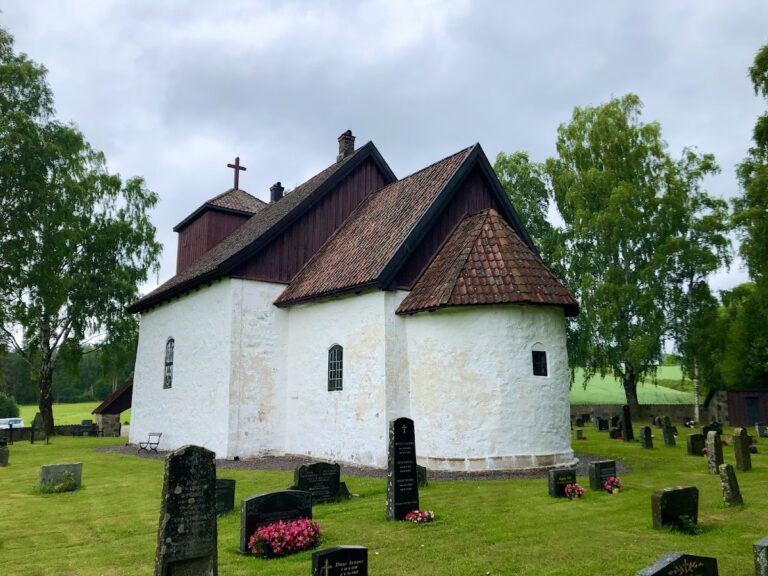
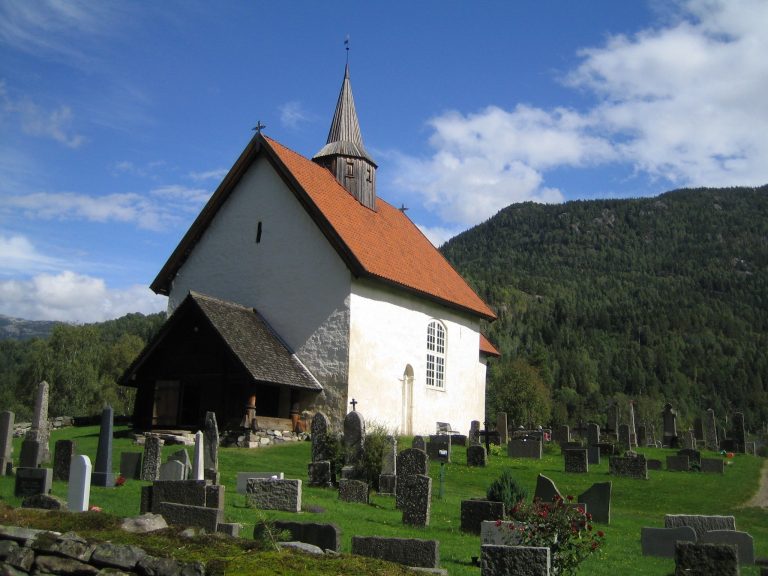
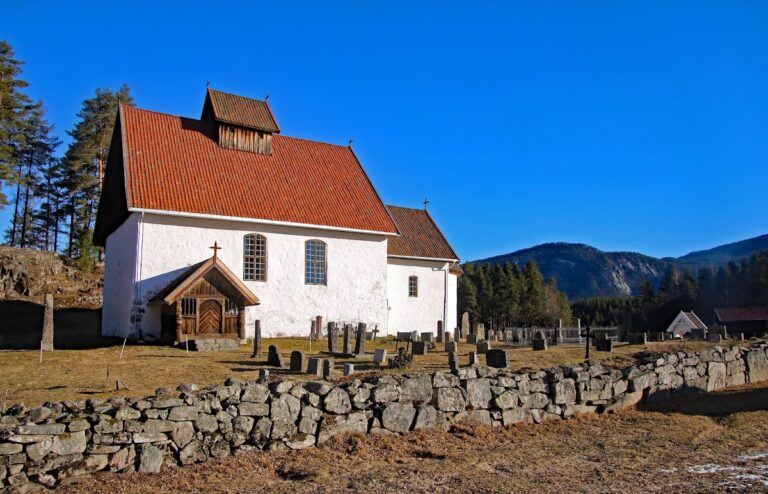
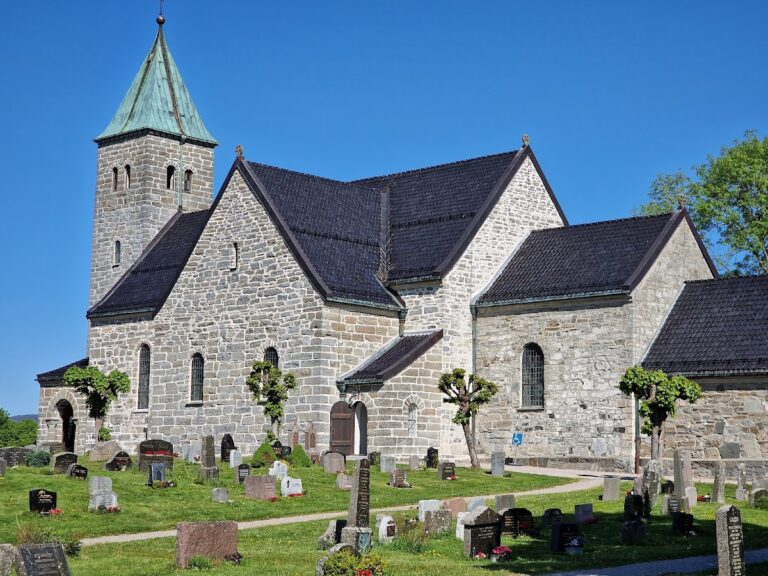
Old Bø Church is a medieval stone long church, a plan in which the nave and chancel are arranged lengthwise, with the chancel at the eastern end. The building consists of a rectangular nave, a smaller chancel with a lower roof, and a semicircular apse, or rounded sanctuary end. These principal elements belong to the medieval church. The building stands on Bøhaugen near the edge of a steep slope. Ground movement, including landslides and settlement, caused instability in the foundations and contributed to the settling of the walls over the centuries.
Walls, entrances, and roof features
The church’s walls are whitewashed and are believed to have carried painted decoration during the Middle Ages. The nave has portals on its west and south sides, while the chancel is entered through a south portal. A church porch was added at the main entrance during the 17th century. The church originally used a pillar in the churchyard for its bells, and this structure held as many as seven bells during the 16th century. A small roof turret, a tower rising from the roof rather than from the ground, was added above the nave in the early 19th century. The church has approximately 150 seats.
Interior and religious features
A Romanesque cross from the 13th century stands in the chancel. Romanesque art developed in medieval Europe before the Gothic period and is associated with rounded forms, massive masonry, and symbolic religious imagery. The cross presents Christ as living and victorious, wearing a royal crown. After the Reformation, the interior was remodelled in the Renaissance style, with galleries along the north and west walls, a pulpit, and a new altarpiece.