Our Lady of the Scapular Church in Wołczkowo: A Gothic Parish Church in Poland
Site at a Glance
- Rating
- 4.2
- Popularity
- Very Low
- Country
- Poland
- Primary era
- Medieval
- External website
- Open
- Eras represented
- Medieval, Early Modern, Modern
- Civilizations
- Duchy of Pomerania, German, Holy Roman Empire, Swedish
- Site type
- Religious
- Remains
- Church
On this page9 sections
History
Our Lady of the Scapular Church in Wołczkowo is a Roman Catholic parish church in Wołczkowo, Poland, built at the end of the thirteenth century in the Gothic style. It belongs to the parish of Our Lady of the Scapular and remains a historic religious building within Dobra municipality in Police County.
Medieval foundation
The church originated as a single-nave medieval building. Its Gothic character is expressed through pointed arches, narrow openings, and carefully arranged masonry. The eastern gable from this period remains part of the building, preserving an important element of its original form.
Nineteenth-century rebuilding
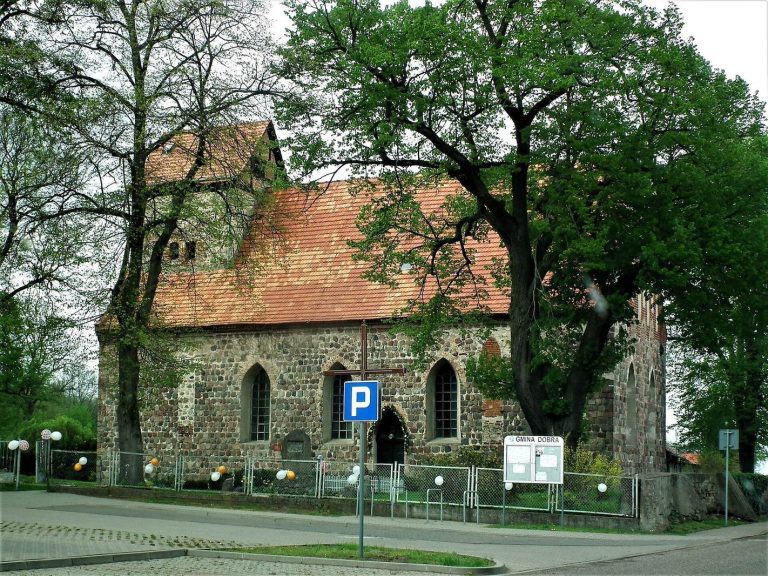
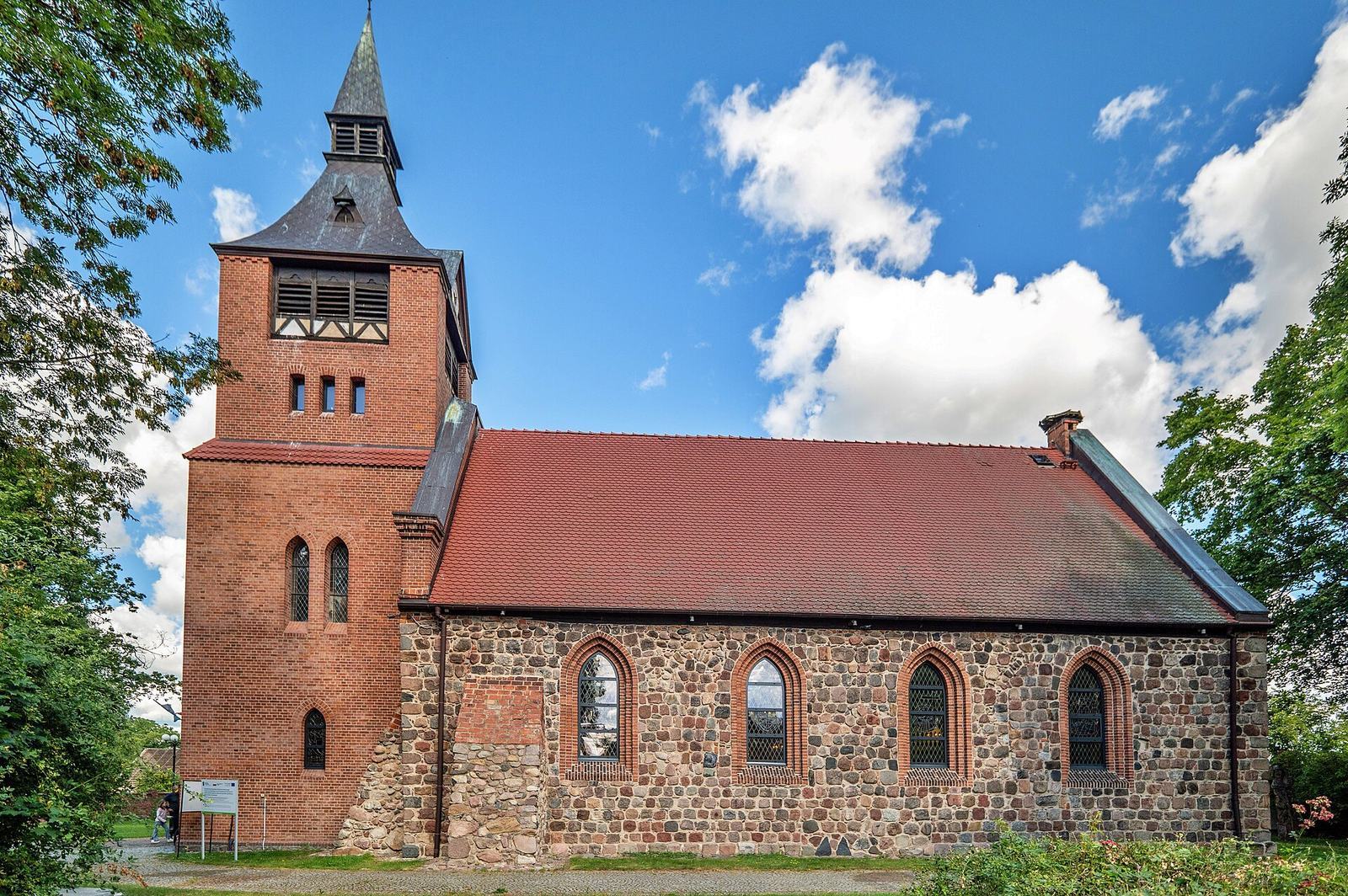
In 1865, the church was rebuilt in a Neo-Gothic manner, meaning that nineteenth-century builders revived medieval Gothic forms. The work introduced tall pointed-arch windows into the nave and added a brick tower at the west end. The Gothic portal in the nave’s west wall was plastered during the rebuilding. In 1900, the tower received its present tent roof and lantern, a small roofed structure that crowns the tower and admits light.
Twentieth-century religious use
Central heating was installed in 1931, when new chandeliers were also hung and the altar and sculptures were renovated. On 16 July 1946, the building was dedicated as a Roman Catholic church under the invocation of Our Lady of the Scapular, a title of the Virgin Mary associated with the scapular, a devotional garment or badge. The liturgical feast of the church is held on 16 July.
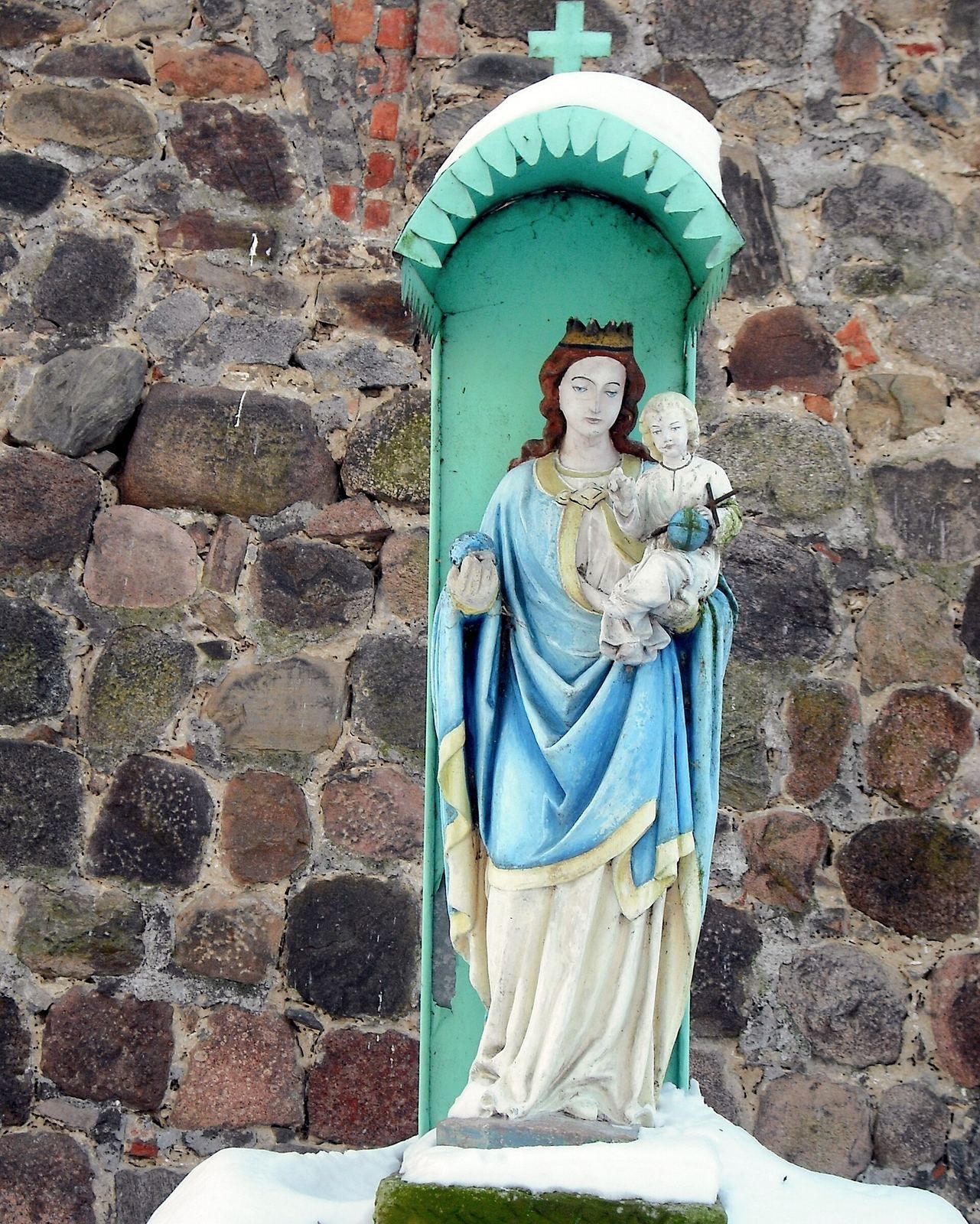
The church was entered in Poland’s register of historic monuments under designation A-509 on 1 August 1956. Since 1987, three Late Gothic sculptures from the church, representing a holy deacon, the Virgin and Child, and Our Lady of Sorrows, have been held at the Archdiocesan Museum in Szczecin. Two Baroque sculptures, of the Risen Christ and a baptismal angel, are also preserved there.
Remains
The church is a compact, single-space Gothic building with one nave on a rectangular plan. Its walls are made from dressed granite blocks arranged in eighteen regular courses, and the building is covered by a gabled roof. The surviving medieval fabric is combined with the nineteenth-century brick tower and the later furnishings within the undivided interior.
Medieval masonry and eastern gable
The eastern gable is decorated with a blind panel, a recessed feature that resembles an opening but does not pass through the wall. The central panel forms a large cross, with two smaller pointed-arch panels below the arms. Three narrow slit windows provide light to the attic. These elements preserve the medieval architectural treatment of the east end.
West tower and nave elevations
The square west tower is built of brick and belongs to the Neo-Gothic rebuilding of 1865. Its tent roof is crowned by a lantern. Along the nave, tall pointed-arch windows have profiled brick surrounds, giving the elevations a strongly articulated appearance. The west wall also retains the position of the Gothic portal, although its surface was plastered during the nineteenth-century work.
Interior furnishings and liturgical objects
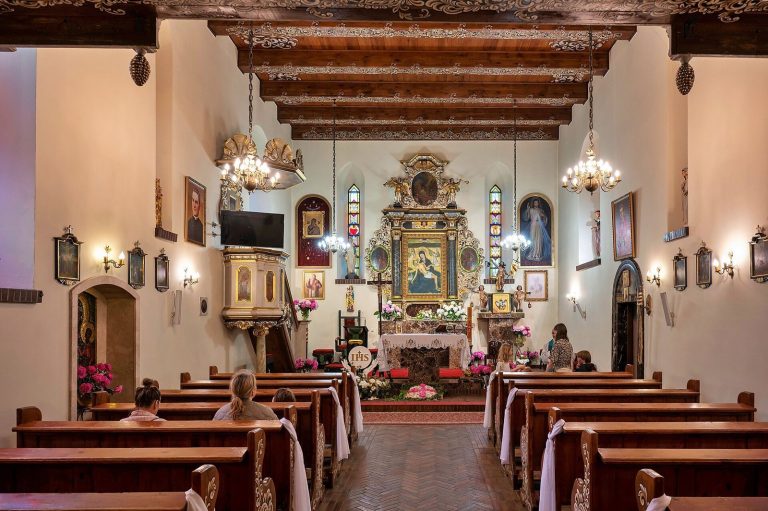
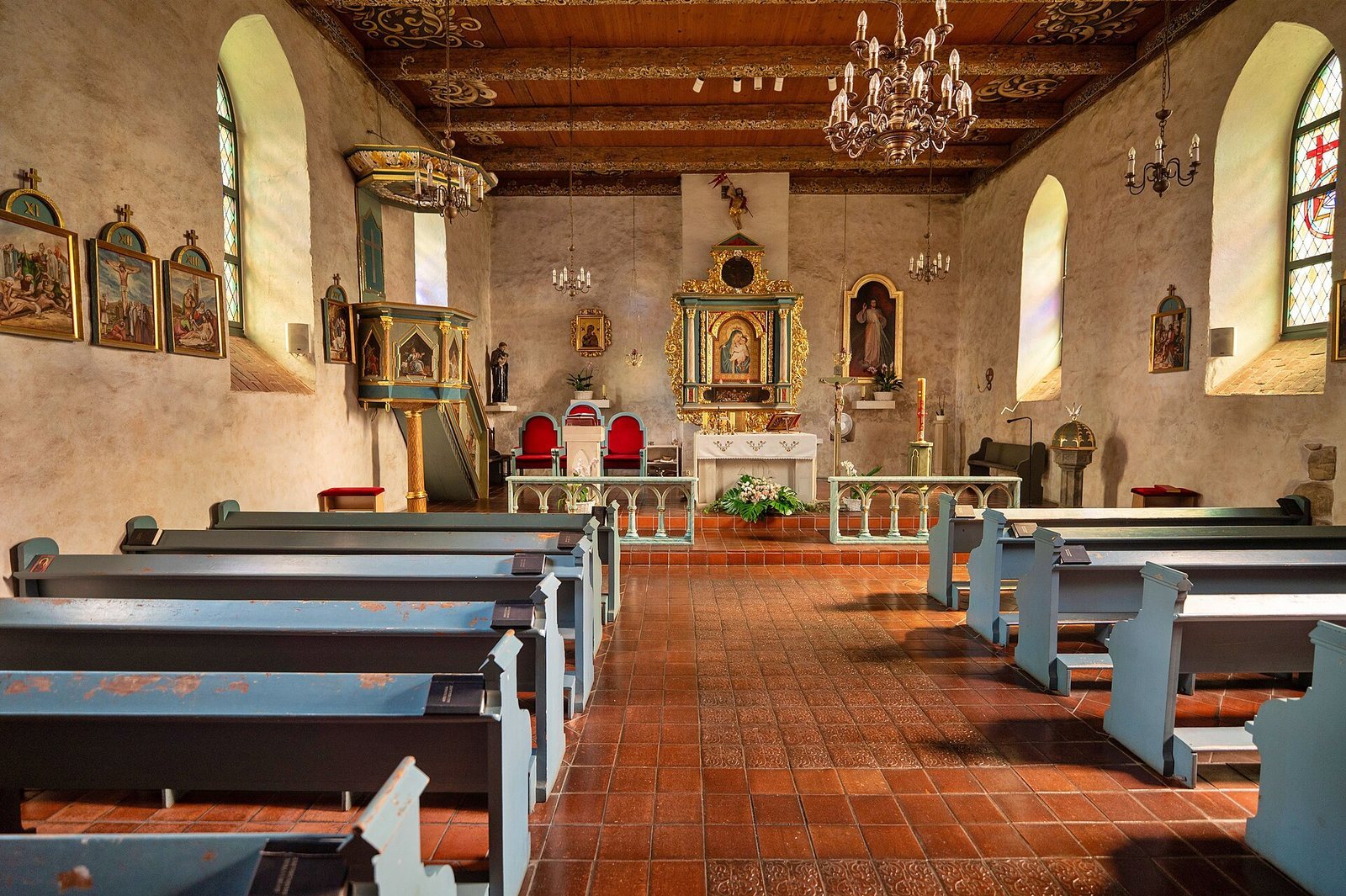
The interior forms one undivided space beneath a flat wooden beam ceiling. Nineteenth-century furnishings include a Neoclassical pulpit, a Neo-Gothic organ case, and two baptismal fonts, one made of cast iron and the other of wood. A brass baptismal basin carries a relief of Adam and Eve. The church also contains a monstrance dated 1913, a liturgical vessel used to display the consecrated Eucharistic host.
Altar and paintings
The altar, funded in 1722, consists of a predella, the lower section of an altar framework, a retable, and a crowning section. The predella contains an oil painting of the Last Supper. The retable, the decorated structure behind the altar, is framed by two columns and acanthus-leaf-shaped side wings. Its central painting represents the Virgin and Child and replaced an earlier image of Christ praying in the Garden of Gethsemane. The earlier painting bears the signature of Georg Meyn on its reverse.