San Zeno: A Romanesque Church in Cerea, Italy
Site at a Glance
- Rating
- 4.7
- Popularity
- Very Low
- Country
- Italy
- Primary era
- Medieval
- External website
- Open
- Eras represented
- Medieval, Modern
- Civilizations
- Holy Roman Empire, Italian
- Site type
- Religious
- Remains
- Church
On this page8 sections
History
Foundation and Medieval Survival
San Zeno is a Roman Catholic church of the Roman rite in Cerea, Italy, dedicated to Saint Zeno, the fourth-century bishop and patron saint of Verona. Probably erected around 1110 in the Romanesque period, its foundation is traditionally attributed to Matilda of Canossa, a powerful Italian noblewoman whose patronage was closely connected with ecclesiastical institutions. At the time, the castle of Cerea was held in fief by the Chapter of the Veronese Canons, a collegiate body of clergy associated with Verona Cathedral.
During the twelfth century, the construction of a second church dedicated to Saint Mary in central Cerea raised concern that the older San Zeno might be abandoned. The inhabitants nevertheless helped preserve the church through the following centuries. Earthquakes in 1117 and 1298 damaged San Zeno and caused considerable destruction in the surrounding areas. The interior frescoes are attributed to the end of the thirteenth century, while the building itself underwent repeated modernization.
Restoration and the Threat of Demolition
From the middle of the sixteenth century, repeated campaigns sought to repair the church’s deterioration, although their effects were often temporary. Limited municipal funds contributed to a long period of piecemeal work that lasted for about three centuries. During this time, the bell tower was repaired, its bell was put into operation, and the flooring and sacristy were arranged. These works were repeated over the centuries, along with the provision of candles and other objects needed for furnishings and religious celebrations. In the eighteenth century, the church came close to demolition.
The 1902-1910 Restoration
After years of neglect and repeated consideration of demolition, an inspection took place in 1902. Concern among ecclesiastical authorities had been heightened by the collapse of the bell tower of San Marco in Venice. San Zeno was closed while restoration proceeded under the Superintendency of Fine Arts, the state authority responsible for protecting and restoring historic and artistic monuments. The work addressed longstanding structural problems and raised the central nave on the basis of old drawings, with the aim of recovering its original appearance. It was completed in 1910.
Remains
Plan, Materials, and Exterior
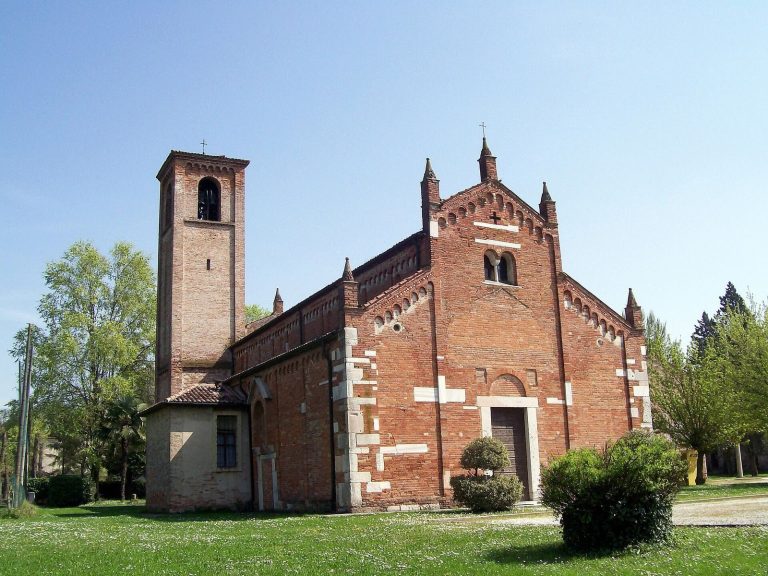
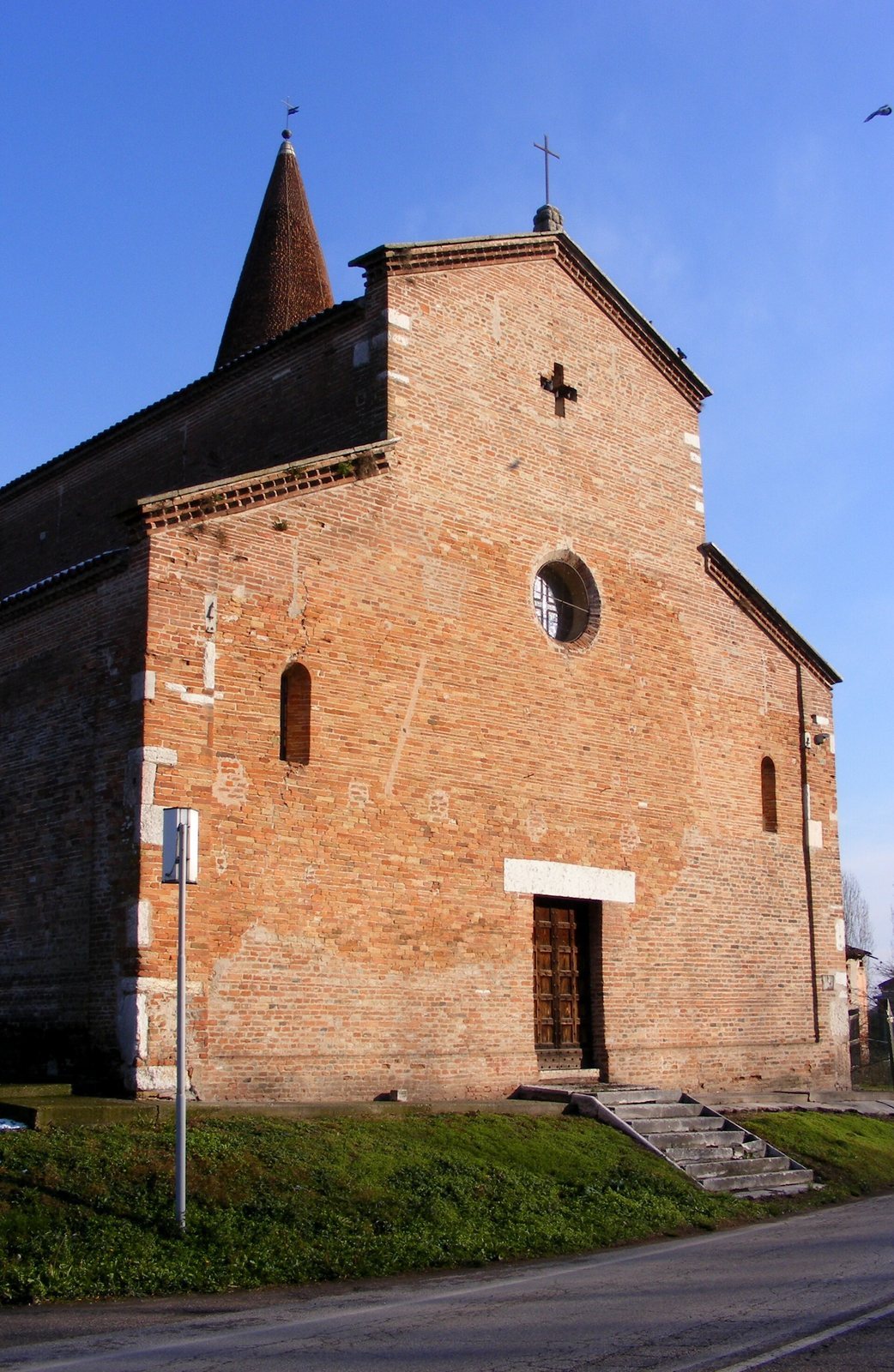
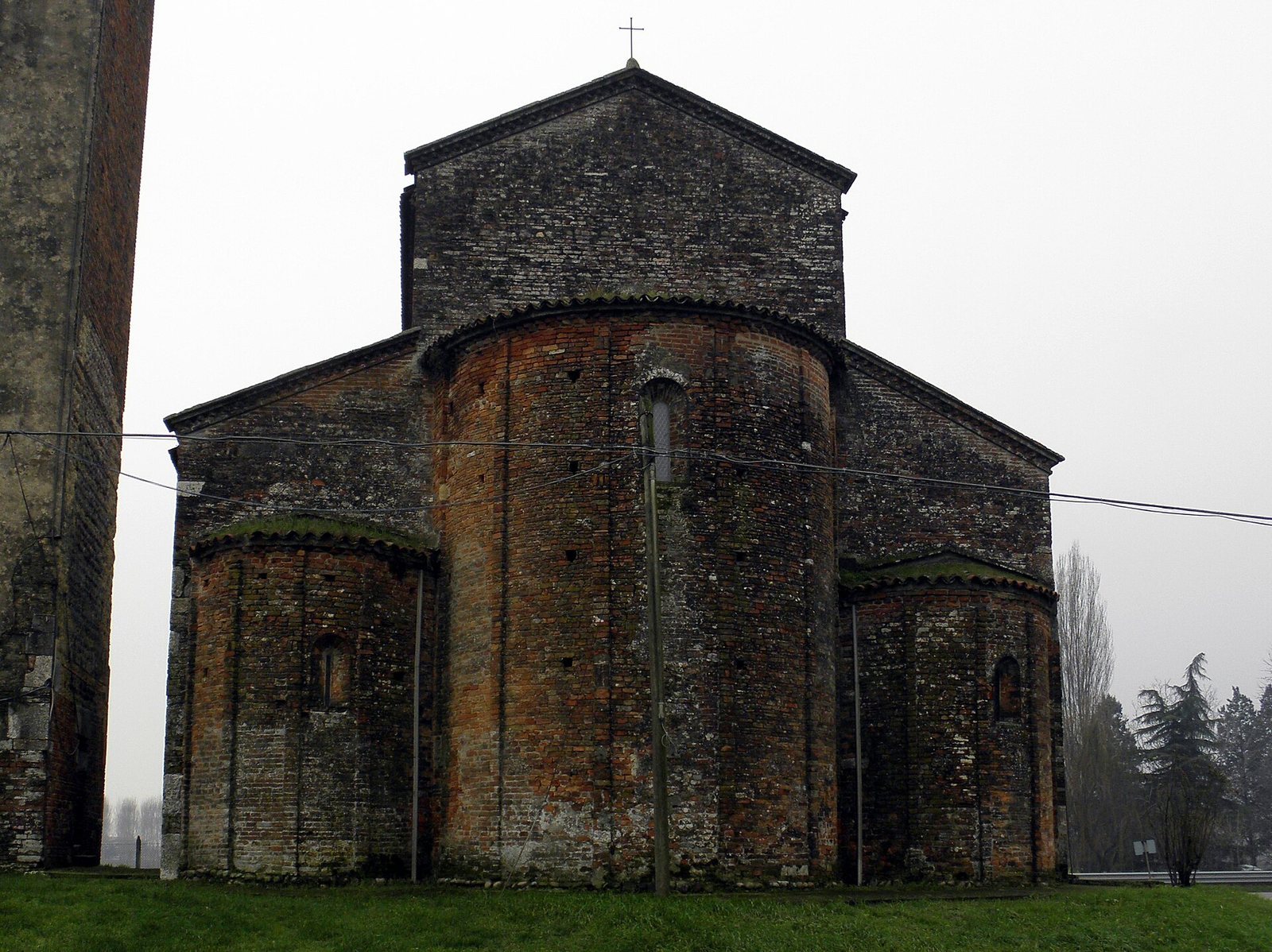
San Zeno stands on the northern outskirts of Cerea along the road leading from the town center toward Bovolone, now known as Via San Zeno because of the church. Built almost entirely of brick, it has a three-aisled plan, with each nave ending in an apse, the curved terminal space of a church often located behind the altar. Six arcades supported by substantial piers separate the three naves. Alternating courses of thicker and thinner bricks produce a distinctive variation in color across the walls.
A staircase leads to the facade, which contains a central entrance, a circular oculus, and two narrow side windows with splayed openings. The facade’s stepped outline dates from the twentieth-century restoration and replaced an earlier gabled profile. The building formerly included a small sacristy between the liturgical area and the bell tower. This space had previously served as the archpriest’s residence before being demolished during the restoration.
Windows and Structural Fabric
Two elongated windows in the main apse were blocked during the first half of the twentieth century, as were similar windows along the right perimeter wall. Before the major restoration, the lateral walls on both the uphill and downhill sides had leaned outward. This reduced the supporting surface for the roof beams. Some facade cobbles and cobbles within the bell tower were damaged, and the arches in the bell chamber had become unsafe. The restoration raised the central nave and stabilized the building while creating the stepped facade that survives today.
Painted Decoration
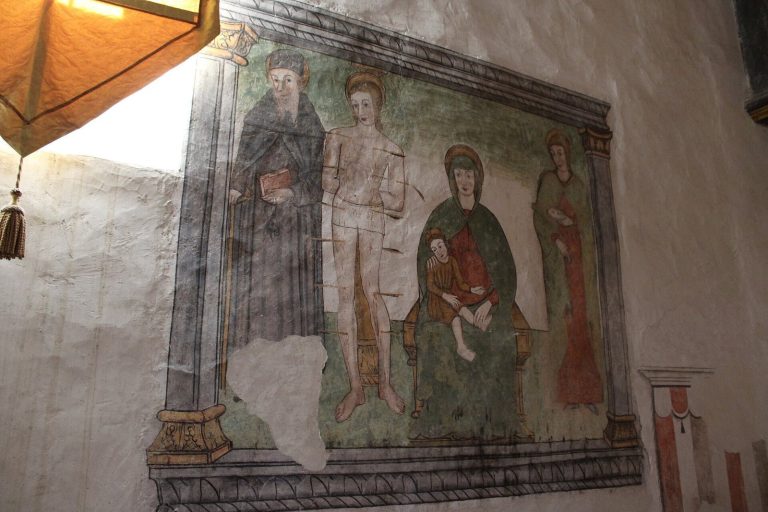
The church contains twenty painted artworks, each surrounded by bands of colored decoration. Most occupy the piers, and some show damage caused by age and unsuccessful restoration attempts, revealing three superimposed layers of plaster. Six paintings depict the Madonna and Child. Their figures are generally presented frontally, and their artistic characteristics point to local artists.
The fresco on the second pier on the right shows Saint Zeno with an unidentified knight saint. Dating approximately to the first half of the fourteenth century, it is the best-preserved of the church’s frescoes. Its frame is formed by white, red, and green bands with yellow-ochre shading. Large white-and-red haloes extend from both saints into the frame, while Saint Zeno’s headgear identifies him as a bishop.