Franciscan Monastery Gransee: A Medieval Friary and School in Germany
Site at a Glance
- Rating
- 4.2
- Popularity
- Very Low
- Country
- Germany
- Primary era
- Medieval
- Eras represented
- Medieval
- Civilizations
- Holy Roman Empire, Margraviate of Brandenburg
- Site type
- Religious
- Remains
- Monastery
On this page10 sections
History
The Franciscan monastery in Gransee, Germany, was established north of the town with a church and convent between about 1270 and 1280, after Gransee received urban rights in 1262. It belonged to the Franciscan Order, a mendicant religious community founded in 1210 whose Friars Minor combined preaching and communal religious life with an ideal of poverty. The friars first appear in records in 1302 as Fratres minores in Granzoge.
Foundation and Franciscan administration
The monastery stood within the Diocese of Havelberg and formed part of the Brandenburg Custody, a regional administrative subdivision of the Saxon Franciscan Province. The Counts of Lindow-Ruppin, the territorial rulers, supported the convent. Their last recorded donation was 20 gulden in 1524.
By the early sixteenth century, the convent had adopted the Martinian Constitutions. These Franciscan regulations represented a moderate position in disputes within the order concerning the strict interpretation of its poverty ideal.
Reformation and dissolution
When the Reformation made Brandenburg Protestant and monastic institutions increasingly unpopular, the friars sold the complex to the town of Gransee in 1541. The guardian, the monastery’s last remaining Franciscan, died in 1561, and the Gransee convent then ceased to exist.
At the direction of Elector Joachim II, who ruled Brandenburg during the adoption of the Protestant Reformation, Gransee retained the buildings and converted them into a school. The school continued until 1963. Reformed Protestant services were occasionally held in the monastery’s Fürstensaal, while a Protestant pastor temporarily lived in another part of the complex.
Fire, rebuilding, and later use
A town fire destroyed the monastery church in 1604. A second fire in 1711 destroyed the west wing and cloister. Their surviving materials were reused in the construction of a new town hall, while the less-damaged east wing was repaired and structurally altered for use as a school.
The monastery garden was later known as the Stadthof and was used for agriculture and livestock raising. After the school closed, the surviving building served as storage space and was opened for guided tours and occasional exhibitions. The site is protected as a monument in Brandenburg under inventory number 09165333.
Remains
Church and convent wings
Monastery church
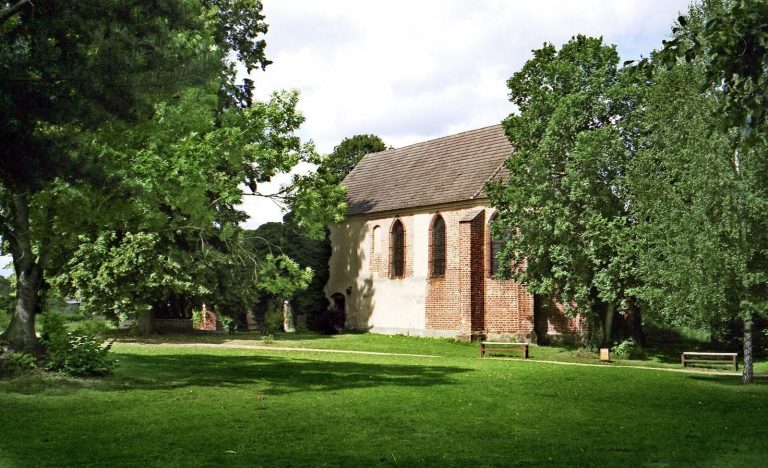
The monastery church was built of brick in the Gothic style. Its original plan remains subject to different reconstructions: some specialists identify a single-nave church, while others propose a three-nave hall church with a single-nave long choir. A Gothic hall church has parallel aisles of approximately equal height rather than a clearly higher central nave. The church was destroyed in the fire of 1604, and a remnant of its wall survives within the complex.
East wing
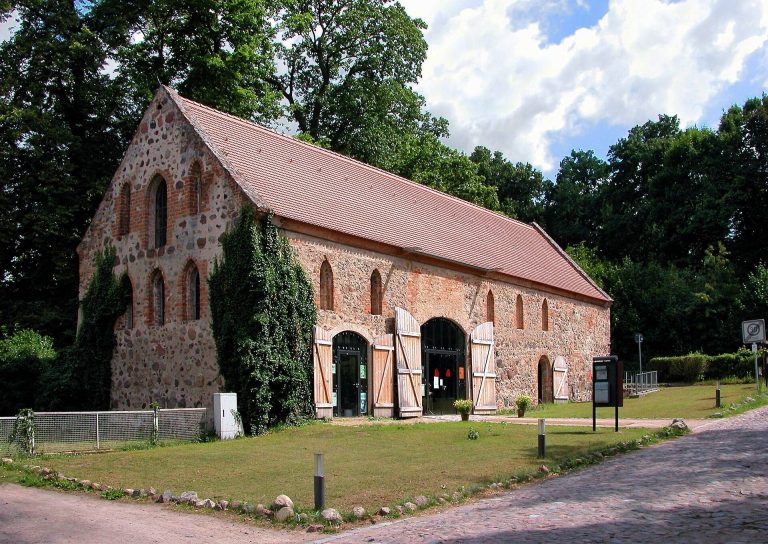
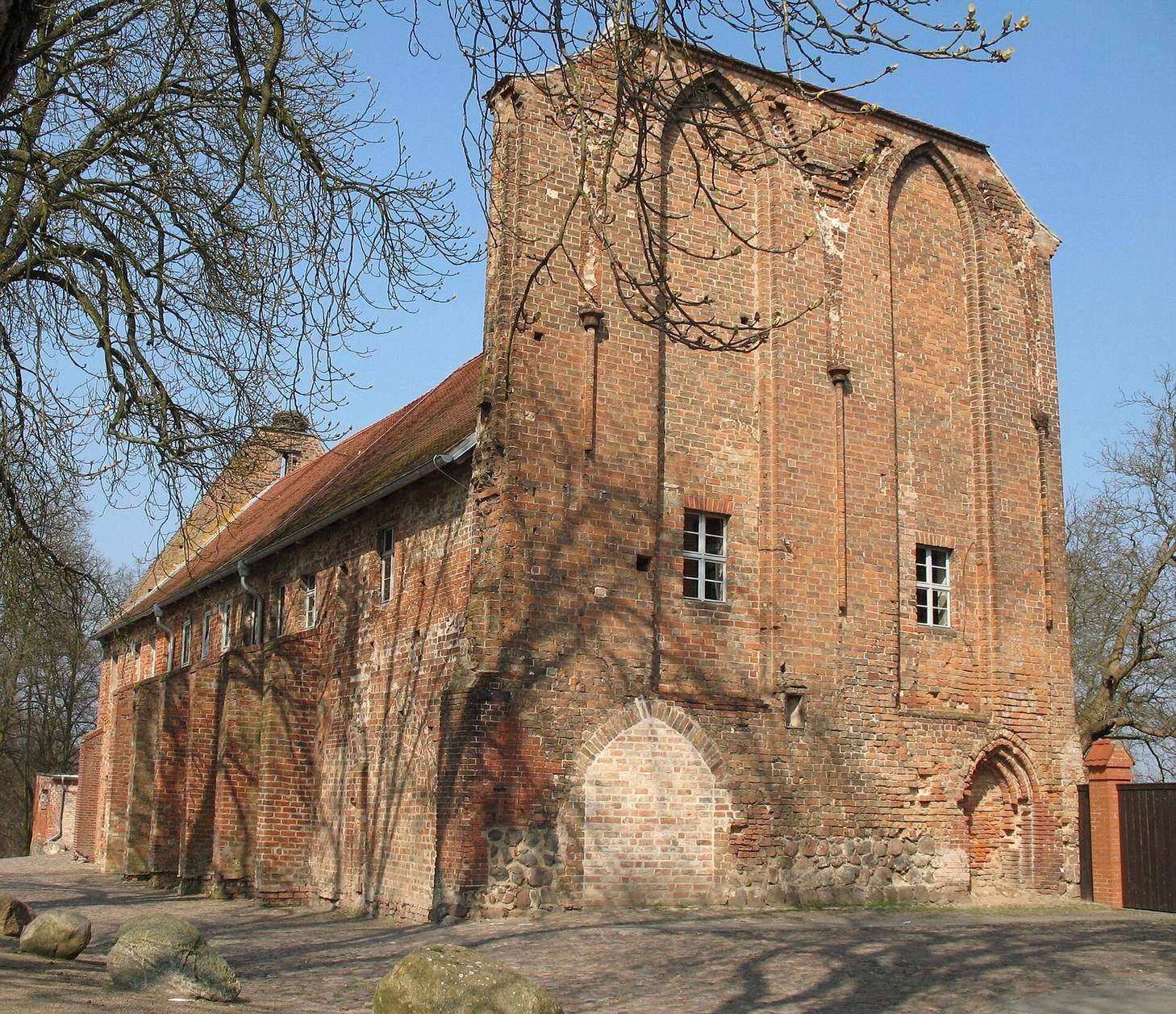
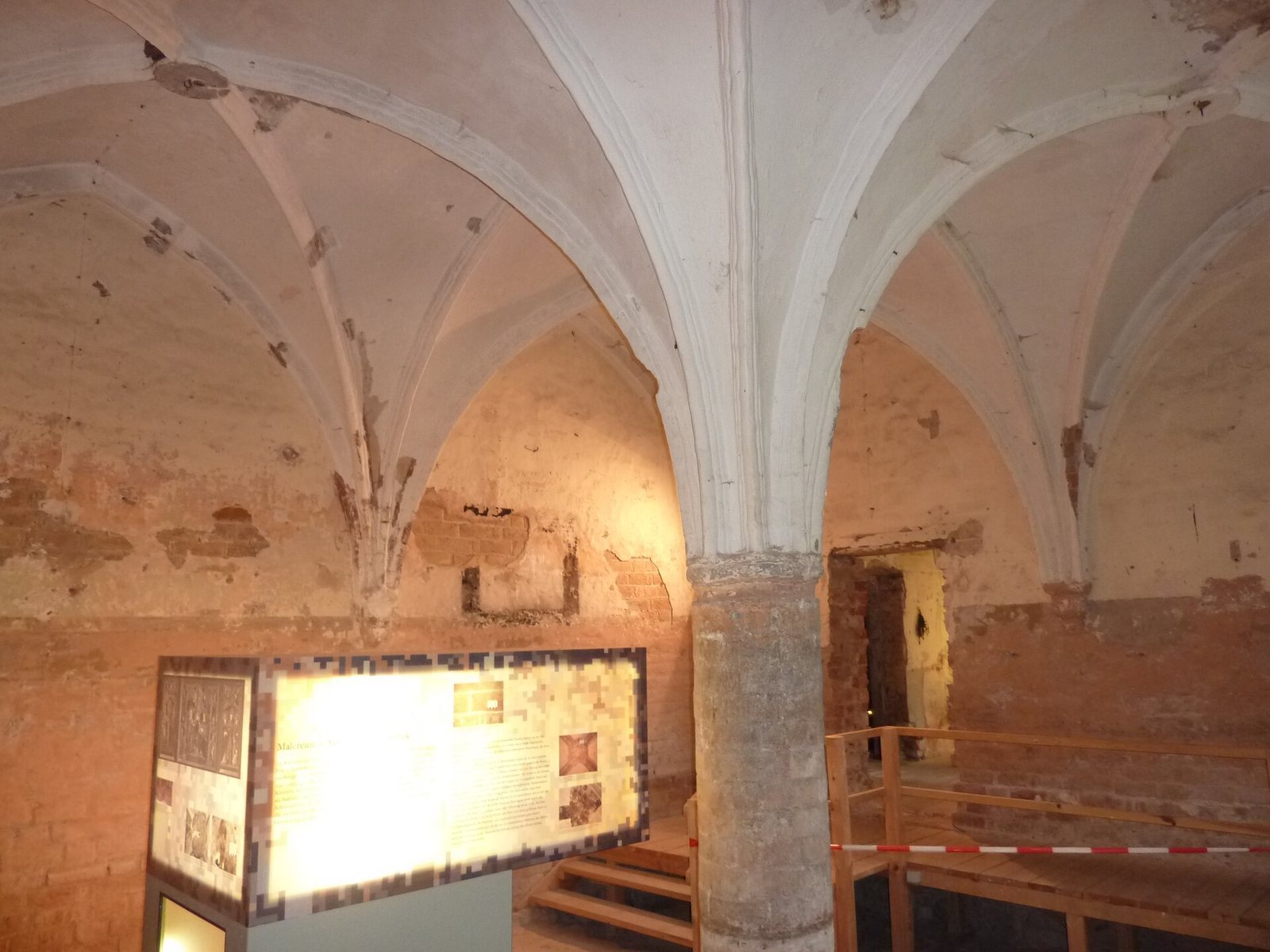
The elongated east wing is a two-storey brick building with a gabled roof. It originally adjoined the north side of the church choir. The ground floor contained the sacristy, where liturgical furnishings were stored and services were prepared, while the dormitory, the communal sleeping area, occupied the upper floor. The wing was later repaired and altered after the 1711 fire and remains part of the surviving complex.
Cloister and property setting
During the fourteenth century, the east and west wings were completed and joined by a cloister. The surviving remains include the east cloister wing, a section of the church wall, and a portal. Around 1330, the town wall was built north of and along the monastery. The monastery and its large garden consequently occupied a protected area between the church and the town wall, a property later known as the Prälathof.
Surviving altarpiece
An altarpiece from the former monastery church, the Saint Anne Retable, dates to about 1520–1530. It is preserved in Gransee’s Marienkirche, where it remains a surviving object associated with the medieval Franciscan complex.