Rheinsberg Palace: A Frederician Rococo Residence in Germany


Site at a Glance
- Rating
- 4.5
- Popularity
- Medium
- Country
- Germany
- Primary era
- Early Modern
- External website
- Open
- Eras represented
- Early Modern, Modern
- Civilizations
- Holy Roman Empire, Kingdom of Prussia, Margraviate of Brandenburg
- Site type
- Domestic
- Remains
- Palace
On this page13 sections
History
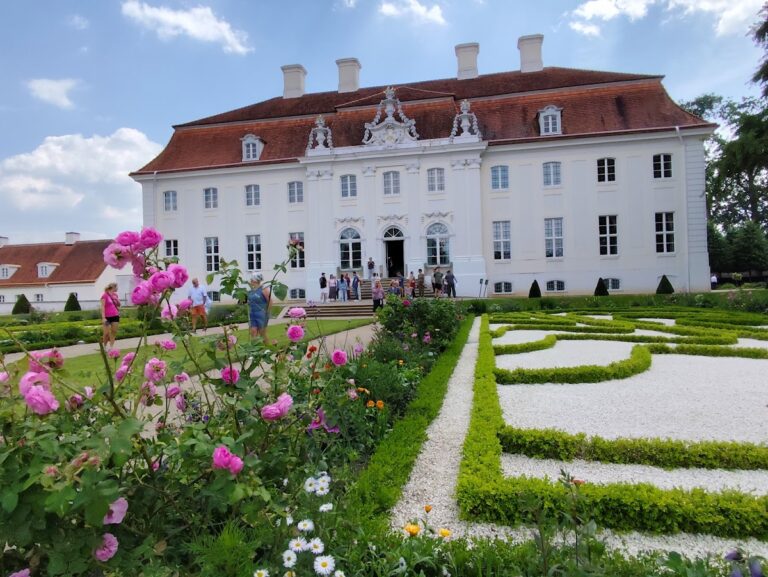
Rheinsberg Palace is an eighteenth-century residence in Rheinsberg, Germany, developed in the Frederician Rococo style from an earlier Renaissance water castle. Its history reflects the changing ownership of the Rheinsberg lordship, its role as the home of Crown Prince Frederick between 1736 and 1740, and the later residence of his younger brother Prince Henry.
Medieval Lordship and Renaissance Castle
A medieval moated castle occupied the site before the present palace. The von Bredow family acquired the lordship of Rheinsberg through marriage from the von Platen family in 1464. In 1524, Rheinsberg became part of the Margraviate of Brandenburg together with the Lordship of Ruppin.
In 1566, the von Bredows built a Renaissance water castle on the site. By 1618 it had been sold to Kuno von Lochow, and the castle suffered severe damage during the Thirty Years’ War, the seventeenth-century conflict that devastated much of central Europe.
Hohenzollern Ownership and Frederick’s Residence
After the Lochow line became extinct, Rheinsberg reverted as a Brandenburg margravial fief to Elector Frederick William of the Hohenzollern dynasty, the ruling house that supplied the electors of Brandenburg and the kings of Prussia. Frederick William gave the property to his general Franz du Hamel, who later sold it, with the elector’s permission, to Benjamin Chevenix de Beville. In March 1734, Chevenix de Beville sold the estate to King Frederick William I of Prussia for 75,000 thalers.
Frederick William I gave Rheinsberg to his son, Crown Prince Frederick, later Frederick II, commonly called Frederick the Great, in recognition of his loyalty. Frederick moved into the palace’s south wing with his wife, Crown Princess Elisabeth Christine, in 1736. He remained there until he became king in 1740 and later described his years at Rheinsberg as the happiest of his life.
Between 1736 and 1740, Frederick commissioned extensive enlargement and improvement from Johann Gottfried Kemmeter and Georg Wenzeslaus von Knobelsdorff. The work made Rheinsberg the first building associated with Frederician Rococo, the form of eighteenth-century Rococo linked to Frederick the Great’s projects. Rococo architecture is characterized by curved forms, delicate ornament, asymmetry, and theatrical interiors. Rheinsberg later served as a model for Sanssouci Palace.
In 1738, Frederick founded the first Freemasons’ lodge in Prussia at Rheinsberg. A lodge is a local association belonging to the fraternal organization known as Freemasonry, and Frederick’s lodge was modeled on the Grand Lodge in Hamburg.
Prince Henry and the Completed Palace
In 1744, Frederick gave Rheinsberg to his younger brother, Prince Henry of Prussia. Henry moved into the palace with his wife, Princess Wilhelmine of Hesse-Kassel, in 1752 and lived there until his death. An art patron, he expanded and embellished the palace and its park.
In 1774, Henry attached a palace theatre to the Cavalier House. He brought traveling drama companies to Rheinsberg and presented operas with an improvised orchestra. Georg Friedrich von Boumann and Carl Gotthard Langhans completed the palace in 1786 according to the original plans. Langhans had prepared designs for Prince Henry during several weeks at Rheinsberg in 1766, and Henry’s building director, Carl Wilhelm Hennert, later put those plans into effect.
The Rheinsberg Obelisk was erected in the early 1790s on the opposite shore of the lake, within the palace’s line of sight. It commemorates Prince Augustus William of Prussia, who had fallen out of favor with Frederick II, as well as officers close to Henry who had distinguished themselves in the Silesian Wars, conflicts in which Prussia fought for control of Silesia. Henry had the officers’ names placed on commemorative plaques on the obelisk.
Henry arranged during his lifetime for a tomb to be built in the palace garden. He was buried there in 1802, and he wrote the tomb’s French inscription himself.
Inheritance, Public Memory, and Modern Use
After Henry’s death, the childless prince’s younger brother August Ferdinand of Prussia inherited the palace and estate, followed by his son August of Prussia. Because August had only illegitimate children, the property returned to the Prussian kings, who used it only occasionally. The royal household appointed palace governors, generally local landowners.
Rheinsberg became a public place of remembrance for Frederick the Great. Its literary reputation was strengthened by Theodor Fontane’s Walks through the March of Brandenburg and Kurt Tucholsky’s Rheinsberg: A Storybook for Lovers.
The palace and estate remained Hohenzollern property after the division of Hohenzollern assets in 1926 and continued to be open to visitors. Soviet occupation authorities expropriated the property in 1945, ending public access in its former form. During the German Democratic Republic, the palace housed a diabetes sanatorium named after Helmut Lehmann, an SED social-policy politician.
After extensive restoration, Rheinsberg Palace became a museum and the home of the Kurt Tucholsky Literature Museum. Since 1991, the former Cavalier House has accommodated the Rheinsberg Music Academy, which operates the palace theatre. Since the same year, the International Chamber Opera Festival Rheinsberg has used the palace theatre, courtyard, and open-air theatre. The palace and its gardens now belong to the Foundation for Prussian Palaces and Gardens Berlin-Brandenburg.
Remains
Rheinsberg Palace stands on the eastern shore of the Grienericksee in the municipality of Rheinsberg. The complex developed from the earlier Renaissance water castle and includes the south wing, east wing, palace courtyard, former Cavalier House, palace theatre, two pavilions, garden grounds, and an open-air theatre. Its principal surviving form is a classic example of Frederician Rococo architecture.
Palace and Court Buildings
Main Palace
The original building was single-storeyed. During Frederick’s enlargement campaign, an upper floor was added and the east wing was extended by 25 metres. The south and east wings form the principal palace buildings around the palace courtyard. In the Mirror Hall, court painter Antoine Pesne created the programmatic ceiling painting Day Dispels Darkness. It depicts Aurora, the goddess of dawn, rising to announce a new age.
Cavalier House and Theatre
The palace theatre was attached to the Cavalier House in 1774. The former Cavalier House now contains the Rheinsberg Music Academy and remains associated with the theatre. The theatre, palace courtyard, and open-air theatre serve as venues for the International Chamber Opera Festival Rheinsberg.
Palace Pavilions
Georg Friedrich von Boumann built the two palace pavilions in 1785 and 1786. Carl Gotthard Langhans may previously have demolished earlier structures on their sites. The pavilions form part of the palace grounds completed during Prince Henry’s period of residence.
Memorials beside the Lake and in the Garden
Rheinsberg Obelisk
The Rheinsberg Obelisk stands on the opposite bank of the lake within sight of the palace. Erected in the early 1790s, it bears commemorative plaques naming officers associated with Prince Henry who distinguished themselves in the Silesian Wars. The monument also commemorates Prince Augustus William of Prussia.
Prince Henry’s Tomb
Prince Henry’s garden tomb is shaped as a truncated pyramid and is his burial place from 1802. Its inscription is in French and was written by Henry himself. The tomb was built in the palace garden during his lifetime.