Kuršumli An: An Ottoman Caravanserai in Skopje


Site at a Glance
- Rating
- 4.3
- Popularity
- Low
- Country
- North Macedonia
- Primary era
- Early Modern
- Eras represented
- Early Modern
- Civilizations
- Ottoman
- Site type
- Economic
- Remains
- Caravanserai
On this page9 sections
History
Kuršumli An is a sixteenth-century Ottoman caravanserai in Skopje, North Macedonia, probably built around 1550 in the Ottoman architectural tradition. A caravanserai was an inn that provided lodging, storage, stabling, and related services for merchants and travellers. The building’s exact construction date is unknown because no inscription recording it survives, but a waqf deed from 1550, a legal document establishing a charitable endowment, names Muslihuddin Abdulgani, also known as Hoca el-Madeni, as its commissioner.
Ottoman foundation and name
The caravanserai may have been raised on the foundations of an earlier building, although this possibility remains uncertain. It was originally called Muezzin Hoca Hanı. The later name, Kurşunlu or Kuršumli, refers to the covering of its pyramidal domes with tin or, according to another interpretation, lead.
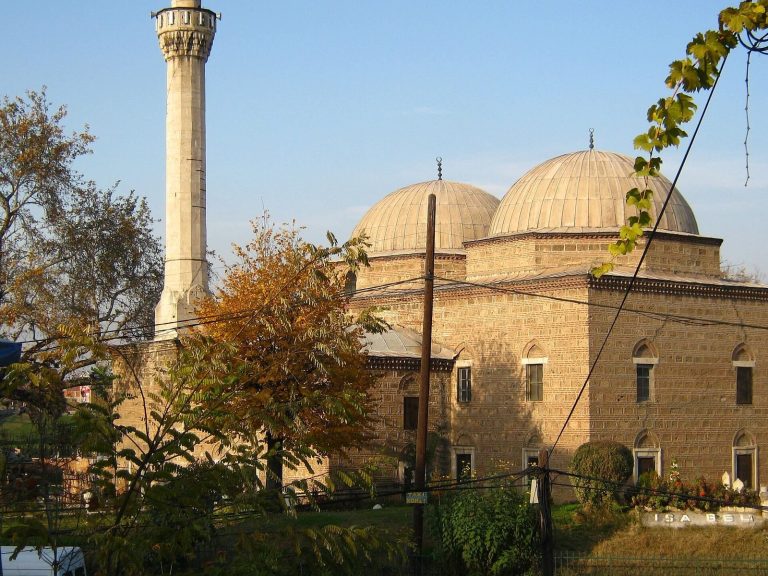
Muslihuddin Abdulgani also commissioned a mosque and a bath beside the caravanserai. Both were damaged by the great fire of 1689 and by the 1963 earthquake. The mosque no longer survives, while the bath is represented by a single remaining wall.
Changing functions
Kuršumli An continued to operate as an inn until 1787, when it was converted into a prison. Bulgarian and Macedonian revolutionaries were among those held there. The building returned to use as an inn from 1904 until 1914.
Earthquake damage and modern use
The 1963 earthquake seriously damaged Kuršumli An, leading to its restoration. The building is now part of the Museum of Macedonia and serves as a lapidarium, a collection area for stone monuments, sculptures, architectural fragments, and inscriptions. Under a 2006 cultural agreement, it was selected as the site of Skopje’s Turkish Cultural Centre, with the allocation taking place in 2016.
Remains
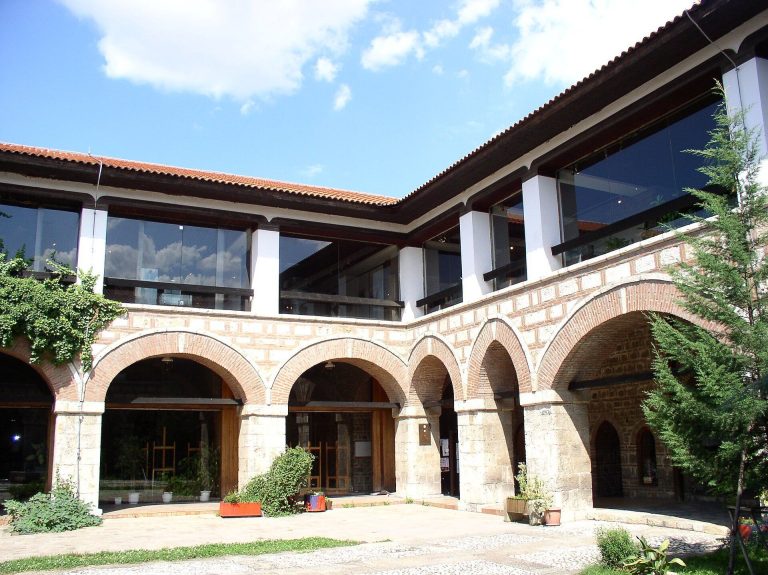
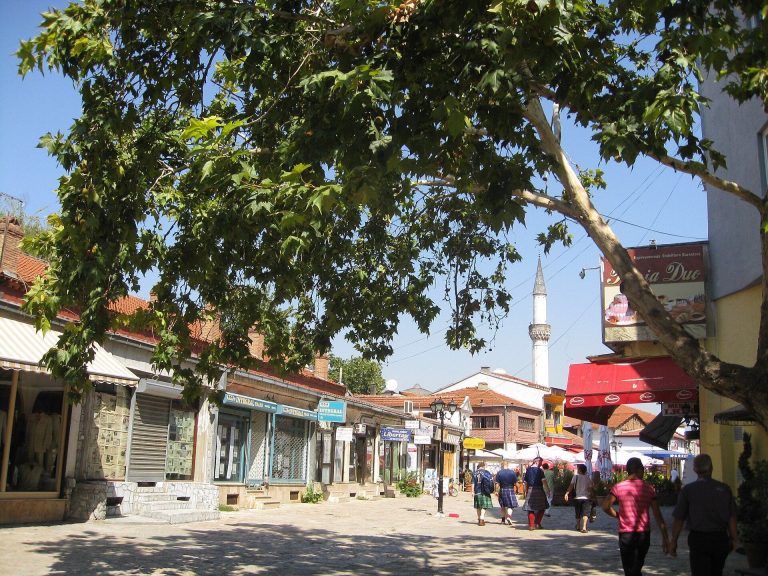
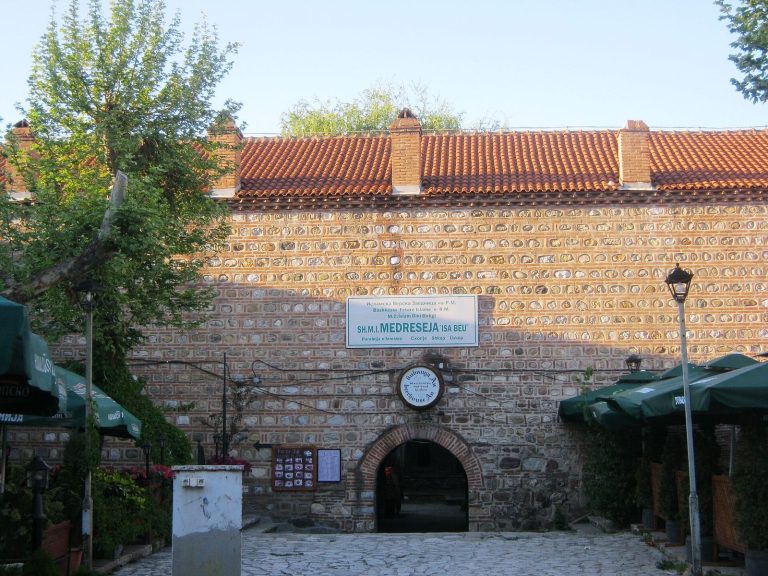
Kuršumli An stands in Skopje’s historic Bazaar, on the left bank of the Vardar River, within the courtyard of the Museum of Macedonia. The two-storey rectangular building covers approximately 2,800 square metres and is organized around two courtyards. Its main entrance is on the south side, opening toward the Turkish Bazaar.
Courtyards and accommodation
The first courtyard has a pool or fountain at its centre and is enclosed by covered galleries rising through two storeys. The rooms opening onto these galleries accommodated lodgers, and each had a fireplace. Ground-floor rooms also served as storage areas, while the upper floor provided sleeping quarters. The building contains 60 rooms in total, with 28 on the ground floor and 32 above.
Stables and storage courtyard
An arch leads from the main courtyard into a second courtyard. Stables arranged around this space accommodated approximately 100 horses, while adjoining areas held the belongings of merchants and other guests. This arrangement combined accommodation, storage, and animal shelter within the same caravanserai.
Construction and elevations
The structure is built from stone and brick. Its masonry uses one course of stone followed by two courses of brick, with a vertical brick inserted between the stones in each course. Numerous square stone columns on both levels are joined by arches and support the covered galleries.
The roof is formed by pyramidal domes, whose tin or possibly lead covering is associated with the building’s name. The north and south façades each contain ten upper-storey windows, while the upper part of the east façade has six. Further windows appear above the southern entrance, facing east, west, and south. The windows are rectangular, fitted with straight lintels, and protected by iron bars.
Lapidarium collection
The building houses 130 stone sculptures dating from the first century BC to the fourth century AD. They are displayed as part of the Museum of Macedonia’s lapidarium, giving the restored caravanserai a continuing museum function alongside its surviving Ottoman fabric.