Abdij van Maagdendale: A Cistercian Nuns’ Abbey in Oudenaarde, Belgium
Site at a Glance
- Rating
- 4.4
- Popularity
- Very Low
- Country
- Belgium
- Primary era
- Early Modern
- External website
- Open
- Eras represented
- Medieval, Early Modern, Modern
- Civilizations
- Belgian, County of Flanders, Spanish
- Site type
- Religious
- Remains
- Monastery
On this page9 sections
History
Abdij van Maagdendale is a former Cistercian nuns’ monastery in Oudenaarde, Belgium, founded in the thirteenth century after the community moved from Flobecq and joined the Cistercian Order, a Catholic monastic order known for disciplined communal religious life. The abbey stood at Ham in Pamele, on the eastern bank of the Scheldt.
Relocation and medieval development
The community had established an earlier monastery at Flobecq during the twelfth or early thirteenth century. As conditions there became unsafe, the nuns sought permission from Arnould IV, Baron of Pamele, a medieval nobleman who held that title, to relocate. In 1233, they received land at Ham in the hamlet of Pamele, now part of Oudenaarde, where they built a new abbey.
Flooding from the Scheldt devastated the abbey in 1408. A reform of monastic practices was successfully introduced in 1468. Amatus, a member of the Villegas family, later served as prior, the monastic officeholder who directed a priory or acted as a deputy to an abbot or abbess.
Conflict, destruction, and rebuilding
During the religious wars, the abbey was searched several times. In 1576, the Geuzen, Protestant rebels active in the Low Countries during conflicts against Spanish rule, raided the complex, took its gold and silver objects, and caused extensive damage, including within the abbey church.
In 1684, French bombardment during the defence of Oudenaarde caused a fire that destroyed much of the complex. Reconstruction continued until the middle of the eighteenth century, leaving most of the buildings visible today associated with this rebuilding phase.
Suppression and secular use
The community was dissolved and the abbey was suppressed in September 1796 under the French revolutionary authorities. Its buildings were then sold as national property, meaning property confiscated by the authorities and sold after religious institutions were suppressed.
From 1826, the complex came under civil authority and served as military barracks from 1830 to 1966. Military use altered parts of the monastic buildings and encouraged commercial activity and café life in the surrounding Baarstraat district. Single-storey houses were built near the gatehouse in the 1830s, and a riding arena followed in 1841.
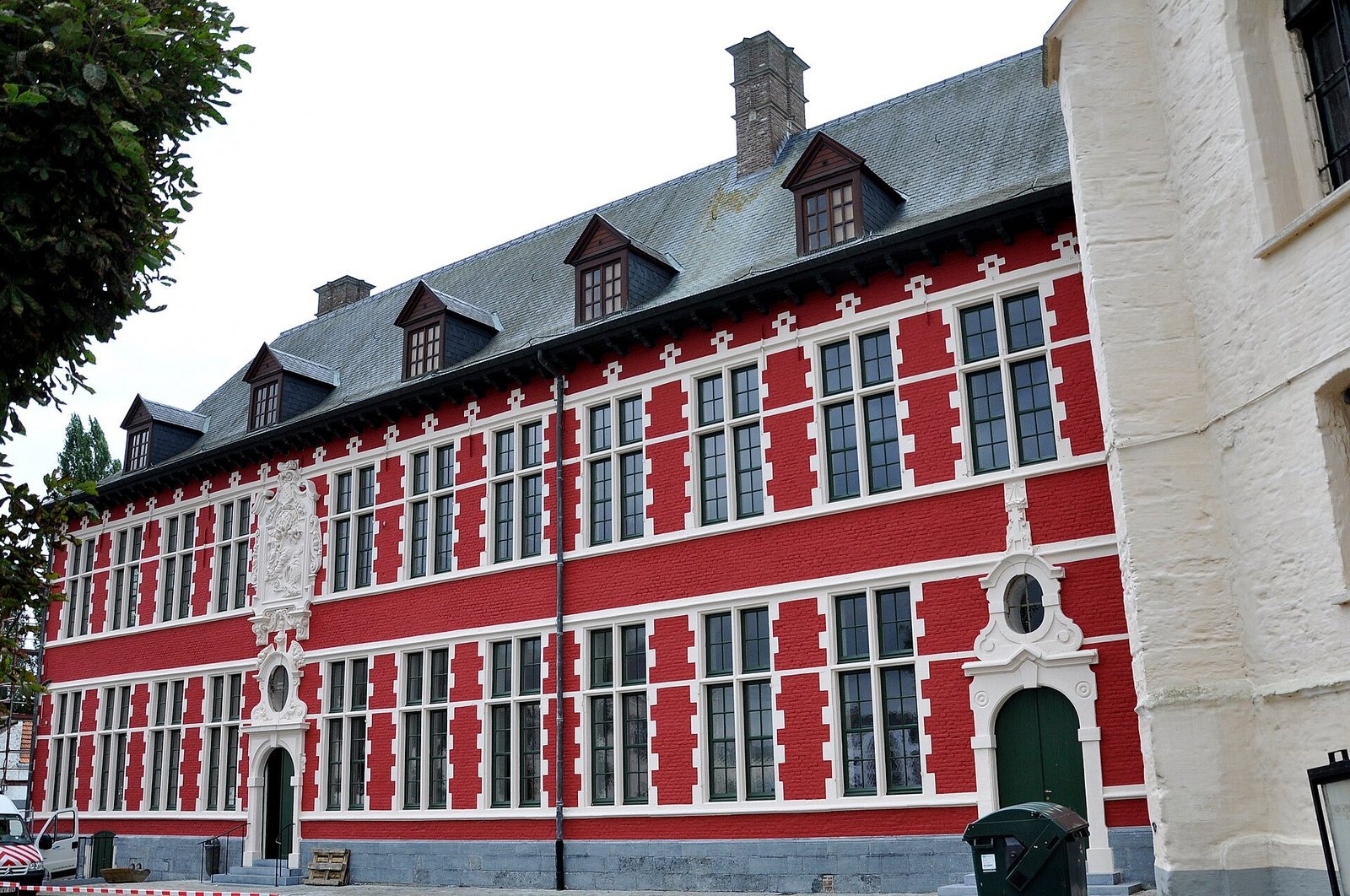
In 1966, the city of Oudenaarde acquired the complex in exchange for the Castle of Burgundy, which had been expropriated by the Belgian state. The restored abbess’s house now accommodates the Royal Academy of Fine Arts and the city archives.
Remains
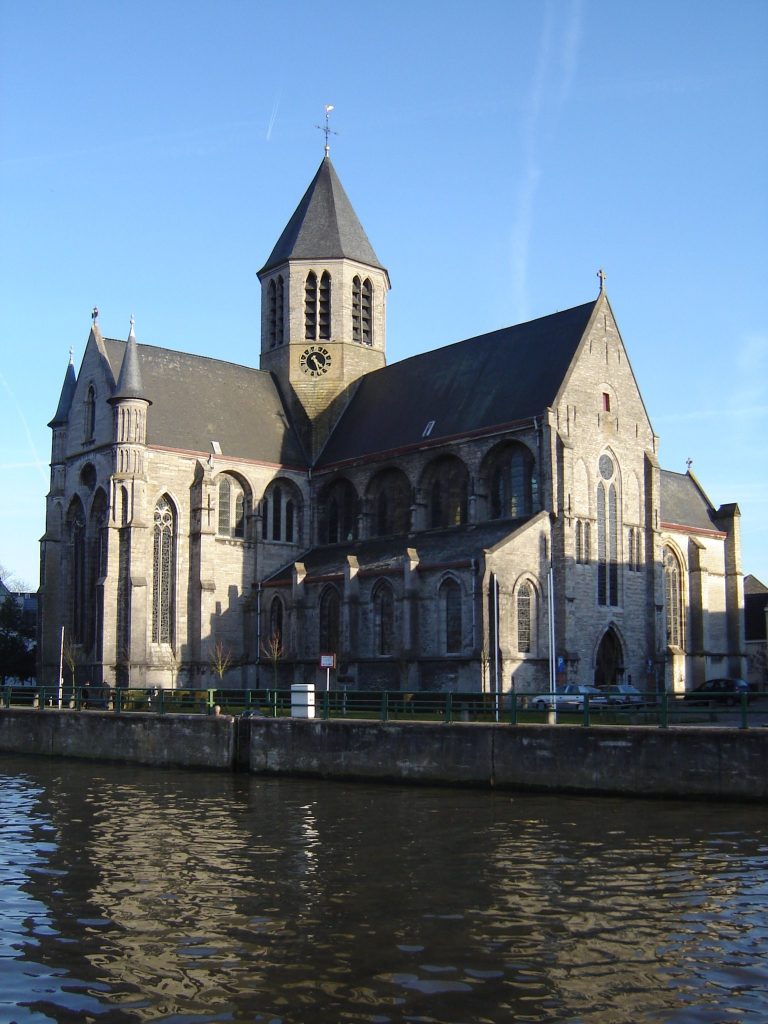
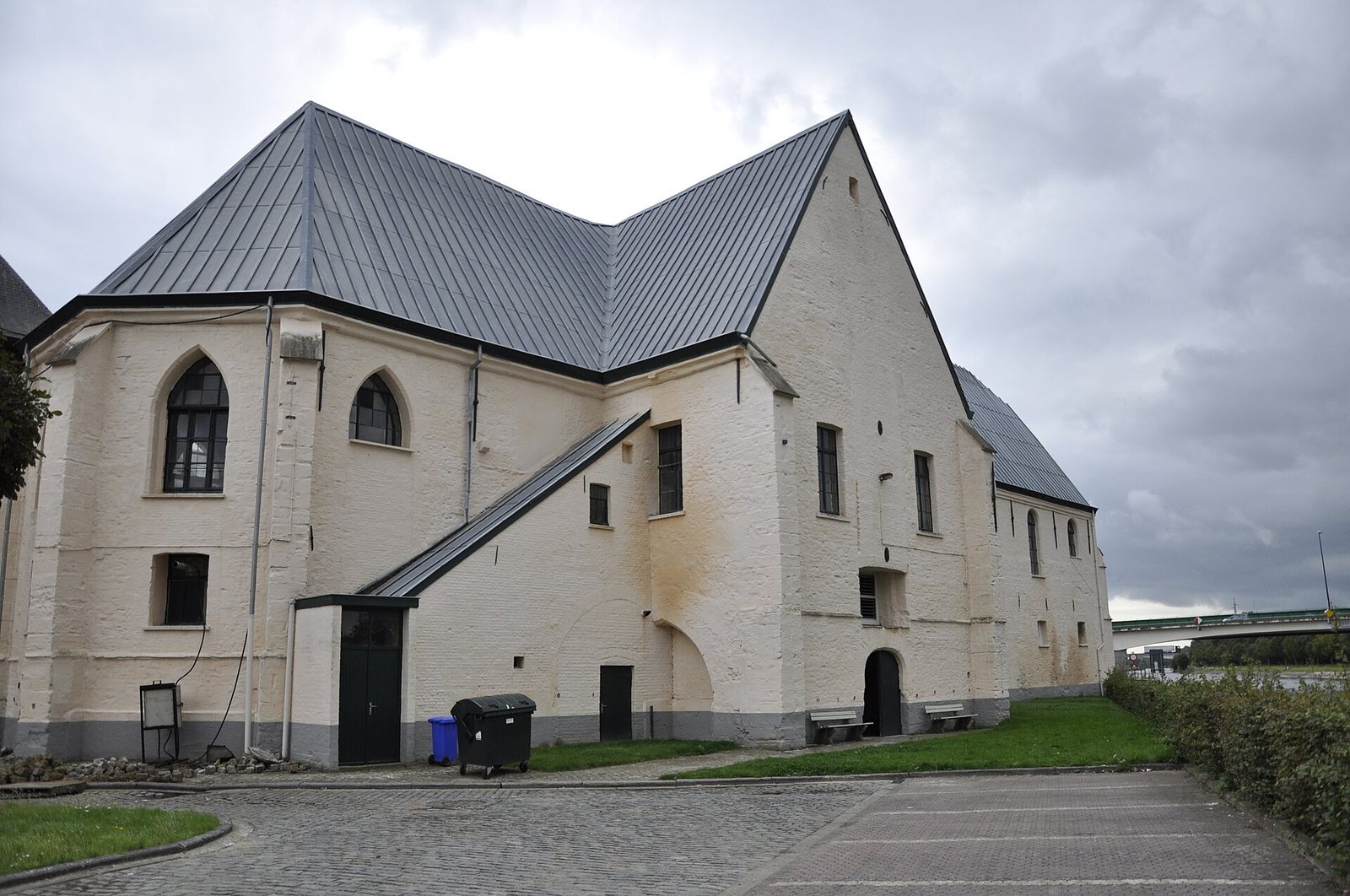
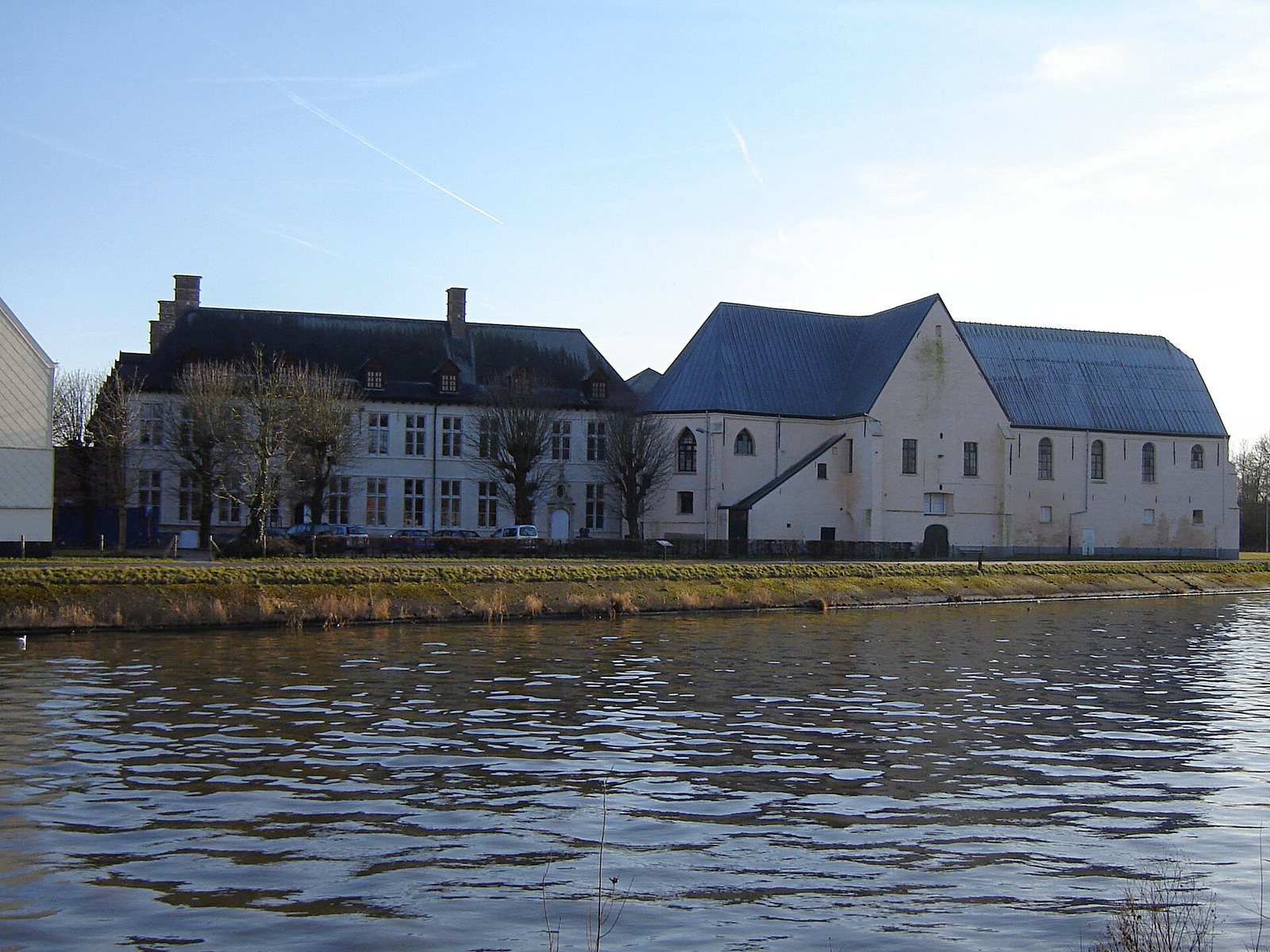
The surviving complex stands at Ham on the eastern, or right, bank of the Scheldt. It consists of the thirteenth-century Gothic abbey church and two wings of buildings, one of which has a notable portal. Gothic architecture is a medieval style associated with pointed arches, ribbed vaults, and often large windows. Most of the visible buildings belong to the reconstruction that followed the fire and bombardment of 1684 and continued into the mid-eighteenth century.
Church and surviving wings
The abbey church is the principal surviving thirteenth-century element. Its Gothic fabric preserves the medieval architectural phase of the monastery, while the two adjoining wings represent the later built complex. A notable portal survives in one wing, forming a distinct architectural feature within the restored group of buildings.
Restored later buildings
Abbess’s house
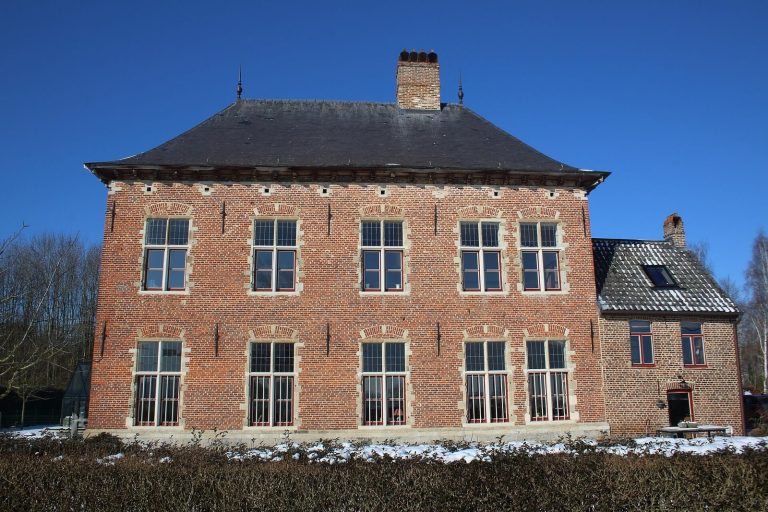
The restored abbess’s house dates from 1663 to 1664. It belongs to the seventeenth-century phase of the complex and remains one of the surviving buildings from the period before the major destruction caused by the 1684 fire.
Gatehouse and former riding arena
A seventeenth-century gatehouse is another restored surviving element. Single-storey houses were added near it in the 1830s during the barracks period. A riding arena built in 1841 occupied the site now taken by the Administrative Centre, but it was later demolished.