Sint-Pieterskerk: A Neo-Gothic Catholic Church in Harelbeke
Site at a Glance
- Rating
- 4
- Popularity
- Very Low
- Country
- Belgium
- Primary era
- Modern
- Eras represented
- Early Modern, Modern
- Civilizations
- Belgian, Habsburg
- Site type
- Religious
- Remains
- Church
On this page11 sections
History
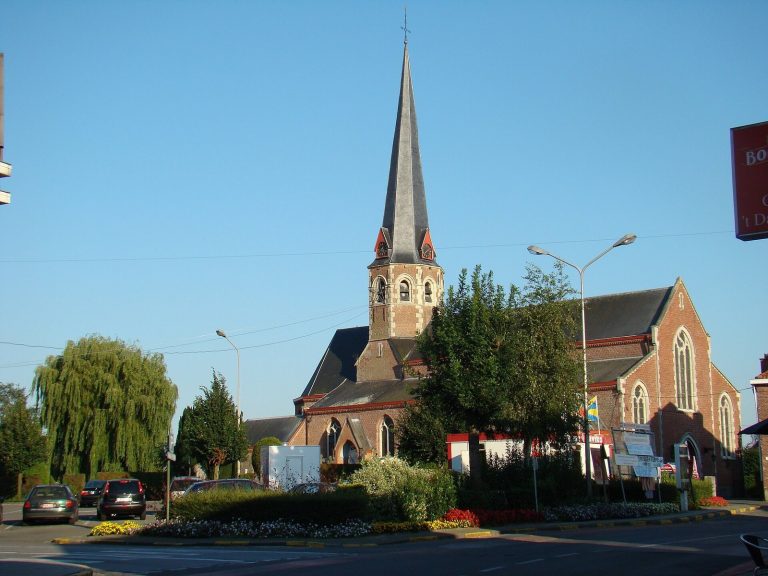
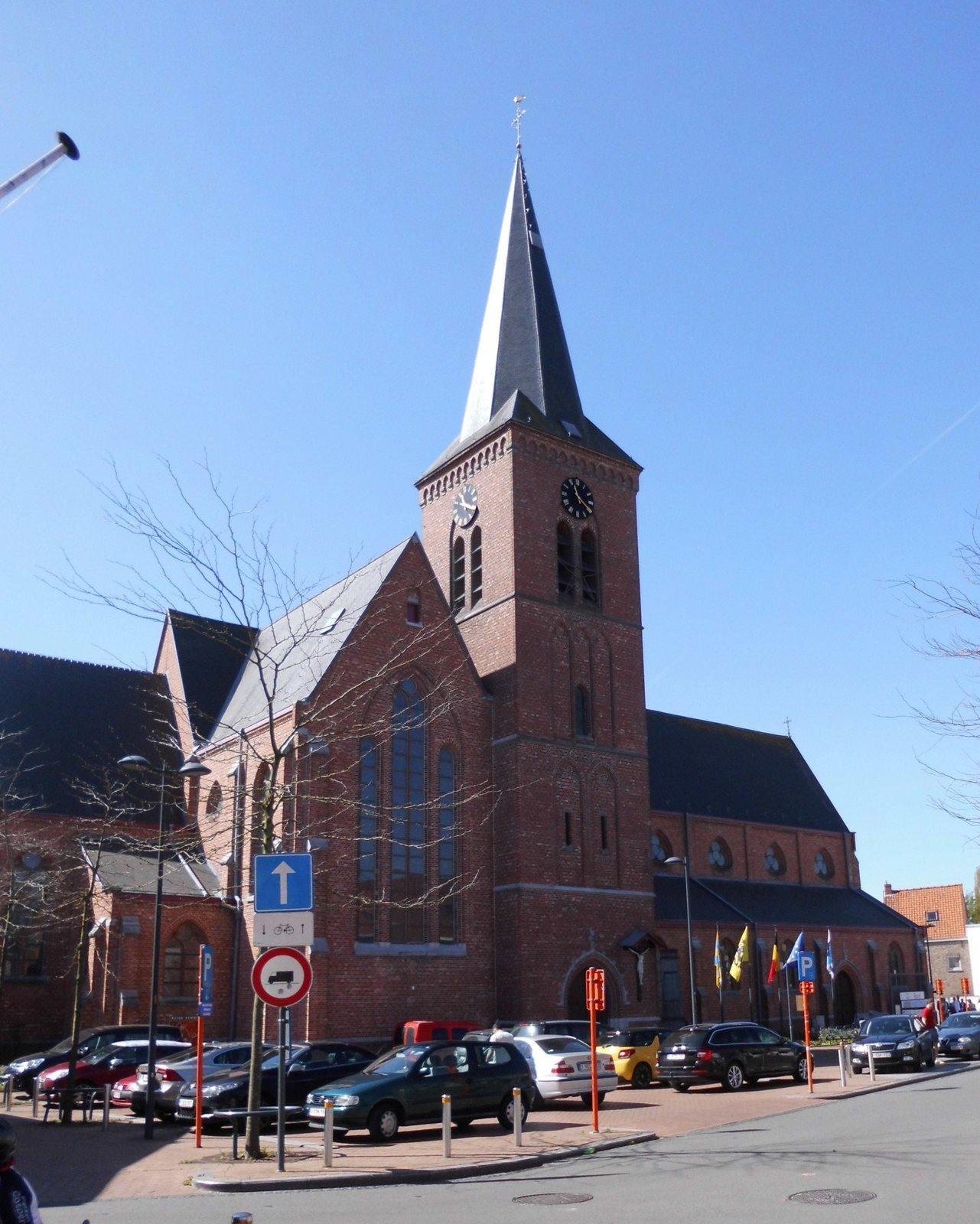
Sint-Pieterskerk is a Catholic church in Harelbeke, Belgium, dedicated to Saint Peter and belonging to the Diocese of Bruges. The present Neo-Gothic building was constructed in 1904–1906, replacing an older church with medieval origins. Its history also includes a long succession of buildings, the continued use of a historic organ, and the preservation of furnishings from earlier churches.
Medieval foundation and patronage
A tradition recorded by Despars places the foundation of the first church at Hulste in 1063, during the rule of Robert the Frisian, Count of Flanders. According to this tradition, Robert established the church in thanksgiving for a victory achieved on Saint Peter’s day. In the same year, Bishop Baldwin of Noyon transferred Hulste’s altar to the Chapter of Harelbeke, a collegiate ecclesiastical institution whose patronage gave it authority over the church and its altar.
The earliest building was Romanesque, a style known for massive forms and rounded arches. A later inscription reportedly found on a decayed oak beam during tower repairs in 1852 attributed construction to Robert the Frisian in 1075. This date belonged to the inscription’s claim about the church’s construction, while the traditional foundation date was 1063.
Damage and eighteenth-century rebuilding
The Romanesque church suffered severe damage in the seventeenth century. Repairs were delayed because the Diocese of Tournai did not wish to meet the cost. The damaged roof remained in poor condition, the tower leaned, rain entered the building, and construction materials deteriorated.
Judocus Steyt, a master builder from Kortrijk, undertook a major renovation in 1777–1778. The work retained the choir, the lower part of the tower, and a front section containing a window. The church was arranged on an east–west axis. The tower was repaired again in 1852, when the oak beam bearing the inscription about Robert the Frisian was reportedly discovered.
The present church
By about 1900, the church had become too small. On 15 January 1904, King Albert authorized the demolition of the old building. The present church was then built in 1904–1906 by Jules Carette, an architect from Kortrijk, and consecrated in 1906.
Sint-Pieterskerk is listed as a monument under number 205419. Its historic organ has a separate monument protection dating from 1976. Conservation authorities considered blown air harmful to organs, so the church was equipped with underfloor heating instead.
The organ’s history
The church’s organ was built in 1736 by Corneille Cacheux, an eighteenth-century organ builder from the region historically known as French Flanders. The instrument passed through three buildings. It was first installed in the oldest church, identified with the Romanesque building used from 1075 to 1780. It then moved to the second church, used from 1780 to 1904, before being installed in the present building after its completion in 1906.
A restoration directed by the organ specialist Gabriël Loncke began when the instrument was dismantled and taken to the J. Lapon workshop in Diksmuide on 14 April 2000. It was returned and reinaugurated on 14 September 2007, followed by a recital. The work restored the organ to its original condition and repaired defects that had accumulated over more than 250 years.
Remains
The surviving church is a Neo-Gothic building whose interior combines early twentieth-century decoration with furnishings transferred from earlier churches. Its principal historic features include painted apostle figures, scenes connected with Christian devotion, older confessionals, Stations of the Cross, and the restored eighteenth-century organ on the organ gallery.
Church interior and furnishings
Apostles and religious paintings
Paintings of the twelve apostles line both sides of the church. Near the beginning of the nave, a painting represents Judgment Day. Above the altar, a Calvary scene presents the Crucifixion and related figures as the principal painted image of the sanctuary.
Wooden Calvary group
The Calvary group above the former communion rail is made entirely of wood. The mayor donated it for the inauguration of the present church in 1906, linking the work directly to the opening of the Neo-Gothic building.
Confessionals and Stations of the Cross
The two oldest confessionals, positioned at the front of the church, came from the second building and date from 1780. The Stations of the Cross originally belonged to a church in Langemark that burned during the French Revolution. They survived the fire and reached Hulste in 1906 after passing through Rumbeke.
Historic organ
The 1736 organ stands on the organ gallery, an elevated loft used to house and play the instrument. Its case follows the design of the organ case formerly associated with the church of Lozer, where only the case survived. Made of Hainaut oak, it is a balustrade organ, meaning that the case is integrated into or positioned along the gallery balustrade. The symmetrical façade has two outer pipe fields of five pipes each, a central tower of seven pipes, and two additional fields of five pipes each. The pipe fields are 152 centimetres high, while the central tower and the full façade are each 180 centimetres high. The façade measures 180 centimetres in width.