Grötlingbo Church: A Medieval Church on Gotland
Site at a Glance
- Rating
- 4
- Popularity
- Very Low
- Country
- Sweden
- Primary era
- Medieval
- External website
- Open
- Eras represented
- Medieval, Early Modern, Modern
- Civilizations
- Unclassified
- Site type
- Religious
- Remains
- Church
On this page17 sections
History
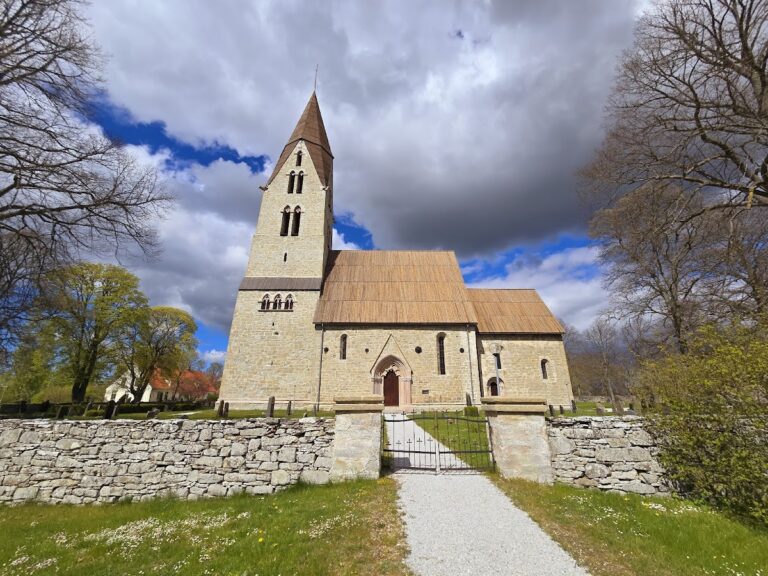
Grötlingbo Church is a medieval church in Sweden, on the island of Gotland. It belongs to the Church of Sweden and the Diocese of Visby, within Havdhem parish. The church was dedicated to the Evangelist Luke by 1296, when it appeared in a papal bull.
Earlier Church and Medieval Reconstruction
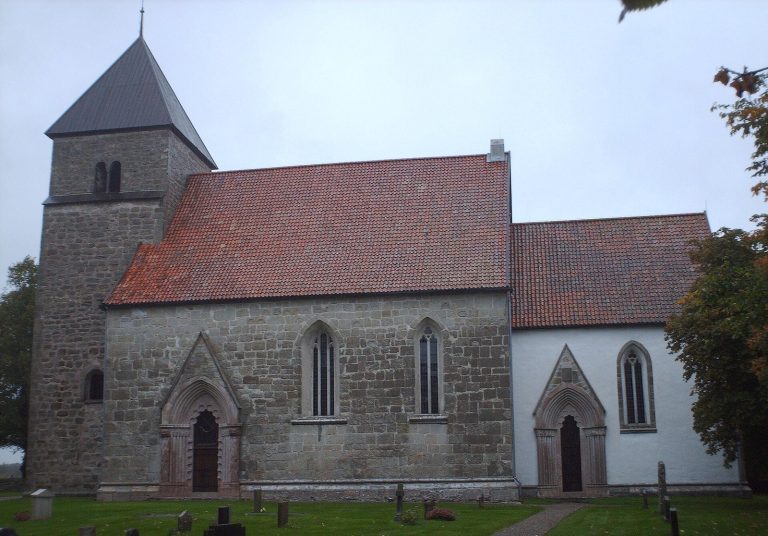
Excavations carried out in 1956 and 1957 established that a stone church stood on the site during the twelfth century. This earlier building was a smaller Romanesque church made from sandstone. Carved blocks from it were incorporated into the present structure, allowing elements of the first church to survive within the later building.
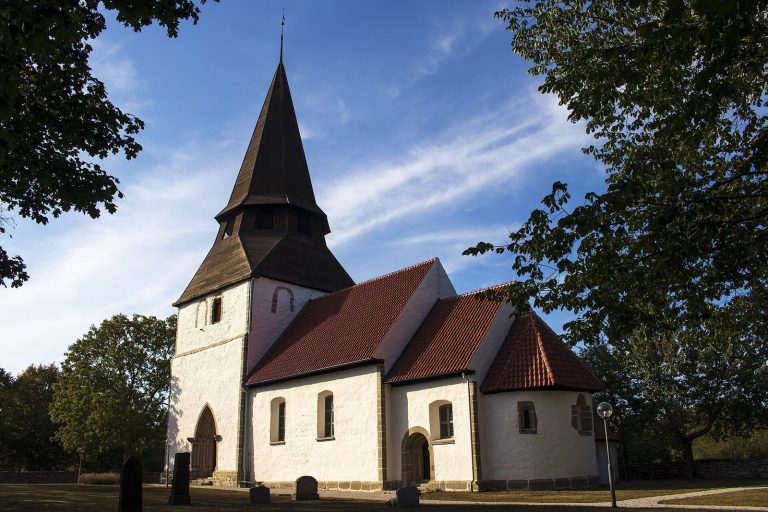
A western tower was added in the thirteenth century. The present nave and choir belong to a major rebuilding in the fourteenth century, associated with the master or workshop conventionally called Egypticus. Egypticus is a modern scholarly name for an unidentified medieval sculptor or workshop active on Gotland around 1330–1380. The reconstruction produced the large medieval church that remains substantially intact in its overall form.
Later Use and Restoration
Later changes have mainly concerned furnishings and restoration rather than the medieval structure itself. The church was restored in 1956–1957 according to plans by cathedral architect Eiler Greebe. Its exterior was restored in 1986–1987, and in 1989 a glass partition created a separate worship space in the tower room, used especially during the winter half of the year.
Grötlingbo Church continues to be administered through the Diocese of Visby and the Church of Sweden. The Danish artist Asger Jorn was buried in the church cemetery in 1973.
Remains
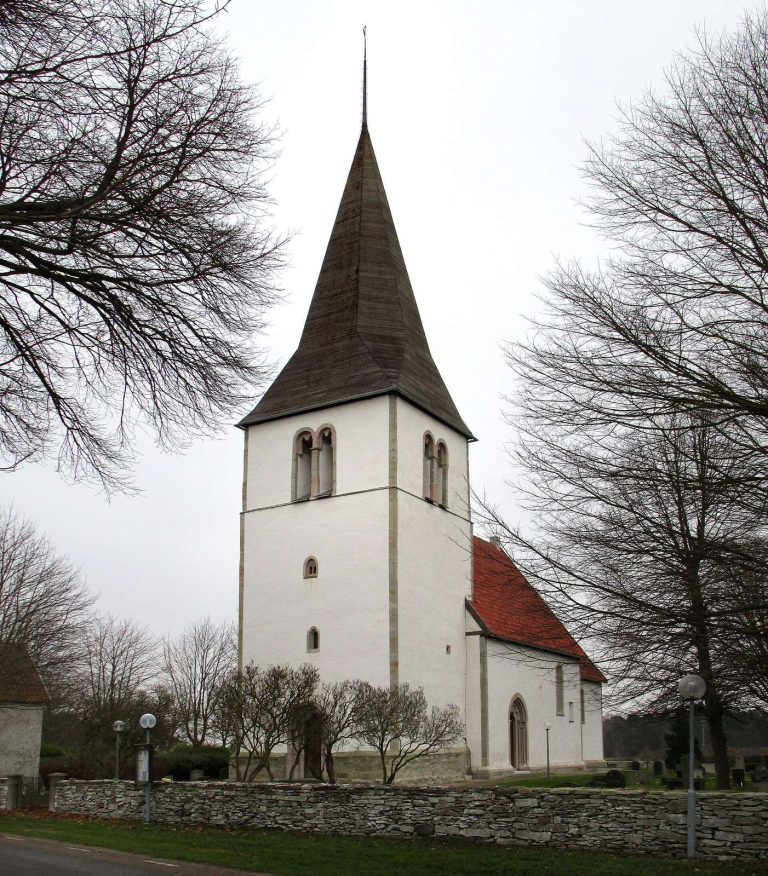
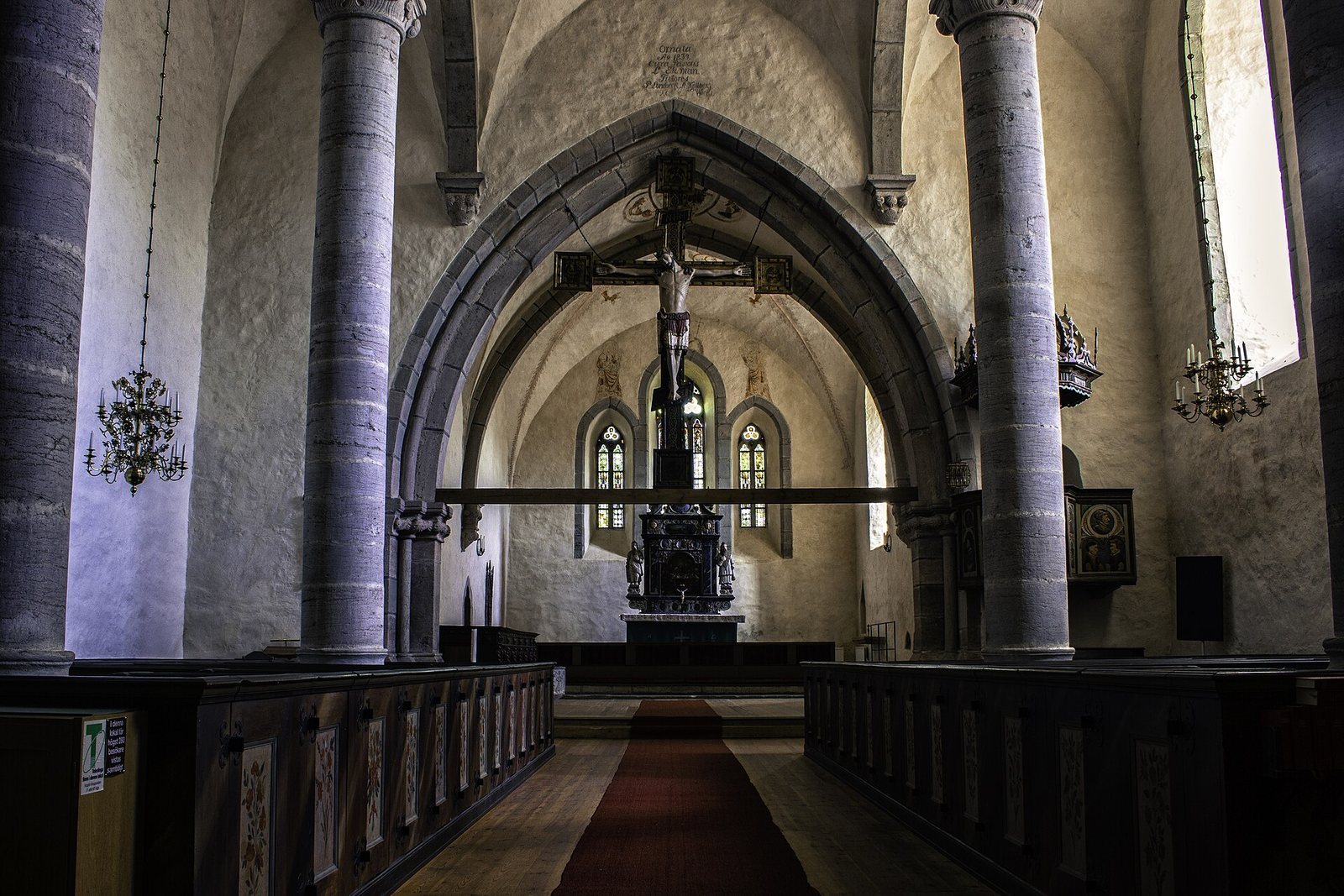
Built from local sandstone, Grötlingbo Church is unusually large for a rural church on Gotland. Its interior is arranged as a three-aisled hall supported by four substantial round columns. The medieval building combines a Romanesque tower with a Gothic nave and choir, while later furnishings and painted decoration remain within the reconstructed church.
Exterior Stonework
Romanesque Reliefs
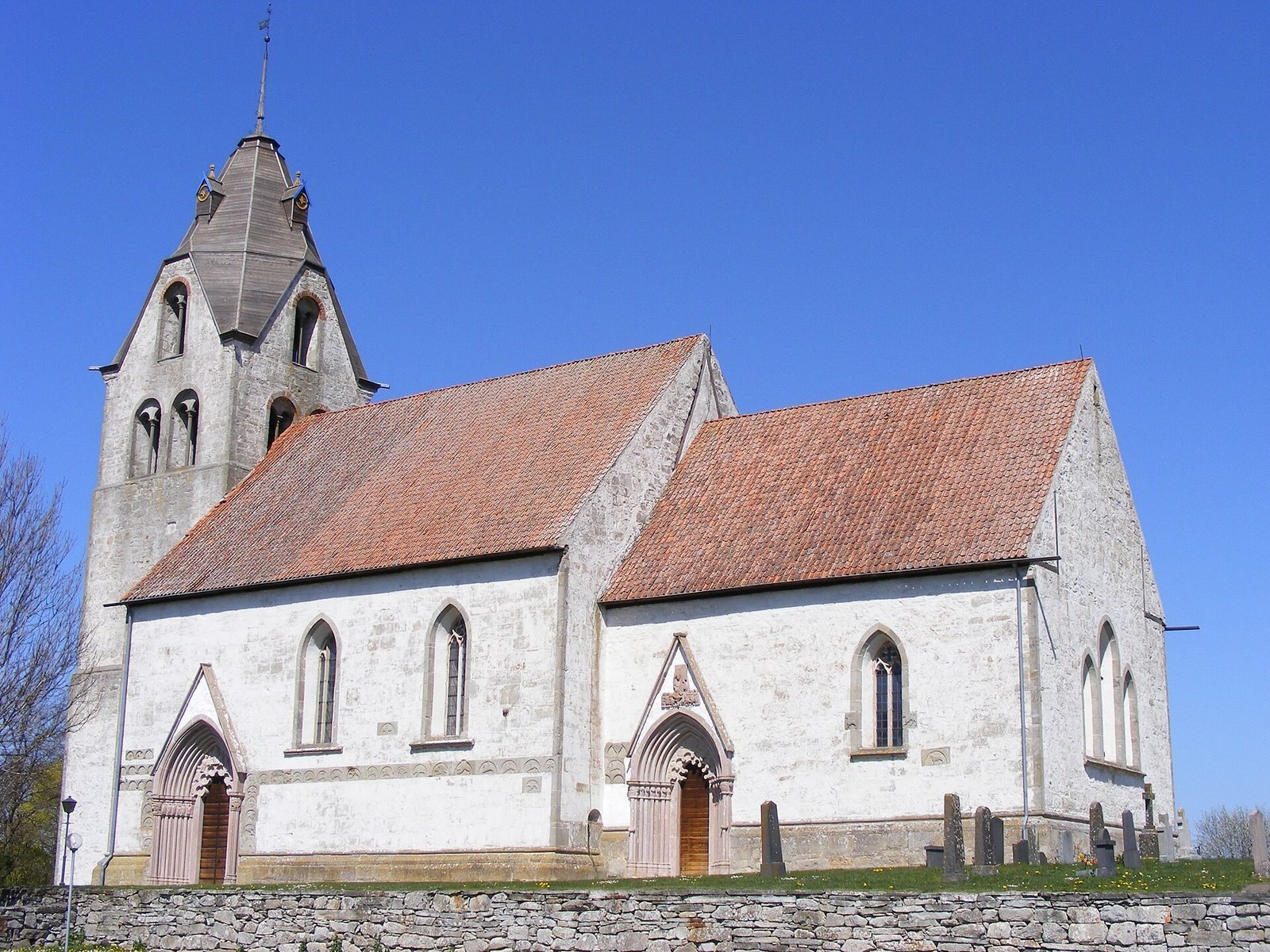
The south facade incorporates finely carved blocks from the earlier church, dating from around 1200. They are attributed to Sigraf, a Romanesque stone sculptor active on Gotland who was known for architectural reliefs and baptismal fonts. The sandstone carvings show real and fantastic animals, hunting and combat scenes, fighting men, and mounted knights.
The meaning of these reliefs is uncertain. They have been interpreted either as an image of evil forces pursuing humans or as scenes from an ancient heroic narrative, possibly the story of Beowulf.
Gothic Portals
Two carved portals on the south side date from the middle of the fourteenth century and are Gothic in style. They are associated with the Egypticus workshop. Their reliefs present Christian subjects, including the Virgin Mary, the Madonna and Child, saints, and the Resurrection of Christ. Grotesque grinning faces, characteristic of this workshop, also appear among the portal carvings.
Tower and Spire
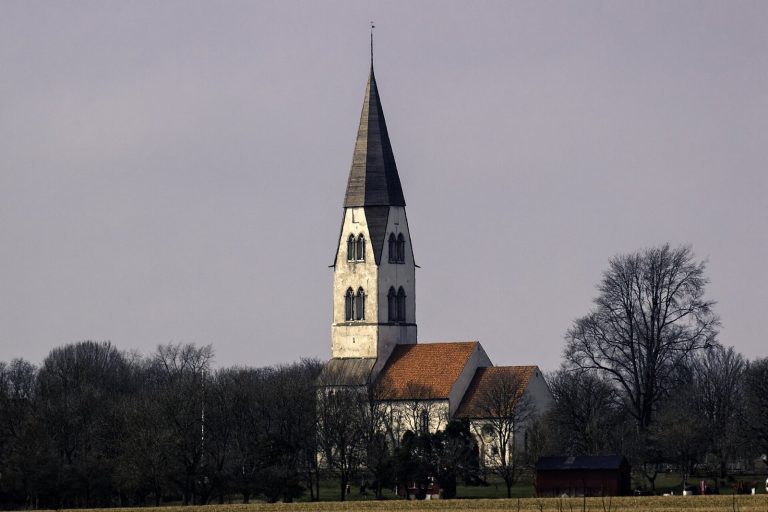
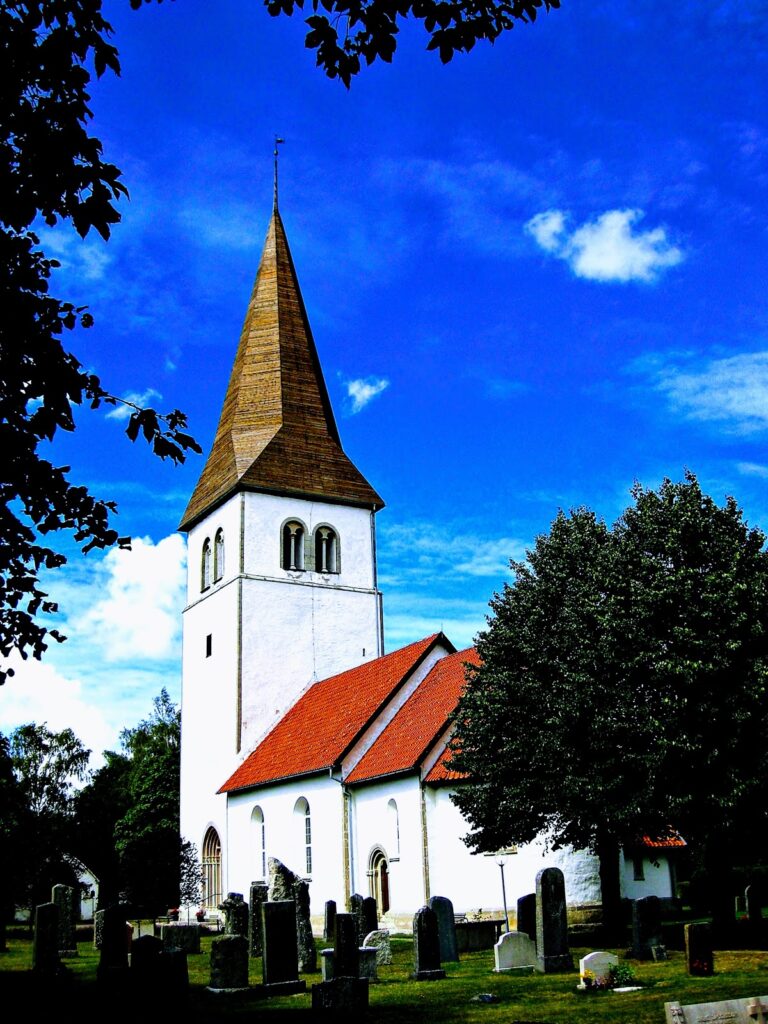
The western tower is Romanesque in style. Its spire was added in the eighteenth century and is decorated with painted clock faces, giving the medieval tower a later upper silhouette.
Choir and Nave Decoration
Choir Paintings
Fourteenth-century wall paintings survive in the choir and depict Christian scenes related to the subjects carved on the portals. Above the central window, the choir vault contains a Deesis, an image of Christ as judge or ruler flanked by intercessory figures. Here Christ as Judge of the World is accompanied by Mary and John the Baptist.
The eastern vault contains dragons and foliage symbolizing the struggle between good and evil. The western vault shows Christ as Judge with Mary holding the infant Jesus, John the Baptist, and Saint Olof, referring to Olaf II of Norway, the medieval Norwegian king and Christian martyr.
Windows and Vaults
The choir windows contain stained glass from approximately the same period as the wall paintings. Apostle figures in the side windows are stylistically more advanced than the New Testament scenes in the central window and may have been made later. The nave vaults carry paintings that are purely decorative.
Medieval Objects and Inscriptions
Triumphal Cross and Baptismal Font
A large triumphal cross hangs between the nave and choir. Such a cross traditionally marked the boundary between these two parts of a church. The cross dates from the middle of the thirteenth century and was acquired for the earlier church.
The twelfth-century baptismal font is a work by Sigraf and is regarded as one of the finest examples of his sculpture. Its delicate reliefs include the Adoration of the Magi and episodes from the childhood of Jesus.
Bell and Grave Monuments
A bell cast in 1384 carries a Latin dedication to Saint Luke and is regarded as one of the oldest bells on Gotland. The floor contains several medieval tomb slabs and two rune stones, while some rune-inscribed grave monuments are located in the choir.
Later Furnishings
Pulpit
The Renaissance pulpit dates from 1548 and is the oldest preserved pulpit on Gotland. It was originally made for Visby Cathedral and later donated to Visby’s Church of St Mary by the Danish fief-holder Eiler Hardenberg and his wife. The pulpit retains the Danish coat of arms and includes an image of Philipp Melanchthon, the German theologian who collaborated with Martin Luther in developing Lutheran theology and education. Its canopy was added in the late seventeenth century.
Altarpiece and Pews
The sandstone altarpiece dates from 1699 and contains paintings by Jacob Andersson Blass. The pews date from 1710, and paintings on their doors were added in the 1740s. Their differing decoration was associated with assigned users, including women, men, the crown commissioner, and the pastor’s wife.
Two badly damaged wooden sculptures of Saint Olof and Saint Luke are preserved at the Gotland Museum in Visby rather than in the church.