Rone Church: A Medieval Gothic Landmark in Sweden

Site at a Glance
- Rating
- 4.2
- Popularity
- Very Low
- Country
- Sweden
- Primary era
- Medieval
- External website
- Open
- Eras represented
- Medieval
- Civilizations
- Swedish
- Site type
- Religious
- Remains
- Church
On this page15 sections
History
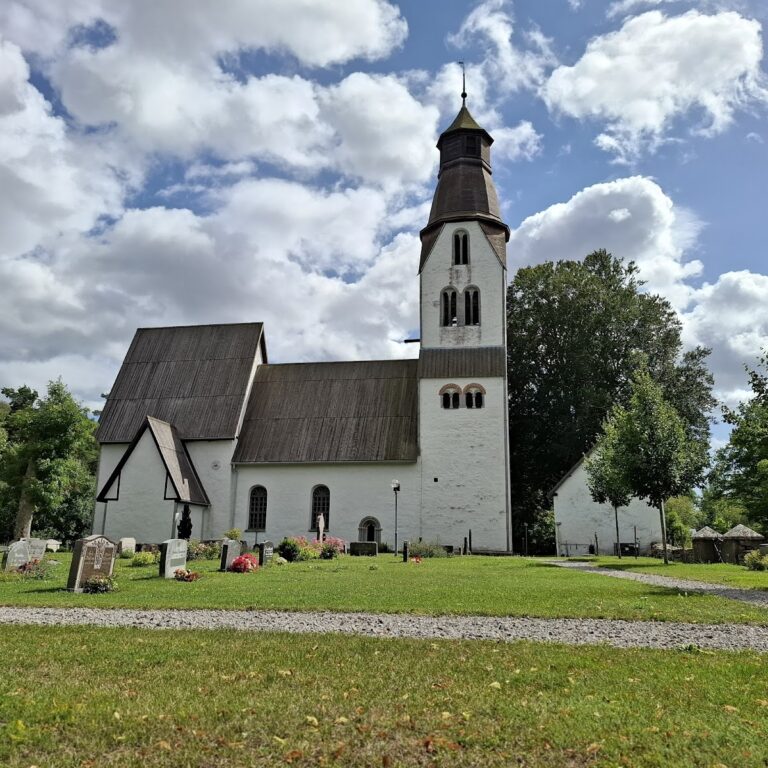
Rone Church is a medieval Gothic church in Sweden, located in Rone on southern Gotland. Its nave, choir, and the lower part of its tower were built around 1300, probably replacing a smaller Romanesque stone church. The present building belongs to the Church of Sweden, Sweden’s Lutheran national church, and forms part of the Alva, Hemse and Rone parish in the Diocese of Visby, an ecclesiastical district overseen by a bishop.
From Romanesque beginnings to the Gothic church
The earlier Romanesque church has disappeared as a building, but foundation stones and reliefs survive, while fragments were incorporated into the later structure. Around 1300, the nave, choir, and lower tower of the Gothic church were erected. The building was constructed mainly from limestone, with sandstone and granite also used, reflecting its position near the boundary between southern Gotland’s sandstone area and the island’s wider limestone region.
The tower was raised during the middle of the 14th century and completed under the direction of the master stonemason known as Egypticus. This is a conventional name given by art historians to an otherwise unidentified medieval mason or workshop associated with several Gotland church towers and related sculpture. The completed tower made Rone Church a landmark for seafarers, a role it has retained since the Middle Ages.
Medieval continuity and later care
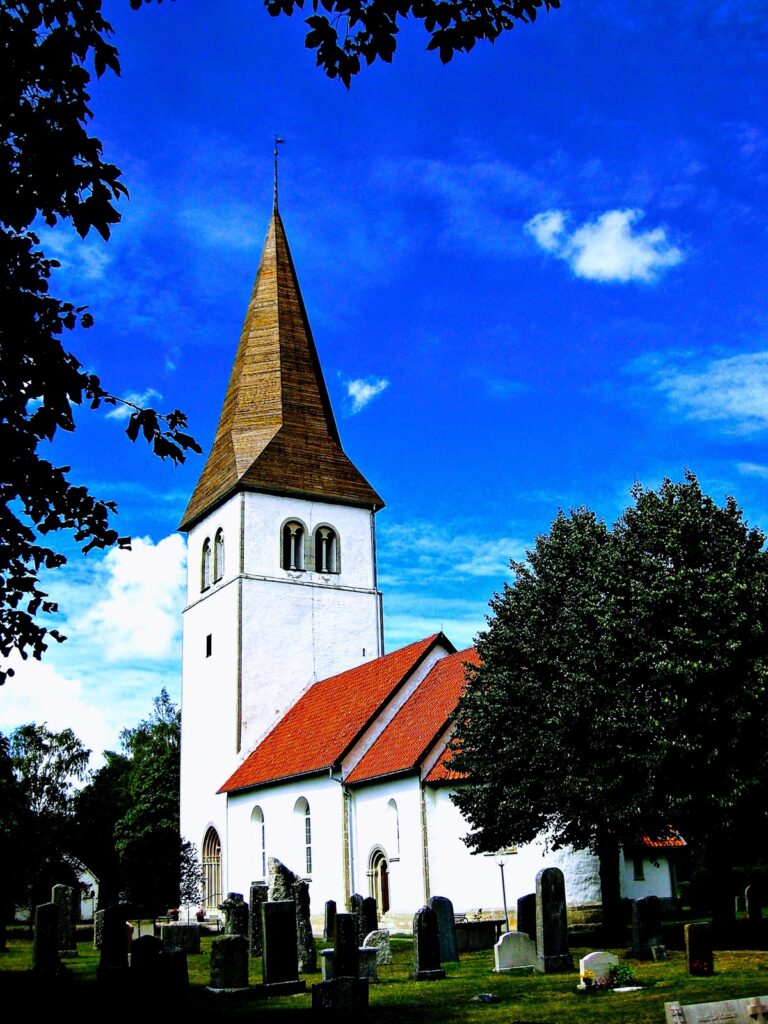
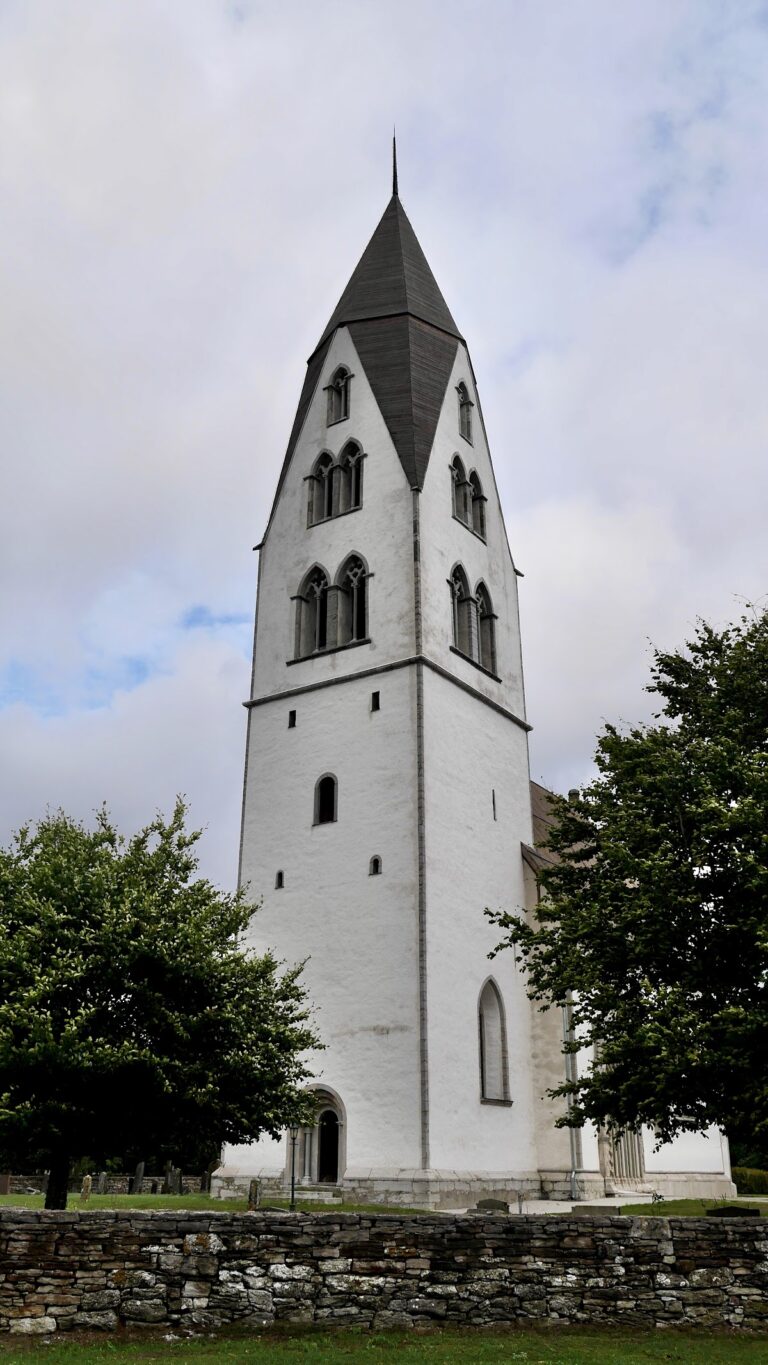
The church has remained largely unchanged since the medieval period and has long been known as “Lang Jaku.” The name refers to Saint James, the church’s patron saint, and to the building’s tall tower. Rone Church is recognized as the tallest church on Gotland, and its tower has served as a navigational aid for mariners since the Middle Ages.
Restoration was carried out in 1913–1915 and again in 1954–1955. The later work followed plans by the architect Eiler Græbe. During the earlier restoration, missing parts of the medieval stained glass were supplemented with imitations. These interventions form part of the church’s modern history while leaving its medieval structure and much of its interior character intact.
Remains
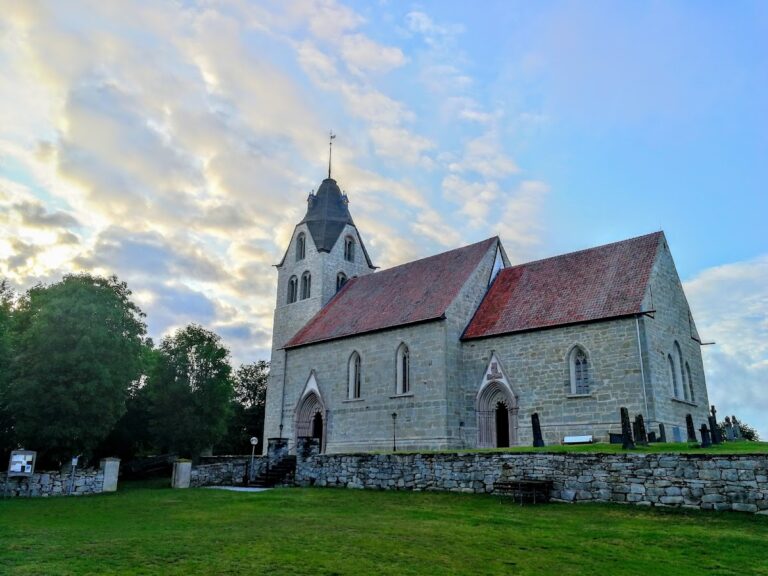
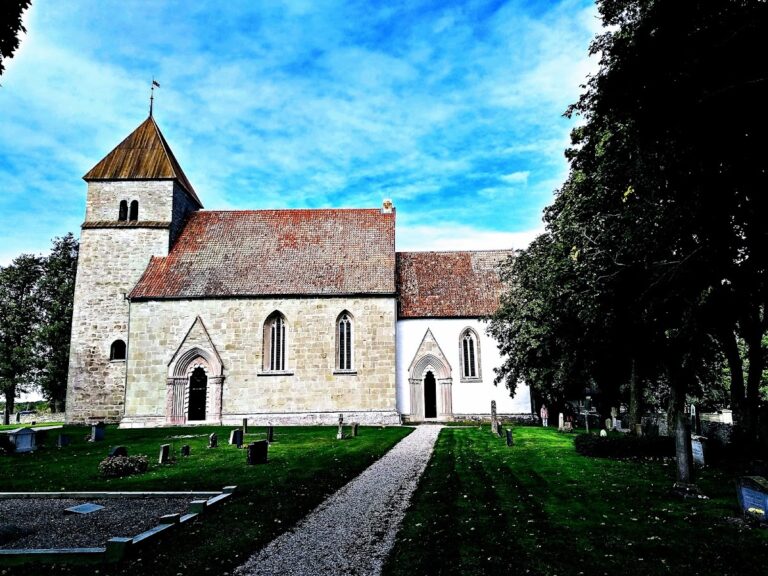
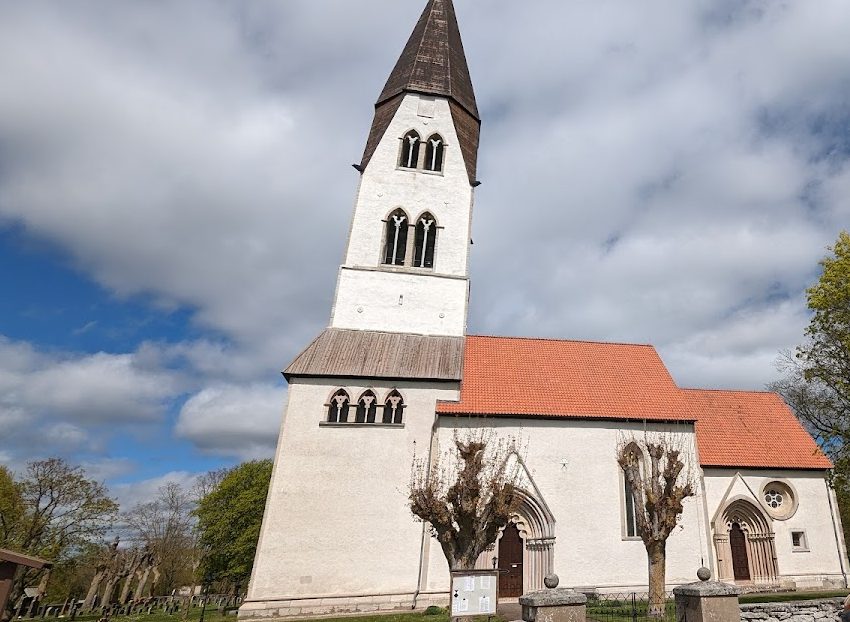
Rone Church is a relatively homogeneous, plastered Gothic building made chiefly of limestone, with sandstone and granite details. Its plan has a two-aisled nave, a western tower, and a narrower, straight-ended choir. A sacristy, a service room for liturgical objects and vestments, is attached to the choir’s north side. Gabled roofs cover the nave and choir, while the sacristy has a single-pitched roof.
Exterior architecture
Tower
The approximately 60-metre tower dominates the church’s exterior. It has galleries on three sides, pointed gables, and an octagonal spire. Pointed-arched sound openings, each framed by columns, are arranged on two levels. The tower’s height and design explain its long-standing use as a landmark and navigational aid.
Windows and portals
The original window openings survive throughout the church. Narrow pointed-arch windows light the nave, while the choir has a circular window on the south side and three interconnected eastern windows. Four medieval portals remain. The two southern entrances lead respectively to the nave and choir and are decorated with finely carved capital bands and deep, perspective-shaped openings. The nave portal was partly renewed in 1915 and 1955. The northern tower portal contains a stone relief of Saint Botvid lying on a fish, a motif associated with the Egypticus workshop, while sculpted capitals enrich both southern portals.
Interior structure and medieval decoration
Vaults and arches
Inside, the nave is covered by four cross-vaults carried by a slender central column with ornamented capitals. Substantial transverse arches are carved from limestone. A pointed tower arch leads toward the bell chamber, and a pointed triumphal arch, the division between the nave and choir, opens into the eastern part of the church.
Mural paintings
Medieval wall paintings survive from two periods. The paintings made around 1300 are chiefly decorative, with floral motifs particularly prominent on the vaults. The murals from the middle of the 15th century are attributed to the Master of the Passion of Christ, the conventional name for an unidentified painter or workshop known for narrative scenes from Christ’s life and Passion. At Rone, these paintings show episodes from Christ’s childhood and Passion and may also include the Binding of Isaac.
Stained glass
Medieval stained-glass panels remain in the choir’s three eastern windows. They are among the oldest surviving examples of their kind on Gotland and may originally have belonged to the earlier Romanesque church. Their subjects include episodes from Christ’s childhood, the raising of Lazarus, Mary Magdalene, and other religious motifs. Some missing elements were supplemented with imitations during the restoration of 1913–1915.
Furnishings and movable remains
Medieval sculpture and textiles
A locally made triumphal cross from around 1400 hangs in the triumphal arch with sculptures of Mary and John the Evangelist. A medieval cope is preserved in the church collections and kept in the sacristy. Together, these objects represent surviving elements of the church’s medieval liturgical furnishings.
Early modern furnishings
The pulpit dates from 1595, while its canopy and stairs were added in 1664. A sandstone baptismal font was made in 1664, replacing a 12th-century font attributed to the master Hegvald. The sandstone altar was made in 1694 by Peiter van Eigen. Well-preserved pews from the 17th and 18th centuries also remain in the church.
Organ and bell
The main organ was built in 1876 by Åkerman and Lund Orgelbyggeri of Stockholm and renovated in 1988 by J. Künkels Orgelverkstad of Färjestaden. A choir organ was built by J. Künkel in 1988. The functioning church bell bears the date 1345 and an inscription stating that it was cast at Hemse that year, followed by a prayer for mercy toward the community of priests and the oppressed city.